
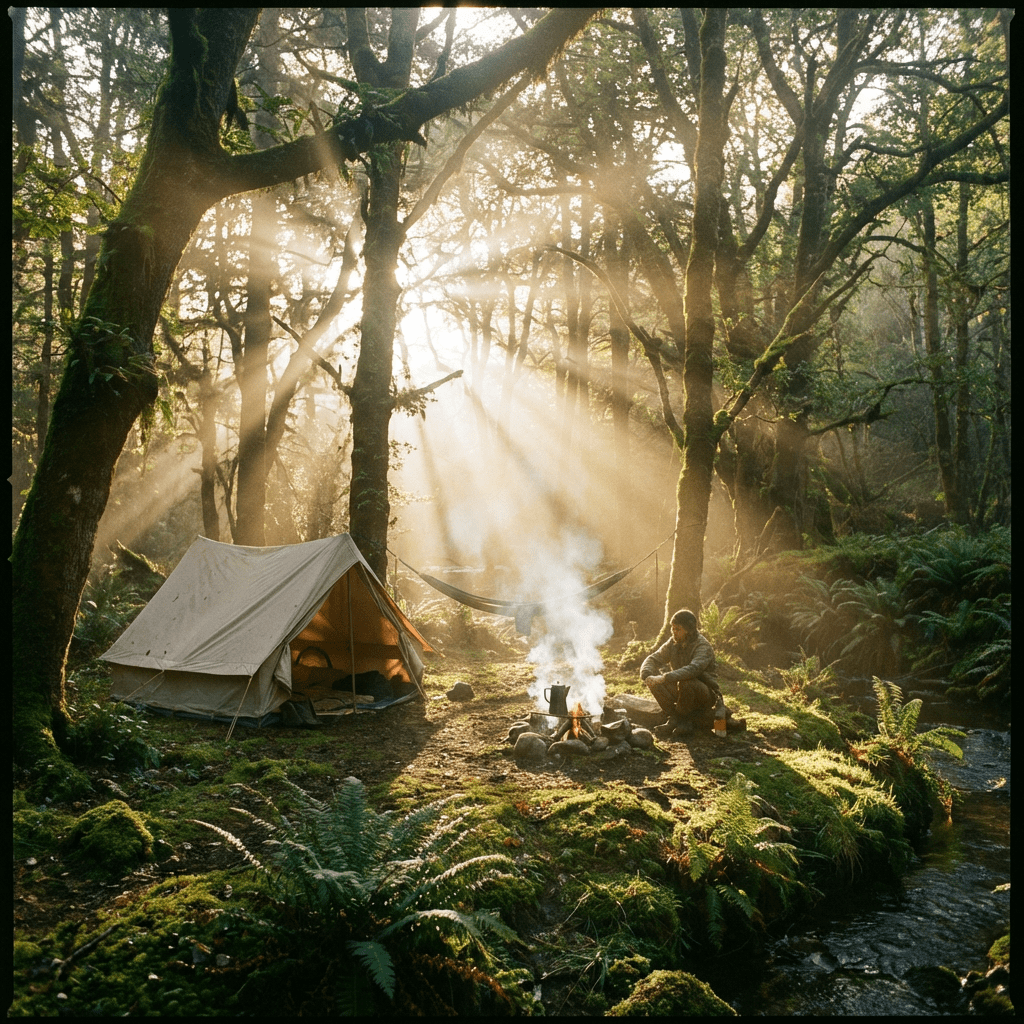
Finding the perfect spot in a national forest can transform your outdoor experience from ordinary to extraordinary. camping offers solitude, freedom, and a deeper connection with nature by allowing you to camp away from crowded campgrounds and established sites. However, locating these secluded, legal spots requires some knowledge, preparation, and respect for the environment. This comprehensive guide will walk you through tips and tricks to find the best camping areas in national forests, ensuring a safe, enjoyable, and responsible adventure.
What is dispersed camping?
Dispersed camping is essentially the purest form of heading into the backcountry and making the land itself your campsite. Instead of pulling into a numbered site with a picnic table and a neatly raked tent pad, you’re stepping into spaces where nature hasn’t been shaped for you. It’s camping on public land—often national forests or Bureau of Land Management areas—where you choose your own spot within the rules of the area. Because there are no built structures or services, the experience feels closer to what camping used to be before recreation infrastructure existed.
What makes this distinct is the level of self‑reliance it demands. With no bathrooms, no potable water, and no trash facilities, you become responsible for every part of your stay. You bring the water you need or know how to safely collect and purify it. You manage your waste in a way that protects the land. You build a fire only where it’s safe and permitted, or you rely entirely on a stove. This absence of amenities isn’t a drawback for most people who seek out camping—it’s the appeal. The quiet is deeper, the sense of solitude more profound, and the connection to the landscape more immediate.
There’s also a certain freedom to it. You aren’t hemmed in by campground boundaries or neighboring RVs. You can choose a site with a view that speaks to you, settle into a clearing that catches the morning sun, or tuck yourself beneath a stand of pines where the wind barely reaches. The experience becomes more personal because you’re shaping it yourself rather than fitting into a predefined space.
At the same time, camping carries a responsibility to tread lightly. Because these areas aren’t maintained, the impact of each visitor matters more. Following Leave No Trace principles isn’t just good practice—it’s essential to keeping these wild places open and healthy. When done well, camping becomes a kind of partnership with the land: you get the solitude and beauty you’re seeking, and in return you take care to leave the place as wild as you found it.
Why Choose Dispersed Camping?
Choosing dispersed camping is really about choosing a different rhythm—one that slows down, quiets the noise, and lets the landscape shape your experience instead of the other way around. The solitude is often the first thing people notice. When you’re miles from the nearest campground loop, the silence feels fuller, almost textured. You hear wind moving through branches instead of car doors slamming, and the night sky opens up without the glow of nearby lanterns or RV lights. That sense of being alone—not lonely, but peacefully separate—can be deeply restorative.
The cost aspect is almost incidental, though it’s undeniably appealing. Because dispersed camping is usually free, it removes the transactional feeling that sometimes comes with reserving a site. You aren’t paying for a numbered square of ground; you’re simply stepping into public land that belongs to everyone. That freedom from fees makes longer trips more accessible and encourages a kind of slow, unhurried exploration. You can stay an extra night because you feel like it, not because you prepaid or need to justify the cost.
Flexibility is another part of the draw. Instead of arriving at a predetermined spot, you get to choose the place that feels right in the moment. Maybe it’s a ridge with a sweeping view, or a tucked‑away hollow sheltered from the wind. Maybe you want to camp close to a trailhead, a fishing hole, or a patch of forest where you plan to forage. Dispersed camping lets you shape your basecamp around your intentions rather than adapting your plans to whatever sites were available.
But the real heart of camping is the connection with nature. Without the buffer of campground infrastructure, you’re more aware of the land beneath your feet and the rhythms around you. You notice the shift in temperature as the sun drops, the way the forest quiets at dusk, the subtle sounds of wildlife moving through the understory. It’s a more intimate experience because nothing is curated for you. You’re part of the environment rather than a visitor observing it from a designated pad.
When you step into your spot, time stops behaving the way it does in everyday life. Without the structure of campground schedules, check‑in times, or the subtle pressure of nearby campers packing up at dawn, your sense of the day becomes tied to natural cues instead of clocks. Sunrise becomes your alarm, not because you must get up, but because the light gently insists on your attention. Meals happen when you’re hungry, not when a routine dictates. Evenings stretch out in a way that feels almost elastic—firelight, stars, and the slow cooling of the air create their own tempo. It’s remarkable how quickly your internal rhythm recalibrates when you’re not surrounded by artificial markers of time.
That shift naturally leads into a different kind of mindfulness. In dispersed camping, you’re not just in nature—you’re participating in it1. You notice the small things because there’s nothing to distract you from them. The sound of a distant creek becomes a kind of background music. The way shadows lengthen across the ground tells you more about the hour than a watch ever could. Even simple tasks—filtering water, gathering wood, setting up your shelter—become grounding rituals. They require presence, attention, and a kind of deliberate slowness that modern life rarely allows. It’s not mindfulness as an exercise; it’s mindfulness as a natural consequence of being fully immersed in your surroundings.
Preparing for that level of independence is part practical readiness and part mental shift. On the practical side, you’re taking responsibility for everything: your water, your waste, your safety, your navigation. That means knowing how to read a map, how to assess a site for hazards, how to store food properly, and how to leave no trace. But the deeper preparation is internal. It’s learning to trust your judgment, to stay calm when plans change, and to embrace the unpredictability that comes with wild places. camping rewards people who can adapt, who can observe, and who can appreciate the quiet confidence that comes from being self‑reliant.
What’s interesting is how these elements—time, mindfulness, independence—reinforce each other. When you slow down, you notice more. When you notice more, you feel more connected. And when you feel more connected, the independence of camping stops feeling like a challenge and starts feeling like a privilege. It’s a way of being that lingers long after you’ve packed up and headed home.
Understanding National Forests and Regulations
Understanding national forests—and the rules that shape how you move through them—adds another layer of meaning to camping. These landscapes aren’t just big green spaces on a map; they’re living, working ecosystems managed with a balance of recreation, conservation, and resource use in mind. When you camp in a national forest, you’re stepping into a place that has been intentionally left open and accessible, but also carefully protected. That dual purpose is why the regulations exist: they’re not meant to limit your freedom, but to preserve the very qualities that make these places worth visiting.
The idea of camping duration limits, for example, isn’t about policing your stay. It’s about preventing long‑term occupation that can damage soil, vegetation, and wildlife patterns. Fourteen days within a month is enough time to settle into the rhythm of the land without creating a semi‑permanent footprint. It encourages movement, exploration, and a kind of respectful impermanence—an understanding that you’re a guest, not a resident.
The distance-from-water rule is another expression of that respect. Water sources are the arteries of the forest, drawing wildlife and supporting delicate riparian ecosystems. By camping at least 200 feet away, you’re giving animals the space they need to drink and move freely, and you’re reducing the risk of contaminating the very waters that sustain the landscape. It’s a small shift in where you pitch your tent, but it has an outsized impact on the health of the forest.
Fire restrictions are perhaps the most dynamic part of camping regulations. They ebb and flow with the seasons, the weather, and the condition of the land. A forest in early spring after heavy rain might welcome a small, well‑managed campfire, while the same forest in late summer could be one spark away from catastrophe. Checking fire danger levels becomes a ritual of responsibility—an acknowledgment that your actions carry weight in a place where fire is both a natural force and a potential threat.
Vehicle access rules often reflect the terrain’s fragility. Some roads can handle the weight and wear of regular traffic; others can’t. High‑clearance requirements aren’t arbitrary—they’re a way of keeping visitors from getting stuck, tearing up soft ground, or unintentionally creating new, damaging routes. Staying on designated roads is part of the unspoken agreement between you and the land: you get to explore, but you do so in a way that doesn’t scar the forest for the next person.
What ties all these regulations together is the idea of shared stewardship. National forests belong to everyone, and camping is one of the most intimate ways to experience them. But that intimacy comes with responsibility. Checking a forest’s website or calling a ranger station isn’t just a formality—it’s a way of tuning in to the land’s current needs, of aligning your plans with the forest’s rhythms and vulnerabilities.
Reading a forest beyond the posted rules is a bit like learning a language that doesn’t use words. The signs are subtle—patterns in vegetation, the feel of the soil under your boots, the way water moves through a landscape—but once you start paying attention, the forest becomes far more legible than any regulation sheet. And that awareness is what allows you to choose a dispersed campsite that not only serves you well but also protects the land for whoever comes next.
One of the first things you learn to read is the ground itself. A healthy forest floor has a kind of spring to it, a layer of duff—pine needles, leaves, decomposing organic matter—that cushions your steps. When that layer is thin or missing, it’s a sign the area has been heavily used or is naturally fragile. Setting up camp on durable surfaces like gravel, sand, or already‑impacted clearings helps prevent further wear. You start to notice where water flows during storms, too. A shallow depression might look inviting on a dry day, but the soil texture, the slope, and the arrangement of plants can tell you it’s a temporary drainage path. Choosing higher, well‑drained ground keeps you dry and keeps the forest from being compacted in sensitive areas.
Vegetation also tells a story. Lush, delicate plants—ferns, mosses, wildflowers—signal places that shouldn’t be trampled or camped on. Hardy grasses or bare, compacted patches often indicate previously used sites, which are ideal for minimizing impact. Over time, you develop an instinct for where the forest can handle your presence and where it needs space to recover.
Wildlife patterns are another layer of the forest’s language. Game trails, for example, are not good places to camp even if they look like convenient paths. They’re highways for animals, and setting up nearby disrupts their movement. You learn to look for signs of nesting birds, burrows, or areas where animals regularly feed. Respecting those spaces is part of the quiet agreement you make with the land.
Choosing a dispersed site becomes an act of reading all these cues at once. You’re looking for a place that’s already resilient—flat enough for a tent, far enough from water to protect riparian zones, and durable enough to handle a few nights of human presence. When you find a spot that feels right, it’s usually because the forest has already signaled that it can bear your footprint.
Different national forests across the country add their own nuances to this experience. A forest in the Pacific Northwest, with its deep mosses and rain‑soaked soils, demands a gentler touch than the granite‑dominated landscapes of the Rockies. In the Southwest, where cryptobiotic soil crusts hold entire ecosystems together, stepping off established paths can cause damage that lasts decades. Eastern forests, with their dense undergrowth and abundant water, often require more attention to avoiding sensitive wetlands. Each forest’s regulations reflect these ecological realities. Some limit camping near meadows to protect fragile alpine plants. Others restrict fires entirely during dry seasons because a single ember could ignite thousands of acres. Vehicle rules vary too—some forests allow dispersed car camping along designated roads, while others require you to hike in to prevent erosion and habitat fragmentation.
Camping isn’t just an activity; it’s a relationship. The more you learn to read the land, the more the land reveals. And the more you understand its needs, the more naturally you adjust your behavior to fit the place rather than forcing the place to fit you. That’s the essence of low‑impact camping, and it’s also what makes camping feel so deeply rewarding.
Tips for Finding the Best camping Spots
Use Official Maps and Resources
When you’re searching for a dispersed campsite, official maps and resources become less like bureaucratic tools and more like a kind of compass that helps you understand how the forest is structured. They give you a sense of the land’s skeleton—its roads, its boundaries, its access points—and once you know how to read them, they open up entire landscapes that would otherwise remain hidden.
Forest Service maps are often the first doorway into this world. They’re not glossy recreation brochures; they’re working documents that show the network of forest roads, the contours of the land, and sometimes even areas where camping is common or encouraged. When you study one, you start to see patterns: where roads follow ridgelines, where they dip into valleys, where they dead‑end near trailheads or water sources. These details help you imagine what the terrain feels like long before you arrive. A road that winds tightly through switchbacks probably climbs into higher, more secluded ground. A long, straight stretch might indicate a plateau or a wide valley. The map becomes a way of previewing the character of the place.
Motor Vehicle Use Maps add another layer of clarity. They tell you not just where roads exist, but which ones you’re actually allowed to drive. In a forest with thousands of miles of roads, that distinction matters. Some routes are open only seasonally, others are closed to protect wildlife or prevent erosion, and still others require high‑clearance vehicles because they’re little more than rocky tracks. Reading an MVUM is like learning the forest’s traffic laws, but it’s also a way of understanding its vulnerabilities. A road that’s closed might be protecting a sensitive watershed or a recovering burn area. Knowing that helps you move through the forest with more intention and respect.
And then there are the ranger stations—the human side of the equation. Talking to a ranger is like getting a local’s perspective on a place that’s too vast to fully grasp from a map alone. They know which roads washed out in last winter’s storms, where the snowline currently sits, which areas are seeing heavy use, and where wildlife is particularly active. They can point you toward lesser‑known corners of the forest or steer you away from places that are struggling under too much pressure. A five‑minute conversation can save you hours of frustration and lead you to spots you never would have found on your own.
What’s powerful about using these resources together is that they shift your mindset. Instead of wandering blindly or relying on chance, you’re approaching the forest with curiosity and awareness. You’re learning its structure, its rules, and its rhythms before you ever set foot on the ground. And when you finally do arrive, you’re not just stumbling into a campsite—you’re stepping into a place you’ve already begun to understand.
Leverage Technology and Apps
When you start weaving technology into the search for camping spots, the forest opens up in a different way. Instead of relying solely on paper maps or intuition, you gain access to a living, constantly updated layer of information created by other travelers who’ve wandered those same backroads before you. These apps don’t replace the need to understand the land, but they give you a head start—almost like having a quiet conversation with hundreds of campers who’ve left breadcrumbs behind.
Campendium is often the first digital voice in that conversation. Because it’s built on user‑generated reviews, it gives you a sense of what a place feels like, not just where it is. You can see GPS coordinates for pullouts and clearings, but you also get the human texture: someone mentioning that the road gets rough after a certain point, or that the sunrise hits a particular ridge beautifully, or that cell service disappears just past a bend. It’s like scouting a site before you ever leave home, guided by people who’ve already tested the terrain.
The Dyrt adds another dimension by blending maps with practical insights about free camping opportunities. It’s especially helpful when you’re trying to understand the broader layout of a forest—where camping is common, where it’s discouraged, and how different access points connect. The app’s tips often highlight nuances you might miss on a traditional map, such as seasonal closures, recent fire damage, or areas that have become overcrowded. It helps you navigate not just the geography but the etiquette of choosing a spot that’s both legal and respectful of the land.
iOverlander expands your reach even further, especially if you’re the kind of camper who likes to roam beyond familiar regions. Because it’s global, the database reflects a wide range of landscapes and camping cultures. You might find a quiet clearing deep in a national forest, but you might also stumble across notes about water sources, road conditions, or nearby hazards that aren’t documented anywhere else. The entries tend to be straightforward and practical, written by people who are living out of their vehicles or traveling long distances, which gives the information a certain grounded honesty.
These tools complement your own judgment. Technology can point you toward a promising area, but once you arrive, it’s still up to you to read the land, assess the conditions, and choose a site that minimizes impact. The apps help you narrow the search; the forest teaches you the rest. And when you combine the two—digital breadcrumbs and real‑world awareness—you end up with a richer, more confident approach to finding those quiet, tucked‑away places that make camping so rewarding.
Look for Primitive Campsites Along Forest Roads
Primitive campsites along forest roads have a kind of quiet, unpolished charm—they’re the places where the forest subtly signals, “People have rested here before, and the land can handle it again.” When you’re driving these access roads, you start to develop an eye for the small cues that distinguish a promising dispersed site from just another patch of trees. It’s less about hunting for a perfect spot and more about recognizing the gentle fingerprints of previous low‑impact use.
Clearings and pull‑offs are often the first signs. They appear as small widenings in the road where the ground has been compacted just enough to support a vehicle without crushing vegetation. Sometimes they’re obvious, like a broad gravel pad with a view of the valley. Other times they’re subtle—a slight opening in the trees, a patch of bare earth tucked just far enough from the road to feel private. These places tend to have a certain practicality to them: enough room to turn around, a flat patch for a tent, and a sense that the forest has already absorbed a bit of human presence without suffering for it.
As you explore, you start noticing how vegetation—or the absence of it—guides your choices. Areas with minimal plant life aren’t barren wastelands; they’re often durable surfaces that can withstand repeated use. A clearing with hardy grasses or exposed soil is far better than a lush carpet of moss or wildflowers that would be damaged by a single night’s stay. The forest almost teaches you to look for resilience: places where your presence won’t erase something delicate.
Distance from water becomes another intuitive layer of your search. Even if you can’t see a stream, you can often hear it or sense the cooler air that pools near riparian zones. Primitive sites that sit comfortably away from these sensitive areas feel more sustainable. They give wildlife the space they need to drink and move, and they keep your camp safely out of flood‑prone terrain. Over time, you start to appreciate how much healthier the forest feels when campers choose higher, drier ground.
Staying away from trails is part of that same ethic. Trails are arteries of movement—for hikers, for animals, for the forest itself. A good primitive site feels tucked away, not perched on the edge of a path where your presence might interrupt the flow of others. When you find a spot that’s quiet, slightly hidden, and clearly durable, it feels like the forest is offering you a temporary home rather than tolerating an intrusion.
What’s beautiful about searching for these roadside primitive sites is how it sharpens your awareness. You’re not just scanning for a place to park; you’re reading the land, noticing its textures, its patterns, its subtle invitations. And when you finally settle into a spot that feels right, there’s a sense of harmony—your camp fits the landscape rather than imposing on it.
Stepping out of your vehicle at a potential dispersed campsite is the moment when the forest stops being an abstraction on a map and becomes something you can read with your senses. The evaluation begins almost instinctively, but the more experience you gain, the more deliberate and intuitive it becomes. You’re looking for a place that feels both welcoming and resilient—somewhere the land can handle your presence without being altered by it.
The first thing you tend to notice is the ground. You can tell a lot just by how it feels under your boots. Firm, compacted soil or gravel suggests previous use and durability, while soft duff, lush undergrowth, or spongy moss signals a place that shouldn’t be disturbed. You might crouch down and check for subtle depressions that could collect water during a storm, or look for signs of erosion that indicate the site is already stressed. A good campsite feels stable, level enough for sleeping, and clearly outside any natural drainage paths. You’re not just choosing comfort—you’re choosing a place where your presence won’t disrupt the forest’s natural flow.
Then there’s the question of hazards. Standing dead trees—snags—can be beautiful, but they’re also unpredictable in wind. You learn to scan upward, checking for leaning trunks or broken branches that could fall. You listen, too; forests have a way of telling you when they’re unsettled. If the wind is funneling through a narrow gap or the canopy creaks in a way that feels uneasy, you trust that instinct and move on. Safety and serenity often go hand in hand.
Judging road conditions before you commit to a pull‑off is its own small art. Forest roads can shift dramatically from one mile to the next. A stretch that looks smooth and inviting can suddenly turn into rutted clay, loose rock, or deep mud. Before driving down a questionable spur, you might walk it first, feeling the soil, checking the grade, and imagining how your vehicle will handle it. Tire tracks can tell a story—deep ruts might mean recent rain or heavy traffic, while scattered rocks could hint at washouts. The goal isn’t just to avoid getting stuck; it’s to avoid damaging the road or creating new scars on the landscape. When you choose a pull‑off that’s already established and stable, you’re helping keep the forest’s road network healthy.
Balancing convenience with solitude is where the experience becomes personal. A site right off the main road might be easy to access, but it may also carry the hum of occasional traffic or feel too exposed. A more secluded spot down a narrow spur offers quiet and privacy, but it might require careful driving or a willingness to hike your gear a short distance. You start to weigh what matters most for this particular trip. If you’re planning early‑morning hikes, proximity to a trailhead might be worth a little noise. If you’re seeking deep quiet, you might choose a site that requires more effort to reach. The forest rewards both approaches; it simply asks that you choose with intention.
Decisions begin to feel less like a checklist and more like a conversation with the land. You’re reading the forest, and the forest is responding—offering hints, warnings, and invitations. When you finally settle into a spot that feels right, there’s a sense of alignment, as if you’ve found a temporary home that fits naturally into the landscape rather than imposing on it.
Scout for Natural Features
When you start scouting for natural features around a potential dispersed campsite, you’re really tuning yourself to the landscape’s quiet signals—those subtle cues that tell you where the forest is comfortable hosting you and where it would rather you pass through gently. It’s a slower, more attentive way of choosing a place to stay, and it often leads you to spots that feel both practical and deeply connected to the land.
Flat, dry ground is usually the first thing your body notices, even before your mind does. When you step onto a patch of earth that feels level and firm, there’s an immediate sense of ease. Dryness matters just as much as flatness. Soil that drains well—often sandy, gravelly, or lightly compacted—keeps your tent stable and your gear dry, but it also protects the forest floor from unnecessary compaction. You start to recognize the difference between a durable surface and one that’s soft or spongy, the kind that would hold moisture and bear the imprint of your stay long after you’ve gone. Choosing the right ground becomes a way of honoring the forest’s resilience.
Hammock camping adds another layer of subtlety to the art of choosing a dispersed site, because now you’re not just reading the ground—you’re reading the trees themselves. The right pair of trees feels almost like a natural gateway, spaced just far enough apart to hold your hammock without strain and sturdy enough to support your weight without bending or swaying. As you walk through a potential site, you start noticing the character of each tree: the thickness of the trunk, the health of the bark, the angle of the branches. Mature, living trees with solid root systems are ideal, while anything dead, hollow, or showing signs of disease becomes an immediate no‑go. You’re looking for a partnership between the trees and your setup, a place where your hammock can hang cleanly without damaging the bark or stressing the trunk. When you find that perfect pair—strong, healthy, well‑spaced—you feel a kind of quiet alignment, as if the forest has offered you a gentle cradle for the night.
Natural windbreaks add another layer of comfort and safety. Trees, boulders, ridgelines, and even dense shrubs can create pockets of calm where the wind softens and the air feels more settled. You learn to read the shapes of the land—how a stand of pines might shield you from prevailing winds, or how a rock outcrop can create a quiet microclimate just a few steps away from an exposed clearing. These features don’t just make camp life easier; they help you blend into the landscape, sheltered by the same formations that protect wildlife. There’s something grounding about tucking your tent beside a natural barrier, as if the land itself is offering you a bit of shelter.
Proximity to water is where practicality and responsibility meet. Being near a stream or lake can make camp life smoother—easier access for filtering water, a soothing soundtrack at night, a sense of freshness in the air. But respecting distance regulations transforms that convenience into stewardship. When you choose a site far enough from the water’s edge, you’re protecting fragile riparian zones, giving wildlife space to drink undisturbed, and reducing the risk of contaminating the very resource you’re relying on. Over time, you start to sense the right balance: close enough to appreciate the presence of water, far enough to let the ecosystem breathe.
Scouting for natural features shifts your mindset: You’re no longer just looking for a place to sleep—you’re looking for a place that feels in harmony with the land. A spot where the ground supports you without strain, where the wind softens around you, where water is near but not burdened by your presence. When all these elements come together, the campsite feels less like something you’ve claimed and more like something you’ve been invited into.
Practice Leave No Trace Principles
Leave No Trace becomes something deeper and more intuitive when you’re camping, because there’s no infrastructure to absorb your impact. Every choice you make—where you walk, where you cook, where you sleep—interacts directly with the land. Camping at least 200 feet from water isn’t just a rule; it’s a way of protecting the forest’s most sensitive arteries. When you stand near a creek or lake, you can feel how alive those edges are: animal tracks pressed into the mud, delicate plants that thrive only in moist soil, the quiet hum of insects that depend on clean water. By setting up camp farther back, you’re giving that ecosystem room to breathe, letting wildlife move freely, and ensuring your presence doesn’t alter the chemistry or clarity of the water you rely on.
Using existing fire rings, when fires are allowed at all, is another expression of that same respect. A fire ring is a scar the land has already accepted; creating a new one is like carving a fresh wound. When you choose an established ring, you’re concentrating impact instead of spreading it. You’re also reducing the risk of fire creeping into roots or leaf litter, especially in forests where dry seasons turn the ground into tinder. Even the act of tending a fire becomes more mindful—you’re aware of wind, of sparks, of the subtle shift in temperature that tells you the forest is drying out. And on days when fire danger is high, choosing not to build a fire at all becomes a quiet act of stewardship.
Packing out everything you bring in is the final thread that ties the whole ethic together. In a dispersed site, there are no trash cans, no maintenance crews, no one to clean up after you. The forest relies entirely on your integrity. When you carry out every scrap of food, every bit of packaging, every trace of your stay, you’re preserving the illusion that no one was ever there. It’s a kind of magic—leaving a place so untouched that the next person who wanders through feels like they’ve discovered something wild and unspoiled. And it’s not just about trash. Minimizing impact means being conscious of how you move, how you gather water, how you interact with the soil and vegetation. It’s a mindset that turns camping into a partnership with the land rather than an imposition on it.
Leave No Trace stops feeling like a set of rules and starts feeling like a natural way of being. The more you practice it, the more attuned you become to the forest’s rhythms, and the more satisfying it becomes to know that your presence leaves no shadow behind.
Plan for Accessibility
Planning for accessibility in camping is really about understanding the relationship between your vehicle, the terrain, and the conditions that shape both. Forest roads are living things in their own way—they shift with weather, erode with time, and reveal their character only when you approach them with patience and awareness. When you think about your vehicle’s capabilities, you’re not just considering horsepower or tire size; you’re imagining how it will move through the landscape. A low‑clearance sedan might glide comfortably along well‑graded gravel, while a rocky spur road with deep ruts or exposed roots demands the confidence and clearance of a 4WD truck. The forest doesn’t judge what you drive, but it does expect you to know your limits. Choosing a site that matches your vehicle’s abilities isn’t just about convenience—it’s about preventing damage to the land and avoiding situations where you might get stuck or tear up a fragile roadbed.
Road conditions add another layer of complexity, especially after rain or snow. A road that looked perfectly manageable on a map can transform into slick clay, deep mud, or soft shoulders that crumble under weight. Snowmelt can turn shallow dips into hidden water crossings, and freeze‑thaw cycles can create ruts that swallow tires. When you pause before committing to a questionable stretch of road, you’re giving yourself time to read the terrain the way seasoned forest travelers do. Sometimes that means stepping out and walking ahead, feeling the ground with your boots, noticing how your footprints sink or hold. Other times it means listening to the forest itself—the way water pools, the way gravel shifts underfoot, the way the air cools in shaded hollows where ice might linger. These small observations help you decide whether to proceed, turn around, or choose a different route entirely.
Planning for accessibility becomes part of the adventure rather than a limitation. It encourages you to slow down, to pay attention, to treat the forest as a partner rather than an obstacle. When you choose a site that your vehicle can reach safely and sustainably, you’re not just protecting your gear—you’re protecting the land. And when you learn to read the roads as carefully as you read the trees or the sky, you start to feel a deeper sense of belonging in these wild places, as if you’re moving through them with respect rather than force.
Time Your Trip Wisely
Timing a camping trip is one of those quiet decisions that shapes the entire character of your experience. When you avoid peak holiday weekends, you’re not just dodging crowds—you’re giving yourself the chance to feel the forest on its own terms. On busy weekends, even the most remote pull‑offs can echo with the distant hum of engines or the occasional burst of voices drifting through the trees. But when you choose a quieter stretch of the calendar, the forest settles into a different rhythm. You hear more birdsong than human noise, more wind than conversation, and the solitude becomes something you can actually feel in your body. The absence of other people isn’t just peaceful; it lets the landscape expand around you, unhurried and unbroken.
Seasonal restrictions add another layer of nuance to planning. Fire bans, for example, aren’t arbitrary rules—they’re reflections of the land’s vulnerability at a given moment. In late summer, when the air is dry and the duff crackles underfoot, a single spark can change the fate of thousands of acres. Respecting those bans becomes a way of aligning yourself with the forest’s needs rather than your own preferences. Wildlife closures work the same way. Certain areas might be off‑limits during nesting seasons, migration periods, or times when animals are particularly sensitive to disturbance. When you pay attention to these restrictions, you’re not just following regulations—you’re participating in the seasonal life of the forest, moving in harmony with the cycles that sustain it.
Each season reshapes the forest in ways that go far beyond temperature or scenery, and when you’re camping, those shifts become part of the experience. Road conditions, wildlife behavior, and even the emotional tone of a trip all change with the time of year. Once you start paying attention to these patterns, choosing when to go becomes just as important as choosing where to camp.
Spring is a season of awakening, but it’s also a season of unpredictability. Snowmelt saturates the soil, turning forest roads into soft, rutted tracks that can swallow tires or collapse under weight. Even well‑maintained gravel roads can become slick with mud, and shaded sections may hold onto ice long after the rest of the forest has thawed. But that same moisture brings life—migrating birds return, amphibians emerge near ponds and creeks, and animals move more frequently as they shake off winter scarcity. Camping in spring feels vibrant and alive, but it also requires patience and flexibility. You learn to read the land carefully, to respect muddy roads that need time to dry, and to give wildlife extra space during sensitive breeding periods.
Summer transforms the forest into something entirely different. Roads dry out and become more accessible, though dust and washboarding can make long drives feel rougher. Afternoon thunderstorms in some regions can turn a passable road into a temporary hazard, carving new ruts or flooding low spots. Wildlife shifts into a more nocturnal rhythm to escape the heat, and you may notice more activity at dawn and dusk—deer grazing, birds calling, insects humming. Summer is also the season when fire danger peaks. A single spark can have enormous consequences, and fire restrictions often tighten as the landscape dries. Camping in summer feels expansive and energetic, but it also demands heightened awareness and respect for the forest’s vulnerability.
Fall brings a kind of quiet clarity. Roads are often at their best—dry, firm, and less traveled as crowds thin out. Cooler temperatures make hiking and exploring more comfortable, and wildlife becomes more active again as animals prepare for winter. You might see elk moving through meadows, squirrels caching food, or birds gathering for migration. But fall also carries its own risks. Early storms can drop snow unexpectedly at higher elevations, and fallen leaves can hide potholes or slick patches on forest roads. The forest feels contemplative in fall, as if it’s exhaling after the intensity of summer, and camping during this season often feels like stepping into a quieter, more introspective world.
Winter is the season that tests your preparation and your respect for the land. Many forest roads close entirely under snow, and those that remain open can be icy, drifted over, or nearly impassable without the right vehicle and experience. Wildlife becomes more elusive, conserving energy and moving with purpose. The forest itself feels stripped down to its essentials—bare branches, crisp air, and a silence so deep it almost hums. Winter camping can be profoundly rewarding for those equipped for it, offering solitude that’s impossible to find at any other time, but it requires a level of independence and caution that goes beyond the other seasons.
Choosing the perfect time for the experience you’re seeking becomes a matter of aligning your intentions with the forest’s seasonal personality. If you want lushness and renewal, spring offers that in abundance—along with the challenge of muddy roads and sensitive wildlife. If you crave long days and easy access, summer gives you freedom, tempered by fire danger and heat. If you’re drawn to quiet, color, and crisp air, fall is the forest at its most generous. And if solitude and stark beauty call to you, winter provides a kind of wilderness intimacy that few people ever experience.
What’s remarkable is how each season teaches you something different about the land—and about yourself. If you’d like, we can explore how to prepare for each season’s unique challenges, or how to match your camping style to the time of year that resonates most with the experience you want to create.
Timing becomes part of the adventure. A spring trip might mean muddy roads, rushing creeks, and the electric green of new growth. Late fall might bring crisp air, empty roads, and the kind of silence that feels almost sacred. Even winter, for those prepared for it, offers a stark, crystalline solitude that’s impossible to find at any other time of year. Each season shapes not only what you see, but how you feel, how you move, and how deeply you connect with the land.
Preparing for Dispersed Camping
Preparing is really about embracing the fact that you’re stepping into a landscape where nothing is provided for you. There are no spigots, no bathrooms, no trash cans, no picnic tables—just you, your gear, and the land. That simplicity is part of the appeal, but it also means you have to think ahead in a way that feels more intentional than traditional campground trips.
Water becomes one of the most important considerations. In a developed campground, you can take clean water for granted; in the backcountry, you can’t. Bringing enough water for drinking, cooking, and cleaning is essential, but so is having a reliable way to filter or purify more if you’re staying longer or exploring deeper into the forest. Streams and lakes may look pristine, but wildlife, upstream campers, or natural contaminants can make untreated water unsafe. When you carry a filtration system, you’re not just preparing for convenience—you’re acknowledging that the forest’s beauty doesn’t always guarantee its water is ready to drink. It’s a small act of self‑reliance that keeps you healthy and lets you stay longer without straining your supplies.
Sanitation is another layer of responsibility that becomes more personal in camping. Without bathrooms, you’re managing your own waste in a way that protects the land and keeps the experience clean for everyone who comes after you. Some people bring portable toilets, especially when camping near fragile ecosystems or in areas with strict regulations. Others rely on digging catholes, which requires knowing how to choose the right spot, how deep to dig, and how to leave the area undisturbed afterward. It’s not glamorous, but it’s part of the unspoken agreement you make with the forest: you get solitude and freedom, and in return, you handle your presence with care.
Safety takes on a different tone when you’re far from services. A map, compass, or GPS isn’t just a backup—it’s your lifeline if a road washes out, a trail disappears, or your phone loses signal. Informing someone of your plans becomes a quiet ritual of responsibility. You’re acknowledging that the forest is vast, that conditions can change, and that even experienced campers can run into the unexpected. This isn’t about fear; it’s about respect. When you prepare for navigation challenges, weather shifts, or emergencies, you’re giving yourself the freedom to explore without anxiety.
Gear becomes the final piece of the puzzle, and it’s where the independence of camping really shows. Without amenities, everything you need must come with you: your shelter, your cooking setup, your food storage, your waste disposal bags, your lighting, your warmth. The forest provides the setting, but you provide the infrastructure. This doesn’t mean overpacking—it means packing thoughtfully. A sturdy tent or hammock system, a reliable stove, a way to store food safely away from wildlife, and the tools to clean up after yourself all become part of your rhythm. When you bring what you need, you’re not just preparing for comfort—you’re preparing to leave the land exactly as you found it.
All these preparations deepen the experience. The more self‑sufficient you become, the more the forest opens up to you. You’re not relying on amenities; you’re relying on your own awareness, skills, and respect for the land. And that’s what makes camping feel so profoundly rewarding.
Conclusion
A good conclusion to a guide on camping isn’t just a summary—it’s a reminder of why the effort is worth it. Finding the best camping spots in national forests becomes a kind of journey in itself, one that blends curiosity with responsibility. You start with research, learning how the land is managed and where camping is allowed. You add technology and maps to expand your options, and then you bring in your own judgment, reading the terrain and the forest’s subtle cues. Each step deepens your understanding of the landscape and your place within it.
What makes the experience so rewarding is that it asks something of you. It asks for respect—for the land, for wildlife, for other visitors who will come after you. It asks for readiness, because there are no amenities waiting to catch you if you forget something essential. And it asks for awareness, the kind that grows naturally when you’re far from crowds and immersed in the rhythms of the forest. When you combine all of that with good outdoor ethics, you’re not just finding a campsite—you’re participating in a tradition of stewardship that keeps these wild places open and healthy.
The payoff is profound. You discover pockets of solitude where the only sounds are wind and water. You wake up to light filtering through trees instead of the noise of a busy campground. You feel the satisfaction of knowing you reached a place that isn’t marked by signs or reservations, but by your own preparation and respect for the land. camping offers a kind of peace and authenticity that’s hard to find anywhere else, and when you approach it with care, the forest welcomes you into that experience fully.
It’s the kind of adventure that stays with you long after you’ve packed up and driven back to pavement.
- Check out my previous essay on “Cultivating ‘Wa:’ Mindful Cooking in Nature” ↩︎



 UTAZCO Overland
Leave a Reply