
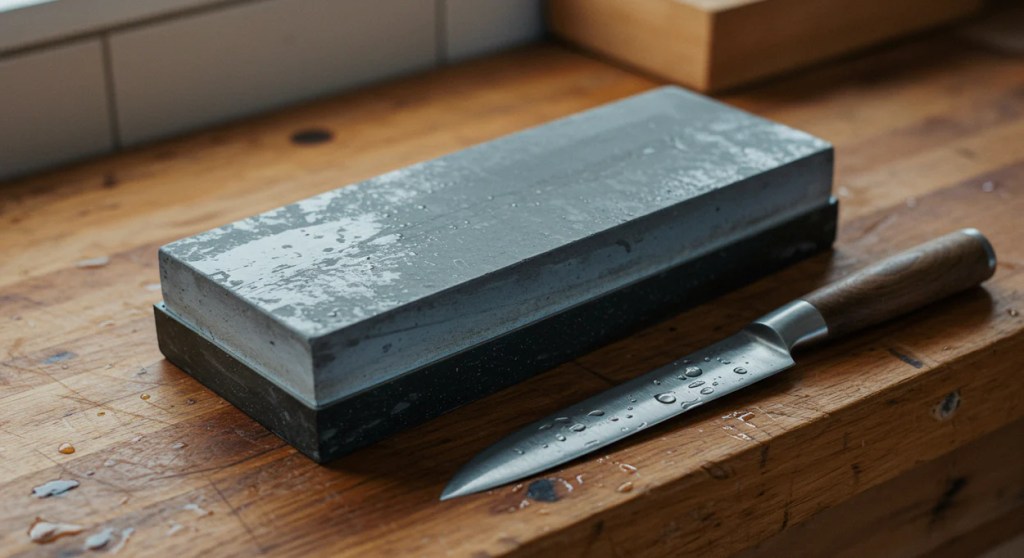
For a more in-depth look and instructional videos, check out this link:
Sharpening tools in the field is a practice as old as the tools themselves. Whether it’s a hunter maintaining a knife, a woodworker tuning a chisel, or a chef honing a blade, the ability to restore an edge away from the workshop is essential. Across cultures, approaches to field sharpening have evolved, shaped by available materials, tool design, and philosophy.
The Western Approach: Practicality and Versatility
Tools and Techniques
Within the Western tradition, the selection of sharpening tools for field use is guided by the need for both convenience and resilience. Pocket stones, for instance, are a staple due to their compact size and ability to withstand the rigors of outdoor environments. These stones, whether made from natural materials like Arkansas novaculite or modern synthetic composites, are valued for their ability to quickly restore an edge without requiring elaborate setup or maintenance. Diamond plates have become increasingly popular as well, prized for their hardness, longevity, and the fact that they can sharpen even the toughest tool steels with minimal effort. Small files, often carried by those who work with axes or saws, provide a means to reshape or touch up an edge that has become nicked or dulled through heavy use. Compact honing rods, sometimes made of ceramic or steel, offer a quick way to realign a blade’s edge, especially for knives that see frequent use.
The techniques employed with these tools are typically straightforward and designed for speed. In the field, there is little time or inclination for elaborate sharpening rituals. A user might simply moisten a stone, if water is available, or use it dry, running the blade across its surface at a consistent angle. The number of strokes is dictated by necessity rather than precision, with the primary goal being to restore enough sharpness to complete the immediate task. The edge is often checked by running a thumb lightly across it or by attempting a simple cut, such as slicing through a piece of rope or shaving a sliver of wood. If the tool performs adequately, the sharpening session ends, and work resumes.
Versatility is a defining feature of Western field sharpening. The same pocket stone or file might be used on a variety of tools, from a folding knife to a hatchet or even the teeth of a saw. This adaptability is essential for those who must travel light or who work in unpredictable conditions, where carrying a specialized sharpener for each tool would be impractical. The emphasis is always on restoring function quickly and efficiently, rather than achieving a perfect or polished edge. This approach reflects a broader Western ethos of resourcefulness and self-sufficiency, where the ability to improvise and make do with what is at hand is highly valued. In this way, the tools and techniques of Western field sharpening are not just about maintaining an edge, but about enabling continued work and survival in challenging environments.
Philosophy
At the heart of the Western approach to field sharpening lies a deeply ingrained philosophy of utility and pragmatism. Tools, in this worldview, are not precious artifacts to be revered, but practical extensions of the worker’s own hands—objects whose value is measured by their ability to perform the task at hand. Maintenance, therefore, is not an act of ritual or reverence, but a straightforward necessity, dictated by the demands of the moment and the environment.
This philosophy manifests most clearly in the concept of “good enough.” In the field, perfection is a luxury rarely afforded. The edge of a blade does not need to be mirror-polished or honed to a razor’s keenness; it simply needs to be sharp enough to cut, chop, or carve as required. The pursuit of a flawless edge is reserved for the controlled environment of the workshop, where time, tools, and conditions allow for meticulous attention to detail. In contrast, the field sharpener is guided by the immediate need to restore function, to get back to work with minimal delay.
Resilience and improvisation are highly valued within this mindset. The Western craftsman or outdoorsman is expected to adapt to circumstances, making use of whatever materials are at hand. If a proper sharpening stone is unavailable, a smooth river rock might suffice. In the absence of a strop, a leather belt can be pressed into service. Even the unglazed bottom of a ceramic mug can become a makeshift honing surface in a pinch. This resourcefulness is not just a matter of convenience, but a reflection of a broader cultural ethos that prizes self-reliance and the ability to overcome obstacles with ingenuity.
The Western philosophy of field sharpening is about maintaining momentum and ensuring survival or productivity, rather than achieving aesthetic or technical perfection. It is a mindset shaped by necessity, honed by experience, and defined by a willingness to adapt. The edge, like the worker, must be resilient—capable of enduring hardship and returning to service with minimal fuss. In this way, the act of sharpening becomes not just a technical task, but a testament to the enduring values of practicality, adaptability, and self-sufficiency.
The Japanese Approach: Precision and Respect
Tools and Techniques
In the Japanese tradition, the act of sharpening a blade in the field is imbued with a sense of precision and reverence that sets it apart from its Western counterpart. The tools chosen for this task reflect a long-standing cultural appreciation for craftsmanship and the intrinsic value of the blade itself. Natural water stones, prized for their unique mineral composition and ability to produce an exceptionally fine edge, are the gold standard. However, recognizing the practical limitations of carrying such stones into the field, Japanese craftsmen have developed compact synthetic stones and even folding water stones that can be easily transported without sacrificing quality. Small nagura stones, used to create a slurry and enhance the sharpening process, are sometimes included as well, underscoring the attention to detail that characterizes the Japanese approach.
The sharpening technique itself is almost ritualistic, even when performed outside the controlled environment of a workshop. Every movement is deliberate, with the craftsman maintaining a consistent angle that preserves the original geometry of the blade—a geometry that is often the result of generations of refinement and tradition. The application of water is not merely functional, but part of a process that minimizes friction, carries away swarf, and cools the blade, all while connecting the craftsman to the natural elements. Pressure is carefully modulated, and strokes are counted or timed, ensuring that both sides of the blade receive equal attention. When possible, multiple grits are used in succession, starting with a coarser stone to reset the edge and finishing with a finer stone to achieve a level of sharpness that borders on the surgical.
This methodical approach means that sharpening in the Japanese tradition is rarely rushed. Even in the field, where time and resources may be limited, there is a reluctance to compromise on the quality of the edge. The process may take longer, but the result is a blade that not only cuts efficiently but also retains its integrity and longevity. The craftsman’s respect for the tool is evident in every aspect of the process, from the careful selection of stones to the mindful execution of each stroke. In this way, Japanese field sharpening becomes more than a maintenance task—it is an act of stewardship, a reaffirmation of the bond between maker, user, and tool. The keen, refined edge that emerges is a testament to this philosophy, embodying both the practical and spiritual dimensions of Japanese craftsmanship.
Philosophy
Central to the Japanese approach to sharpening is a philosophy that transcends mere functionality, embracing a profound sense of harmony between the craftsman, the tool, and the material being worked. This perspective is rooted in centuries of tradition, where the act of sharpening is elevated from a routine chore to a meaningful ritual. The blade is not simply a piece of metal to be kept sharp for convenience; it is regarded as possessing a spirit or soul, a reflection of the skill and intention of both its maker and its user. To care for the edge, then, is to honor this spirit, acknowledging the interconnectedness of human effort, natural resources, and the artistry embedded in the tool.
Sharpening, in this context, becomes an act of respect and renewal. Each time the edge is honed, the craftsman is not only restoring its cutting ability but also reaffirming their commitment to the craft. This process is approached with mindfulness and deliberate attention, even when performed in the field under less-than-ideal circumstances. There is a conscious avoidance of shortcuts; the craftsman resists the temptation to rush or to settle for “good enough.” Instead, the sharpening session is treated as a meditative interlude, a pause in the flow of work that allows for reflection and reconnection with the tool. The repetitive motions, the sound of stone against steel, and the careful observation of the blade’s changing surface all contribute to a heightened awareness of the present moment.
This philosophy also extends to the relationship between the tool and the material it is meant to shape. A well-sharpened edge, achieved through attentive care, honors the wood, fish, or fabric it will touch, ensuring clean, precise cuts that minimize waste and damage. The craftsman’s respect for the tool is thus inseparable from respect for the material and the finished product. In this way, sharpening is not merely about prolonging the life of a blade; it is about sustaining a cycle of care, attention, and harmony that permeates every aspect of the craft.
Even in the field, where conditions may be challenging and resources limited, this philosophy endures. The craftsman adapts, perhaps using a smaller stone or less water, but the underlying attitude remains unchanged. The act of sharpening is still a moment set apart, a quiet dialogue between hand, tool, and nature. Through this ritual, the edge is renewed, and so too is the craftsman’s sense of purpose and connection to their work.
Technical Differences: Sharpening Double-Bevel (Western) vs. Single-Bevel (Japanese) Knives
The technical process of sharpening a Western double-bevel knife differs significantly from that of a Japanese single-bevel knife, not only in technique but also in the structure and geometry of the blade itself. Understanding these differences is crucial for achieving optimal sharpness and maintaining the intended performance characteristics of each knife.
A Western double-bevel knife features two symmetrical bevels, one on each side of the blade, typically meeting at an angle between 20 and 30 degrees. Sharpening such a knife involves maintaining equal angles on both sides to create a balanced, V-shaped edge. The process usually begins by placing the blade at the desired angle against the sharpening stone or rod and alternating strokes from one side to the other. The goal is to remove metal evenly, forming a burr along the edge that signals the meeting of the two bevels. Once a burr is detected, the sharpener switches sides, repeating the process until the burr is minimized or removed. For a refined edge, a micro-bevel—a very slight secondary bevel at a slightly steeper angle—may be added by making a few light passes on each side. This micro-bevel increases edge durability without significantly sacrificing sharpness. The process is straightforward, with the focus on symmetry and consistency across both sides of the blade.
In contrast, a Japanese single-bevel knife, such as a traditional yanagiba or usuba, is ground with a pronounced bevel on one side (the omote) and a flat or slightly concave surface (the urasuki) on the other. Sharpening a single-bevel knife is a more nuanced process, requiring careful attention to the unique geometry. The primary bevel is sharpened by laying the beveled side flat against the stone and working the entire length of the edge, maintaining the original angle—often much shallower than that of a Western knife, sometimes as low as 10 degrees. The urasuki, or hollow-ground back, is gently polished on the stone to maintain its flatness and to remove any burr that forms during sharpening. This step is delicate, as excessive pressure or uneven contact can alter the urasuki’s subtle concavity, affecting the knife’s performance and food release properties.
After establishing the main bevel and refining the urasuki, some sharpeners apply a micro-bevel, known as the koba, to the very edge of the primary bevel. This is done by slightly raising the angle and making a few light passes on the stone, creating a tiny, secondary edge that enhances durability while preserving the knife’s legendary sharpness. The process requires patience and precision, as the asymmetrical geometry must be preserved to maintain the knife’s cutting characteristics and ease of sharpening in the future.
Sharpening a Western double-bevel knife is a matter of maintaining symmetry and creating a robust, V-shaped edge, often with the addition of a micro-bevel for strength. Sharpening a Japanese single-bevel knife, on the other hand, involves working the primary bevel and carefully maintaining the urasuki, with the optional addition of a micro-bevel for durability. Each approach reflects the design philosophy and intended use of the knife, and mastering these techniques ensures that both Western and Japanese blades perform at their best.
Points of Convergence
Although the Western and Japanese approaches to field sharpening are shaped by distinct philosophies and cultural histories, they ultimately converge on several fundamental principles that transcend regional boundaries. At the core of both traditions lies a deep respect for preparedness. Whether it is a Western woodsman slipping a pocket stone into his pack or a Japanese craftsman tucking a compact water stone into his tool roll, the act of carrying sharpening tools is a silent testament to foresight and professionalism. This readiness is not merely about convenience; it is an acknowledgment that a sharp tool is essential for both safety and efficiency, and that the responsibility for maintaining that edge rests squarely with the user.
Adaptability is another shared value, manifesting in the willingness to respond creatively to the challenges of the environment. Both traditions recognize that ideal conditions are rare in the field. The Western sharpener might reach for a river stone or a leather belt when conventional tools are unavailable, while the Japanese craftsman may use a smaller, travel-friendly stone or adjust technique to suit the circumstances. This flexibility is born of experience and a practical understanding that the work must go on, regardless of obstacles. It is a quiet confidence in one’s ability to improvise, to make do with what is at hand, and to achieve a functional edge even when resources are limited.
The shared goal of both approaches is the restoration of the tool’s effectiveness. The methods may differ—one favoring speed and utility, the other precision and ritual—but the outcome is the same: a blade that is ready to perform its task. This convergence speaks to a universal truth among those who work with their hands: the tool is an extension of the self, and its care is a reflection of the user’s skill, dedication, and respect for the craft. In this way, the act of sharpening in the field becomes a point of unity, a common ground where cultural differences fade and the shared values of preparedness, adaptability, and craftsmanship come to the fore.
Modern Influences and Hybrid Approaches
In the contemporary world, the boundaries that once clearly separated Western and Japanese approaches to field sharpening have become increasingly porous, thanks to the twin forces of globalization and technological innovation. The exchange of ideas, tools, and techniques across continents has led to a dynamic landscape where tradition and modernity intermingle, and where the sharpener’s kit is no longer dictated solely by geography or heritage.
One of the most significant developments has been the widespread availability of advanced sharpening materials. Diamond plates, once a rarity, are now manufactured and distributed globally, prized for their durability, portability, and ability to cut even the hardest steels with ease. Ceramic rods, too, have found favor among professionals and enthusiasts alike, offering a lightweight and effective means of maintaining an edge in the field. Compact water stones, inspired by Japanese tradition but often produced with modern synthetic materials, are now marketed to a worldwide audience, making the benefits of fine, water-lubricated sharpening accessible to anyone, anywhere.
This proliferation of options has encouraged a hybridization of techniques. It is not uncommon to see a Western outdoorsman employing the careful, angle-conscious strokes characteristic of Japanese sharpening, or a Japanese craftsman adopting the expedient, multi-purpose use of a diamond plate favored in the West. The modern field sharpener is pragmatic, selecting tools and methods based on the specific demands of the situation rather than strict adherence to tradition. For example, a chef might use a Japanese water stone for fine honing at home but carry a folding diamond plate for quick touch-ups during catering events. A woodworker may combine the speed of a Western file with the finishing finesse of a Japanese nagura stone, achieving a balance between efficiency and precision.
Technology has also played a role in democratizing knowledge. Online tutorials, forums, and videos allow practitioners from around the world to share insights, troubleshoot problems, and refine their techniques. This global conversation has fostered a spirit of experimentation and openness, where the best practices from both traditions are adopted, adapted, and improved upon.
The modern approach to field sharpening is defined by its flexibility and inclusivity. The sharpener is no longer bound by the limitations of a single tradition but is empowered to draw from a rich, global toolkit. This blending of East and West, old and new, has not only expanded the possibilities for maintaining an edge in the field but has also enriched the culture of craftsmanship itself, ensuring that the art of sharpening continues to evolve in response to the needs and innovations of each new generation.
Conclusion
Sharpening in the field, when examined closely, reveals itself as a practice that goes far beyond the mechanics of restoring a blade’s edge. It is, in many ways, a window into the deeper values and philosophies that shape how individuals and cultures relate to their tools, their work, and the environments in which they operate. The act of sharpening, performed in the unpredictable conditions of the outdoors or on the move, becomes a kind of dialogue between tradition and necessity, between the ideals of a culture and the realities of daily life.
The Western approach, with its emphasis on practicality and adaptability, speaks to a worldview that values resilience and resourcefulness. Here, the sharpener is a problem-solver, someone who meets challenges head-on and finds solutions with whatever is at hand. The process is quick, efficient, and focused on restoring function above all else. This mindset reflects a broader cultural narrative of self-reliance and improvisation, where the ability to keep working, to keep moving forward, is paramount. The satisfaction comes not from achieving perfection, but from knowing that one is prepared for whatever the day may bring, and that the tools at hand will not fail when they are needed most.
In contrast, the Japanese tradition infuses the act of sharpening with a sense of precision and respect that elevates it to a near-ritualistic status. Every stroke of the stone, every adjustment of angle and pressure, is performed with mindful attention and a deep appreciation for the tool’s history and purpose. The edge is not merely a functional necessity, but a symbol of the craftsman’s dedication and the harmonious relationship between human, tool, and material. Even in the field, where conditions are less than ideal, there is a reluctance to compromise on quality or care. The process is slower, more deliberate, and ultimately more meditative, offering a moment of renewal and connection amid the demands of work.
Despite these differences, both traditions converge on essential truths that transcend cultural boundaries. Preparedness is universally valued; the act of carrying a sharpening tool, of being ready to maintain one’s edge, is a mark of professionalism and respect for the craft. Care and attention, whether expressed through quick improvisation or careful ritual, are what ensure the longevity and effectiveness of the tool. And finally, there is a deep, shared satisfaction in the act of restoration itself—the quiet pride that comes from breathing new life into a dulled blade, from knowing that one’s own hands have made the tool ready for work once more.
In the end, sharpening in the field is not just about the edge—it is about the person behind the tool, the culture that shaped them, and the enduring human desire to create, maintain, and adapt. It is a small but telling act, one that encapsulates the values of preparedness, care, and the pursuit of excellence, wherever the journey may lead.



 UTAZCO Overland
Leave a Reply