
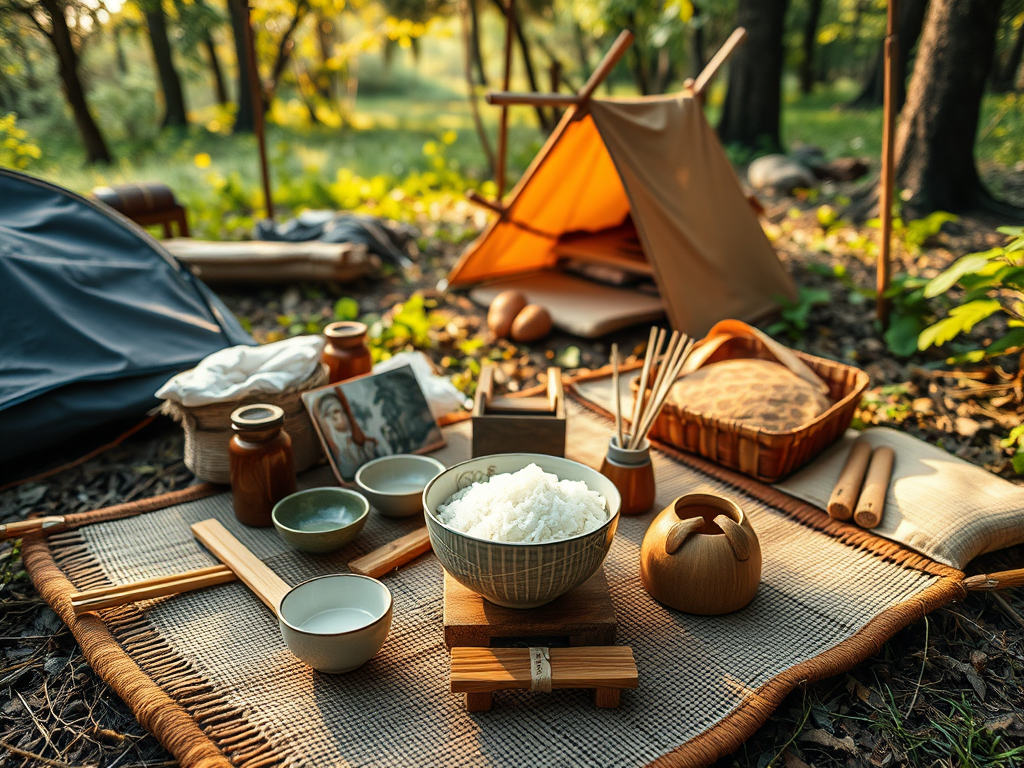
Seeking Harmony in the Wilderness
The Wilderness as a Canvas for Wa
Stepping into the wilderness is an act of leaving behind the relentless pace and noise of modern existence. The forest, mountains, or riverside become a canvas upon which a different rhythm of life is painted—one that is slower, quieter, and more attuned to the cycles of nature. In this setting, the Japanese concept of “Wa” (‘Harmony;’ Kanji: 和, Hiragana: わ) emerges not as an abstract ideal, but as a lived reality. The wilderness strips away distractions, inviting us to notice the subtle interplay between ourselves and our environment.
Wa as Practice, Not Just Feeling
Wa is often translated as harmony or peace, but its true essence lies in the active cultivation of balance and unity. In camp life, this means more than simply enjoying the beauty of nature; it involves participating in daily rituals that foster a sense of interconnectedness. Setting up a tent, gathering firewood, or preparing a meal all become opportunities to practice “Wa.” Each task is performed with intention, respect, and awareness of its place within the larger ecosystem of camp life.
Rituals of Daily Life: The Knife as a Tool for Harmony
Among these rituals, the act of preparing food with a knife holds special significance. Unlike the hurried, utilitarian chopping that often characterizes kitchen work at home, camp knife prep is slow and deliberate. The cook selects each ingredient with care, feeling its weight and texture, and considers how best to honor its natural form. The knife becomes an extension of the hand, and the act of slicing, dicing, or peeling is transformed into a mindful practice.
The Slow-Food Movement in the Wild
The slow-food movement, which champions local ingredients, traditional techniques, and unhurried meals, finds a natural home in the wilderness. Here, there are no microwaves or delivery apps—only what you have brought and what the land provides. The process of preparing food from scratch, often over an open flame, demands patience and presence. This slowness is not a hindrance, but a gift: it allows for deeper engagement with the food, the tools, and the moment itself.
Knife Prep as Meditative Experience
As the blade moves through vegetables or meat, the repetitive motion becomes a form of meditation. The mind quiets, focusing on the sensation of the handle, the sound of the cut, the aroma released with each slice. In these moments, the boundaries between self, tool, and environment blur. The cook is no longer separate from the act; they are fully immersed in the flow of preparation. This is Wa in action—a harmony that arises from mindful engagement with the world.
In the wilderness, harmony is not something to be found, but something to be created through daily practice. The slow, intentional act of knife prep is both a symbol and a source of Wa, reminding us that peace and unity are cultivated, one mindful moment at a time.
The Philosophy of Wa and the Slow-Food Movement
Understanding Wa as a Way of Being
At its core, Wa is a guiding principle in Japanese culture, representing not only harmony and peace, but also a profound sense of balance and unity with one’s environment and community. It is the invisible thread that weaves individuals into the fabric of a group, and people into the rhythms of nature. In daily life, Wa is expressed through acts of consideration, cooperation, and respect—qualities that are magnified in the close quarters and shared responsibilities of camp life.
The Slow-Food Movement: Mindfulness and Connection
The slow-food movement, originating in Italy but resonating globally, advocates for a return to traditional, mindful ways of preparing and enjoying food. It stands in opposition to the fast-food culture of speed, convenience, and disposability. Instead, slow food values:
- Mindful preparation and consumption
- Use of local, seasonal ingredients
- Sustainability and respect for the environment
- Preservation of culinary traditions
- Deep appreciation for the act of sharing meals
In the wilderness, these values are not just ideals—they are necessities. With limited resources and no shortcuts, every step of the cooking process becomes intentional and meaningful.
The Intersection of Wa and Slow Food in Camp Life
Camp life naturally fosters the philosophy of Wa through its demands for cooperation, patience, and adaptability. The slow-food movement’s emphasis on mindfulness and sustainability dovetails perfectly with this environment. Preparing a meal in camp is rarely a solitary endeavor; it is a communal act that requires communication, shared effort, and mutual respect. Each person’s contribution—whether gathering firewood, fetching water, or chopping vegetables—becomes part of a harmonious whole.
Savoring the Process: From Preparation to Plate
Unlike the hurried routines of urban kitchens, where efficiency often trumps experience, camp cooking encourages us to slow down and savor each step. The process itself becomes as important as the final meal:
- Selecting and cleaning ingredients by hand
- Chopping and preparing food with care and attention
- Cooking over an open flame, adjusting to the unpredictability of nature
- Sharing stories and laughter as the meal comes together
This deliberate pace allows for a deeper connection to the food, the people, and the place. The act of cooking transforms into a meditative practice, embodying the spirit of Wa by fostering unity and presence.
Reconnecting with the Essentials
In the simplicity of camp life, stripped of modern conveniences, we are reminded of what truly matters: nourishment, companionship, and harmony with our surroundings. The philosophy of Wa and the principles of the slow-food movement both encourage us to appreciate the essentials—to find joy in the process, gratitude in the meal, and peace in the shared experience.
By embracing Wa and the slow-food movement in the wilderness, camp cooking becomes more than a means of sustenance. It is a celebration of balance, mindfulness, and unity—a living expression of harmony that nourishes both body and spirit.
The Ritual of Preparation
The Knife as the Heart of the Camp Kitchen
At camp, where resources are limited and every action carries weight, the knife emerges as the heart of the camp kitchen. Its simplicity belies its significance: it is both a practical tool and a symbol of intention. Before the first cut is made, there is a moment of preparation—choosing the right knife, ensuring it is clean and sharp, and setting up a stable surface. This initial care sets the stage for what follows, signaling a transition from the bustle of camp chores to a quieter, more focused state.
Approaching the Task with Ceremony
As the cook begins, the act of chopping vegetables, slicing meat, or mincing herbs is approached with a sense of ceremony. Each movement is purposeful. The hand guides the blade with steady pressure, feeling the resistance of a potato or the yielding flesh of a tomato. The process is unhurried; there is no race against the clock, only the gentle unfolding of the task.
The Music and Rhythm of Knife Prep
The sounds of knife prep become a kind of music in the wilderness. The crisp snap as a carrot splits, the soft crunch of celery, the rhythmic thud of the blade meeting the cutting board—all these noises are grounding. They draw the cook’s attention away from distractions and into the immediacy of the moment. The repetition of these sounds and motions creates a soothing rhythm, much like a mantra in meditation.
Engaging the Senses
This ritual is deeply sensory. The cook notices the vibrant colors of peppers and onions, the earthy aroma released as herbs are chopped, the stickiness of garlic on fingertips. Each sensation is a reminder to remain present, to appreciate the ingredients not just as fuel, but as gifts from the land. The act of preparation becomes a dialogue between the cook and the natural world, fostering gratitude and respect.
Entering a Meditative State
In this meditative state, the mind quiets. Worries about the day’s hike or tomorrow’s weather recede, replaced by a calm focus on the task at hand. The cook is fully engaged, not just in preparing food, but in cultivating mindfulness. The ritual of knife prep thus becomes a form of moving meditation—a way to anchor oneself in the present, to find peace in repetition, and to infuse the meal with intention and care.
This ritual transforms a simple act into something sacred. Knife prep in camp life is not just about efficiency or necessity; it is about honoring the process, the ingredients, and the moment. Through this practice, the cook weaves harmony into the fabric of camp life, nourishing both body and spirit.
Mindfulness in Motion
Embracing Mindfulness Through Movement
Knife prep in camp is a unique opportunity to practice mindfulness through movement. Unlike the hurried, distracted chopping that often happens in a home kitchen, camp cooking invites the cook to slow down and become fully present with each motion. The repetitive nature of slicing, dicing, and mincing is not monotonous; rather, it is soothing, almost hypnotic. Each stroke of the blade becomes a breath, each cut a heartbeat, drawing the cook deeper into a state of flow.
Entering the Flow State
In this flow state, the mind naturally lets go of external worries and internal chatter. The cook’s focus narrows to the immediate sensations: the resistance of a carrot under the knife, the crisp snap as it splits, the subtle give of a ripe tomato, the pungent aroma released by freshly chopped herbs. The colors of the ingredients—vivid greens, deep reds, earthy browns—stand out against the backdrop of the wilderness, illuminated by natural light. The tactile feedback from the knife and the cutting board, the sound of the blade meeting wood, and the scent of each ingredient combine to create a fully immersive sensory experience.
Cultivating Gratitude for Food and Place
This heightened awareness fosters a sense of gratitude. In the wilderness, every ingredient is precious—carried in a backpack, foraged from the land, or caught fresh. The act of preparing food with care becomes an expression of respect for the effort it took to bring these ingredients to the table, and for the environment that provided them. The cook may pause to appreciate the journey of a potato from soil to campfire, or the wild herbs gathered along the trail. This gratitude is not abstract; it is felt in the hands, seen in the eyes, and inhaled with every breath.
Deepening Connection and Presence
Mindfulness in motion also creates a sense of connection—not just to the food, but to the environment and to oneself. The cook becomes aware of their own movements, the rhythm of their breath, the steadiness of their hands. There is a sense of unity between the person, the knife, the ingredients, and the natural world. This connection is grounding, bringing a sense of peace and contentment that lingers long after the meal is finished.
Knife prep in the wilderness becomes a practice of presence. It transforms a simple task into a meditative ritual, one that nourishes not only the body but also the mind and spirit. Through mindfulness in motion, the cook finds harmony in the act of creation, gratitude in the process, and a deep sense of belonging in the wild.
Creating Community Through Shared Tasks
Gathering Around the Campfire
In a (base) camp situation, the act of preparing food is rarely a solitary endeavor. The meditative ritual of knife prep naturally draws people together, transforming a simple task into a communal experience. Around the campfire or a makeshift table, friends and even strangers gather, each person taking up a role—one slicing onions, another peeling potatoes, someone else mincing herbs. The division of labor is organic, guided by the needs of the meal and the skills or preferences of the group.
The Social Rhythm of Shared Work
This shared work becomes a powerful social glue. As hands move in rhythm, conversation flows easily. Sometimes it is lively, filled with laughter and stories from the day’s adventures; other times it is quiet, with only the sounds of chopping and the crackle of the fire filling the air. These natural ebbs and flows in conversation create space for both connection and contemplation, allowing each person to participate at their own comfort level.
Fostering a Sense of Belonging
The act of working together on a common goal fosters a sense of belonging. Each person’s contribution, no matter how small, is valued. There is a subtle but profound shift from “my meal” to “our meal.” The food prepared becomes a symbol of collective effort and shared experience. This sense of unity is especially poignant in the wilderness, where cooperation is essential for comfort and survival.
Knife Prep as a Catalyst for Connection
Knife prep, in particular, is an ideal task for building community. It is repetitive enough to allow for conversation, yet engaging enough to keep everyone present. The steady rhythm of chopping provides a comforting background, a kind of heartbeat for the group. As ingredients are prepared and passed around, there is a tangible sense of progress and anticipation—a meal is coming together, piece by piece, through shared hands.
Extending Harmony Beyond the Individual
In these moments, the spirit of Wa—harmony—extends beyond the individual. The group moves in sync, each person attuned to the needs of the others. Differences in background, age, or experience fade into the background, replaced by a sense of mutual respect and camaraderie. The simple act of preparing food together becomes a ritual of connection, deepening relationships and creating memories that linger long after the meal is finished.
Shared knife prep in camp life is about more than efficiency or necessity. It is a practice of building community, fostering harmony, and celebrating the joy of working together. Through these shared tasks, the campfire becomes not just a place for cooking, but a center of warmth, laughter, and human connection.
The Rewards of Intentional Cooking
Transforming Meals into Celebrations
In the outdoors, where every meal is the result of effort, resourcefulness, and cooperation, food takes on a new significance. The slow-food approach—marked by patience, attention, and respect for ingredients—elevates camp meals from mere sustenance to meaningful celebrations. Each dish becomes a testament to the journey: the miles hiked, the wood gathered, the water fetched, and the hands that worked together. The act of cooking intentionally turns the meal into a focal point of the day, something anticipated and cherished by all.
Flavors of the Land and Spirit of the Moment
Intentional cooking in camp life means using what is available, whether it’s ingredients carried in, foraged from the wild, or caught fresh from a stream. The flavors that emerge are unique to the place and time—wild herbs add a hint of the forest, fresh fish carries the taste of the river, and even simple vegetables seem more vibrant when prepared outdoors. The spirit of the moment infuses the food: the laughter shared during prep, the stories told around the fire, the quiet satisfaction of a task completed together. Each bite is a reminder of the environment and the experience, making the meal deeply personal and memorable.
Eating as an Act of Gratitude
When food is prepared with care and intention, eating becomes more than a physical act—it becomes a ritual of gratitude. Campers pause before the first bite, appreciating not only the flavors but also the journey of the ingredients and the collective effort that brought the meal to life. There is a heightened awareness of the value of each morsel, especially in the wilderness where resources are finite and nothing is taken for granted. This gratitude extends beyond the food itself, encompassing the companionship, the setting, and the harmony cultivated through mindful preparation.
Harmony Through Mindful Preparation
The rewards of intentional cooking are not limited to the meal itself. The process of preparing food mindfully fosters a sense of harmony—within oneself, among the group, and with the natural world. The slow, deliberate actions required by camp cooking encourage presence and connection, turning routine tasks into opportunities for reflection and unity. This harmony lingers long after the meal is finished, enriching the entire camp experience and leaving lasting memories of peace, satisfaction, and togetherness.
The rewards of intentional cooking in camp life are both tangible and intangible. The body is nourished by wholesome, flavorful food, while the spirit is fed by the sense of accomplishment, connection, and gratitude that comes from creating and sharing a meal with intention. These moments of celebration, reflection, and harmony become the true sustenance of the wilderness experience, reminding us of the profound joy found in simple, mindful acts.
Conclusion: Carrying Wa Beyond the Camp
Harmony as a Daily Practice
The meditative experience of knife prep in the wilderness reveals that harmony—Wa—is not reserved for special occasions or remote settings. Instead, it is a quality that can be cultivated in the smallest of actions, wherever we are. The slow, intentional movements of preparing food at camp serve as a powerful metaphor for how we might approach our daily routines: with mindfulness, care, and respect for both the process and the outcome. Wa becomes not just an ideal, but a lived practice, woven into the fabric of everyday life.
Integrating Wa and Slow-Food Principles at Home
Returning from the wilderness, it is easy to slip back into the hurried pace and distractions of modern life. Yet, the lessons of camp cooking and the slow-food movement offer a blueprint for maintaining harmony at home. By slowing down, choosing ingredients thoughtfully, and preparing meals with intention, we can recreate the sense of presence and connection experienced around the campfire. Even in a busy kitchen, the simple act of chopping vegetables or stirring a pot can become a moment of meditation—a chance to pause, breathe, and appreciate the present.
Extending Harmony to Relationships and Community
Wa is not only about personal peace, but also about fostering harmony in our relationships and communities. The communal aspects of camp cooking—sharing tasks, supporting one another, and celebrating together—can inspire us to seek deeper connections in our daily lives. Whether it’s inviting family or friends to cook together, sharing meals, or simply being present with others, these practices help to build a sense of unity and belonging that echoes the spirit of the wilderness.
Finding Connection in the Everyday
Ultimately, carrying Wa beyond the camp means recognizing that every moment holds the potential for harmony. The lessons learned from mindful knife prep and intentional cooking remind us to approach life with gratitude, patience, and awareness. Whether we are in the wild or at home, we can choose to cultivate peace and connection—turning ordinary routines into opportunities for reflection, celebration, and growth.
Wa and the Ritual of Itadakimasu
The concept of Wa is deeply woven into the Japanese custom of saying いただきます (itadakimasu) before meals. By uttering itadakimasu, we express gratitude not only for the food itself but also for the interconnected web of people, nature, and effort that made the meal possible. This simple phrase is an acknowledgment of the harmony between humans and their environment—the farmers who grew the crops, the animals and plants that gave their lives, and the hands that prepared the meal. In this way, itadakimasu becomes a daily ritual that embodies Wa, fostering a sense of unity, respect, and peaceful coexistence at the dining table.
A Lasting Legacy of Presence
The true reward of embracing Wa and the slow-food movement is the transformation of our relationship with ourselves, others, and the world around us. By bringing the meditative spirit of camp life into our everyday actions, we create a lasting legacy of presence, harmony, and joy—one mindful moment at a time.




 UTAZCO Overland
Leave a Reply