
Introduction: The Crusades as a Historical Flashpoint
The Crusades, spanning from 1095 to 1291, are often misunderstood as unprovoked wars of aggression launched by Christian Europe against a peaceful Islamic world. Popular narratives, perpetuated by media and some educational frameworks, paint the Crusades as imperialistic ventures driven by greed, religious fanaticism, or a desire for conquest. However, a closer examination of historical context reveals that these views are rooted in misconceptions. The Crusades, particularly in their origins, were primarily a defensive response to centuries of Muslim expansion and aggression against Christian territories, prompted by specific threats to the Byzantine Empire and Christian pilgrims. This essay will address the most common misconceptions about how the Crusades started and argue that their initial motivation was defensive, grounded in the geopolitical and religious realities of the 11th century.
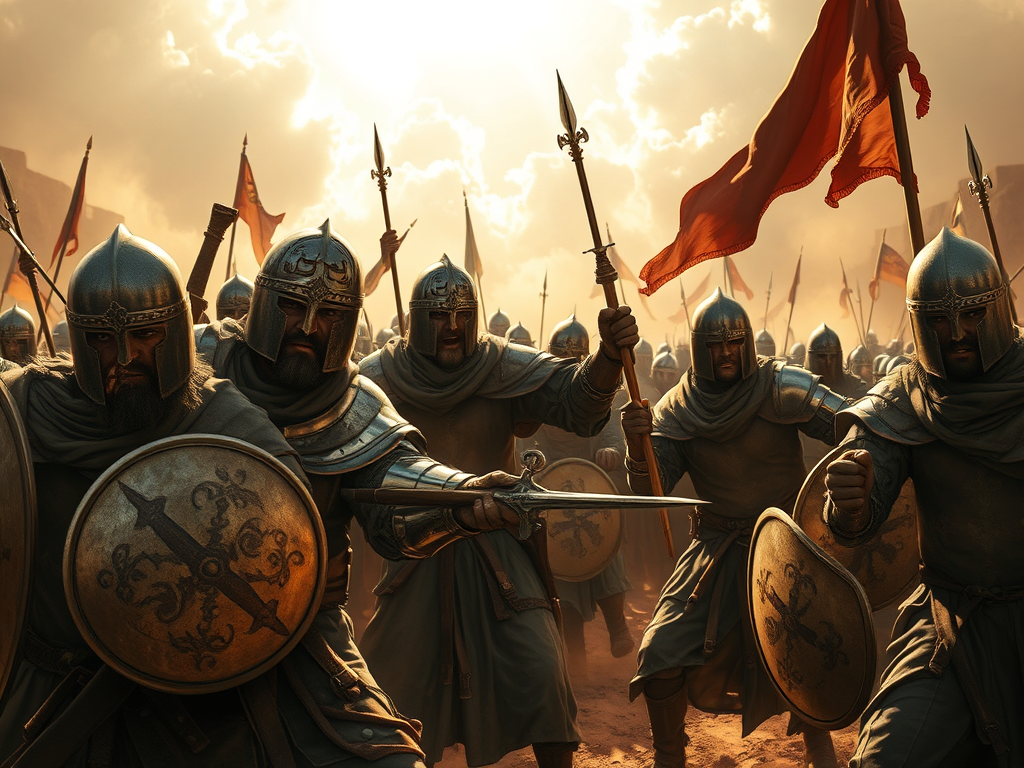
Misconception 1: The Crusades Were Purely Aggressive
The notion that the Crusades were purely aggressive campaigns is a simplification that overlooks the multifaceted motivations and historical context of these medieval expeditions. While aggression and territorial expansion did become more pronounced in later Crusades, the initial campaigns were primarily driven by defensive and religious motivations.
Historical Context: A Response to Muslim Expansion
To understand the origins of the Crusades, it is essential to consider the geopolitical landscape of the 11th century. For centuries, the Islamic Caliphates had been expanding into territories that were traditionally Christian. The rapid spread of Islam from the 7th century onwards saw the conquest of regions such as North Africa, the Iberian Peninsula, and parts of the Byzantine Empire. By the time of the First Crusade, the Seljuk Turks had taken control of much of Anatolia and the Levant, including Jerusalem, a city of profound religious significance to Christians.
Religious Motivations: Defense of the Faith
The Crusades were deeply rooted in the religious fervor of the time. The Christian world viewed the loss of the Holy Land and the persecution of Christian pilgrims as a direct affront to their faith. Pope Urban II’s call to arms at the Council of Clermont in 1095 was framed as a holy mission to defend Christianity and reclaim sacred sites. The promise of spiritual rewards, such as indulgences and the remission of sins, further motivated many to take up the cross.
The Role of Pilgrimage
Pilgrimage was an integral aspect of medieval Christian practice, and the Holy Land was a primary destination. The increasing difficulty and danger faced by pilgrims due to Muslim control and reports of harassment were significant factors in the call for a Crusade. The desire to ensure safe passage for pilgrims and protect holy sites was a defensive motivation that resonated with many in Christendom.
Political and Social Factors
While religious and defensive motivations were paramount, political and social factors also played a role. The Crusades offered an opportunity for younger sons of nobility, who had limited prospects due to primogeniture, to gain land and status. Additionally, the Crusades provided a means for the papacy to assert its influence over secular rulers and unite Christendom under a common cause.
The Evolution of the Crusades
As the Crusades progressed, the initial defensive motivations became intertwined with other objectives. The establishment of Crusader states in the Levant introduced elements of territorial expansion and colonization. Subsequent Crusades, such as the Fourth Crusade, deviated significantly from their original purpose, culminating in events like the sack of Constantinople, which was driven by political and economic interests rather than religious zeal.
The misconception that the Crusades were purely aggressive campaigns fails to capture the complexity of their origins. While later Crusades did involve elements of aggression and expansion, the initial impetus was largely defensive, rooted in religious fervor and a response to external threats. Understanding this nuanced motivational landscape is crucial to appreciating the historical significance of the Crusades and their enduring legacy.
Misconception 2: The Crusades Were Unprovoked Attacks on the Muslim World
The belief that the Crusades were unprovoked assaults on the Muslim world is a misconception that overlooks the historical context of the time. The Crusades were, in fact, a reaction to a series of events and developments that posed significant threats to the Christian world, particularly the Byzantine Empire.
Historical Context: Centuries of Muslim Expansion
The expansion of Islamic empires from the 7th century onwards dramatically altered the political and religious landscape of the Mediterranean and Near East. Following the death of the Prophet Muhammad, Islamic Caliphates rapidly expanded, conquering vast territories that were previously part of the Christian Byzantine Empire and other Christian kingdoms. This expansion included the conquest of the Levant, North Africa, and the Iberian Peninsula.
The Seljuk Turks and the Byzantine Empire
By the late 11th century, the Seljuk Turks, a Muslim dynasty, had emerged as a dominant force in the region. Their conquests included significant portions of the Byzantine Empire, culminating in the Battle of Manzikert in 1071, where the Byzantine army suffered a devastating defeat. This loss opened Anatolia to Turkish settlement and further threatened the stability of the Byzantine Empire.
The Loss of the Holy Land
The Holy Land, particularly Jerusalem, held immense religious significance for Christians as the site of Christ’s crucifixion and resurrection. The Muslim control of these sacred sites was perceived as a profound loss and a challenge to Christian authority. The Seljuk Turks’ control over Jerusalem and their reported mistreatment of Christian pilgrims added to the sense of urgency and provocation felt in the Christian world.
The Byzantine Appeal for Assistance
Facing existential threats from the Seljuk Turks, Byzantine Emperor Alexios I Komnenos sought assistance from the West. In 1095, he appealed to Pope Urban II for military aid to help repel the Turkish advances and reclaim lost territories. This appeal was not merely a call for aggression but a desperate plea for survival and defense against encroaching forces.
Pope Urban II’s Response
Pope Urban II’s response to Alexios I’s appeal was pivotal in launching the First Crusade. At the Council of Clermont in 1095, Urban II called upon Western Christians to aid their Eastern brethren and reclaim the Holy Land. His call was framed as a defensive measure to protect Christendom and its sacred sites from Muslim control. The Pope’s message resonated with many, who saw the Crusades as a justified response to the ongoing Muslim expansion.
The misconception that the Crusades were unprovoked attacks fails to account for the historical provocations and threats faced by the Christian world. The Crusades were a reaction to centuries of Muslim expansion and the immediate threats posed by the Seljuk Turks. Understanding this context is essential to appreciating the defensive motivations behind the initial Crusades and their complex legacy.
Defensive Origins: Protecting Christendom
The Byzantine Appeal: A Plea for Survival
The Byzantine Empire, once a formidable power in the Eastern Mediterranean, found itself in a precarious position by the late 11th century. The rise of the Seljuk Turks and their territorial ambitions posed significant threats to the empire’s stability and survival. The appeal for assistance from the West by Emperor Alexios I Komnenos was a strategic move aimed at preserving the empire and safeguarding Christendom in the East.
The Decline of Byzantine Power
The Byzantine Empire had been experiencing a gradual decline due to internal strife, economic challenges, and external pressures. The empire’s military capabilities were weakened by civil wars and a lack of resources, making it increasingly vulnerable to external threats. The loss of key territories, particularly in Anatolia, further strained the empire’s ability to defend its borders.
The Seljuk Threat
The Seljuk Turks, a nomadic group that had converted to Islam, emerged as a dominant force in the region. Their victory at the Battle of Manzikert in 1071 was a turning point, as it resulted in the capture of the Byzantine Emperor Romanos IV Diogenes and the subsequent loss of much of Anatolia. This defeat left the heartland of the Byzantine Empire exposed and vulnerable to further incursions.
The Strategic Importance of Constantinople
Constantinople, the capital of the Byzantine Empire, was not only a political and economic hub but also a symbol of Christian power in the East. The city’s strategic location made it a critical point of defense against Muslim expansion into Europe. The threat of Constantinople falling into Seljuk hands was a dire prospect that could have had far-reaching consequences for the Christian world.
Emperor Alexios I Komnenos: A Diplomatic Strategy
Recognizing the existential threat posed by the Seljuk Turks, Emperor Alexios I Komnenos sought to strengthen the empire’s defenses through diplomatic means. He reached out to the West, appealing to Pope Urban II and Western European leaders for military assistance. This appeal was not an act of aggression but a calculated move to secure the empire’s survival and protect the Christian faith.
The Byzantine appeal for assistance was a plea for survival in the face of overwhelming odds. It was a strategic effort to preserve the empire and protect the Christian world from further Muslim expansion. Understanding this context highlights the defensive nature of the initial Crusades and the complex interplay of political, religious, and military factors that shaped this pivotal period in history.
The Call of Pope Urban II: A Rallying Cry for Christendom
Pope Urban II’s call to arms at the Council of Clermont in 1095 was a pivotal moment in the history of the Crusades. His sermon not only launched the First Crusade but also set the tone for subsequent campaigns. Urban’s message was carefully crafted to resonate with the religious and social sensibilities of the time, framing the Crusade as a defensive and righteous endeavor.
The Context of the Council of Clermont
The Council of Clermont was convened in response to the Byzantine Emperor Alexios I Komnenos’s appeal for military assistance against the Seljuk Turks. The council brought together church leaders and secular nobility from across Western Europe to discuss the pressing issues facing Christendom. It was against this backdrop that Pope Urban II delivered his influential sermon.
The Sermon: A Call to Arms
Pope Urban II’s sermon at Clermont was a masterful blend of religious fervor and political strategy. He called upon Western Christians to take up arms in defense of their Eastern brethren and to reclaim the Holy Land from Muslim control. Urban framed the Crusade as a pilgrimage with a martial aspect, offering spiritual rewards such as indulgences and the remission of sins to those who participated.
Framing the Crusade as a Defensive Measure
Urban’s call was strategically positioned as a defensive measure to protect Christian pilgrims and holy sites. Reports of harassment and violence against pilgrims traveling to Jerusalem had stirred outrage in the Christian world. By emphasizing the need to safeguard these pilgrims and reclaim sacred sites, Urban appealed to the deeply held religious convictions of his audience.
The Promise of Spiritual Rewards
One of the most compelling aspects of Urban’s call was the promise of spiritual rewards. Participants in the Crusade were offered indulgences, which were believed to reduce the temporal punishment for sins. This promise of spiritual salvation was a powerful motivator, as it provided a means for knights and commoners alike to achieve redemption and eternal glory.
Resonance with the Audience
Urban’s message resonated deeply with the audience at Clermont and beyond. The idea of a holy war to defend the faith and protect fellow Christians struck a chord with the medieval mindset, which was steeped in religious devotion and a sense of duty to Christendom. The response was overwhelming, with many taking up the cross and pledging to join the Crusade.
The Mobilization of the First Crusade
The enthusiasm generated by Urban’s call led to the rapid mobilization of forces across Western Europe. Nobles, knights, and commoners alike were inspired to join the Crusade, driven by a mix of religious zeal, the promise of spiritual rewards, and the opportunity for adventure and potential gain. This widespread support marked the beginning of the First Crusade, which would have lasting impacts on both the Christian and Muslim worlds.
Pope Urban II’s call at the Council of Clermont was a strategic and inspirational moment that galvanized Christendom into action. By framing the Crusade as a defensive and righteous endeavor, Urban successfully united Western Christians in a common cause. His message not only launched the First Crusade but also set a precedent for the religious and military campaigns that followed, shaping the course of medieval history.
The Defense of Pilgrims and Holy Sites: A Catalyst for the Crusades
The protection of Christian pilgrims and holy sites was a central theme in the call for the Crusades, serving as a powerful motivator for many who took up the cross. The perceived threats to these sacred aspects of Christian life underscored the defensive nature of the initial Crusades and played a crucial role in rallying support across Europe.
The Importance of Pilgrimage in Medieval Christianity
Pilgrimage was a deeply ingrained practice in medieval Christianity, seen as an act of piety and devotion. Pilgrims traveled to holy sites to seek spiritual benefits, such as penance, healing, and divine favor. The Holy Land, particularly Jerusalem, was the ultimate pilgrimage destination, revered as the site of Christ’s crucifixion and resurrection.
Increasing Perils for Pilgrims
As Muslim powers, particularly the Seljuk Turks, gained control over the Holy Land, the safety of Christian pilgrims became increasingly precarious. Reports of harassment, robbery, and violence against pilgrims were widespread, contributing to a sense of urgency and injustice within the Christian world. These accounts were often exaggerated or sensationalized, but they effectively fueled fears and resentment.
The Symbolic Significance of Holy Sites
The Holy Land held immense symbolic significance for Christians, representing the physical manifestation of their faith. The loss of control over these sacred sites to Muslim rulers was perceived as a profound affront to Christianity. The desire to reclaim and protect these sites was a powerful motivator for the Crusades, as it was seen as a defense of the faith itself.
The Role of Religious Leaders
Religious leaders played a crucial role in emphasizing the need to protect pilgrims and holy sites. Pope Urban II, in his call for the First Crusade, highlighted the dangers faced by pilgrims and the desecration of sacred sites as justifications for military action. By framing the Crusade as a mission to safeguard these aspects of Christian life, religious leaders were able to galvanize support and mobilize forces.
The Emotional and Spiritual Appeal
The defense of pilgrims and holy sites resonated deeply with the medieval Christian mindset, which was characterized by a strong sense of religious duty and communal identity. The idea of defending fellow Christians and sacred spaces from perceived threats appealed to both the emotional and spiritual sensibilities of the time, making it a compelling call to action.
Mobilizing Support Across Europe
The narrative of defending pilgrims and holy sites was instrumental in mobilizing support for the Crusades across Europe. Nobles, knights, and commoners alike were inspired by the prospect of participating in a holy mission that promised both spiritual rewards and the opportunity to protect their faith. This widespread support was crucial in launching the First Crusade and subsequent campaigns.
The defense of pilgrims and holy sites was a significant factor in the initial motivations for the Crusades. It provided a compelling justification for military action, framed as a righteous and defensive cause. Understanding this motivation helps to contextualize the complex interplay of religious, social, and political factors that drove the Crusades and shaped their enduring legacy.
Conclusion: The Defense of Pilgrims and Holy Sites – A Catalyst for the Crusades
The protection of Christian pilgrims and holy sites was a central theme in the call for the Crusades, serving as a powerful motivator for many who took up the cross. The perceived threats to these sacred aspects of Christian life underscored the defensive nature of the initial Crusades and played a crucial role in rallying support across Europe.
The Importance of Pilgrimage in Medieval Christianity
In medieval Christianity, pilgrimage was more than a journey; it was a profound spiritual exercise. Pilgrims traveled to holy sites to seek penance, healing, and divine favor, often as a means of fulfilling vows or seeking redemption. The Holy Land, particularly Jerusalem, was the ultimate pilgrimage destination, revered as the site of Christ’s crucifixion and resurrection. This journey was seen as a way to physically and spiritually connect with the life of Jesus, making it an essential aspect of Christian devotion.
Increasing Perils for Pilgrims
With the rise of Muslim powers, particularly the Seljuk Turks, control over the Holy Land shifted, and the safety of Christian pilgrims became increasingly precarious. Reports of harassment, robbery, and violence against pilgrims were widespread, contributing to a sense of urgency and injustice within the Christian world. These accounts, whether exaggerated or not, effectively fueled fears and resentment, creating a narrative of persecution that demanded a response. The perceived threat to pilgrims was not just a matter of personal safety but was seen as an attack on the Christian faith itself.
The Symbolic Significance of Holy Sites
The Holy Land held immense symbolic significance for Christians, representing the physical manifestation of their faith. The loss of control over these sacred sites to Muslim rulers was perceived as a profound affront to Christianity. The desire to reclaim and protect these sites was a powerful motivator for the Crusades, as it was seen as a defense of the faith itself. The idea of restoring Christian control over Jerusalem and other holy sites was not only a religious imperative but also a matter of cultural and spiritual identity.
The Role of Religious Leaders
Religious leaders played a crucial role in emphasizing the need to protect pilgrims and holy sites. Pope Urban II, in his call for the First Crusade, highlighted the dangers faced by pilgrims and the desecration of sacred sites as justifications for military action. By framing the Crusade as a mission to safeguard these aspects of Christian life, religious leaders were able to galvanize support and mobilize forces. Their rhetoric emphasized the spiritual rewards of participating in the Crusade, portraying it as a holy duty and a path to salvation.
The Emotional and Spiritual Appeal
The defense of pilgrims and holy sites resonated deeply with the medieval Christian mindset, which was characterized by a strong sense of religious duty and communal identity. The idea of defending fellow Christians and sacred spaces from perceived threats appealed to both the emotional and spiritual sensibilities of the time, making it a compelling call to action. The Crusades were seen as a way to demonstrate one’s faith and commitment to God, providing a sense of purpose and unity in a fragmented world.
Mobilizing Support Across Europe
The narrative of defending pilgrims and holy sites was instrumental in mobilizing support for the Crusades across Europe. Nobles, knights, and commoners alike were inspired by the prospect of participating in a holy mission that promised both spiritual rewards and the opportunity to protect their faith. This widespread support was crucial in launching the First Crusade and subsequent campaigns. The promise of indulgences and the remission of sins further incentivized participation, making the Crusades a unifying cause that transcended social and political divisions.
The defense of pilgrims and holy sites was a significant factor in the initial motivations for the Crusades. It provided a compelling justification for military action, framed as a righteous and defensive cause. Understanding this motivation helps to contextualize the complex interplay of religious, social, and political factors that drove the Crusades and shaped their enduring legacy. The Crusades were not merely military campaigns but were deeply intertwined with the spiritual and cultural fabric of medieval Christendom, reflecting the profound impact of faith on historical events.





 UTAZCO Overland
Leave a Reply