
This essay is a summary of the long-form article, “ Designing a Self-Sufficient Camp Kitchen for Overlanding Adventures,” published Wednesday, September 9th 2026.
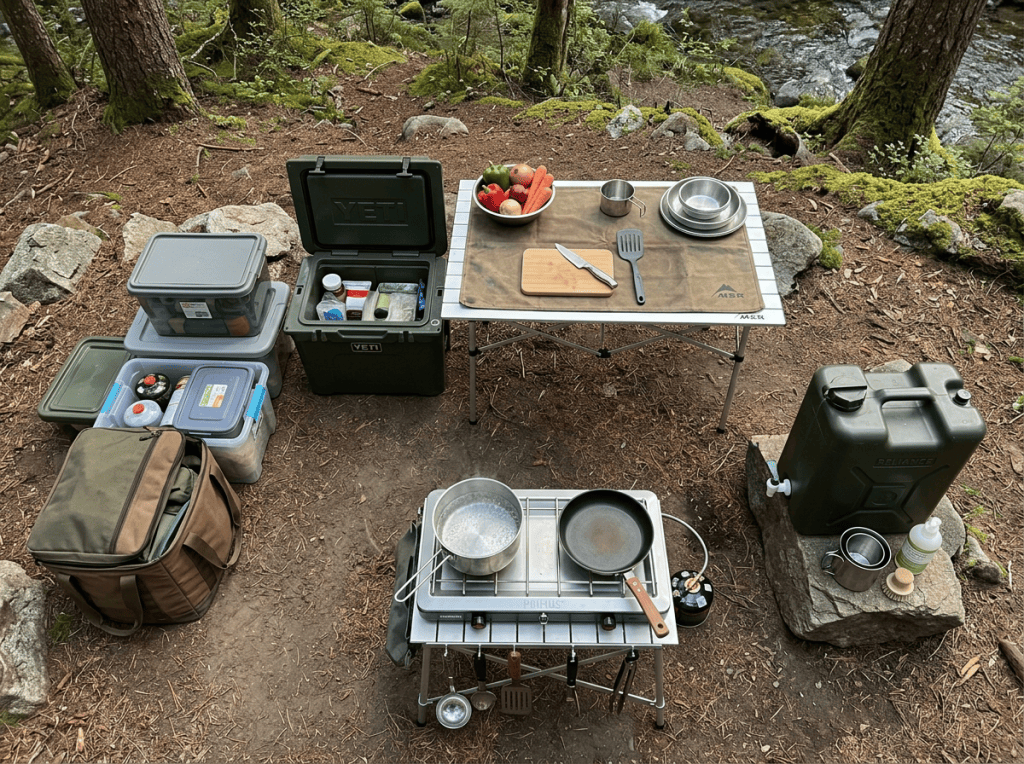
A well-planned camp kitchen is the heart of any multi-week overlanding trip, and this article walks through every dimension of building one that actually works. It opens by grounding all decisions in two foundational variables: trip duration and group size. A two-week trip with two people is a fundamentally different logistical challenge than a month-long expedition with four, and every choice that follows—stove, cookware, storage, water—flows from that starting point. Water is the hardest constraint: two liters per person per day just for drinking, quickly escalating when cooking and washing are factored in, which means filtration, resupply logistics, and storage must be planned with precision before departure.
The article then moves through each major component of the kitchen in detail. Stoves come first: the two-burner propane unit is the workhorse of most setups, but space and payload constraints sometimes demand a single-burner backpacking stove, which means accepting slower meal prep and a narrower menu. A spare fuel canister is non-negotiable, and a compact wood-burning stove earns its place as a backup that uses nothing but gathered twigs. Climate matters—propane weakens in extreme cold, butane can fail entirely, and altitude changes output—so testing equipment before departure is essential.
Cookware is where the tension between functionality and weight becomes most visible. Hard-anodized aluminum is the practical default, striking a middle ground between the durability and even heating that overlanders need and the weight they can afford. Titanium saves weight but conducts heat unevenly and costs three to four times as much, making it worthwhile mainly for motorcycle travelers or those with very tight payload margins. A core set of three pieces—a two-liter pot, a one-liter saucepan, and a skillet—covers the vast majority of camp meals, and nesting design keeps the entire set compact enough for a single stuff sack. Lids that double as plates, cutting boards, or strainers are not gimmicks but thoughtful solutions to the problem of carrying fewer items without sacrificing capability.
Utensils are where the small, handheld instruments translate cooking intentions into actual food. A heat-proof silicone spatula, spring-loaded tongs, a ladle, a folding pocket knife, a small sharpening stone, a manual can opener, and a multi-tool form the backbone of the kit. Corrosion resistance matters more in the field than at home—drying utensils before packing is the single most effective way to prevent rust—and a compact utensil roll keeps everything organized so you never fumble for the right tool in fading light and rising wind.
Dry storage follows: airtight, stackable, labeled containers with dates protect rice, pasta, lentils, oats, flour, sugar, coffee, and spices from moisture, insects, and heat. A dedicated spice kit—one of the most impactful upgrades for morale and flavor—should be arranged by frequency of use, with salt, pepper, and cumin at the front and turmeric and smoked paprika toward the back. Resupply every seven to ten days and rotate stock using first-in, first-out discipline, the same principle professional kitchens rely on.
Cold storage is the most temperamental component. A high-quality rotomolded cooler with a two-to-one ice-to-food ratio and twenty-four-hour pre-chilling can hold safe temperatures for several days, but for longer stretches a twelve-volt compressor fridge eliminates the anxiety of watching ice melt—at the cost of requiring a robust auxiliary battery and charging system, typically a lithium iron phosphate bank with at least a hundred amp-hours and either solar panels, a DC-to-DC charger, or both. Raw meats must always sit below ready-to-eat foods to prevent contamination, and every second the lid stays open lets cold air out and warm air in, so knowing what you want before you open the cooler is a discipline that extends ice life measurably.
Fresh produce occupies a peculiar place: simultaneously the most desirable and most fragile component of the food supply. Root vegetables—carrots, onions, potatoes, sweet potatoes—last weeks; firm fruits like apples and citrus last one to two weeks; leafy greens, herbs, berries, and ripe stone fruit must be front-loaded into early meals and consumed before they wilt. Separating ethylene-producing fruits from ethylene-sensitive vegetables, cushioning delicate items against road vibration, and planning resupply stops specifically to restock perishables keeps the supply flowing over the long haul.
Water management centers on a gravity-fed filter for daily use and chlorine dioxide tablets as backup for viruses, which hollow-fiber membranes cannot remove. Collapsible, food-grade containers are the most space-efficient storage solution, but they must be rated food-safe because non-food plastics can leach chemicals in hot vehicle interiors. Gray water must be disposed of at least two hundred meters from any water source, trail, or campsite—a legal requirement in many protected areas.
The dishwashing station uses a two-basin system with biodegradable soap, a dedicated scrub brush, a scraper that removes the bulk of food residue before dishes enter the wash basin, and a lightweight folding dish rack for drying. Everything ends up in a sealed gray-water container that is carried out and disposed of responsibly, never dumped on the ground near water sources or campsites.
Layout follows the work triangle—stove, prep area, and water source—each within one step of the others, with a foldable table at counter height serving as both prep surface and social center. Zoning by frequency of use keeps daily items in top-access bins, weekly spares in middle layers, and emergency gear at the bottom, while items used together are stored together to reduce the number of separate locations visited during a single task. Weather protection calls for a properly anchored canopy or tarp, a portable windscreen for the stove, waterproof cases for electronics and spices, and constant ventilation when fuel is burning to prevent carbon monoxide buildup.
Hygiene hinges on a foot-pump hand-washing station that eliminates cross-contamination, used before every meal prep and after handling raw meat. Waste management requires sorting at the source, packing out everything, using reusable bags, and following Leave No Trace principles rigorously.
Contingency planning assumes something will break. A repair kit with O-rings, gaskets, duct tape, zip ties, a multi-tool, and a spare ignition source covers most field failures. An emergency food supply of calorie-dense energy bars and freeze-dried meals—two to three days’ worth per person—should be sealed, stored in the coolest part of the vehicle, and never casually consumed. Weather adaptations include insulating water lines in cold, warming fuel canisters before use, shifting cooking to cooler hours in heat, and building a kitchen system resilient enough to function across rapid climate-zone transitions.
Sustainability is woven throughout: biodegradable soaps, elimination of single-use plastics, repurposed containers, responsible gray-water disposal, and careful campfire management. These practices preserve the landscapes that make overlanding possible, ensuring that the roads remain open and the campsites remain beautiful for travelers who come after.
The article closes by framing the camp kitchen as the crucible of the trip—the place where planning meets execution, where preparation meets improvisation, and where the most basic human need intersects with the most demanding conditions the journey can offer. A kitchen that works well disappears into the background, allowing you to focus on the horizon, the road, and the people beside you. A kitchen that fails becomes the only thing you can think about. The difference between those two outcomes is not luck; it is preparation, organization, and the willingness to invest time and thought into the systems that sustain you.





Leave a Reply