
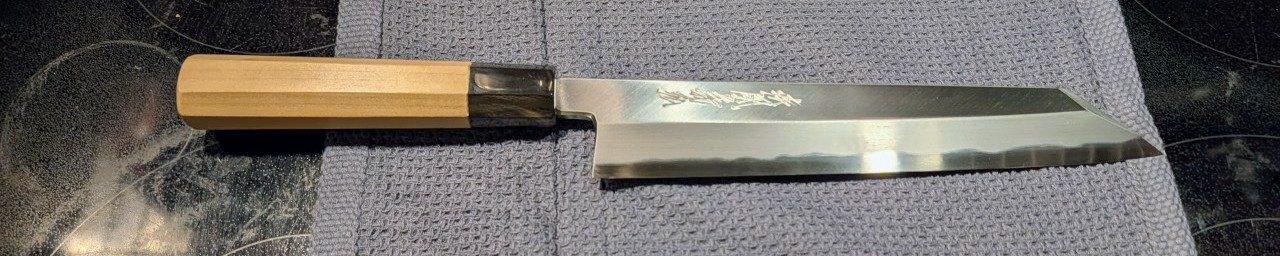
In a world overflowing with specialized kitchen gadgets and elaborate knife sets, the idea of relying on a single, high-quality knife may seem radical. Yet, for the minimalist cook—especially one embarking on a week-long trek—the Japanese Kiritsuke emerges as the ultimate tool of simplicity and versatility. This essay explores how one well-crafted Kiritsuke can transform the way we approach cooking, both in the wild and at home.
The Philosophy of Minimalism in the Kitchen
Minimalism is not about deprivation; it is about intentionality. In the kitchen, this philosophy is rooted in the belief that fewer, better-chosen tools can lead to a richer, more satisfying cooking experience. Rather than filling drawers and countertops with single-purpose gadgets and redundant utensils, the minimalist cook seeks out versatile, high-quality tools that can handle a wide range of tasks. This approach not only reduces physical clutter but also cultivates a sense of clarity and purpose in the act of cooking.
Intentionality Over Accumulation
At its core, minimalism in the kitchen is about making deliberate choices. Every item has a purpose and earns its place. Instead of accumulating a collection of knives for every conceivable task, the minimalist selects a tool like the Kiritsuke—a knife that, through thoughtful design and craftsmanship, can perform many roles. This intentionality extends beyond tools to ingredients, recipes, and even the cooking process itself. By focusing on what is essential, the cook is freed from distraction and able to engage more deeply with the food and the act of preparation.
Multipurpose Tools and Reduced Clutter
A minimalist kitchen is defined by its efficiency. Multipurpose tools like the Kiritsuke eliminate the need for a separate slicer, chopper, or filleting knife. This reduction in equipment not only saves space but also streamlines the workflow, making it easier to clean up and maintain order. The kitchen becomes a place of calm and focus, where every movement is purposeful and every tool is within easy reach.
Mindful Cooking and Skill Development
Minimalism encourages mindfulness. With fewer tools at hand, the cook must rely more on technique and less on specialized equipment. This fosters a deeper understanding of knife skills, ingredient handling, and the nuances of preparation. The Kiritsuke, with its distinctive shape and razor-sharp edge, becomes an extension of the cook’s hand—inviting precision, care, and creativity. Each cut is deliberate, each meal a product of skill rather than gadgetry.
The Joy of Doing More with Less
There is a quiet joy in mastering a single, exceptional tool. The Kiritsuke’s versatility transforms it from a mere object into a trusted companion, capable of handling everything from delicate sashimi to robust root vegetables. This simplicity brings a sense of freedom and satisfaction, as the cook learns to adapt, improvise, and create with what is available. The minimalist kitchen is not a place of limitation, but of possibility—where less truly becomes more.
Embracing minimalism in the kitchen is an invitation to slow down, focus, and appreciate the essentials. The Kiritsuke, as a symbol of this philosophy, reminds us that intentional choices, skillful technique, and mindful practice can elevate even the simplest meal into something extraordinary. In doing more with less, we rediscover the true pleasures of cooking.
The Japanese Kiritsuke: A Tool of Mastery
The Kiritsuke is a knife steeped in tradition and respect, often seen as a symbol of mastery in the Japanese kitchen. Unlike many Western knives, which are designed for specific tasks, the Kiritsuke is a hybrid—combining the precision of the Yanagiba (used for slicing raw fish) and the versatility of the Usuba (used for vegetables). This unique lineage gives the Kiritsuke its distinctive profile: a long, flat blade with a sharply angled tip, typically ranging from 210mm to 330mm in length.
A Symbol of Culinary Authority
In many traditional Japanese kitchens, the Kiritsuke is reserved for the executive chef, or itamae. This is not just a matter of hierarchy, but a reflection of the skill required to wield the knife effectively. The single-bevel edge (in traditional versions) demands precise technique and careful maintenance. Using a Kiritsuke is a mark of confidence and expertise, as improper handling can easily damage both the blade and the ingredients.
Anatomy and Design
The Kiritsuke’s blade is typically longer and flatter than a Western chef’s knife, with a pointed tip that allows for intricate work. The flat edge is ideal for push-cutting, while the length provides ample surface area for slicing large ingredients or making long, clean cuts. The angled tip, reminiscent of a sword, is perfect for delicate tasks that require precision.
- Blade Length: The extended blade allows for slicing through large cuts of fish or vegetables in a single, uninterrupted motion, preserving the integrity and appearance of the ingredient.
- Flat Edge: The straight edge is perfect for push-cutting, a technique favored in Japanese cuisine for its efficiency and precision.
- Angled Tip: The acute tip enables detailed work, such as scoring fish skin or making decorative vegetable cuts.
Butchering Fish: Precision and Respect
One of the Kiritsuke’s most celebrated uses is in the preparation of fish, especially for sashimi. The sharpness and length of the blade allow for clean, single-stroke cuts that preserve the delicate texture of raw fish. The pointed tip is invaluable for working around bones and removing skin with minimal waste. This level of precision is essential in Japanese cuisine, where the presentation and texture of fish are as important as the flavor.
Slicing Vegetables: Efficiency and Finesse
The Kiritsuke’s flat edge excels at slicing and julienning vegetables. Unlike a curved Western chef’s knife, which relies on a rocking motion, the Kiritsuke is designed for push-cutting—moving the blade forward and down in a single motion. This technique produces uniform slices and minimizes bruising, which is especially important for delicate ingredients like herbs and leafy greens. The length of the blade also makes it easy to handle large vegetables, such as daikon or cabbage, with speed and accuracy.
General Prep: Versatility in Action
Beyond fish and vegetables, the Kiritsuke proves its worth in a variety of general prep tasks. Its sharp edge makes quick work of mincing garlic, chopping herbs, or trimming meat. The blade’s length and balance allow for controlled, efficient movements, reducing fatigue during extended prep sessions. For the minimalist cook, this versatility means that one knife can replace an entire set, streamlining both the cooking process and the cleanup.
The Kiritsuke is more than just a knife—it is a tool of mastery, tradition, and versatility. Its unique design bridges the gap between specialized blades, offering the skilled cook a single instrument capable of handling a wide range of culinary challenges. In the hands of a practiced user, the Kiritsuke transforms meal preparation into an art form, embodying the minimalist ideal of doing more with less, and doing it beautifully.
One Knife, Many Meals: The Trekking Experience
A week-long trek through the wilderness is the ultimate test of both resourcefulness and restraint. Every item packed must justify its weight and utility, and nowhere is this more apparent than in the choice of cooking tools. In this context, the Japanese Kiritsuke stands out as an indispensable companion, embodying the minimalist ethos of doing more with less.
Portability: The Balance of Size and Function
While the Kiritsuke is longer than many typical outdoor knives, its slim profile and lightweight construction make it surprisingly portable. Forged from high-quality Japanese steel, a well-crafted Kiritsuke is designed to be both robust and elegant. Its blade, though substantial, is thin and easy to slip into a protective sheath, which can then be tucked into a backpack or mess kit without adding significant bulk.
The handle, often made from lightweight wood or composite materials, further reduces weight while providing a comfortable grip for extended use. Unlike bulky multi-knife sets or heavy cleavers, the Kiritsuke offers a streamlined solution—one knife that can handle every meal, from breakfast to dinner, without weighing down your pack.
Versatility: Adapting to Every Culinary Challenge
The true genius of the Kiritsuke reveals itself in its adaptability. Trekking often means unpredictable ingredients and improvised meals, but the Kiritsuke is ready for anything:
- Preparing Fresh-Caught Fish: Its long, sharp blade glides through fish with ease, making it ideal for filleting, deboning, and even slicing sashimi by a lakeside camp.
- Vegetable Prep: Whether foraged wild onions, mushrooms, or root vegetables, the Kiritsuke’s flat edge and acute tip allow for precise slicing, dicing, and julienning, even on uneven surfaces like a log or a flat rock.
- Meat and General Prep: From trimming fat off a cut of meat to mincing garlic or herbs, the Kiritsuke’s versatility means you never miss the convenience of a full kitchen.
This adaptability is especially valuable in the wild, where improvisation is key and every meal is an opportunity to make the most of limited resources.
Ease of Maintenance: Reliability in the Wild
A week in the wilderness demands tools that are not only effective but also easy to maintain. The Kiritsuke, forged from high-carbon Japanese steel, is renowned for its ability to hold a razor-sharp edge through repeated use. With basic care—a quick rinse, a wipe dry, and the occasional touch-up with a portable honing rod—the Kiritsuke remains sharp and ready for every meal.
Unlike softer, mass-produced blades that dull quickly and require frequent sharpening, a quality Kiritsuke can endure the rigors of outdoor cooking with minimal upkeep. Its resilience means less time spent on maintenance and more time enjoying the trek and the meals you prepare.
The Minimalist Ritual: Cooking as Connection
Using a single, exceptional knife like the Kiritsuke during a trek transforms cooking from a chore into a ritual. Each meal becomes a moment of focus and creativity, as you adapt your technique to the ingredients and environment at hand. The limitations imposed by minimal gear foster ingenuity—how to fillet a fish with precision, how to slice vegetables thinly for a quick stir-fry, how to carve meat for a communal meal around the fire.
This ritual not only deepens your connection to the food and the landscape but also reinforces the minimalist principle: that with the right tool and a bit of skill, you can create nourishing, memorable meals anywhere.
In the context of a week-long trek, the Kiritsuke proves itself as the ultimate minimalist tool—portable, versatile, and easy to maintain. It earns its place in your pack not just through utility, but by enhancing the experience of cooking in the wild. With one knife, you unlock a world of culinary possibilities, embracing the freedom and satisfaction that come from doing more with less.
The Ritual of Cooking with Less
Cooking with a single knife, such as the Kiritsuke, transforms meal preparation from a routine task into a mindful ritual. In a world where convenience often means an abundance of specialized gadgets, paring down to one versatile tool demands—and rewards—a different approach. This simplicity fosters a deeper connection to both the ingredients and the act of cooking itself.
Mindfulness and Focus
When you cook with only one knife, every movement becomes intentional. There is no reaching for a different blade or switching between tools; instead, your attention is fully on the task at hand. The Kiritsuke becomes an extension of your hand, and you begin to notice the subtle differences in texture, resistance, and aroma as you slice, dice, or carve. This heightened awareness turns cooking into a meditative practice, where each cut is deliberate and each meal is crafted with care.
Mastery Through Limitation
Limitations, rather than hindering creativity, often enhance it. With only the Kiritsuke at your disposal, you are challenged to adapt your technique to a variety of tasks:
- Julienning: The flat edge and long blade of the Kiritsuke make it possible to create fine, uniform strips of vegetables, even without a mandoline or specialized slicer.
- Deboning: While a flexible boning knife might be ideal, the pointed tip and sharp edge of the Kiritsuke can be skillfully maneuvered around bones with practice and patience.
- Carving: The length and sharpness of the blade allow for smooth, clean slices of meat or fish, rivaling the results of more specialized carving knives.
Each new challenge becomes an opportunity to refine your skills and discover new techniques. Over time, you develop a deeper understanding of both the knife and the ingredients, learning how to coax the best results from each.
Creativity Born from Simplicity
With fewer tools, you are encouraged to think creatively. How can you use the Kiritsuke to peel a fruit, crush garlic, or score a piece of fish? These questions invite experimentation and innovation, turning everyday cooking into a playful exploration. The process becomes less about following rigid rules and more about adapting to the moment, using what you have to achieve what you need.
The Joy of the Process
There is a quiet satisfaction in mastering a single tool. The Kiritsuke, with its elegant design and razor-sharp edge, rewards careful handling and regular maintenance. Honing the blade, cleaning it after each use, and storing it properly become part of the ritual, deepening your respect for the tool and the craft of cooking.
This ritualistic approach extends to the meal itself. Each dish prepared with the Kiritsuke carries the imprint of your focus and skill, making even simple meals feel special. The act of cooking becomes less about efficiency and more about enjoyment, connection, and pride in your work.
Cooking with less is not about making do; it is about making more of what you have. The ritual of using a single Kiritsuke knife fosters mindfulness, creativity, and mastery, transforming the kitchen into a space of intentionality and joy. In embracing the limitations, you discover the true pleasures of cooking—where every meal is a celebration of skill, simplicity, and the beauty of doing more with less.
Lessons from the Minimalist Kitchen
The minimalist kitchen, distilled to its essentials, offers profound lessons that extend far beyond the act of cooking. By focusing on quality, skill, and simplicity, it transforms both the process and the outcome of meal preparation. Let’s explore these lessons in greater depth:
Quality Over Quantity
In a culture that often equates abundance with preparedness, the minimalist kitchen challenges us to reconsider our relationship with our tools. Rather than filling drawers with an array of knives—many of which are rarely used or quickly dulled—a minimalist approach advocates for investing in a single, exceptional blade like the Kiritsuke.
- Superior Performance: A high-quality Kiritsuke, forged from premium steel and crafted with precision, maintains its sharpness and integrity far longer than mass-produced alternatives. Each cut is cleaner, each movement more efficient, and the risk of injury from a dull blade is greatly reduced.
- Long-Term Value: While the initial investment may be higher, a well-made knife can last a lifetime with proper care. This stands in stark contrast to the cycle of buying, replacing, and discarding cheaper tools.
- Aesthetic and Emotional Value: There is a unique pleasure in using a beautifully crafted tool. The Kiritsuke’s balance, weight, and design make it a joy to handle, turning everyday tasks into moments of appreciation.
Skill Development
Minimalism in the kitchen is not just about having fewer tools—it’s about becoming more skilled with the ones you have. Relying on a single knife like the Kiritsuke encourages you to develop a deeper understanding of technique and ingredient handling.
- Knife Skills: With only one blade, you learn to adapt your grip, angle, and motion for different tasks—whether slicing fish, dicing vegetables, or mincing herbs. This versatility builds confidence and dexterity.
- Problem-Solving: The absence of specialized gadgets means you must think creatively and resourcefully. How can you use the Kiritsuke to peel, crush, or carve? Each challenge becomes an opportunity to learn and innovate.
- Culinary Confidence: As your proficiency grows, so does your confidence. You become less reliant on recipes or equipment, and more attuned to the food itself—its textures, aromas, and flavors.
Simplicity and Satisfaction
Perhaps the most profound lesson of the minimalist kitchen is the satisfaction that comes from simplicity. Cooking with just one knife strips away distractions and clutter, allowing you to focus on what truly matters.
- Streamlined Workflow: Fewer tools mean less time spent searching, cleaning, and organizing. The kitchen becomes a space of calm and order, where every item has a purpose.
- Mindful Cooking: The act of preparing food becomes more intentional. Each meal is crafted with care, and the process itself becomes a source of enjoyment rather than stress.
- Empowerment: There is a quiet pride in knowing that, with just one knife, you can create a week’s worth of nourishing, delicious meals. This self-sufficiency is both liberating and deeply rewarding.
The minimalist kitchen, centered around a single, high-quality Kiritsuke, teaches us that less can truly be more. By prioritizing quality over quantity, honing our skills, and embracing simplicity, we not only become better cooks but also find greater satisfaction in the everyday ritual of preparing food. These lessons, learned at the cutting board, resonate throughout our lives—reminding us that intentionality, mastery, and joy are found not in abundance, but in the thoughtful use of what we have.
Conclusion
The minimalist kitchen is not defined by what it lacks, but by the freedom it offers. This freedom is both practical and philosophical: it is the liberation from clutter, distraction, and the pressure to accumulate, as well as the invitation to focus on what truly matters in the act of cooking. At the heart of this approach stands the Japanese Kiritsuke—a single, sharp, and reliable knife that embodies the minimalist ethos.
The Power of One Exceptional Tool
The Kiritsuke is more than just a blade; it is a symbol of trust in quality and skill. Its versatility allows it to replace an entire arsenal of specialized knives, proving that thoughtful design and craftsmanship can outshine quantity. With the Kiritsuke, you are empowered to tackle any culinary challenge, from filleting a fish by a mountain stream to preparing a delicate vegetable medley at home. This adaptability means you are never limited by your tools, but instead, inspired by their potential.
Freedom Through Simplicity
Owning fewer tools means less time spent organizing, cleaning, and maintaining equipment. It means a lighter backpack on the trail and a more open, inviting kitchen at home. This simplicity creates space—both physical and mental—for creativity, focus, and enjoyment. The Kiritsuke encourages you to slow down, pay attention, and savor the process of cooking, transforming even the simplest meal into a meaningful ritual.
Cooking with Intention and Joy
With a single, trusted knife, every meal becomes an act of intention. You learn to appreciate the nuances of each ingredient, to refine your technique, and to take pride in your growing mastery. The limitations of minimalism become opportunities for creativity and growth, as you discover new ways to use your Kiritsuke and new flavors to explore.
Most importantly, the minimalist kitchen reminds us that joy in cooking does not come from abundance, but from engagement. It is found in the quiet satisfaction of a well-prepared meal, the confidence of self-sufficiency, and the beauty of doing more with less.
A Lasting Lesson
Whether you are standing at a campfire in the wilderness or at your kitchen counter at home, the Kiritsuke is a reminder that the best tools are those that invite us to be present, resourceful, and joyful. The minimalist kitchen, far from being empty, is full of possibility—one meal, one knife, and endless freedom to create.





 UTAZCO Overland
Leave a Reply