
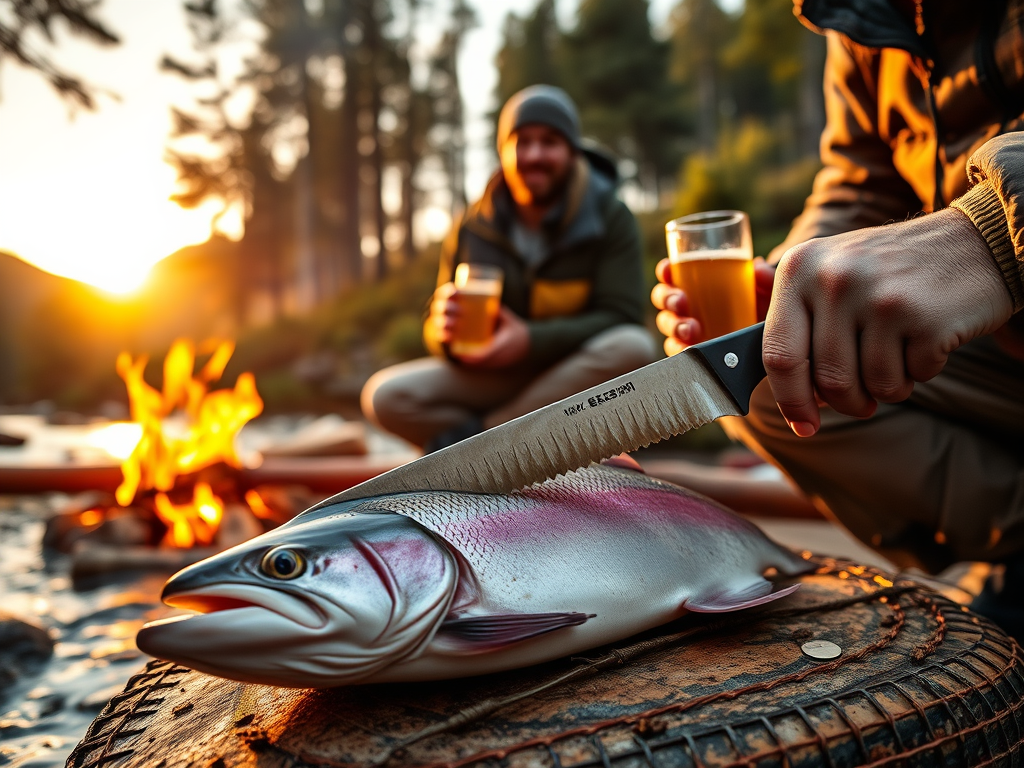
Campfire cooking conjures images of rustic simplicity—charred sausages, skewered marshmallows, and hearty stews. Yet, what if the tools and techniques of a master chef could elevate this experience? Enter fine-edge Japanese steel: knives renowned for their precision, sharpness, and craftsmanship. This essay explores how these blades transform food texture and cooking efficiency, even in the wild, blending culinary artistry with the adventure of outdoor cooking.
The Essence of Japanese Steel
Tradition Meets Innovation
Centuries-Old Craftsmanship
Japanese knife-making is rooted in the same traditions that produced the legendary samurai swords. For centuries, blacksmiths in regions like Sakai and Seki have passed down their skills, refining forging, tempering, and sharpening techniques. This heritage is evident in every aspect of a Japanese kitchen knife, from the choice of steel to the final polish on the blade.
High-Carbon Steel: The Heart of Sharpness
Unlike many Western knives, which often use softer stainless steel for durability, traditional Japanese knives are frequently made from high-carbon steels such as Blue Steel (Aogami) or White Steel (Shirogami). These steels can be hardened to a much higher degree (often 60+ HRC on the Rockwell scale), allowing for:
- A finer, sharper edge: The steel can be ground to an acute angle, producing a razor-like edge ideal for precision work.
- Superior edge retention: High hardness means the knife stays sharp longer, even with heavy use.
- Responsive sharpening: Skilled users can restore the edge quickly with a whetstone, maintaining peak performance.
Meticulous Hand-Finishing
Japanese knives are often finished by hand, with artisans spending hours or even days on each blade. This process includes:
- Honing the edge: Achieving a mirror-polished, ultra-fine edge for smooth, effortless cutting.
- Balancing the blade: Ensuring the knife feels light and agile in the hand, crucial for delicate techniques.
- Aesthetic touches: Traditional finishes like kurouchi (black-forged), kasumi (misty), or mirror-polished surfaces, as well as hand-carved kanji signatures, make each knife unique.
Purpose-Built Designs
Japanese knives are not one-size-fits-all. Each style is engineered for a specific culinary task:
- Kiritsuke: A hybrid blade combining the precision of a vegetable knife (usuba) with the slicing power of a sashimi knife (yanagiba). Traditionally reserved for head chefs, it symbolizes mastery and versatility.
- Yanagiba: The quintessential sashimi knife, with a long, slender, single-bevel blade designed for pulling through raw fish in a single, clean stroke—preserving texture and appearance.
- Usuba: The professional’s vegetable knife, with a tall, thin, single-bevel blade for intricate cuts and paper-thin slices, essential in kaiseki and decorative Japanese cuisine.
Innovation for Modern Needs
While tradition remains central, Japanese knife-makers have also embraced innovation:
- Double-bevel variants: Modern versions of classic knives (like the kiritsuke-gyuto or double-bevel nakiri) make these tools more accessible to home cooks and Western chefs.
- Stainless steel alloys: Newer steels combine the sharpness of carbon steel with the rust resistance of stainless, making maintenance easier for outdoor or camp use.
- Ergonomic handles: From traditional octagonal wa handles to Western-style grips, there’s a Japanese knife for every hand and preference.
The essence of Japanese steel lies in the seamless blend of tradition and innovation. Each knife is a product of centuries of refinement, designed for precision and beauty. Whether in a professional kitchen or under the stars, these blades empower cooks to achieve extraordinary results, transforming even the simplest ingredients into culinary art.
Key Features for Outdoor Use
Extreme Sharpness: Clean, Effortless Cuts in the Wild
Japanese knives are renowned for their razor-sharp edges, achieved through hard, fine-grained steel and acute edge angles (often 12–15° per side, compared to 20–25° for most Western knives). This extreme sharpness is especially valuable outdoors:
- Minimal Effort, Maximum Control: Even tough-skinned vegetables, freshly caught fish, or dense root crops can be sliced with little force. This reduces fatigue and risk of injury, especially when working on makeshift surfaces or in low-light conditions.
- Preservation of Ingredient Quality: Clean cuts mean less bruising and tearing. For example, slicing tomatoes or delicate herbs with a sharp Japanese blade keeps juices inside, preserving flavor and texture—crucial when ingredients are limited or foraged.
- Precision for Advanced Techniques: Whether filleting a fish for sashimi or preparing thin vegetable sheets for wraps, the sharpness allows for techniques that would be impossible with a dull, generic camp knife.
Lightweight and Balanced: Comfort and Safety at the Campsite
Japanese knives are typically lighter and more finely balanced than their Western counterparts, thanks to thinner blades and traditional wa (octagonal or D-shaped) handles. This brings several advantages to outdoor cooking:
- Ease of Handling: A lightweight knife is less tiring to use for extended prep sessions, such as when preparing a multi-course meal for a group.
- Stability on Uneven Surfaces: Campsites rarely offer the stability of a kitchen counter. A well-balanced knife is easier to control on a picnic table, a log, or even a flat rock, reducing the risk of slips and accidents.
- Agility for Varied Tasks: The nimbleness of a Japanese knife makes it easy to switch between tasks—mincing herbs, slicing fish, or chopping vegetables—without needing multiple heavy tools.
Versatile Profiles: The Right Tool for Every Campfire Task
Japanese knives are purpose-built, and their variety means you can choose the perfect blade for your outdoor menu:
- Kiritsuke: The all-rounder, capable of both slicing fish and handling vegetables. Its long, flat edge excels at push-cutting and pull-slicing, making it ideal for everything from prepping sashimi to dicing onions for stew.
- Nakiri: The vegetable specialist, with a tall, flat blade that makes quick work of chopping, slicing, and dicing all kinds of produce. Its double-bevel edge is forgiving and easy to maintain, even for beginners.
- Yanagiba: The ultimate slicer for fish and proteins. Its long, single-bevel blade is designed for clean, single-stroke cuts, perfect for preparing sashimi or thinly slicing smoked meats.
- Petty: A small utility knife, perfect for peeling, trimming, or delicate work—ideal for foraged herbs, mushrooms, or fruit.
This specialization means you can tailor your knife selection to your planned meals, or bring a single versatile blade (like a kiritsuke or nakiri) for a minimalist yet high-performance camp kitchen.
The key features of Japanese knives—extreme sharpness, lightweight balance, and specialized profiles—translate beautifully to outdoor cooking. They make food prep faster, safer, and more enjoyable, allowing you to bring the finesse of a master chef to the campfire, no matter how rugged the setting.
Precision Cutting: Transforming Food Texture in the Wild
Clean Cuts, Superior Texture
When cooking outdoors—whether over a crackling campfire or a compact portable stove—the quality of your ingredient preparation can make or break the meal. Fine-edge Japanese knives, with their legendary sharpness and precision, offer unique advantages that directly impact the texture, flavor, and visual appeal of your food, even in the most rustic settings.
Preserves Moisture: Tender, Juicy Results
One of the most significant benefits of a razor-sharp Japanese knife is its ability to make exceptionally clean cuts through proteins and produce. This matters because:
- Cellular Integrity: Dull knives crush and tear food, rupturing cell walls and causing juices to leak out. This leads to dry, tough meat and limp, watery vegetables.
- Moisture Retention: A fine-edge blade glides through flesh and fiber, minimizing cellular damage. For proteins like fish or steak, this means juices stay locked inside during cooking, resulting in tender, succulent bites.
- Outdoor Advantage: When cooking over open flames, where heat can be uneven and drying, preserving every drop of moisture is crucial for delicious results.
Example: Slicing a freshly caught trout with a yanagiba yields fillets that remain moist and flaky after grilling, rather than drying out or falling apart.
Enhances Mouthfeel: Consistent, Pleasurable Texture
Texture is a key component of culinary enjoyment, and precision cutting plays a vital role:
- Uniform Slices: Japanese knives excel at producing even, consistent cuts—whether you’re julienning carrots, slicing mushrooms, or portioning sashimi. Uniform pieces cook at the same rate, preventing some bits from being overdone while others remain raw.
- Smooth Surfaces: Cleanly cut surfaces feel smoother and more pleasant in the mouth. For example, thinly sliced onions or peppers will have a crisp, clean bite, rather than a ragged, fibrous chew.
- Enhanced Cooking Efficiency: Evenly cut ingredients not only taste better but also cook faster and more predictably, which is especially valuable when managing a fire or limited fuel.
Example: Preparing a stir-fry with a nakiri ensures all vegetables are the same size, so they sauté evenly and retain a satisfying crunch.
Improves Presentation: Beauty in the Wilderness
Even in the wild, the visual appeal of your meal matters. Beautifully cut ingredients can transform a simple camp dish into a memorable experience:
- Professional Appearance: Neatly sliced vegetables, perfectly portioned proteins, and artfully arranged garnishes elevate the look of your food, making it more appetizing and enjoyable.
- Boosts Morale: After a long day outdoors, a meal that looks as good as it tastes can lift spirits and create a sense of occasion.
- Encourages Mindful Eating: Taking the time to prepare and present food with care, even in nature, fosters appreciation for both the ingredients and the moment.
Example: Using a kiritsuke to create paper-thin cucumber ribbons or precise tomato wedges adds elegance to a simple camp salad, making it feel special and thoughtfully prepared.
Precision cutting with fine-edge Japanese knives is not just about aesthetics or tradition—it has a profound impact on the texture, flavor, and enjoyment of your food, especially in outdoor settings. By preserving moisture, enhancing mouthfeel, and improving presentation, these knives allow you to bring the finesse of a master chef to every meal under the stars.
Vegetable Mastery: Usuba and Nakiri in Action
Japanese cuisine places a premium on the beauty, texture, and flavor of vegetables, and this reverence is reflected in the specialized knives designed for their preparation. The usuba and nakiri are two such blades, each with unique features that make them indispensable for vegetable mastery—whether in a professional kitchen or at a remote campsite.
Usuba: The Precision Instrument for Intricate Vegetable Work
The usuba is a single-bevel, tall, and thin-bladed knife traditionally used by professional chefs, especially in the Kansai region. Its name literally means “thin blade,” and it lives up to this promise with unmatched finesse.
- Katsuramuki (Rotary Peeling): The usuba’s razor-sharp, flat edge is perfect for katsuramuki, a technique where a daikon radish or cucumber is peeled into a continuous, paper-thin sheet. This skill is the hallmark of a trained Japanese chef and is used to create delicate garnishes, wraps, or decorative vegetable ribbons for salads and sushi.
- Mukimono (Decorative Carving): The usuba’s precision allows for intricate vegetable carving, turning carrots, cucumbers, or turnips into flowers, leaves, or other artistic shapes. This elevates even the simplest camp meal into a visual feast.
- Ultra-Fine Slicing and Dicing: The usuba excels at making ultra-thin slices and perfect brunoise (tiny cubes), essential for refined textures in salads, pickles, or garnishes.
Outdoor Advantage: With an usuba, you can transform foraged roots or market vegetables into elegant, restaurant-quality components, even on a picnic table or log.
Nakiri: The Everyday Vegetable Workhorse
The nakiri is the double-bevel, rectangular-bladed cousin of the usuba. Designed for home cooks and professionals alike, it is prized for its ease of use and versatility.
- Effortless Chopping and Slicing: The nakiri’s flat edge and tall blade make it ideal for up-and-down chopping motions. It glides through everything from wild onions and leeks to potatoes, carrots, and leafy greens with minimal resistance.
- Uniform Cuts for Even Cooking: The wide blade helps guide your knuckles, ensuring straight, even cuts. This is especially useful when prepping large quantities of vegetables for stews, stir-fries, or grilling over the fire.
- Speed and Precision: The nakiri’s double-bevel edge is forgiving and easy to maintain, making it perfect for quick, precise prep—even for those new to Japanese knives.
- Scooping and Transferring: The broad blade doubles as a scoop, allowing you to transfer chopped vegetables from the cutting board to the pot or pan with ease—a practical feature when working with limited space outdoors.
Outdoor Advantage: The nakiri’s simplicity and efficiency make it the ideal companion for campsite cooking, where speed, consistency, and ease of maintenance are paramount.
Usuba vs. Nakiri: Choosing the Right Tool
| Feature | Usuba | Nakiri |
|---|---|---|
| Bevel | Single (right or left) | Double (50/50) |
| Skill Level | Advanced | Beginner to expert |
| Best For | Decorative, ultra-precise work | Everyday chopping, slicing, dicing |
| Maintenance | Requires skill to sharpen | Easy to sharpen |
| Outdoor Suitability | For enthusiasts and pros | For everyone |
Both the usuba and nakiri bring vegetable preparation to a new level, but each shines in its own way. The usuba is the tool of choice for those seeking to master traditional Japanese techniques and create visually stunning dishes, even in the wild. The nakiri, meanwhile, is the ultimate all-rounder—fast, precise, and easy to use, making it perfect for efficient, high-quality campfire cooking. With either knife in hand, you can turn humble vegetables into the stars of your outdoor meals.
Cooking Efficiency: Saving Time and Fuel
Faster Prep, Quicker Cooking
When cooking outdoors, every minute and every ounce of fuel counts. The sharpness and precision of Japanese knives—especially when compared to the average camp knife—can have a profound impact on both the speed and efficiency of your camp kitchen.
Faster Prep: Streamlining the Process
- Effortless Slicing and Dicing: A razor-sharp Japanese knife glides through ingredients with minimal resistance. This means you can prep vegetables, proteins, and herbs much faster than with a dull or thick-bladed knife. Tasks like mincing garlic, julienning carrots, or filleting fish become quick and almost effortless.
- Reduced Fatigue: Because less force is required, your hands and wrists tire less quickly. This is especially important when preparing meals for a group or after a long day of hiking or paddling.
- Precision and Consistency: The ability to make thin, uniform cuts means you spend less time correcting mistakes or dealing with uneven pieces. This is particularly valuable when working with limited light or space at a campsite.
Example: Prepping a stir-fry with a nakiri or kiritsuke, you can quickly and uniformly slice a variety of vegetables, ensuring everything is ready for the pan at the same time.
Quicker Cooking: Uniformity Equals Efficiency
- Even Cooking: Thin, consistent slices cook at the same rate. This prevents the common campfire problem of some pieces being burnt while others are undercooked. Whether you’re grilling, sautéing, or simmering, uniformity ensures that everything is ready at once.
- Shorter Cooking Times: Smaller, thinner pieces of food cook through more rapidly. This is especially important when using a portable stove or open fire, where heat can be uneven and fuel is limited.
- Better Texture and Flavor: Quick, even cooking helps preserve the natural texture and flavor of ingredients, preventing them from becoming mushy or dried out.
Example: Slicing potatoes thinly for a campfire hash allows them to cook through in minutes, rather than waiting for thick chunks to soften over unpredictable flames.
Fuel Efficiency: Making the Most of Limited Resources
- Less Time Over the Fire: The faster your food cooks, the less fuel you use—whether that’s wood, charcoal, or gas canisters. This is not only cost-effective but also environmentally friendly, reducing your impact on the campsite.
- More Meals, Less Waste: Efficient prep and cooking mean you can stretch your fuel supply further, allowing for more meals or longer trips without resupply.
- Safer Cooking: Shorter cooking times mean less exposure to open flames or hot stoves, reducing the risk of accidents, especially in windy or unpredictable outdoor conditions.
Example: When making a soup or stew, thinly sliced vegetables and proteins come together quickly, using less fuel and allowing you to enjoy your meal sooner.
The efficiency gained from using sharp, precise Japanese knives in the outdoors is more than a matter of convenience—it’s a practical advantage. Faster prep and quicker, more even cooking save precious time and fuel, making your camp kitchen more sustainable, enjoyable, and effective. With the right knife, you can focus less on the logistics of cooking and more on savoring great food and the beauty of the outdoors.
Example: Stir-Fry Over a Portable Stove
Stir-frying is a classic camp meal—quick, flavorful, and adaptable to whatever ingredients you have on hand. The process, however, demands speed and precision: vegetables and proteins must be cut uniformly to ensure they cook evenly in the high heat of a portable stove or over an open flame. This is where the unique qualities of Japanese knives like the kiritsuke and nakiri truly shine.
Kiritsuke: The All-Purpose Precision Blade
The kiritsuke is revered for its versatility and sharp, flat edge. In the context of a camp stir-fry:
- Julienning Vegetables: The long, straight blade of the kiritsuke excels at producing fine, even matchsticks of carrots, bell peppers, or zucchini. This uniformity ensures that all vegetables cook at the same rate, preventing some from burning while others remain raw.
- Slicing Proteins: Whether you’re working with chicken, beef, tofu, or freshly caught fish, the kiritsuke’s razor edge allows you to slice proteins thinly and cleanly. Thin slices cook rapidly and absorb marinades or seasonings more effectively, enhancing flavor.
- Speed and Efficiency: The kiritsuke’s length and balance allow for swift, continuous slicing motions, making prep work fast and fluid—even on a makeshift camp cutting board.
Nakiri: The Vegetable Specialist
The nakiri is designed specifically for vegetables, making it a stir-fry superstar:
- Effortless Chopping: The nakiri’s tall, flat blade is perfect for up-and-down chopping, allowing you to quickly process large quantities of vegetables—onions, mushrooms, bok choy, or wild greens—with minimal effort.
- Consistent Thickness: The double-bevel edge and rectangular profile help guide your cuts, resulting in slices and dices of uniform thickness. This consistency is crucial for even cooking in a hot pan or wok.
- Scooping and Transferring: The broad blade doubles as a scoop, making it easy to transfer chopped ingredients from the board to the pan, minimizing spills and mess in the limited space of a camp kitchen.
Maximizing Flavor, Minimizing Cooking Time
- Quick, Even Cooking: Uniformly cut ingredients mean everything cooks through at the same time, allowing you to stir-fry over high heat without worrying about undercooked or burnt pieces.
- Retained Texture and Color: Fast, even cooking preserves the crispness and vibrant color of vegetables, making the dish more appealing and nutritious.
- Efficient Fuel Use: Because the stir-fry comes together quickly, you use less fuel—an important consideration when cooking outdoors.
The Outdoor Advantage
With a kiritsuke or nakiri in hand, you can transform a handful of simple ingredients into a restaurant-quality stir-fry in minutes, even in the wilderness. The precision and speed these knives offer not only make the cooking process more enjoyable but also ensure that your meal is as delicious and satisfying as anything you’d make at home.
A sharp Japanese knife turns camp stir-fry from a basic necessity into a culinary highlight—maximizing flavor, preserving texture, and saving precious time and fuel, all while letting you enjoy the artistry of cooking under the open sky.
Master Chef Techniques, Anywhere
Bringing Kaiseki to the Campfire
Kaiseki, the pinnacle of Japanese haute cuisine, is renowned for its meticulous preparation, seasonal ingredients, and artistic presentation. While it’s traditionally associated with serene tatami rooms and multi-course meals, the spirit of kaiseki—precision, respect for ingredients, and aesthetic beauty—can be brought to even the most rustic campfire setting with the right tools and mindset. Japanese knives, with their specialized designs and razor-sharp edges, are the key to unlocking these master chef techniques in the wild.
Katsuramuki: The Art of Rotary Peeling
- What It Is: Katsuramuki is a traditional Japanese technique where a vegetable (often daikon radish or cucumber) is peeled into a continuous, paper-thin sheet. This sheet can then be used for decorative garnishes, wraps, or delicate salads.
- How Japanese Knives Help: The usuba, with its tall, flat, single-bevel blade, is specifically designed for this task. Its sharpness and precision allow you to maintain a consistent thickness, creating translucent ribbons that would be impossible with a standard camp knife.
- Campfire Application: Imagine preparing a fresh-caught fish, then using katsuramuki daikon as a bed or wrap for sashimi, elevating your outdoor meal to a work of art.
Fine Brunoise: Precision Dicing for Texture and Presentation
- What It Is: Brunoise is a classic knife cut where vegetables are diced into tiny, uniform cubes (typically 1–2 mm per side). This technique is essential for refined textures in soups, salads, and garnishes.
- How Japanese Knives Help: The nakiri or usuba, with their straight edges and thin blades, make it easy to achieve perfectly even cuts. The sharpness of the blade ensures clean edges, preserving the structure and moisture of each tiny cube.
- Campfire Application: Use fine brunoise carrots, onions, or wild herbs to add bursts of color and flavor to a simple rice dish or soup, turning a basic camp meal into something visually and texturally sophisticated.
Sashimi Slicing: Clean, Single-Stroke Cuts
- What It Is: Sashimi slicing is the art of cutting raw fish into smooth, even slices with a single, uninterrupted pull of the knife. This preserves the delicate texture and appearance of the fish.
- How Japanese Knives Help: The yanagiba, with its long, slender, single-bevel blade, is engineered for this exact purpose. Its length allows for long, continuous strokes, while its sharpness ensures the fish is not torn or crushed.
- Campfire Application: After catching a fish, use a yanagiba to prepare sashimi or crudo, serving it with foraged greens or freshly grated wasabi for a meal that rivals any sushi bar—right by the water’s edge.
The Meditative Act of Outdoor Cooking
- Mindful Preparation: Using Japanese knives for these techniques requires focus and care, turning meal prep into a meditative ritual. The rhythmic motion of slicing, the attention to detail, and the connection to your ingredients all foster a sense of presence and appreciation.
- Creativity in Nature: The limitations of the outdoors—fewer tools, unpredictable conditions—can actually spark creativity. With a single sharp knife and fresh ingredients, you can improvise and adapt, finding new ways to express culinary artistry.
- Elevating the Experience: Bringing master chef techniques to the campfire transforms outdoor cooking from a chore into a celebration. Each meal becomes an opportunity to honor the ingredients, the setting, and the act of sharing food with others.
Japanese knives empower you to practice advanced culinary techniques—katsuramuki, fine brunoise, sashimi slicing—anywhere, from a mountain campsite to a lakeside clearing. This not only enhances the flavor, texture, and beauty of your meals but also turns camp cooking into a creative, mindful, and deeply satisfying experience. With the right blade in hand, the spirit of kaiseki can truly shine under the stars.
The Joy of Craftsmanship
A Bridge Between Tradition and the Wild
Using a beautifully crafted Japanese knife outdoors is more than a matter of utility—it’s a profound sensory and cultural experience. Each knife is the product of centuries-old traditions, forged by artisans who have honed their craft through generations. When you bring such a tool into nature, you’re not just preparing food; you’re participating in a lineage of craftsmanship that honors both the maker and the materials.
- Heritage in Your Hands: Every detail—from the hand-forged steel to the carefully shaped handle—reflects the skill and pride of its maker. The kanji etched on the blade, the subtle balance, and the unique patterns of the steel all tell a story. Using the knife in the wild, you become part of that story, blending ancient tradition with the immediacy of the natural world.
Tactile Pleasure: The Sensory Experience
- The Feel of the Blade: There’s a distinct pleasure in the way a sharp Japanese knife glides through a ripe tomato, a crisp cucumber, or a freshly caught fish. The resistance is minimal, the motion smooth and controlled. Each cut is accompanied by a satisfying sound and feel—a gentle “thunk” as the blade meets the cutting board, a whisper as it slices through herbs.
- Connection to Ingredients: The precision of the blade allows you to interact with your ingredients on a deeper level. You notice the texture of a carrot, the aroma released by a sliced onion, the translucence of a thinly cut radish. This heightened awareness turns meal prep into a mindful, almost meditative act.
Craftsmanship Enhances the Outdoor Experience
- Ritual and Mindfulness: In the outdoors, where distractions are few and the pace is slower, the act of preparing food with a fine knife becomes a ritual. Sharpening the blade by the fire, wiping it clean after each use, and appreciating its beauty in the changing light all add to the sense of ceremony.
- Respect for Materials: A well-made knife encourages respect for both the tool and the ingredients. You’re less likely to waste food or rush through prep. Instead, you savor each step, from foraging or fishing to the final presentation.
- Aesthetic Satisfaction: The visual beauty of a Japanese knife—its polished blade, elegant profile, and natural wood handle—complements the beauty of the natural setting. It’s a reminder that functional objects can also be works of art.
As Rewarding Under the Stars as in a Michelin-Starred Kitchen
- Universal Pleasure: The joy of craftsmanship transcends location. Whether you’re plating a dish in a world-class restaurant or serving a simple meal by the campfire, the satisfaction of using a finely made tool is the same. It elevates the experience, making even the most humble ingredients feel special.
- Shared Moments: Cooking outdoors with a beautiful knife often draws curiosity and admiration from fellow campers. It becomes a conversation piece, a source of pride, and a way to share the appreciation of skill and artistry with others.
The joy of craftsmanship is a powerful, universal pleasure. Using a beautifully crafted Japanese knife in nature is a celebration of tradition, skill, and sensory delight. It connects you to the past, deepens your engagement with the present, and transforms outdoor cooking into an act of artistry and mindfulness—one that is as rewarding under the stars as it is in the world’s finest kitchens.
Conclusion: Elevating the Outdoor Experience
Fine-edge Japanese steel is often admired for its beauty and heritage, but its true value is revealed in the hands of a cook—especially in the raw, elemental setting of the outdoors. Far from being a mere luxury, a well-crafted Japanese knife becomes an essential companion for anyone who values not just the outcome of a meal, but the process and experience of creating it.
Precision: Turning Campfire Cooking Into Culinary Art
The sharpness and design of Japanese knives allow for a level of precision that is transformative, even in the wild. Whether you’re filleting a freshly caught fish, julienning wild vegetables, or slicing fruit for dessert, the ability to make clean, controlled cuts means:
- Better Texture and Flavor: Ingredients retain their moisture, structure, and natural taste, resulting in dishes that are more satisfying and delicious.
- Consistent Results: Uniform cuts ensure even cooking, so every bite is just right—no burnt edges or raw centers, even over unpredictable campfire heat.
Efficiency: Making the Most of Time and Resources
Outdoor cooking often comes with constraints: limited fuel, minimal equipment, and the need to work quickly before daylight fades or weather changes. Japanese knives, with their effortless cutting action and ergonomic design, streamline every step:
- Faster Prep: Ingredients are ready for the pot or pan in minutes, reducing the time spent hunched over a makeshift cutting board.
- Fuel Savings: Evenly cut food cooks faster and more predictably, conserving precious wood, charcoal, or gas.
- Less Waste: Precision cutting means less food lost to clumsy prep, and the ability to use every part of your ingredients.
Artistry: Bringing Beauty and Mindfulness to the Wilderness
Cooking with a fine Japanese knife is not just about efficiency—it’s about artistry and connection. The act of slicing, dicing, and plating becomes a mindful ritual, a way to honor both the ingredients and the setting.
- Aesthetic Pleasure: Beautifully cut vegetables, artful garnishes, and perfectly portioned proteins elevate even the simplest camp meal into a feast for the senses.
- Tradition and Storytelling: Each knife carries the legacy of its maker and the centuries-old traditions of Japanese craftsmanship. Using it in nature weaves your own story into this lineage, blending the old with the new, the refined with the rugged.
- Shared Experience: Meals prepared with care and artistry become memorable moments, whether enjoyed alone in quiet reflection or shared with friends around the fire.
Every Meal a Celebration
With fine-edge Japanese steel in hand, campfire cooking transcends mere sustenance. It becomes a celebration—of skill, of tradition, and of the great outdoors. The right knife transforms not just the food, but the entire experience, turning each meal under the stars into an act of creativity, respect, and joy.
In the end, it’s not just about what you cook, but how you cook it—and with Japanese steel, every outdoor meal becomes an opportunity to savor the best of both worlds: the artistry of the kitchen and the wonder of the wild.



 UTAZCO Overland
Leave a Reply