
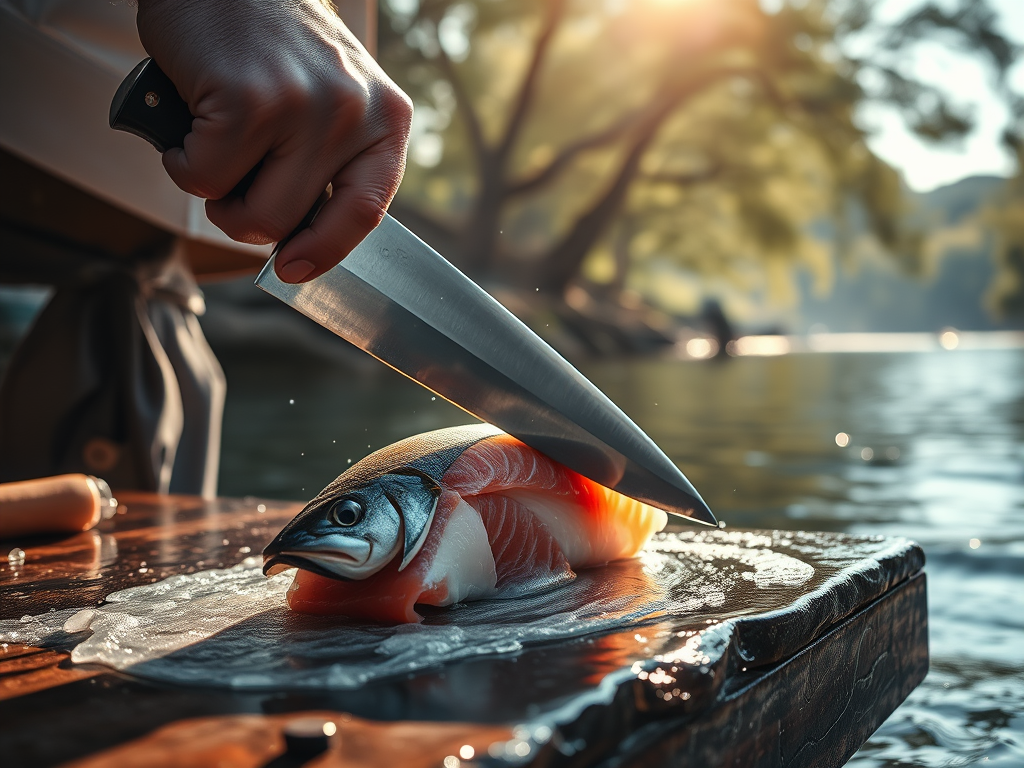
The allure of preparing sashimi in the wild—freshly caught fish, the gentle rush of a river, and the sharp gleam of a Yanagiba knife—evokes a sense of adventure and culinary purity. Yet, this romantic vision comes with serious responsibilities: ensuring food safety, maintaining hygiene, and mastering the technique of sashimi preparation far from the comforts of a modern kitchen. Let’s explore the intersection of tradition, technique, and safety when preparing sashimi by the riverside.
The Yanagiba: The Sashimi Knife of Choice
Anatomy of the Yanagiba
The Yanagiba, often called the “willow blade” for its elegant, elongated shape, is a quintessential tool in Japanese cuisine, especially for preparing sashimi. Its design is the result of centuries of refinement, balancing form and function to achieve the highest standards of precision and delicacy.
Blade Length and Shape
- Length: Yanagiba knives typically range from 210mm to 360mm (8 to 14 inches), with longer blades favored by professionals for slicing larger fish in a single, uninterrupted motion.
- Shape: The blade is narrow and tapers to a pointed tip, allowing for intricate work around bones and skin. The long, straight edge is ideal for drawing cuts, which are essential for sashimi.
Single-Bevel Edge
- Bevel: Unlike Western knives, which are double-beveled, the Yanagiba features a single-bevel edge (usually on the right side for right-handed users). This creates an extremely sharp edge and allows for more precise, cleaner cuts.
- Urasuki: The back side of the blade (urasuki) is slightly concave, reducing friction and preventing slices from sticking to the knife. This subtle feature is crucial for achieving the smooth, glossy surface prized in sashimi.
Blade Thickness and Weight
- Thinness: The blade is relatively thin, which minimizes resistance as it glides through delicate fish flesh.
- Weight: Despite its length, the Yanagiba is lightweight and well-balanced, enabling controlled, graceful movements.
Steel and Sharpness
- Material: Traditionally, Yanagiba knives are forged from high-carbon steel, which can be honed to a razor-sharp edge. Modern versions may use stainless steel for easier maintenance.
- Sharpness: The acute angle of the single bevel allows for an edge that is sharper than most Western knives, essential for preserving the texture and appearance of raw fish.
Handle
- Wa-Handle: The handle is typically made from lightweight wood and has an octagonal or D-shaped cross-section, providing a comfortable, secure grip for precise control.
Why the Yanagiba Excels at Sashimi
- Clean, Single-Motion Cuts: The length and sharpness of the Yanagiba allow the chef to slice through fish in one smooth, uninterrupted motion. This prevents tearing or crushing the flesh, which is vital for maintaining the fish’s natural texture and appearance.
- Minimal Cell Damage: The single-bevel edge and acute sharpness reduce cell rupture, preserving the umami and moisture within the fish.
- Aesthetic Presentation: The Yanagiba’s precision enables the creation of uniform, translucent slices, enhancing the visual appeal of sashimi.
Cultural and Practical Significance
- Symbol of Craftsmanship: In Japanese culinary tradition, the Yanagiba is more than a tool—it is a symbol of the chef’s skill and dedication. Mastery of the Yanagiba is a rite of passage for sushi and sashimi chefs.
- Versatility in the Wild: For riverside sashimi preparation, the Yanagiba’s design is especially advantageous. Its ability to process fish cleanly and efficiently, even in less-than-ideal conditions, makes it the knife of choice for both professionals and serious enthusiasts.
The Yanagiba is a marvel of specialized design, perfectly suited for the art of sashimi. Its anatomy—long, slender, single-beveled, and razor-sharp—enables the precise, delicate cuts that define high-quality raw fish preparation, whether in a professional kitchen or by the riverside.
Why the Yanagiba Excels Outdoors
The Yanagiba’s reputation as the ultimate sashimi knife is not limited to the controlled environment of a professional kitchen. Its unique features make it exceptionally well-suited for outdoor, riverside sashimi preparation, where conditions are less forgiving and precision is paramount.
Single-Bevel Edge: Precision and Preservation
- Ultra-Sharp, Clean Cuts: The single-bevel edge of the Yanagiba is ground at a much steeper angle than double-beveled Western knives, resulting in an edge that is incredibly sharp. This sharpness is crucial outdoors, where you may not have access to advanced sharpening tools and need a knife that can maintain its edge through multiple fish.
- Minimizing Cell Damage: When slicing raw fish for sashimi, the goal is to preserve the integrity of the flesh. The Yanagiba’s single-bevel edge glides through the fish with minimal resistance, reducing cell rupture. This not only keeps the texture smooth and appealing but also helps retain the natural moisture and umami flavors—essential for freshness, especially when refrigeration is unavailable.
- Reduced Sticking: The urasuki (slightly concave back) of the Yanagiba helps prevent slices from sticking to the blade, making it easier to work quickly and cleanly in the field.
Long Blade: Efficiency and Hygiene
- One-Stroke Filleting: The Yanagiba’s long blade allows you to fillet and portion fish in a single, continuous motion. This is especially important outdoors, where surfaces may not be perfectly clean and every extra movement increases the risk of contamination. By minimizing the number of cuts, you reduce the chance of introducing bacteria from the environment or from the fish’s skin and scales into the flesh.
- Handling Larger Fish: River fish can vary greatly in size. The Yanagiba’s length makes it possible to process even larger catches efficiently, without the need for repeated sawing or hacking, which can bruise the flesh and compromise both safety and presentation.
- Less Sawing, Less Mess: Repeated sawing motions with a shorter or duller knife can tear the fish, leave ragged edges, and create more mess—attracting insects and making cleanup harder. The Yanagiba’s design ensures that each slice is clean and controlled, which is invaluable when working in the wild.
Practical Advantages in the Wilderness
- Ease of Cleaning: The Yanagiba’s simple, straight blade is easier to wipe clean between cuts, even with limited water. This helps maintain hygiene standards when resources are scarce.
- Versatility: While specialized for sashimi, the Yanagiba can also be used for other tasks such as skinning and portioning, reducing the need to carry multiple knives into the wilderness.
- Tradition Meets Necessity: The Yanagiba’s design is rooted in centuries of Japanese culinary tradition, where resourcefulness and respect for ingredients are paramount. These values align perfectly with the ethos of outdoor cooking, where every tool must earn its place and every movement must be purposeful.
In the unpredictable and sometimes harsh environment of the outdoors, the Yanagiba’s single-bevel edge and long, slender blade provide unmatched precision, efficiency, and hygiene. These qualities not only elevate the quality of riverside sashimi but also help ensure that the experience is as safe and enjoyable as it is memorable.
Hygiene: The Cornerstone of Safe Sashimi
The Risks of Raw Fish in the Wild
Parasites
- Natural Hosts: Freshwater and some saltwater fish can harbor parasites such as Anisakis (roundworms), tapeworms, and flukes. These organisms are often invisible to the naked eye and can cause serious illness if ingested.
- Life Cycle Factors: Parasites thrive in wild environments where fish are part of complex food chains. Unlike farmed fish, wild-caught specimens are more likely to have been exposed to parasite eggs or larvae.
- No Freezing Option: In restaurants, fish destined for raw consumption are often frozen at -20°C for at least 7 days to kill parasites. In the wilderness, this safety step is usually unavailable, increasing the risk.
Bacteria
- Rapid Growth: Once a fish is caught and killed, bacteria from its gut, gills, and skin begin to multiply rapidly, especially in warm weather.
- Common Pathogens: Vibrio, Salmonella, and Listeria are among the bacteria that can cause food poisoning. These bacteria can be present in the fish itself or introduced from contaminated hands, tools, or surfaces.
- Cross-Contamination: Without access to running water and soap, it’s easy to transfer bacteria from the fish’s exterior or guts to the edible flesh.
Environmental Contaminants
- Water Quality: Rivers and lakes can be contaminated with agricultural runoff, heavy metals, or human waste. Fish from polluted waters may accumulate toxins or pathogens in their tissues.
- Surface Cleanliness: In the wild, you may be forced to use rocks, logs, or improvised boards as cutting surfaces. These are rarely sterile and can harbor dirt, mold, or animal droppings.
- Insects and Wildlife: Flies, ants, and other animals are attracted to fish and can introduce additional bacteria or parasites.
Lack of Modern Sanitation
- No Running Water: Washing hands, knives, and fish with untreated river water may not remove pathogens and can even introduce new ones.
- No Refrigeration: Sashimi-grade fish should be kept cold from the moment of capture. In the wild, unless you have access to ice or very cold water, fish flesh can spoil quickly, increasing the risk of foodborne illness.
- Limited Cleaning Supplies: Without soap, alcohol wipes, or clean towels, maintaining a sanitary workspace is a constant challenge.
Increased Risk of Foodborne Illness
- Symptoms: Consuming contaminated raw fish can lead to nausea, vomiting, diarrhea, abdominal pain, and in severe cases, long-term health complications.
- Vulnerability: Children, pregnant women, the elderly, and those with weakened immune systems are especially at risk.
In the wilderness, the risks associated with eating raw fish are significantly heightened due to the absence of the safety nets provided by modern kitchens—sterile surfaces, refrigeration, and reliable sanitation. Every step, from catching and cleaning the fish to slicing and serving, must be approached with heightened vigilance and respect for hygiene. Understanding these risks is the first and most crucial step in ensuring that the experience of riverside sashimi remains not only delicious but also safe.
Essential Hygiene Practices
Hand Washing
- Why It Matters: Your hands are the primary point of contact with both the fish and your tools. Any bacteria, dirt, or contaminants on your skin can easily transfer to the sashimi, increasing the risk of foodborne illness.
- How to Do It:
- Always wash your hands before and after handling fish, after touching any potentially dirty surfaces, and before eating.
- Use filtered or boiled water to ensure you’re not introducing river-borne pathogens.
- Biodegradable soap is ideal for minimizing environmental impact. Lather thoroughly, scrubbing under fingernails and between fingers for at least 20 seconds.
- If soap is unavailable, alcohol-based hand sanitizer is a good backup, but it’s less effective against some contaminants.
Sanitizing Tools
- Why It Matters: The Yanagiba and any other knives or utensils can harbor bacteria from previous use, the environment, or the fish itself. A contaminated blade can quickly spoil even the freshest catch.
- How to Do It:
- Wipe the blade with alcohol wipes before and after use, especially after gutting or filleting.
- If you have access to a camp stove or fire, boiling the knife for a few minutes is highly effective.
- Avoid laying the knife on the ground or on unclean surfaces; use a clean cloth or designated area.
- If neither alcohol nor boiling is possible, rinse the blade with filtered or boiled water and wipe it dry with a clean cloth.
Clean Surfaces
- Why It Matters: The surface where you process your fish can be a major source of contamination. Dirt, bacteria, and residues from previous meals or wildlife can easily transfer to the fish flesh.
- How to Do It:
- Bring a lightweight, portable cutting board if possible. Clean it thoroughly before use.
- If you must use a rock or log, scrub it with filtered or boiled water and, ideally, pour boiling water over it to sanitize.
- Line natural surfaces with food-safe plastic wrap, parchment paper, or even a clean silicone mat to create a barrier between the fish and the environment.
- Avoid using surfaces that show signs of mold, animal droppings, or excessive dirt.
Fish Handling
- Why It Matters: The way you handle your catch from the moment it leaves the water has a direct impact on its safety and quality as sashimi.
- How to Do It:
- Bleeding: Immediately after catching, cut the gills or make an incision behind the head to bleed the fish. This reduces bacterial growth and improves flavor.
- Gutting: Remove the guts as soon as possible, as the digestive tract is a hotspot for bacteria and parasites.
- Rinsing: Rinse the cavity with filtered or boiled water to remove blood and residual organs.
- Cooling: Keep the fish cool to slow bacterial growth. The best method is to place the cleaned fish in a mesh bag and submerge it in cold, flowing river water. If the water is not cold, use insulated bags with ice packs if available.
- Minimize Exposure: Only expose the fish flesh to the air when you are ready to slice and serve. Cover it with a clean cloth or wrap if you need to step away.
In the wilderness, every step of sashimi preparation must be performed with heightened attention to hygiene. Clean hands, sanitized tools, and safe surfaces are your first line of defense against contamination. Proper fish handling—bleeding, gutting, rinsing, and cooling—ensures that your riverside sashimi is not only delicious but also safe to eat. These practices, though simple, are essential for transforming a wild-caught fish into a meal that honors both tradition and health.
Technique: Processing Fish for Sashimi
Step 1: Bleeding and Gutting
Bleed the Fish
- Why Bleeding Matters:
- Fish blood is rich in enzymes and bacteria that accelerate spoilage and can impart a strong, unpleasant flavor to the flesh if left inside.
- Proper bleeding is a hallmark of high-quality sashimi preparation, as it results in cleaner-tasting, firmer, and more visually appealing fillets.
- In the wild, where refrigeration is limited or absent, bleeding is even more critical to slow down bacterial growth and extend the freshness window.
- How to Bleed a Fish:
- As soon as the fish is caught and dispatched, use your Yanagiba or another sharp knife to make a decisive incision just behind the gills, severing the main arteries.
- For larger fish, you can also cut through the isthmus (the narrow area under the gills connecting the two sides of the jaw) to ensure thorough bleeding.
- Hold the fish head-down over the water or a clean container, allowing gravity to help drain the blood.
- Some anglers also remove the gills entirely to facilitate bleeding.
- Gently massage the body or flex the tail to help expel as much blood as possible.
- Rinse the fish in clean, cold, filtered or boiled water to remove any residual blood from the surface.
Gut Promptly
- Why Gutting is Essential:
- The digestive tract of a fish contains a high concentration of bacteria and digestive enzymes. If left inside, these can quickly migrate into the flesh, causing off-flavors, mushy texture, and increased risk of foodborne illness.
- Prompt gutting is especially important in warm weather or when the fish cannot be immediately chilled.
- How to Gut a Fish:
- Lay the fish on its side on your sanitized cutting surface.
- Insert the tip of your Yanagiba or a small utility knife into the vent (the small opening on the belly, near the tail) and make a shallow incision up toward the gills, being careful not to puncture the intestines.
- Open the belly cavity and gently pull out the entrails, taking care to remove all internal organs, including the liver and kidneys (which are often attached along the backbone).
- For some species, a dark bloodline runs along the backbone; scrape this out with the edge of your knife or a clean spoon.
- Rinse the cavity thoroughly with filtered or boiled water to remove any remaining blood, organ fragments, or slime.
- Inspect the cavity for any remaining bits and remove them to ensure cleanliness.
Additional Tips for Wilderness Sashimi
- Work Quickly: The less time the fish spends at ambient temperature with its guts intact, the safer and tastier your sashimi will be.
- Dispose Properly: Bury entrails and blood away from your prep area and water sources to avoid attracting wildlife and contaminating the environment.
- Keep Cool: After gutting, keep the fish cool (in a mesh bag in cold water or wrapped in a damp cloth in the shade) until you are ready to fillet and slice.
Bleeding and gutting are the foundation of safe, high-quality sashimi preparation—especially in the wilderness. These steps not only preserve the delicate flavor and texture of the fish but also dramatically reduce the risk of spoilage and contamination. By acting quickly and methodically, you set the stage for sashimi that is both delicious and safe to enjoy, even far from the comforts of a modern kitchen.
Step 2: Filleting with the Yanagiba
Filleting is the art of separating the edible flesh from the bones with minimal waste and maximum preservation of texture. The Yanagiba, with its long, razor-sharp, single-bevel blade, is designed for this purpose—enabling clean, precise cuts that are essential for sashimi.
First Cut: Incision Behind the Pectoral Fin
- Preparation:
- Lay the gutted and bled fish on its side on your sanitized cutting surface. Ensure the fish is stable—if it’s slippery, use a clean cloth or paper towel to hold it steady.
- Position the Yanagiba at a slight angle just behind the pectoral fin (the fin closest to the fish’s head on the side).
- The Cut:
- Insert the tip of the blade just behind the pectoral fin, aiming toward the head.
- Slice downward in a smooth, decisive motion until you reach the backbone. The goal is to sever the flesh cleanly without crushing or tearing, preserving the integrity of the fillet.
- This cut defines the starting point for removing the fillet and ensures you maximize the amount of usable meat.
Follow the Spine: Gliding the Blade
- Blade Positioning:
- With the initial cut made, turn the Yanagiba so the edge is parallel to the backbone.
- The single-bevel edge allows you to keep the blade flush against the bones, minimizing waste.
- The Glide:
- Starting at the head end, insert the blade into the cut and gently glide it along the backbone toward the tail in one continuous, sweeping motion.
- Use the full length of the Yanagiba, letting the weight and sharpness of the blade do the work. Avoid sawing or hacking, which can damage the delicate flesh.
- As you move, use your free hand to gently lift the fillet away from the bones, exposing the seam and guiding the blade.
- The goal is to separate the fillet from the rib cage and backbone in a single, elegant stroke, leaving the bones as clean as possible.
Repeat: Filleting the Second Side
- Flipping the Fish:
- Once the first fillet is removed, flip the fish over so the uncut side is facing up.
- Repeat the process: make the initial incision behind the pectoral fin, then glide the blade along the backbone from head to tail.
- Attention to Symmetry:
- The second fillet can be trickier, as the fish is less stable after the first side is removed. Take extra care to keep your cuts smooth and controlled.
- Again, use the full length of the Yanagiba for a single, continuous motion.
Additional Tips for Wilderness Filleting
- Minimize Handling: The less you handle the flesh, the less risk of contamination and the better the texture.
- Inspect for Bones: After filleting, run your fingers gently over the fillet to check for pin bones. Remove any with sanitized tweezers or the tip of your knife.
- Keep Fillets Cool: Place finished fillets on a clean, cool surface or wrap them in a damp cloth until ready to slice for sashimi.
Filleting with the Yanagiba is a blend of precision, efficiency, and respect for the fish. The knife’s design allows you to make clean, single-motion cuts that preserve the flesh’s texture and appearance—crucial for sashimi. By following the backbone and minimizing waste, you honor both the fish and the tradition, ensuring your riverside sashimi is as beautiful as it is delicious.
Step 3: Skinning and Slicing
Skin Removal
- Purpose:
- Removing the skin is essential for sashimi, as the texture and flavor of the skin can detract from the delicate mouthfeel of the raw fish. Clean skinning also improves the visual appeal of each slice.
- How to Do It:
- Place the fillet skin-side down on your sanitized cutting surface.
- Starting at the tail end, make a small incision between the flesh and the skin, just enough to grip the skin with your fingers or a clean cloth.
- Hold the skin taut with one hand. With the other, angle the Yanagiba so the blade is almost parallel to the cutting surface.
- Insert the blade into the incision, and, using a gentle back-and-forth (sawing) motion, work the knife along the length of the fillet. Let the blade glide between the skin and flesh, using its sharpness and length to separate them in a single, smooth motion.
- Try to keep the blade as close to the skin as possible to maximize yield and avoid leaving flesh behind.
- Once the skin is removed, inspect the fillet for any remaining scales or dark tissue and trim as needed.
Slicing Sashimi
- Preparation:
- Before slicing, wipe the Yanagiba clean with a damp cloth or alcohol wipe. A clean blade ensures each cut is smooth and prevents flavors from transferring between slices.
- Place the skinned fillet on the cutting surface, aligning it so you can make long, uninterrupted cuts.
- The Slicing Technique:
- Hold the fillet steady with your non-dominant hand, fingers curled for safety.
- Position the Yanagiba at the desired angle—typically 45 degrees for traditional sashimi slices, but this can vary depending on the fish and your preference.
- Using the full length of the blade, draw the knife toward you in a single, smooth motion. Avoid pressing down or sawing back and forth; the goal is to let the sharpness and weight of the Yanagiba do the work.
- Each slice should be even in thickness (usually 5–10 mm), with a glossy, clean surface and no ragged edges.
- Wipe the blade between cuts to remove any residue and maintain precision.
- Presentation:
- Arrange the slices neatly on a clean plate, leaf, or food-safe surface. Traditional presentation emphasizes the natural beauty and translucency of the fish.
Additional Tips
- Consistency: Uniform slices not only look beautiful but also ensure an even texture and mouthfeel.
- Temperature: Keep the fillet cool until the moment of slicing to maintain firmness and freshness.
- Minimal Handling: Use clean utensils or gloves if possible to avoid warming or contaminating the fish with your hands.
Skinning and slicing are the final, most delicate steps in sashimi preparation. The Yanagiba’s length and sharpness allow you to remove the skin cleanly and produce thin, even slices that highlight the fish’s freshness and texture. With careful technique and attention to hygiene, you can create sashimi in the wilderness that rivals the best sushi bars—an experience that is as much about respect for the fish as it is about culinary skill.
Safety Considerations
Parasite Prevention
Eating raw fish always carries some risk of parasitic infection, but this risk is heightened in the wild, especially with freshwater species. Understanding the dangers and taking practical steps to minimize them is essential for safe sashimi preparation.
Know Your Fish
- Species Susceptibility:
- Not all fish are equally risky. Freshwater fish—such as trout, perch, and pike—are far more likely to harbor parasites like tapeworms (Diphyllobothrium), roundworms (Anisakis, Pseudoterranova), and flukes (Opisthorchiidae, Clonorchis).
- Some saltwater fish, especially those that migrate between fresh and saltwater (like salmon), can also carry parasites.
- Fish that are strictly ocean-dwelling and caught far from shore (e.g., tuna, some mackerel) are generally considered safer for raw consumption, though not entirely risk-free.
- Local Knowledge:
- Research the fish species in your area before your trip. Local fishing guides, wildlife agencies, or experienced anglers can often provide advice on which species are safest to eat raw.
- When in doubt, err on the side of caution and cook the fish thoroughly.
- Freezing as a Safety Step:
- The gold standard for parasite prevention is freezing the fish at -20°C (-4°F) or colder for at least 7 days, or at -35°C (-31°F) for 15 hours. This kills most parasites that may be present.
- In the wilderness, access to such freezing conditions is rare or impossible. If you cannot freeze your catch, be extra vigilant with inspection and consider only eating sashimi from species with a lower risk profile.
Visual Inspection
- What to Look For:
- Carefully examine the fillets for any signs of parasites. Common indicators include:
- Small, white or cream-colored worms embedded in the flesh.
- Cysts or nodules, which may appear as small, round, opaque spots.
- Unusual discoloration or texture changes in the meat.
- Parasites can sometimes be found coiled near the belly cavity, along the backbone, or within the muscle tissue itself.
- Carefully examine the fillets for any signs of parasites. Common indicators include:
- Inspection Technique:
- Hold the fillet up to the light or against a dark background to make worms or cysts more visible.
- Use the tip of your Yanagiba or sanitized tweezers to remove any suspicious material.
- If you find multiple parasites or cysts, it’s safest to discard the fish or cook it thoroughly.
- Limitations:
- Visual inspection is not foolproof. Some parasites are microscopic or hidden deep within the flesh. This is why freezing is the recommended method for total safety, and why some wilderness sashimi enthusiasts choose to avoid raw freshwater fish altogether.
Additional Tips for Parasite Prevention
- Avoid Raw Consumption of High-Risk Species:
- If you’re unsure about the safety of a particular fish, it’s best to cook it. Heat reliably kills parasites.
- Use Only the Freshest Fish:
- Parasites are more likely to migrate from the gut into the flesh after the fish dies. Gutting and chilling the fish immediately slows this process.
- Educate Yourself:
- Learn to identify common parasites in your region and understand the risks associated with different fish species.
Parasite prevention is a critical aspect of safe sashimi preparation in the wild. While freezing is the most reliable method, it’s rarely available outdoors. Therefore, knowing your fish, performing careful visual inspections, and erring on the side of caution are essential. When in doubt, remember: it’s better to enjoy your catch cooked than to risk illness from a wilderness sashimi adventure.
Environmental Cleanliness
Waste Disposal: Why It Matters
Proper disposal of fish waste—guts, scales, skin, bones, and trimmings—is not just a matter of personal hygiene. It is a crucial practice for:
- Protecting the Environment: Preventing contamination of rivers and lakes preserves water quality for wildlife and other people.
- Wildlife Safety: Discarded fish waste can attract bears, raccoons, foxes, and other animals, potentially putting both you and the animals at risk.
- Leave No Trace Ethics: Responsible outdoor cooking means minimizing your impact and ensuring the wilderness remains pristine for future visitors.
Best Practices for Waste Disposal
- Distance from Water Sources:
- Always dispose of fish guts and trimmings at least 60 meters (about 200 feet) away from any river, lake, or stream. This prevents nutrients and bacteria from entering the water, which can cause algal blooms and harm aquatic life.
- Never throw waste directly into the water, even if it seems like it will “wash away.” Decomposing organic matter can disrupt the ecosystem and attract scavengers.
- Burying Waste:
- Dig a hole at least 15–20 cm (6–8 inches) deep to bury fish waste. This depth helps mask the scent from animals and accelerates decomposition.
- Cover the waste thoroughly with soil, packing it down to deter animals from digging it up.
- If the ground is frozen or rocky and you cannot dig, double-bag the waste in odor-proof bags and pack it out if possible.
- Avoiding High-Traffic Areas:
- Do not bury waste near campsites, trails, or picnic areas. This reduces the chance of attracting wildlife to places where people gather.
- Handling Tools and Surfaces:
- After disposing of waste, clean your knives, cutting boards, and hands thoroughly with filtered or boiled water and biodegradable soap.
- Wipe down any surfaces that came into contact with raw fish to prevent lingering odors and bacteria.
Additional Considerations
- Wildlife Awareness:
- In bear country, be especially vigilant. Fish waste is a powerful attractant. Consider using bear-proof containers or hanging waste in a tree until you can dispose of it properly.
- Community Responsibility:
- If you’re in a popular fishing or camping area, follow posted regulations for fish cleaning stations or waste disposal. Some areas provide designated bins or composting sites.
- Leave No Trace Principle:
- Always strive to leave your site cleaner than you found it. Pack out all non-biodegradable materials, including packaging, wipes, and gloves.
Environmental cleanliness is an essential part of wilderness sashimi preparation. By burying fish waste far from water sources, cleaning up thoroughly, and respecting local wildlife and regulations, you help protect the ecosystem, ensure the safety of future visitors, and honor the spirit of responsible outdoor adventure.
Conclusion
Preparing sashimi in the wilderness is far more than a culinary exercise—it is a profound engagement with nature, tradition, and personal discipline. The process demands not only technical skill with the Yanagiba knife but also a deep sense of responsibility toward both your own health and the environment around you.
The Yanagiba: More Than a Tool
The Yanagiba is not just a knife; it is an extension of the chef’s intent and respect for the fish. Its design, honed over centuries, allows for the precise, delicate cuts that define sashimi. In the wild, where every movement must be purposeful and every resource is precious, the Yanagiba’s efficiency and elegance shine. Each slice is a testament to the harmony between human craftsmanship and the gifts of the river.
The Ritual of Hygiene and Technique
Wilderness sashimi is a ritual that begins long before the first cut. It starts with the careful selection and immediate processing of the fish—bleeding, gutting, and cooling to preserve freshness and prevent spoilage. Every step, from hand washing to tool sanitization, is a conscious act of respect for the food and for those who will share it. The technique of filleting, skinning, and slicing is not just about aesthetics; it is about maximizing quality, minimizing waste, and ensuring safety.
Safety and Cleanliness: The Foundation of the Experience
The wild is unpredictable. Without the safeguards of a modern kitchen, the risks of parasites, bacteria, and environmental contamination are real and ever-present. By prioritizing safety—knowing your fish, inspecting for parasites, maintaining scrupulous hygiene, and disposing of waste responsibly—you transform a potentially risky endeavor into a safe and rewarding one. Cleanliness is not just a matter of taste; it is the foundation upon which the entire experience rests.
A Celebration of Freshness and Tradition
When all these elements come together, preparing sashimi by the riverside becomes a celebration. It is a moment where the freshness of the catch, the sharpness of the blade, and the serenity of the natural world converge. The act of sharing sashimi in the wild is a tribute to centuries-old traditions, a way of honoring both the fish and the environment that sustains it.
The True Harmony
Ultimately, wilderness sashimi is about balance—between skill and humility, tradition and innovation, enjoyment and responsibility. When approached with care, the experience is not only memorable and delicious but also deeply meaningful. It is a true harmony of nature and culinary art, where every bite carries the story of the river, the fish, and the hands that prepared it.




 UTAZCO Overland
Leave a Reply