
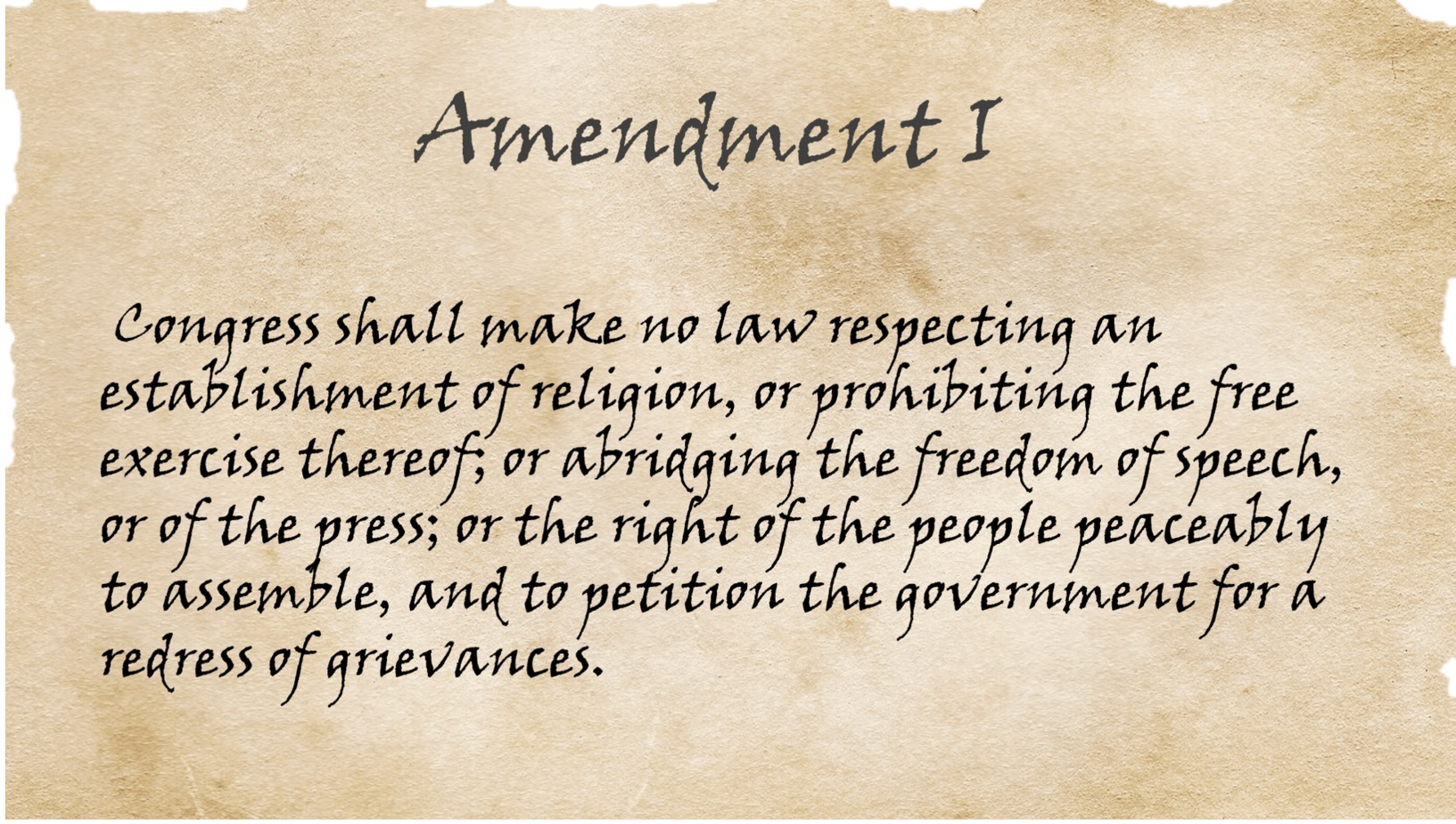
The First Amendment of the United States Constitution enshrines the principle of free speech, a cornerstone of democratic society. This amendment guarantees that “Congress shall make no law… abridging the freedom of speech, or of the press.” However, contemporary debates have emerged around the concepts of “hate speech” and “mis- or disinformation” censorship. These debates raise critical questions about the boundaries of free speech and the role of private platforms in moderating content. This essay argues that the very concepts of hate speech and disinformation censorship are fundamentally antithetical to the principles of free speech and the First Amendment. By extension, it is imperative that platforms like X (formerly Twitter) remain censorship-free to uphold these democratic values.
The First Amendment and Free Speech
Historical Context and Intent
The First Amendment of the United States Constitution, ratified in 1791 as part of the Bill of Rights, was a revolutionary concept in its time. The framers of the Constitution, influenced by Enlightenment thinkers such as John Locke and Voltaire, recognized the importance of protecting individual liberties against potential tyranny. They understood that a robust democracy requires a free and open exchange of ideas, where citizens can debate, criticize, and hold their government accountable without fear of retribution.
The First Amendment states, “Congress shall make no law… abridging the freedom of speech, or of the press.” This clear and unequivocal language was designed to prevent the government from imposing restrictions on speech and expression. The framers were acutely aware of the dangers of censorship, having witnessed the oppressive regimes in Europe where dissent was often met with severe punishment. They sought to create a society where individuals could freely express their thoughts, beliefs, and criticisms.
The Marketplace of Ideas
The concept of the “marketplace of ideas” is central to the First Amendment. This metaphor, popularized by Justice Oliver Wendell Holmes in his dissent in Abrams v. United States (1919), suggests that the best way to discover truth and promote societal progress is through the free competition of ideas. In this marketplace, all ideas, regardless of how controversial or offensive they may be, are allowed to be expressed and debated. The underlying belief is that through open discourse, the most valid and beneficial ideas will ultimately prevail.
This principle is not just about protecting speech that is popular or agreeable. In fact, the true test of free speech is the protection of dissenting, unpopular, or even offensive opinions. The framers understood that progress often comes from challenging the status quo and that societal advancement requires the ability to question and criticize prevailing norms and authorities.
Safeguarding Dissent and Unpopular Opinions
One of the most critical aspects of the First Amendment is its protection of dissent. Throughout history, many of the most significant social and political changes have been driven by individuals and groups who dared to speak out against prevailing norms and injustices. The abolitionist movement, the civil rights movement, and the women’s suffrage movement are just a few examples of how dissenting voices have played a crucial role in advancing human rights and equality.
The protection of unpopular opinions is equally important. What is considered offensive or unacceptable today may be viewed differently in the future. For example, many ideas that were once considered radical or heretical, such as the notion of racial equality or the right to same-sex marriage, are now widely accepted. By safeguarding the right to express unpopular opinions, the First Amendment ensures that society remains open to new ideas and perspectives, fostering an environment where progress and innovation can occur.
The Chilling Effect of Censorship
Censorship, whether imposed by the government or private entities, can have a chilling effect on free speech. When individuals fear repercussions for expressing their views, they may choose to remain silent, depriving society of valuable insights and perspectives. This chilling effect undermines the very foundation of a democratic society, where open discourse and debate are essential for informed decision-making and governance.
The framers of the Constitution recognized that the suppression of speech could lead to a stagnant and oppressive society. By enshrining the principle of free speech in the First Amendment, they sought to create a dynamic and vibrant democracy where ideas could be freely exchanged, and individuals could speak their minds without fear.
The First Amendment’s protection of free speech is a fundamental pillar of American democracy. It was designed to prevent government overreach and to ensure a marketplace of ideas where diverse viewpoints could be expressed without fear of censorship. The framers of the Constitution understood that the free exchange of ideas, even those that are controversial or offensive, is essential for the health of a democratic society. By safeguarding the right to express dissenting, unpopular, or even offensive opinions, the First Amendment fosters an environment where progress, innovation, and societal advancement can occur.
Uncomfortable/Unpopular Speech and Its Implications
Defining Uncomfortable/Unpopular Speech
Hate speech is generally understood as speech that offends, threatens, or insults individuals or groups based on attributes such as race, religion, ethnic origin, sexual orientation, disability, or gender. The intent behind regulating hate speech is often to protect vulnerable communities from harm and to promote social harmony. However, the concept of hate speech is fraught with complexities and challenges that make its regulation problematic.
Mis- and disinformation refer to the spread of false or misleading information. Misinformation is false information shared without harmful intent, while disinformation is deliberately deceptive information spread with the intent to mislead. Both can have serious consequences, such as undermining public trust, influencing elections, and causing public health crises. However, the approach to addressing these issues is critical, as censorship can pose significant threats to free speech and democratic principles.
Subjectivity and Ambiguity
One of the primary issues with speech regulation is its inherent subjectivity. What constitutes hate speech can vary widely depending on cultural, social, and individual perspectives. For example, a statement that one person finds deeply offensive might be seen by another as a legitimate expression of opinion or a critique of certain ideologies or behaviors. This subjectivity makes it difficult to create clear and consistent standards for what should be considered hate speech.
The ambiguity surrounding hate speech can lead to arbitrary enforcement. Authorities or platforms tasked with regulating speech may apply rules inconsistently, influenced by their own biases or external pressures. This can result in the suppression of legitimate discourse and the uneven application of penalties, undermining the principle of equal protection under the law.
Similarly, the primary challenges in censoring mis- or disinformation is the subjective nature of determining what constitutes false information. Truth is not always black and white; it can be complex and multifaceted. Different perspectives, interpretations, and contexts can lead to varying conclusions about what is true or false. This subjectivity raises concerns about who gets to decide what information is accurate and what is not.
Political and ideological biases can further complicate the determination of truth. Those in positions of power, whether in government or private platforms, may have their own agendas and biases that influence their decisions. This can lead to the suppression of information that challenges the status quo or contradicts the prevailing narrative, even if that information is legitimate and valuable.
Potential for Abuse
The subjective nature of hate speech regulation opens the door to potential abuse. Governments or powerful entities could use hate speech laws as tools to silence dissent and suppress opposition. By labeling certain viewpoints as hate speech, they can justify censorship and control over public discourse. This is particularly concerning in authoritarian regimes, but even in democratic societies, the misuse of hate speech laws can erode civil liberties and stifle free expression.
Censorship of disinformation can also lead to the suppression of legitimate dissent and alternative viewpoints. In a democratic society, it is crucial to allow for the contestation of ideas, even if some of those ideas are later proven to be incorrect. The process of debate and scrutiny is essential for the discovery of truth and the advancement of knowledge.
History is replete with examples of ideas that were initially dismissed or ridiculed but later proven to be true or valuable. For instance, the heliocentric model of the solar system, the theory of evolution, and the concept of germ theory all faced significant opposition before gaining acceptance. Suppressing dissenting viewpoints can stifle innovation and prevent the emergence of new and important ideas.
Chilling Effect on Free Speech
Hate speech laws can create a chilling effect, where individuals self-censor out of fear of repercussions. When people are uncertain about what constitutes hate speech and the potential consequences of their words, they may choose to remain silent rather than risk punishment. This self-censorship undermines the very essence of free speech, which is to allow for open and robust debate.
The chilling effect extends beyond individuals to media organizations, academic institutions, and other entities that play crucial roles in public discourse. Fear of legal action or social backlash can lead these institutions to avoid controversial topics, limiting the diversity of viewpoints and stifling intellectual exploration.
The Role of Critical Thinking and Media Literacy
Rather than suppressing speech, the solution to the spread of false information lies in promoting critical thinking and media literacy. Educating the public to critically evaluate information, recognize biases, and verify sources can empower individuals to discern truth from falsehood. Media literacy programs can teach people how to navigate the complex information landscape, identify credible sources, and understand the motivations behind different types of content.
By fostering a more informed and discerning public, society can mitigate the impact of false information without resorting to censorship. This approach respects the principles of free speech while addressing the root causes of misinformation.
The Marketplace of Ideas
In a truly free society, the response to offensive or harmful speech should be more speech, not enforced silence. The marketplace of ideas, a concept central to the First Amendment, posits that the best way to discover truth and promote societal progress is through the free competition of ideas. In this marketplace, all ideas, regardless of how controversial or offensive they may be, are allowed to be expressed and debated. The underlying belief is that through open discourse, the most valid and beneficial ideas will ultimately prevail.
This approach encourages individuals to engage with and challenge offensive speech rather than suppress it. Through dialogue and education, harmful ideas can be exposed and discredited, fostering a more informed and resilient society. Suppressing speech, on the other hand, can drive harmful ideas underground, where they may fester and grow without challenge.
Censorship of mis- or disinformation undermines this marketplace by removing certain ideas from public discourse. This not only limits the diversity of viewpoints but also prevents the public from critically engaging with and challenging false information. By allowing all ideas to be expressed, society can better discern truth from falsehood and promote understanding and tolerance.
Legal Precedents and Protections
In the United States, the Supreme Court has consistently upheld the principle that speech, even if offensive or hateful or if that expression includes false information, is protected under the First Amendment, except in cases where it directly incites imminent lawless action or causes specific harm, such as defamation or fraud. Landmark cases such as Brandenburg v. Ohio (1969) have established that speech can only be restricted if it is directed to inciting imminent lawless action and is likely to produce such action. This high threshold for restricting speech underscores the importance of protecting free expression, even when it is deeply offensive.
While some countries have implemented hate speech laws, the U.S. legal system prioritizes the protection of free speech, recognizing that the benefits of open discourse outweigh the potential harms of offensive speech. This legal framework reflects a commitment to the principles of the First Amendment and the belief that a free and open society is best equipped to address and counteract harmful ideas.
Ethically, the suppression of speech raises concerns about autonomy and the right to self-determination. Individuals have the right to access information, make their own judgments, and engage in public discourse. Censorship, even with good intentions, can infringe on these rights and undermine the democratic process.
The regulation of hate speech, while well-intentioned, poses significant challenges and risks to free expression. The subjective nature of what constitutes hate speech, the potential for abuse, and the chilling effect on free speech all undermine the principles of the First Amendment. In a truly free society, the response to offensive speech should be more speech, not enforced silence. By fostering open and robust debate, society can better address and counteract harmful ideas, promoting understanding and tolerance while safeguarding the fundamental right to free expression.
The censorship of mis- or disinformation poses significant threats to free speech and democratic principles. While the spread of false information can have serious consequences, the solution lies in promoting critical thinking and media literacy rather than suppressing speech. The subjective nature of determining truth, the potential for bias and abuse, and the suppression of legitimate dissent all underscore the importance of protecting free expression. By fostering an informed and discerning public and allowing for the contestation of ideas, society can better
The Role of Private Platforms
The Influence of Private Platforms
In the digital age, private platforms like X (formerly Twitter) have become central to public discourse. These platforms serve as modern-day public squares where individuals from around the world can share ideas, debate issues, and engage in conversations. Unlike traditional media, which is often subject to regulatory oversight, social media platforms operate with a significant degree of autonomy. This autonomy gives them immense power over what information is disseminated and how public discourse is shaped.
Legal Distinctions and Social Responsibility
While the First Amendment restricts government actions against free speech, private platforms are not legally bound by the same constraints. They have the right to set their own terms of service and community guidelines, which can include content moderation policies. However, given their influential role in shaping public discourse, these platforms have a social responsibility to uphold the principles of free speech.
When private platforms engage in censorship, they risk becoming gatekeepers of information. This can have a stifling effect on public debate, as certain viewpoints may be suppressed while others are amplified. The power to control what information is seen and heard can lead to a homogenization of ideas, where only certain narratives are allowed to flourish.
The Risks of Censorship by Private Platforms
- Arbitrary Enforcement: Content moderation policies are often vague and subject to interpretation. This can lead to arbitrary enforcement, where similar content is treated differently based on subjective judgments. Users may find themselves censored or banned without clear explanations, leading to frustration and a sense of injustice.
- Bias and Influence: Private platforms are run by individuals and organizations with their own biases and interests. These biases can influence content moderation decisions, leading to the suppression of certain viewpoints while promoting others. This can create an echo chamber effect, where users are only exposed to information that aligns with the platform’s biases.
- Suppression of Dissent: In a democratic society, dissenting voices play a crucial role in challenging the status quo and promoting progress. When private platforms censor dissenting viewpoints, they undermine the democratic process and stifle innovation. Suppressing dissent can also lead to a lack of accountability, as those in power are not challenged or held to account.
Elon Musk’s Vision for X
Elon Musk’s vision for X as a censorship-free platform is crucial in this context. By allowing a wide range of viewpoints to be expressed, X can serve as a true marketplace of ideas. This approach aligns with the principles of the First Amendment, which prioritize the free exchange of ideas and the protection of dissenting voices.
- Promoting Open Discourse: A censorship-free platform encourages open discourse and the exchange of diverse viewpoints. This can lead to a more informed and engaged public, as individuals are exposed to a broader range of ideas and perspectives. Open discourse also fosters critical thinking, as users are challenged to evaluate and respond to different viewpoints.
- Counter-Speech and Fact-Checking: Allowing harmful or false information to go unchallenged is not the goal of a censorship-free platform. Instead, the response should be through counter-speech and fact-checking. By promoting counter-speech, platforms can encourage users to engage with and challenge false information, leading to a more informed public. Fact-checking can provide users with accurate information and context, helping them to make informed decisions.
- Empowering Users: A censorship-free platform empowers users to take responsibility for their own information consumption. By providing tools and resources for critical evaluation, platforms can help users to navigate the complex information landscape and make informed decisions. This approach respects the autonomy and intelligence of users, rather than treating them as passive recipients of information.
Challenges and Considerations
While the vision of a censorship-free platform is appealing, it is not without challenges. Balancing the need for open discourse with the responsibility to prevent harm is a complex task. Platforms must navigate issues such as harassment, hate speech, and the spread of harmful misinformation, while still upholding the principles of free speech.
- Content Moderation: Even a censorship-free platform will need some form of content moderation to address issues such as harassment, threats, and illegal content. The challenge is to implement moderation policies that are transparent, consistent, and fair, without stifling legitimate discourse.
- Community Standards: Platforms can establish community standards that promote respectful and constructive discourse. These standards should be developed in consultation with users and should reflect the values and principles of the platform. Clear and transparent guidelines can help to build trust and accountability.
- Technological Solutions: Advances in technology can provide new tools for addressing the challenges of content moderation. For example, artificial intelligence and machine learning can be used to identify and flag harmful content, while still allowing for human oversight and judgment. Technological solutions should be used to enhance, rather than replace, human decision-making.
Private platforms like X play a significant role in shaping modern public discourse. While they are not bound by the First Amendment in the same way that the government is, they have a social responsibility to uphold the principles of free speech. Elon Musk’s vision for X as a censorship-free platform is crucial in this context, as it promotes open discourse, counter-speech, and fact-checking, rather than suppression. By allowing a wide range of viewpoints to be expressed, X can serve as a true marketplace of ideas, fostering a more informed and engaged public. However, achieving this vision requires careful consideration of the challenges and a commitment to transparency, fairness, and accountability.
Conclusion
The concepts of hate speech and disinformation censorship are fundamentally at odds with the principles of free speech and the First Amendment. While the intentions behind these forms of censorship may be to protect individuals and society, they ultimately undermine the democratic values they seek to uphold. It is therefore imperative that platforms like X remain committed to free speech, allowing for a diverse and open exchange of ideas. In doing so, they can help to foster a more informed and resilient society.



 UTAZCO Overland
Leave a Reply