
The Essential Edge: Knives in Outdoor Living
A knife is more than just a tool in the outdoors—it’s a symbol of preparedness, adaptability, and self-reliance. The right blade bridges the gap between civilization and wilderness, empowering campers to meet challenges with skill and confidence. Let’s explore how different knives serve unique roles in outdoor living, and why understanding these distinctions elevates both safety and enjoyment.
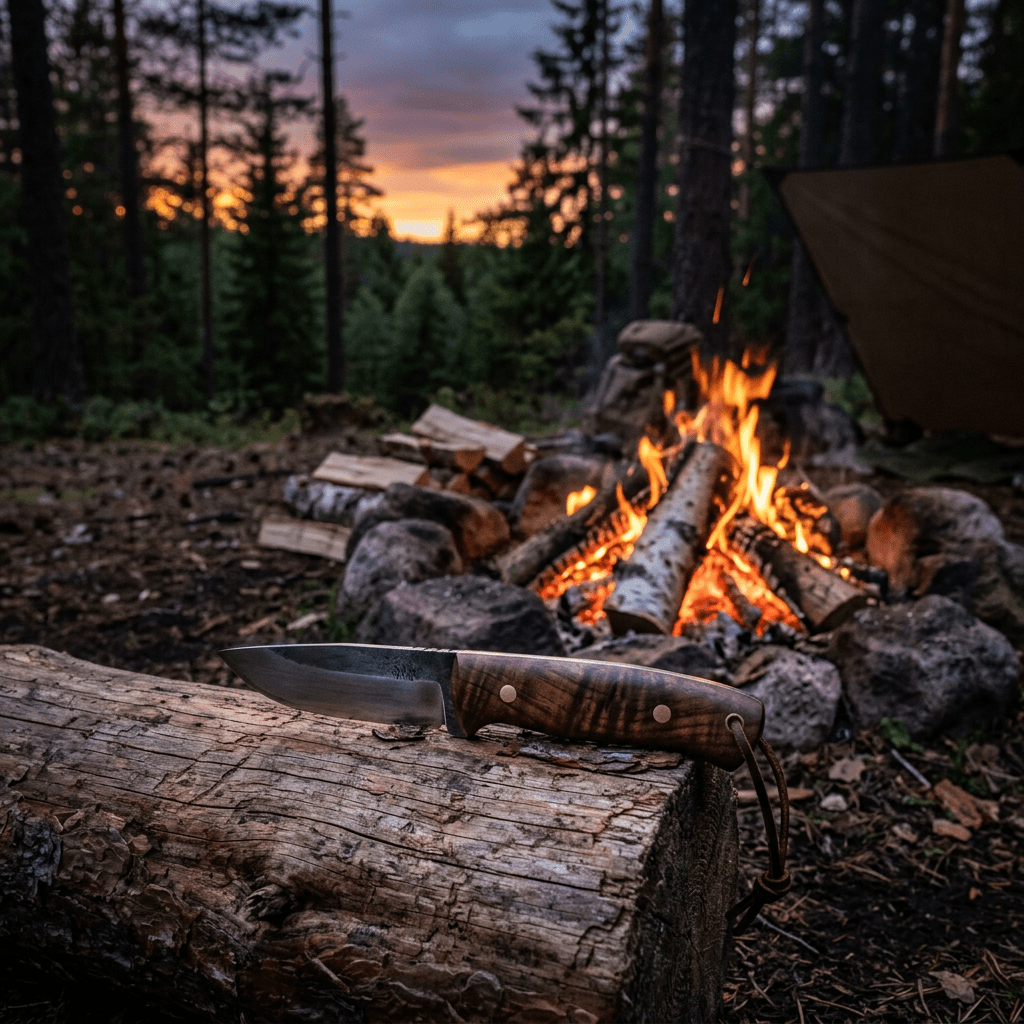
Bushcraft Knives: The Wilderness Workhorse
Philosophy: Bushcraft knives are designed for versatility and durability. Rooted in the ethos of self-sufficiency, these knives are built to handle the unpredictable demands of the wild—making shelter, processing wood, preparing food, and even first aid.
Key Features:
- Robust Construction: Full-tang blades (the steel runs through the handle) for strength and reliability.
- Blade Shape: Drop-point or Scandinavian grind for controlled carving and slicing.
- Materials: High-carbon or stainless steel for edge retention and corrosion resistance.
- Handle: Ergonomic, often textured for grip in wet or cold conditions.
Typical Uses:
- Feather-sticking and fire prep
- Batoning wood for kindling
- Carving tent stakes, traps, or utensils
- Light food prep (if needed)
- Emergency tasks (cutting rope, first aid)
Philosophy in Practice: A bushcraft knife is about adaptability. It’s the tool you reach for when you need to improvise, repair, or survive. Its design reflects the principle that, in the wild, one reliable tool is better than a dozen specialized ones you don’t have.
Kitchen Knives: Culinary Precision in Camp
Philosophy: While bushcraft knives are generalists, kitchen knives are specialists. They bring the finesse and efficiency of home cooking to the outdoors, transforming camp meals from basic sustenance to memorable experiences.
Key Features:
- Blade Geometry: Thin, sharp edges for clean slicing and dicing.
- Specialization: Chef’s knives, paring knives, and even Japanese styles (gyuto, santoku, petty) each excel at specific tasks.
- Materials: Stainless or high-carbon steel for sharpness and ease of maintenance.
- Handle: Comfortable, often designed for extended prep sessions.
Typical Uses:
- Slicing vegetables, fruits, and proteins
- Filleting fish or deboning meat
- Precision cuts for garnishes or delicate ingredients
- Preparing dough, cheese, or other camp gourmet fare
Philosophy in Practice: A dedicated kitchen knife at camp is about elevating the experience. It’s for those who see outdoor cooking as an art, not just a necessity. The right blade makes prep safer, faster, and more enjoyable—especially when sharing meals is central to the adventure.
Packing Smart: Choosing the Right Knife(s)
Efficiency and Safety: Understanding the strengths of each knife helps campers avoid overpacking or, worse, being underprepared. A bushcraft knife can handle most survival tasks, but it’s less ideal for fine food prep. Conversely, a kitchen knife excels at culinary tasks but isn’t built for heavy-duty woodwork.
Common Approaches:
- Minimalist: One high-quality bushcraft knife, used for everything.
- Balanced: A bushcraft knife for camp chores + a compact kitchen knife for food prep.
- Gourmet: Full camp kitchen kit (chef’s knife, paring knife, etc.) + a sturdy outdoor blade.
Safety Note: Using the right knife for the right job reduces accidents. For example, batoning wood with a thin kitchen knife risks breaking the blade and causing injury.
The Knife as an Extension of Self
In the outdoors, a knife becomes an extension of your intent and skill. The more you understand its design and purpose, the more confidently you can tackle challenges—whether that’s splitting kindling in the rain or filleting a trout by the lakeshore.
Self-Reliance: Mastering your knife means mastering your environment. It’s about resourcefulness, respect for the tool, and the satisfaction of doing more with less.
Enjoyment: A sharp, well-chosen knife makes every task smoother and more enjoyable, turning chores into rituals and meals into celebrations.
Summary Table
| Knife Type | Strengths | Typical Camp Uses | Best For |
|---|---|---|---|
| Bushcraft Knife | Durability, versatility, survival tasks | Wood processing, fire prep, shelter, basic food prep | Minimalist, survival-focused campers |
| Kitchen Knife | Precision, efficiency, culinary finesse | Slicing, dicing, filleting, meal prep | Foodies, group cooks, gourmet campers |
| Both | Complements each other | All of the above | Balanced, prepared campers |
The essential edge in outdoor living isn’t just about the blade you carry—it’s about knowing how and when to use it. By understanding the philosophies behind bushcraft and kitchen knives, campers can pack smarter, work safer, and savor every moment in the wild.
Bushcraft Knives: Tools of Self-Reliance
Purpose-Built for the Wild
Bushcraft knives are not generic blades—they are specifically engineered for the unpredictable and demanding conditions of wilderness living. Their design reflects a philosophy of preparedness and adaptability, where one tool must serve many roles reliably.
Key Design Elements
- Full-Tang Construction: The blade steel runs the entire length of the handle, maximizing strength and preventing breakage during heavy tasks like batonning or prying.
- Blade Material:
- High-carbon steel (e.g., 1095, O1): Takes a razor edge, easy to sharpen in the field, develops a patina that resists rust.
- Stainless steel (e.g., Sandvik, VG10): More resistant to corrosion, requires less maintenance, but can be harder to sharpen.
- Blade Thickness and Grind:
- Thick spine (typically 3–5 mm): Withstands pounding and prying.
- Scandinavian (Scandi) grind: Single, wide bevel makes for easy field sharpening and excellent wood carving control.
- Flat grind: Offers a balance between slicing ability and durability.
- Handle Ergonomics:
- Shaped for a secure grip, even when wet, cold, or gloved.
- Materials like micarta, G10, or textured rubber provide traction and comfort.
Shaping the Environment
Unlike kitchen knives, which process food, bushcraft knives are about shaping the environment—turning raw materials into useful objects and resources.
Core Camp Tasks
- Batonning Firewood: Splitting small logs by striking the spine with another stick (baton), turning larger pieces into kindling.
- Feather Sticking: Creating fine, curly shavings from wood for fire-starting—a test of both blade sharpness and user skill.
- Carving Tools and Utensils: Crafting tent stakes, pot hangers, spatulas, or even primitive traps from green wood.
- Scraping and Striking:
- The squared-off spine can scrape bark for tinder or magnesium from a fire starter.
- Used to strike a ferrocerium rod, showering sparks to ignite a fire.
- Light Game Preparation: While not as specialized as a hunting knife, a bushcraft blade can skin small game or clean fish in a pinch.
Multitasking in Scarcity
When you’re far from civilization, redundancy is a luxury. The bushcraft knife’s ruggedness means you can trust it for tasks that would destroy a more delicate blade—without fear of catastrophic failure.
Building Skill and Connection
A bushcraft knife is not just a tool—it’s a teacher. Using one well requires and develops a set of skills that foster a deeper relationship with both the tool and the land.
Mindful Technique
- Carving Angles: Learning how to control the blade for different cuts—push cuts, pull cuts, stop cuts—teaches respect for both the knife and the material.
- Respecting Wood Grain: Understanding how wood splits and carves, and working with (not against) its natural structure.
- Rhythm and Repetition: Tasks like feather sticking or carving stakes become meditative, building muscle memory and patience.
Satisfaction Beyond Convenience
- Self-Reliance: The ability to create what you need from what’s around you—shelter, fire, tools—builds confidence and independence.
- Connection to Place: Each task, from splitting wood to crafting a spoon, deepens your awareness of the environment and your place within it.
Summary Table
| Feature | Purpose/Benefit | Example in Camp |
|---|---|---|
| Full-tang, thick spine | Strength for heavy tasks | Batonning, prying, splitting wood |
| Scandi/flat grind | Easy sharpening, carving control | Feather sticks, tool making |
| Ergonomic handle | Safe, secure grip in all conditions | Wet, cold, or gloved hands |
| Rugged steel | Withstands abuse, holds edge | Scraping, striking ferro rod, food prep |
| Multitasking | Reduces need for multiple tools | Shelter, fire, food, craft |
A bushcraft knife is the cornerstone of wilderness self-reliance. Its design and use encourage not just survival, but a mindful, skillful engagement with the land—transforming necessity into craft, and routine into ritual. The more you use it, the more it becomes an extension of your hand and your will, deepening your connection to both the wild and yourself.
Kitchen Knives: Precision for Camp Cuisine
The Role of Kitchen Knives in Camp
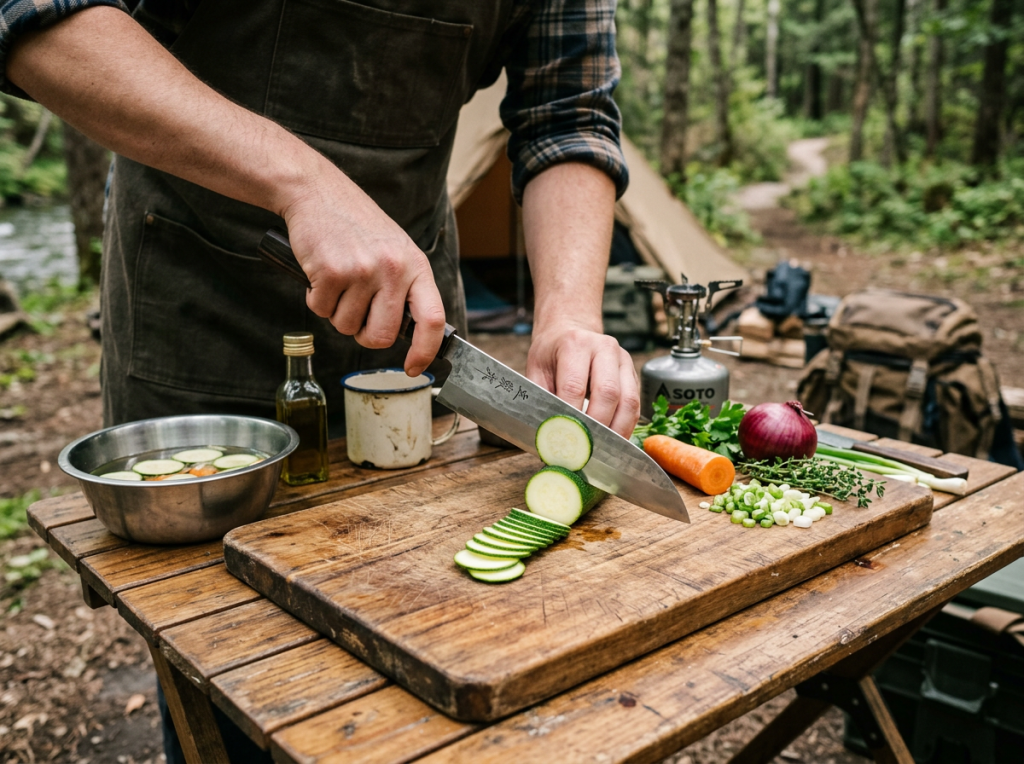
While bushcraft knives handle the heavy work of camp life, a kitchen knife, especially a Japanese single-bevel kitchen knife, brings a level of precision and artistry to outdoor cooking that transforms simple meals into memorable experiences. These knives, traditionally used by sushi and kaiseki chefs, are designed for specialized tasks—slicing, filleting, and intricate vegetable work—making them ideal for campers who value both technique and presentation, even in the wild.
Design Features: The Artistry of Single-Bevel Blades
Single-Bevel Geometry:
- Single-Bevel Edge: Unlike Western double-bevel knives, Japanese single-bevel knives are ground on one side only, creating an extremely sharp, precise edge. This allows for ultra-clean cuts and exceptional control, especially for delicate ingredients.
- Blade Shapes:
- Yanagiba: Long, slender blade for slicing raw fish or proteins in a single, smooth pull.
- Usuba: Tall, thin blade for intricate vegetable work, such as katsuramuki (rotary peeling) or fine julienne.
- Deba: Thick, heavy blade for breaking down and filleting fish or poultry.
- Kiritsuke: Hybrid blade for both slicing fish and precision vegetable work.
- Steel Choices: High-carbon steels (like White #2 or Blue #2) are common, offering razor-sharp edges and easy field sharpening, though they require care to prevent rust.
Handles:
- Traditional Japanese wa-handles (often made from ho wood or magnolia) are lightweight and provide excellent control, even with wet hands.
Advantages in Camp Cooking
Unmatched Precision:
- Clean Slicing: The single-bevel edge glides through proteins and vegetables with minimal cellular damage, preserving texture and flavor—ideal for sashimi, carpaccio, or delicate garnishes.
- Specialized Tasks: Each knife excels at its intended role: yanagiba for fish, usuba for vegetables, deba for butchery. This specialization allows for professional-level results, even outdoors.
Efficiency and Presentation:
- Even Cuts: Uniform slices and dices ensure even cooking and beautiful presentation, elevating camp meals beyond the ordinary.
- Reduced Waste: The precision of single-bevel knives means less food lost to rough chopping or bruising.
Hygiene and Maintenance:
- Easy to Clean: The smooth, flat surfaces of Japanese knives are easy to wipe clean, and the lack of deep grooves reduces the risk of bacteria buildup.
- Dedicated Use: Using a single-bevel knife for food only (not for wood or general camp chores) maintains its edge and hygiene.
Practical Considerations for Campers
Portability and Protection:
- Japanese knives are often thinner and more brittle than Western knives, so a protective saya (wooden sheath) or blade guard is essential for safe transport.
- Compact versions or shorter lengths (e.g., 180–210mm yanagiba or usuba) are easier to pack and handle at camp.
Sharpening in the Field:
- Single-bevel knives are easy to touch up with a small whetstone or ceramic rod, but require some skill to maintain the correct angle.
- High-carbon steel needs to be dried and oiled after use to prevent rust, especially in humid or wet environments.
Best Use Cases:
- Ideal for campers who enjoy preparing fresh fish, vegetables, or Japanese-inspired dishes.
- Perfect for those who appreciate the ritual and mindfulness of precise knife work, even in the outdoors.
Summary Table
| Knife Type | Strengths | Typical Camp Uses | Best For |
|---|---|---|---|
| Yanagiba | Ultra-clean slicing, long blade | Slicing fish, proteins, sashimi | Anglers, sushi lovers |
| Usuba | Precision vegetable work | Peeling, fine slicing, garnishes | Vegetable-focused camp meals |
| Deba | Heavy-duty butchery, filleting | Breaking down fish, poultry | Fishing, game prep |
| Kiritsuke | Versatile, hybrid tasks | Slicing, vegetable work | All-around camp chefs |
The Experience: Japanese Knife Rituals in the Wild
Bringing Japanese single-bevel knives to camp is about more than just cooking—it’s about embracing a tradition of mindfulness, skill, and respect for ingredients. The act of slicing fish for sashimi by a lakeshore, or peeling daikon into paper-thin sheets under the trees, connects the camper to centuries of culinary craftsmanship. These knives reward careful technique and elevate even the simplest meal into a celebration of nature and skill.
Japanese single-bevel kitchen knives bring precision, artistry, and tradition to camp cuisine. Their specialized edges and elegant forms turn outdoor cooking into a mindful, rewarding ritual—making every meal a moment of beauty and satisfaction, even far from home.
Complementary Roles: Why Bring Both
Division of Labor: Efficiency and Edge Preservation
Bringing both a bushcraft knife and a kitchen knife to camp isn’t about redundancy—it’s about letting each tool excel at what it does best. This division of labor is the foundation of a smooth, enjoyable outdoor experience.
- Bushcraft Knife: Handles the demanding, rough tasks—batoning firewood, splitting kindling, carving tent stakes, crafting spits, or even shaping a wooden spoon. Its robust construction and thicker edge are designed to withstand impacts and leverage, making it the go-to for anything that involves wood, rope, or improvisation.
- Kitchen Knife (especially Japanese single-bevel): Reserved for food prep—slicing, dicing, filleting, and garnishing. Its fine, razor-sharp edge is protected from abuse, ensuring clean cuts and maintaining hygiene. The kitchen knife’s precision transforms meal prep into a pleasure, not a chore.
Result: By assigning each knife to its optimal tasks, you preserve their edges, reduce the risk of chipping or dulling, and avoid the frustration of using the wrong tool for the job.
A Typical Camp Routine: Synergy in Action
Imagine an evening at camp:
- Bushcraft Knife:
- Clears a safe workspace by trimming brush or splitting logs.
- Prepares firewood—batoning larger pieces into kindling, shaving feather sticks for tinder.
- Crafts a simple wooden spatula or stirring stick from green wood.
- Kitchen Knife:
- Dices onions, carrots, and potatoes for a stew, ensuring even cooking.
- Slices fish or meat with a yanagiba or deba, preserving texture and flavor.
- Finely chops herbs or prepares garnishes for a finishing touch.
Synergy: The bushcraft knife sets the stage—fire, tools, and workspace—while the kitchen knife brings finesse to the meal. Each blade is used where it shines, making the whole process smoother, safer, and more satisfying.
Personal Systems: Tailoring to Your Adventure
Experienced campers develop systems that reflect their style, group size, and trip goals:
- Minimalist Approach:
- One high-quality bushcraft knife for all tasks, plus a compact folding kitchen knife for food prep.
- Ideal for solo or short trips where weight and simplicity matter.
- Balanced Kit:
- Full-size bushcraft knife and a dedicated kitchen knife (e.g., a small yanagiba or usuba).
- Suitable for small groups or longer stays where cooking is a highlight.
- Gourmet/Basecamp Setup:
- Multiple kitchen knives (chef’s, paring, Japanese single-bevels) and a robust bushcraft blade.
- Perfect for group camps, fishing trips, or when elaborate meals are planned.
Intentional Selection: The key is to match your kit to your trip:
- Short, mobile trips: Prioritize versatility and weight.
- Basecamp or group outings: Bring specialized tools for efficiency and enjoyment.
Safety and Hygiene: Another Layer of Benefit
- Safety: Using the right knife for the right job reduces the risk of injury. For example, splitting wood with a kitchen knife can lead to broken blades and accidents.
- Hygiene: Keeping food knives separate from those used on wood, soil, or game helps prevent cross-contamination and keeps your meals safer.
Summary Table
| Task/Phase | Bushcraft Knife Role | Kitchen Knife Role (Single-Bevel) |
|---|---|---|
| Fire Prep | Batonning, feather sticks, splitting | — |
| Workspace Setup | Clearing, crafting utensils | — |
| Food Prep | — | Slicing, dicing, filleting, garnishing |
| Cooking/Serving | Shaping stirring sticks, skewers | Fine control for seasoning, plating |
| Cleanup | — | Easy to clean, maintain hygiene |
The Real Magic: Confidence, Capability, and Enjoyment
When bushcraft and kitchen knives work together, camp life becomes more efficient, safer, and more enjoyable. You gain confidence knowing you have the right tool for every task, capability to handle both survival and culinary challenges, and the freedom to focus on what matters—enjoying the outdoors and sharing great meals.
Bringing both a bushcraft and a kitchen knife isn’t about carrying more—it’s about carrying smarter. Their complementary roles create a synergy that elevates every aspect of camp life, from fire prep to the final garnish on your evening meal.
Maintenance and Safety Considerations
Maintenance: Keeping Knives Sharp, Clean, and Reliable
Bushcraft Knives
- Field Stropping: Regular stropping on leather (or even improvised materials like a belt) keeps the edge aligned and sharp between major sharpenings. This is especially useful after heavy wood processing or batoning.
- Sharpening: A portable whetstone, ceramic rod, or diamond plate is ideal for restoring a bushcraft knife’s edge in the field. The robust, often Scandi or flat grind makes it easy to maintain a consistent angle, even for beginners.
- Cleaning: After use, especially in wet or muddy conditions, wipe the blade clean and dry it thoroughly. For high-carbon steels, apply a thin layer of oil to prevent rust.
- Inspection: Regularly check for chips, cracks, or loose handles. Addressing small issues early prevents catastrophic failures in the field.
Japanese Single-Bevel Kitchen Knives
- Frequent Honing: The fine, acute edge of single-bevel knives (yanagiba, usuba, deba) benefits from frequent honing with a ceramic rod or fine whetstone. This maintains razor sharpness for precise cuts.
- Sharpening: Use a high-grit whetstone (e.g., 3000–8000 grit) to restore the edge. Pay attention to the unique single-bevel geometry—maintain the correct angle and avoid over-sharpening the flat side.
- Cleaning: Always hand-wash and dry immediately after use. Never leave these knives soaking or exposed to acidic foods for long periods, as high-carbon Japanese steels are prone to rust and staining.
- Storage: Use a saya (wooden sheath), blade guard, or wrap in a cloth to protect the edge and prevent accidents in your camp kit.
Safety: Best Practices for Knife Use at Camp
- Clear Workspace: Designate a safe, stable area for knife work, away from foot traffic and distractions. Keep the ground free of debris to avoid slips.
- Cutting Technique: Always cut away from your body and keep your non-cutting hand clear of the blade’s path. Use a stable cutting surface (wooden board, log, or flat rock).
- Knife Etiquette:
- Pass knives handle-first.
- Announce when moving with a knife in hand.
- Never leave knives unattended or within reach of children.
- Teach all group members, especially beginners and kids, the basics of safe handling and respect for sharp tools.
- Secure Storage: Store knives in sheaths, blade guards, or dedicated rolls when not in use. This prevents accidental cuts and protects the edge.
Environmental Responsibility
- Ethical Materials: Choose knives from reputable makers who use responsibly sourced steel and handle materials (e.g., FSC-certified wood, recycled synthetics).
- Leave No Trace:
- Never leave behind broken blades, metal shavings, or sharpening debris.
- If a knife is damaged beyond repair, pack it out for proper disposal.
- Longevity: A well-maintained knife can last decades, reducing waste and the environmental impact of frequent replacements.
Summary Table
| Aspect | Bushcraft Knife | Japanese Kitchen Knife (Single-Bevel) |
|---|---|---|
| Edge Maintenance | Field stropping, coarse stone | Frequent honing, fine whetstone |
| Cleaning | Wipe, dry, oil if carbon steel | Hand-wash, dry immediately |
| Storage | Sheath or blade guard | Saya, blade guard, or cloth wrap |
| Safety | Cut away, clear workspace | Same; extra care for fine edge |
| Environmental Impact | Ethical materials, pack out waste | Same; avoid leaving metal debris |
Proper maintenance ensures your knives are always ready for the task at hand—whether splitting kindling or slicing sashimi. Safe habits protect both people and tools, while environmental responsibility preserves the wild places we love. In the end, a well-cared-for knife is not just a tool, but a trusted companion that enhances every outdoor adventure.
Choosing Your Camp Knife Philosophy
Minimalist Approach: The One-Knife Solution
Philosophy: Minimalists believe in doing more with less. They seek simplicity, lightness, and adaptability, often carrying a single, high-quality bushcraft knife as their all-purpose tool.
Advantages:
- Weight Savings: Less gear to carry, ideal for backpackers and thru-hikers.
- Simplicity: Fewer decisions, less clutter, and less to maintain.
- Skill Development: Mastery of one tool encourages creative problem-solving and resourcefulness.
Trade-offs:
- Compromise: A bushcraft knife can process wood and handle basic food prep, but it won’t match the precision of a dedicated kitchen knife for fine slicing or delicate tasks.
- Edge Wear: Using one knife for everything means more frequent sharpening and greater risk of dulling or damaging the edge.
Best For: Solo adventurers, ultralight backpackers, or those who value self-reliance and adaptability above all.
Food-Focused Approach: Culinary Excellence in the Wild
Philosophy: For some, camp cooking is a highlight of the outdoor experience. These campers bring dedicated kitchen knives—often Japanese single-bevels like yanagiba, usuba, or deba—to elevate every meal.
Advantages:
- Precision and Presentation: Clean cuts, even slices, and beautiful plating are possible, even far from home.
- Enjoyment: Cooking becomes a creative, satisfying ritual, not just a necessity.
- Hygiene: Dedicated food knives are easier to keep clean and sanitary.
Trade-offs:
- Extra Weight and Bulk: More knives mean more to pack and protect.
- Specialization: Kitchen knives are not suited for heavy camp chores like splitting wood or carving tools.
Best For: Campers who love to cook, anglers preparing fresh fish, group outings where shared meals are central, or anyone who sees food as a key part of the adventure.
Balanced Approach: The Best of Both Worlds
Philosophy: Most campers find that carrying both a bushcraft knife and a kitchen knife (or two) offers the greatest flexibility and enjoyment. Each tool is used for its intended purpose, maximizing efficiency and safety.
Advantages:
- Efficiency: Heavy tasks and fine prep are handled by the right tool, reducing frustration and risk.
- Edge Preservation: Each knife’s edge lasts longer when used appropriately.
- Versatility: Ready for anything—from fire prep to gourmet meals.
Trade-offs:
- Slightly More Gear: Requires thoughtful packing and organization.
- Learning Curve: Understanding when and how to use each knife takes some experience.
Best For: Most campers, especially those on longer trips, in groups, or who want to balance practicality with culinary enjoyment.
Knives as Symbols: Preparation, Skill, and Respect
Knives at camp are more than just tools—they are extensions of the camper’s philosophy and relationship with the outdoors.
- Preparation: The right knife (or combination) reflects forethought and readiness for the challenges of the wild.
- Skill: Mastery of knife technique—whether carving feather sticks or slicing sashimi—builds confidence and self-reliance.
- Respect: Caring for your knives, using them safely, and choosing them wisely shows respect for both the tools and the environment.
Making Your Choice: Questions to Consider
- What is the primary focus of your trip—survival, adventure, or cuisine?
- How much weight and space can you dedicate to knives?
- Are you traveling solo or with a group?
- What kinds of meals do you want to prepare?
- How comfortable are you with knife maintenance and sharpening in the field?
Summary Table
| Philosophy | Typical Kit | Strengths | Trade-offs | Best For |
|---|---|---|---|---|
| Minimalist | 1 bushcraft knife | Light, simple, versatile | Less precision for food | Solo, ultralight, survivalists |
| Food-Focused | 1–2 kitchen knives (single-bevel) | Culinary excellence, hygiene | More gear, less utility for wood | Camp chefs, anglers, foodies |
| Balanced | Bushcraft + kitchen knife(s) | Efficiency, versatility, safety | Slightly more to carry | Most campers, groups, basecamp |
Choosing your camp knife philosophy is about more than steel—it’s about how you want to experience the outdoors. Whether you value simplicity, gourmet meals, or a blend of both, understanding the strengths of bushcraft and kitchen knives equips you not just for survival, but for thriving wherever the trail leads. Your knives become a reflection of your preparation, skill, and respect for the wild places you explore.
Conclusion: The Edge of Experience
Knives at camp are far more than simple tools—they are reflections of our intentions, skills, and relationship with the outdoors. Bushcraft knives embody rugged self-reliance, shaping the environment and meeting the unpredictable demands of wilderness living. Japanese single-bevel kitchen knives bring precision, artistry, and a sense of ritual to camp cuisine, transforming meals into memorable experiences.
The real magic happens when these blades work together, each excelling in its domain: the bushcraft knife preparing fire and shelter, the kitchen knife elevating food preparation. This synergy not only preserves the integrity of each tool but also enhances safety, efficiency, and enjoyment at camp.
Ultimately, the best camp knife philosophy is a personal choice—shaped by your style of adventure, culinary ambitions, and desire for simplicity or specialization. Whether you carry one trusted blade or a thoughtfully chosen combination, understanding the unique strengths of bushcraft and kitchen knives empowers you to thrive in the wild. With proper care, respect, and intentional use, your knives become lifelong companions—enabling you to meet challenges, savor every meal, and deepen your connection to nature with every cut.



 UTAZCO Overland
Leave a Reply