
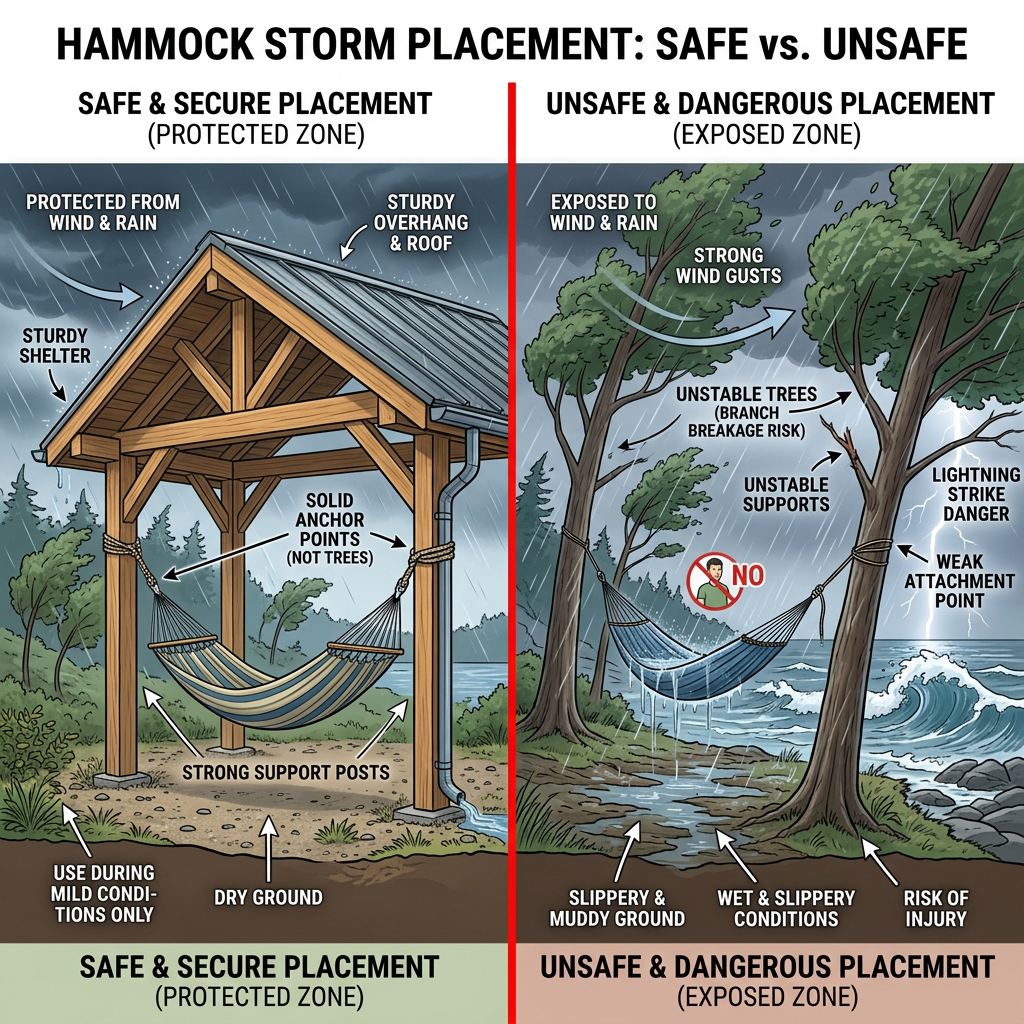
Hammock camping offers a unique connection to nature, but thunderstorms introduce significant risks that require careful planning and knowledge. This essay explores the best practices for staying safe while hammock camping during thunderstorms, covering preparation, site selection, gear considerations, and emergency protocols.
Understanding the Risks of Thunderstorms
Thunderstorms are complex weather events that present a unique set of dangers to hammock campers. The most immediate and life-threatening risk is lightning. Lightning seeks the path of least resistance to the ground, and tall objects such as trees are natural targets. When you suspend a hammock between two trees, you are placing yourself in close proximity to these potential lightning rods. If a tree is struck, the electrical current can travel through the trunk, the ground, and even along wet surfaces, posing a direct threat to anyone nearby or attached to the tree. The risk is not limited to a direct strike; ground current and side flashes can also cause serious injury or death.
In addition to lightning, strong winds are a frequent companion to thunderstorms. These winds can reach speeds capable of snapping branches or even toppling entire trees. Hammock campers, who rely on trees for support, are especially vulnerable to falling limbs—often referred to as “widowmakers”—which can fall without warning during or after a storm. The elevated position of a hammock, while comfortable in fair weather, offers little protection from such hazards.
Heavy rain is another significant concern. Hammocks, by design, leave campers exposed to the elements unless a tarp or rainfly is used. Intense rainfall can quickly saturate gear, leading to discomfort and, in cooler temperatures, hypothermia. Furthermore, heavy rain can cause rapid changes in the landscape, such as flash flooding or pooling water, especially if the campsite is located in a low-lying area or near a water source. The combination of wet conditions and wind chill can dramatically increase the risk of hypothermia, even in summer months.
Finally, thunderstorms can create a sense of disorientation and panic, especially at night. The sudden onset of thunder, flashes of lightning, and the roar of wind and rain can make it difficult to think clearly or execute a safety plan. For hammock campers, who may be suspended above uneven or sloped ground, the challenge of quickly exiting the hammock and seeking safer shelter is compounded by darkness and slippery conditions.
Understanding these interconnected risks—lightning, wind, rain, falling branches, and the psychological stress of a storm—is essential for anyone considering hammock camping during thunderstorm season. Only by acknowledging and preparing for these dangers can campers make informed decisions that prioritize their safety.
Lightning
Thunderstorms, in their unpredictability and intensity, create a hazardous environment for anyone outdoors, but hammock campers face a particularly heightened vulnerability. The central danger is lightning, a force of nature that can strike with little warning and devastating consequences. Trees, which are essential for hammock camping, become liabilities during a storm. Their height and moisture content make them prime conductors for lightning, and when a hammock is suspended between them, the camper is placed in a perilous position. The electrical energy from a lightning strike does not simply travel down the tree; it can radiate outward through the ground, leap to nearby objects in a side flash, or even travel along wet ropes and gear. This means that even if the camper is not directly struck, the proximity to the trees and the interconnectedness of the setup can result in severe injury or fatality from indirect electrical currents.
The threat does not end with lightning. Thunderstorms are often accompanied by powerful, gusting winds that can transform a tranquil forest into a dangerous landscape. These winds exert tremendous force on tree limbs, many of which may be weakened or dead without the camper’s knowledge. Such branches, known ominously as “widowmakers,” can break off and fall with little warning, especially under the stress of a storm. The hammock, suspended above the ground and reliant on the very trees that are now swaying and shedding debris, offers no real protection from falling wood. In fact, the elevated position may make it harder to react quickly or shield oneself if a branch comes crashing down.
Rain, while less immediately dramatic than lightning or wind, poses its own set of dangers. Hammocks, unless paired with a well-secured tarp, leave campers exposed to the full force of precipitation. A sudden downpour can soak sleeping bags, clothing, and gear, stripping away insulation and comfort. In cooler conditions, this wetness can rapidly lead to hypothermia, as the body loses heat much faster when damp. Moreover, heavy rain can alter the landscape in minutes, turning gentle slopes into streams or causing water to pool beneath the hammock. If the campsite is near a river or in a depression, flash flooding becomes a real and immediate threat, potentially sweeping away gear or making escape routes impassable.
Beyond the physical dangers, thunderstorms can have a profound psychological impact. The sensory overload of thunder, lightning, and wind can induce panic or confusion, especially in the darkness of night. For a hammock camper, the challenge of exiting the hammock quickly—perhaps in slippery, uneven terrain—adds to the stress. The combination of fear, disorientation, and the need for rapid decision-making can lead to mistakes or accidents, compounding the risks already present.
Hammock camping during thunderstorms is fraught with interconnected dangers. Lightning, wind, rain, and falling branches each present unique threats, but together they create a scenario where vigilance, preparation, and respect for nature’s power are absolutely essential. Recognizing and understanding these risks is not just a matter of comfort, but of survival.
Wind and Rain
Wind and rain, though often considered less dramatic than lightning, are formidable forces during a thunderstorm and can quickly turn a hammock camping experience into a dangerous ordeal. When a thunderstorm rolls in, the wind rarely arrives gently. Instead, it often comes in sudden, violent gusts that sweep through the forest, bending trees and sending loose branches tumbling to the ground. For the hammock camper, this is a particularly acute hazard. The very trees that provide support for the hammock become unstable, swaying under the force of the wind. Even healthy trees can lose branches, but those that are dead or weakened—sometimes invisible to the casual observer—are especially prone to snapping. A falling branch, even a relatively small one, can cause serious injury or worse if it lands on a camper or their gear. In extreme cases, entire trees can be uprooted or broken, especially in saturated soil where roots lose their grip.
The wind also tests the integrity of the camper’s setup. Tarps and rainflies, if not properly secured, can be ripped away or shredded, leaving the camper exposed. The hammock itself, suspended and lightweight, can become a sail in strong gusts, making it difficult to stay sheltered or even causing the camper to be tossed about. The noise of the wind, combined with the creaking and groaning of trees, can be disorienting and frightening, making it harder to assess the situation or respond quickly to new dangers.
Rain, meanwhile, brings its own set of challenges. A heavy downpour can begin with little warning, saturating the forest floor and quickly overwhelming any inadequately pitched tarp. Water can seep into the hammock, soaking sleeping bags and clothing, and pooling beneath the setup. In cooler temperatures, this moisture is not just uncomfortable—it can be life-threatening. Wet clothing and gear lose their insulating properties, and the body’s heat is rapidly drawn away, increasing the risk of hypothermia even in seasons that are not typically cold. The psychological toll of being wet and cold, combined with the stress of the storm, can sap a camper’s energy and decision-making ability.
Flooding is another danger that comes with heavy rain. Low-lying areas, dry creek beds, or spots near rivers can become inundated in minutes, sometimes with little warning. Water can rise quickly, carrying debris and making escape routes treacherous or impassable. Even if the hammock itself remains above the water, the surrounding area may become a hazardous, muddy quagmire, complicating any attempt to move to safer ground.
Together, wind and rain during a thunderstorm create a dynamic and unpredictable environment. The interplay of falling branches, shifting trees, flying debris, and rising water demands constant vigilance and adaptability from the hammock camper. Without proper preparation and an understanding of these risks, what begins as a peaceful night in the trees can swiftly become a struggle for safety and survival.
Preparation Before the Trip
Weather Monitoring
Preparation before embarking on a hammock camping trip, especially when thunderstorms are a possibility, begins with diligent weather monitoring. This process is far more than a cursory glance at the weekly forecast; it is an ongoing commitment to understanding and anticipating the atmospheric conditions that could impact your safety.
Before leaving home, a responsible camper will consult multiple weather sources, comparing local and regional forecasts to identify patterns or warnings that might affect the chosen campsite. This includes looking for not only the likelihood of thunderstorms but also the timing, expected severity, and any associated hazards such as high winds or flash flood alerts. Understanding the broader weather trends in the area—such as seasonal storm patterns or the likelihood of sudden weather shifts—can inform decisions about where and when to camp.
However, weather is inherently unpredictable, especially in mountainous or forested regions where conditions can change rapidly. For this reason, preparation does not end once the trip begins. Bringing along tools for real-time weather monitoring is essential. Many campers rely on smartphone apps that provide up-to-the-minute radar images, lightning strike maps, and severe weather alerts. In areas with limited cell service, a portable NOAA weather radio becomes invaluable, offering continuous updates and emergency broadcasts that can warn of approaching storms even when other communication methods fail.
The act of monitoring the weather is not passive. It requires regular check-ins, especially as clouds gather or winds shift. A camper who is attuned to subtle changes in temperature, humidity, or wind direction can often sense an approaching storm before it appears on a screen. This awareness allows for timely decisions, such as seeking shelter or relocating the campsite, rather than being caught off guard.
Thorough weather monitoring is the foundation of safe hammock camping in thunderstorm-prone areas. It empowers campers to make informed choices, adapt to changing conditions, and avoid unnecessary risks, transforming what could be a dangerous situation into a manageable challenge.
Emergency Planning
Emergency planning is a crucial aspect of hammock camping, particularly when thunderstorms are a possibility. This process begins long before you set foot on the trail, with careful consideration of how you will communicate your plans and respond to unexpected situations. One of the most fundamental steps is to ensure that someone you trust knows your itinerary in detail. This includes not only your intended route and campsites but also your expected return time and any alternative plans you might consider if the weather turns. By sharing this information, you create a safety net; if you fail to check in or return as scheduled, your contact can alert authorities and provide them with the details needed to initiate a search or rescue.
Beyond communication, emergency planning involves a thorough understanding of the landscape and the resources available to you. Before your trip, you should identify the locations of the nearest shelters, ranger stations, or other safe havens along your route. This knowledge is invaluable if a thunderstorm develops suddenly and you need to seek protection from lightning, wind, or flooding. In some areas, this might mean knowing the distance and direction to a trailhead, a sturdy building, or even a low-lying area away from tall trees and open fields. Familiarizing yourself with these options allows you to make quick, confident decisions under pressure, rather than scrambling to find safety in the midst of a storm.
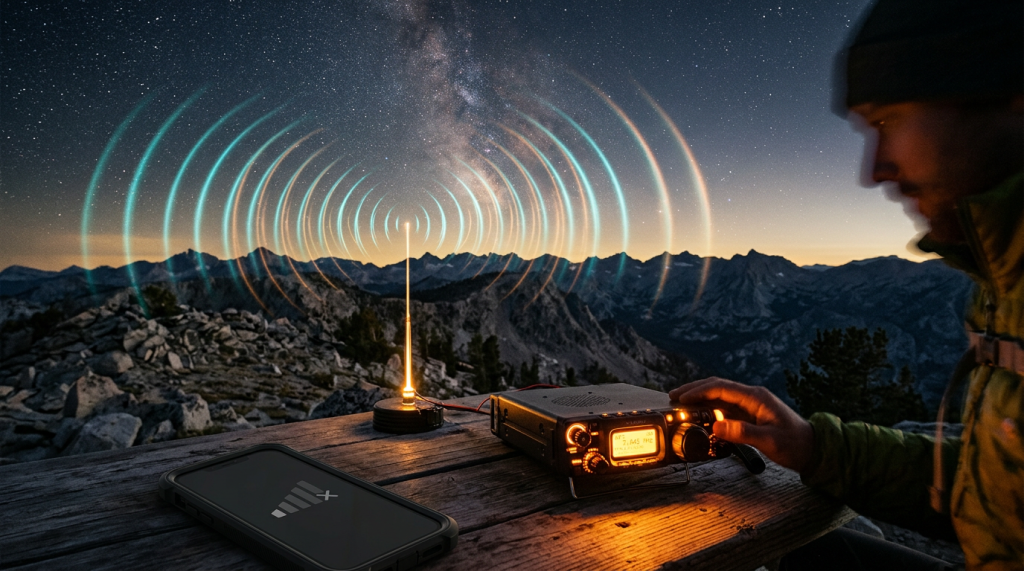
Effective emergency planning also means considering how you will communicate if you need help. In remote areas, cell service may be unreliable or nonexistent, so carrying a satellite messenger, personal locator beacon, or two-way radio can be a lifesaver. These devices enable you to call for assistance even when traditional methods fail, ensuring that you are never truly isolated.
Emergency planning is about anticipating the unexpected and equipping yourself with the knowledge and tools to respond effectively. It transforms a potentially dangerous situation into one where you retain a measure of control, increasing your chances of staying safe and returning home without incident. By taking these steps seriously, you demonstrate respect for both the power of nature and the value of your own well-being.
Site Selection: The Key to Safety
Selecting the right site for your hammock is perhaps the most critical decision you will make when camping in areas prone to thunderstorms. The landscape itself can either amplify or mitigate the dangers posed by severe weather, and a thoughtful approach to site selection can mean the difference between a safe night and a hazardous ordeal.
When you arrive at your intended camping area, the first consideration should be the topography. High ground, such as ridges, hilltops, or exposed plateaus, may offer sweeping views and a sense of openness, but these locations are also more likely to attract lightning strikes. Lightning seeks the shortest path to the ground, and elevated sites provide exactly that. Conversely, setting up in a depression or valley may seem like a safer alternative, but these areas can quickly become channels for water during heavy rain, increasing the risk of flash flooding or water pooling beneath your hammock.
The trees you choose for your hammock anchors are equally important. While it is tempting to select the largest, most robust trees for support, these are often the tallest in the area and therefore more likely to be struck by lightning. Instead, safety is found among clusters of trees of similar height, where the electrical charge is more likely to be distributed rather than concentrated. The health of the trees is also paramount; dead or damaged trees, or those with large overhanging branches, can become deadly projectiles in strong winds. A careful inspection of your chosen trees and their immediate surroundings is essential to avoid the risk of falling limbs, known as “widowmakers.”
Proximity to water is another factor that demands attention. While camping near a stream or lake can be picturesque and convenient, these locations are susceptible to rapid changes during a thunderstorm. Heavy rainfall can cause water levels to rise with alarming speed, turning a tranquil setting into a hazardous flood zone. Even if your hammock remains above the water, the surrounding area may become muddy, unstable, or impassable, complicating any attempt to move to safer ground.
The density of the forest also plays a role in your safety. A site nestled among a stand of medium-height trees provides a natural buffer against wind and reduces the likelihood of a direct lightning strike. However, the area should not be so dense that it becomes difficult to spot potential hazards, such as dead branches or unstable trees. Ideally, your site will offer a balance between protection and visibility, allowing you to monitor changing conditions and respond quickly if necessary.
Site selection is an exercise in risk management. It requires a keen awareness of your environment, a willingness to forego convenience or aesthetics for safety, and the humility to move on if a site does not meet your criteria. By prioritizing these considerations, you lay the groundwork for a safer and more resilient camping experience, even in the face of nature’s most unpredictable storms.
Avoid High Ground and Isolated Trees
Avoiding high ground and isolated trees is a fundamental principle of safe hammock camping during thunderstorms, rooted in the physics of how lightning behaves. When a thunderstorm approaches, the electrical potential between the clouds and the ground increases dramatically. Lightning seeks the shortest and most conductive path to the earth, which is why elevated points in the landscape—such as ridges, hilltops, and open fields—are at greater risk of being struck. Setting up a hammock in these locations, while perhaps offering scenic vistas or a sense of openness, exposes you directly to this danger. The lack of surrounding features means that you, your hammock, and the trees you use for support may become the highest points in the immediate area, effectively turning your campsite into a lightning rod.
Similarly, isolated trees or those that stand taller than their neighbors are natural targets for lightning. In a forested area, lightning is more likely to strike the tallest tree or the one that stands alone in a clearing, as it provides the most direct route for the electrical charge to reach the ground. If your hammock is suspended between such trees, you are placing yourself in a position of heightened vulnerability. The energy from a lightning strike can travel down the trunk, through the roots, and even along the ground surface, affecting not just the tree itself but anything attached to or near it—including your hammock and gear.
The danger is not limited to a direct strike. Lightning can also cause side flashes, where the electrical current jumps from the struck tree to a nearby object, or ground current, which radiates outward from the point of impact. Both scenarios can be deadly for anyone in close proximity. Even if the storm seems distant, the unpredictability of lightning means that strikes can occur miles ahead of the rain or thunder, making it essential to avoid these risky locations at all times when thunderstorms are possible.
By deliberately choosing to set up your hammock away from high ground and isolated trees, you significantly reduce your exposure to one of the most lethal aspects of a thunderstorm. Instead, seek out areas where the trees are of similar height and density, and where the landscape does not elevate you above your surroundings. This approach, grounded in an understanding of natural forces, is a key step in ensuring your safety and peace of mind while camping in the wild.
Stay Away from Water
Staying away from water sources such as rivers, lakes, and streams is a critical safety measure when hammock camping in areas where thunderstorms are possible. While the allure of camping near water is undeniable—offering scenic beauty, easy access to hydration, and a calming atmosphere—the risks during a storm far outweigh these benefits.
Thunderstorms can unleash intense rainfall in a very short period, sometimes overwhelming the ground’s ability to absorb water. When this happens, water levels in nearby rivers and streams can rise rapidly, often with little warning. What begins as a gentle trickle or a placid shoreline can transform into a torrent, flooding the surrounding area and sweeping away anything in its path. Even if your hammock is suspended above the ground, the approach to your campsite, your gear, and your escape routes can quickly become submerged or impassable. The force of moving water is deceptively strong, capable of uprooting trees, shifting large rocks, and creating hazardous currents that pose a danger to anyone caught nearby.
Lakes and ponds, while less prone to swift currents, are not immune to the dangers of flooding. Heavy rain can cause water to spill over natural or artificial banks, inundating low-lying areas and turning solid ground into mud or standing water. This not only threatens your comfort and the integrity of your campsite but also increases the risk of hypothermia, as wet conditions combined with wind can sap body heat quickly.
Beyond the immediate threat of flooding, water attracts lightning. Open bodies of water are often the highest or most conductive features in a landscape, making them more likely to be struck during a thunderstorm. Setting up camp near water increases your exposure to ground current from a lightning strike, which can travel significant distances through wet soil and water, endangering anyone nearby.
Additionally, the terrain near water is often lower than the surrounding landscape, which means it can act as a natural collection point for runoff during a storm. This can lead to pooling water beneath your hammock, muddy conditions, and a proliferation of insects, all of which can make your stay uncomfortable or even hazardous.
By choosing a campsite well away from rivers, lakes, and streams, you not only reduce your risk of flooding and lightning-related dangers but also ensure that you have safer, drier ground to retreat to if the weather turns severe. This decision, though it may require a bit more effort in terms of water collection and campsite selection, is a vital part of responsible and safe hammock camping in unpredictable weather.
Look for a Forest Stand
Seeking out a forest stand composed of trees of similar height is a nuanced but vital strategy for hammock camping safety during thunderstorms. The structure of the forest itself can offer a natural form of protection, provided you understand how to interpret and use it to your advantage. When you enter a wooded area, you’ll notice that some trees tower above the rest, while others form a more uniform canopy. The tallest trees, especially those that rise above the general treeline, are statistically more likely to attract lightning strikes. By contrast, a stand where the trees are roughly the same height distributes the risk more evenly, making it less likely that any single tree will become a lightning rod.
Within such a stand, your goal is to position your hammock so that you are surrounded by this relatively even canopy, rather than directly beneath the tallest or most prominent tree. This approach reduces your exposure to both direct and indirect lightning strikes. The surrounding trees act as a buffer, absorbing and dispersing the energy of a potential strike, rather than channeling it directly to your location. This doesn’t eliminate the risk entirely, but it does significantly lower it compared to camping under a solitary or exceptionally tall tree.
Equally important is the health and stability of the trees you select. Dead or damaged trees, often referred to as “widowmakers,” pose a grave danger during storms. Their weakened branches or trunks are far more likely to break and fall when buffeted by wind or saturated by rain. Even a seemingly sturdy tree can conceal rot or structural weakness that only becomes apparent under the stress of a thunderstorm. Before setting up your hammock, take the time to inspect the trees for signs of decay, large dead limbs, or bark that is peeling away. Avoid any tree that shows these warning signs, as well as those with large overhanging branches that could fall unexpectedly.
The density of the forest stand also plays a role in your safety and comfort. A moderately dense stand provides some shelter from wind and rain, as the canopy and surrounding trunks break up gusts and slow the descent of precipitation. However, the area should not be so crowded that it limits your ability to move quickly or spot potential hazards. You want enough space to set up your hammock and tarp securely, while still benefiting from the protective qualities of the forest.
Choosing a site within a uniform, healthy forest stand is about blending into the landscape rather than standing out. It’s a subtle but effective way to use the natural environment to your advantage, reducing your exposure to the most severe risks posed by thunderstorms while maintaining the comfort and enjoyment that hammock camping can provide.
Summary
| Safe Site Features | Unsafe Site Features |
|---|---|
| Cluster of medium-height trees | Lone tall tree or open field |
| Away from water sources | Near rivers, lakes, or streams |
| No dead branches overhead | Under dead or damaged trees |
| Lower ground, but not the lowest (to avoid pooling water) | Hilltops, ridges, or depressions prone to flooding |
Gear Considerations
Hammock and Suspension
When preparing for hammock camping, especially in areas where thunderstorms are a possibility, the choice and use of your gear become critical not only for comfort but also for safety and environmental stewardship. The hammock itself, along with its suspension system, forms the foundation of your shelter, and the way you set it up can have far-reaching consequences.
Tree-friendly straps are an essential component of responsible hammock camping. These straps are typically wide and flat, designed to distribute the weight of the hammock and its occupant over a larger area of the tree’s bark. This minimizes the risk of cutting into or damaging the tree, which is not only important for the health of the forest but also ensures that the tree remains strong and stable—qualities that are especially vital during the high winds and stress of a thunderstorm. Thin ropes or cords, by contrast, can girdle a tree, stripping away bark and potentially killing or weakening it over time. In the context of a storm, a damaged or weakened tree is far more likely to fail, putting you at risk of falling or being struck by branches.
The process of selecting and inspecting trees for your hammock setup is equally important. Even the best gear cannot compensate for a poor choice of anchor points. Before attaching your straps, take a close look at the trees you intend to use. They should be alive, robust, and free from obvious signs of disease or decay. Look for healthy bark, a solid trunk, and a root system that appears well-anchored in the ground. Avoid trees with large dead branches overhead, as these can become dangerous projectiles in strong winds. The stability of your anchors is not just a matter of comfort; in a thunderstorm, the forces exerted on your setup can increase dramatically, and only healthy, stable trees can be trusted to withstand those stresses.
Secure anchoring is another aspect that cannot be overlooked. Your straps should be wrapped snugly around the tree at a height that provides a comfortable hang while keeping you safely above the ground. The hardware you use—whether carabiners, buckles, or knots—should be rated for the weight and conditions you expect to encounter. In stormy weather, gusts of wind can cause sudden shifts in tension, so double-checking your setup for security and redundancy is wise.
Thoughtful gear selection and careful setup are acts of respect: for the environment, for your own safety, and for the experience of camping itself. By using tree-friendly straps and thoroughly inspecting your anchor points, you create a shelter that is both safe and sustainable, capable of withstanding the challenges posed by thunderstorms while leaving the forest unharmed for future adventurers.
Rain Protection
Rain protection is a cornerstone of safe and comfortable hammock camping, especially when thunderstorms are in the forecast. The tarp, often referred to as a rainfly, serves as your primary barrier against the elements. Its size, shape, and how it is pitched can make the difference between a dry, secure night and a miserable, potentially dangerous experience.
A large tarp is preferable because it offers generous coverage not only for the hammock itself but also for the area beneath and around it. This extra space is invaluable during heavy rain, as it allows you to store gear, change clothes, or simply wait out the storm without being exposed to the downpour. The coverage should extend well beyond the ends and sides of your hammock, creating a protective envelope that channels water away from your sleeping area. Inadequate coverage can lead to water dripping or blowing onto your hammock, soaking your insulation and clothing, and increasing the risk of hypothermia.
The way you pitch your tarp is equally important. A steep pitch is essential during thunderstorms because it encourages water to run off quickly rather than pooling or seeping through. The angle should be sharp enough that even in a torrential downpour, water cannot collect on the surface. This not only keeps you dry but also reduces the weight and strain on the tarp itself, preventing sagging or collapse. The edges of the tarp should be close to the ground, especially on the windward side, to block driving rain and gusts that can force water underneath.
Securing the tarp tightly is critical in stormy conditions. Wind can turn a loosely anchored tarp into a flapping, noisy, and ultimately ineffective shield. Use sturdy guylines and reliable knots or tensioners to anchor each corner and side of the tarp to the ground or nearby trees. The attachment points should be checked for strength and stability, as the forces exerted by wind and rain can be surprisingly intense. Reinforced tie-outs and extra stakes or anchors may be necessary in particularly exposed or windy locations.
Attention to detail in your rain protection setup pays dividends when the storm arrives. A well-chosen and properly pitched tarp creates a dry, sheltered microclimate beneath it, allowing you to rest, prepare food, or simply wait out the weather in relative comfort. It also protects your gear from getting soaked, which is crucial for maintaining warmth and morale. In the context of a thunderstorm, where conditions can deteriorate rapidly, the security provided by a robust rain protection system is not just a matter of convenience—it is a vital component of your overall safety strategy.
Insulation
Insulation is a critical, yet sometimes underestimated, aspect of hammock camping, particularly when thunderstorms are in the forecast. The unique design of a hammock, which suspends you above the ground, means that air circulates freely around your body. While this can be refreshing in warm, dry weather, it becomes a liability when temperatures drop or when rain and wind are present. The combination of evaporative cooling from wet conditions and convective heat loss from air movement beneath the hammock can quickly sap your body heat, even in seasons that are typically mild.
To counteract this, it is essential to bring and properly use adequate insulation. An underquilt, which hangs beneath the hammock, is specifically designed to trap warm air and create a barrier between you and the cold air below. Unlike sleeping bags, which can be compressed by your body weight and lose their insulating properties, an underquilt remains lofted and effective. It wraps around the bottom and sides of the hammock, providing consistent warmth and comfort throughout the night.
Alternatively, a sleeping pad can be placed inside the hammock to serve a similar function. Closed-cell foam pads or inflatable pads create a layer of insulation that reduces heat loss, though they may shift during the night and can sometimes feel less comfortable than an underquilt. In particularly cold or wet conditions, some campers use both an underquilt and a sleeping pad for maximum protection.
The importance of insulation becomes even more pronounced during a thunderstorm. Rain can lower the ambient temperature rapidly, and wind can drive that chill through even the smallest gaps in your shelter. If your insulation becomes wet—whether from rain blowing under your tarp or from condensation—it loses much of its effectiveness, putting you at risk of hypothermia. For this reason, it is wise to choose insulation materials that retain some warmth when damp, such as synthetic fills, and to store them in waterproof bags until they are needed.
Proper insulation not only preserves your physical well-being but also contributes to your mental resilience. Staying warm and dry allows you to rest, think clearly, and make sound decisions if the weather worsens. It transforms your hammock from a potential liability into a secure refuge, enabling you to weather the storm with confidence and comfort. In the unpredictable environment of the outdoors, especially when thunderstorms are a possibility, investing in and carefully managing your insulation is an indispensable part of your safety strategy.
Lightning Safety and Conductivity
Lightning safety and the management of electrical conductivity are paramount concerns when hammock camping during thunderstorms. The very nature of a hammock setup—suspended between two anchor points—means that the materials and methods you use can either increase or decrease your risk in the event of a lightning strike.
Metal is an excellent conductor of electricity, and its presence in your suspension system can create a direct pathway for electrical current. If lightning strikes a tree to which your hammock is attached, any metal hardware—such as carabiners, buckles, or chains—can facilitate the rapid transfer of that energy through your setup. This not only increases the likelihood of electrical injury but also amplifies the danger of burns or secondary fires. Even if the strike is not direct, the electrical charge can travel through wet surfaces, ropes, and hardware, making any metal component a potential hazard.
For this reason, it is advisable to minimize or eliminate metal in your hammock suspension system. Many modern hammock setups offer alternatives, such as high-strength synthetic straps and plastic or composite buckles, which provide the necessary strength without the conductive risk. These materials are not only safer in a thunderstorm but are often lighter and less likely to damage trees, further supporting responsible camping practices.
Equally important is the choice of anchor points. Attaching your hammock to metal objects such as fence posts, signposts, or other man-made structures is particularly dangerous during a thunderstorm. These objects are often grounded and can act as lightning rods, attracting strikes and channeling the electrical current directly through your suspension system and into your hammock. The risk is compounded if the metal object is isolated or taller than its surroundings, as it becomes an even more likely target for lightning.
The dangers of conductivity extend beyond the immediate threat of a strike. In wet conditions, water can act as a conductor, allowing electrical current to travel along surfaces that might otherwise be safe. This means that even if your hammock setup is free of metal, proximity to conductive materials or saturated ground can still pose a risk. Awareness of your environment, the materials you use, and the potential pathways for electricity is essential for reducing your exposure.
Lightning safety in hammock camping is about breaking the chain of conductivity wherever possible. By choosing non-metallic suspension systems and avoiding metal anchor points, you reduce the likelihood that your shelter will become part of a lightning’s path to ground. This precaution, while it may seem minor in fair weather, becomes a critical safeguard when the skies darken and the storm begins.
What to Do When a Thunderstorm Approaches
Evacuate the Hammock
When a thunderstorm approaches while you are hammock camping, your priorities must shift immediately from comfort and routine to personal safety. The elevated and exposed nature of a hammock, especially one strung between trees, makes it a particularly dangerous place to remain during an electrical storm. As soon as you become aware that a thunderstorm is imminent—whether through the sound of distant thunder, flashes of lightning, or a sudden change in wind and temperature—it is crucial to act without delay.
Evacuating your hammock is the first and most important step. Remaining suspended between two trees, which can act as natural lightning rods, places you at significant risk of both direct and indirect lightning strikes. The materials of your hammock and its suspension system, especially if they contain metal or are wet, can further increase your vulnerability by providing a conductive path for electrical current. Even if the trees themselves are not struck, ground current and side flashes can travel through the earth and along wet surfaces, making the area around your setup hazardous.
The ideal course of action is to seek shelter in a fully enclosed building or a hard-topped vehicle, as these structures provide a protective barrier against lightning. Buildings with plumbing and electrical wiring act as Faraday cages, safely channeling electrical energy into the ground. Similarly, the metal frame of a car can disperse the charge around the occupants, provided you avoid touching metal parts inside. If such shelter is available nearby, make your way there as quickly and safely as possible, even if it means leaving your gear behind.
In the absence of a building or vehicle, your next best option is to move to a safer outdoor location. Avoid remaining under or near tall, isolated trees, as well as open fields or high ground. Instead, look for a low-lying area surrounded by trees of uniform height, but not directly beneath any of them. Once you have found a relatively safe spot, assume the lightning safety position: crouch down with your feet together, minimizing your contact with the ground. This position reduces the risk of electrical current passing through your body if lightning strikes nearby. Keep your hands off the ground and avoid lying flat, as this increases the area through which current can travel.
Throughout the storm, remain alert and patient. Wait at least thirty minutes after the last clap of thunder before returning to your hammock or campsite, as lightning can strike even after the main body of the storm has passed. While it may be uncomfortable or inconvenient to leave your shelter and wait out the storm in a less protected spot, these precautions are essential for your safety. The temporary discomfort is a small price to pay compared to the potentially life-threatening consequences of remaining in your hammock during a thunderstorm.
When a thunderstorm approaches while hammock camping, personal safety must become your top priority. Hammocks, especially those strung between trees, are dangerous during storms due to their exposure and proximity to natural lightning rods. At the first sign of a storm, immediately leave your hammock. The safest shelter is a fully enclosed building or a hard-topped vehicle, which protect against lightning. If these are unavailable, move to a low area away from tall or isolated trees and assume the lightning safety position by crouching with your feet together. Remain in your safe spot until at least thirty minutes after the last thunder. Although this may be uncomfortable, these actions are crucial to avoid the serious risks of staying in your hammock during a thunderstorm.
Avoid Shelter Under Trees
Seeking shelter under trees during a thunderstorm is a common instinct, as the canopy can provide a sense of protection from rain and wind. However, this instinct can be dangerously misleading when lightning is a threat. Trees, particularly the tallest or most isolated ones, are natural lightning attractors because they offer a direct path for electrical discharge from the sky to the ground. Taking refuge directly beneath such trees places you at significant risk of being injured or killed by a lightning strike. The electrical current from a strike can travel down the trunk, radiate through the roots, and even jump outward in a side flash, affecting anyone nearby or in contact with the tree.
Even if the tree is not the tallest in the area, sheltering directly beneath any tree during a thunderstorm is hazardous. Wet conditions increase the conductivity of the ground and tree surfaces, making it easier for electrical current to spread. Additionally, strong winds associated with thunderstorms can break branches or even topple entire trees, creating a risk of falling debris. The combination of lightning and wind makes the area directly beneath trees doubly dangerous.
If you have no choice but to remain in the forest during a thunderstorm, your best option is to seek out a low-lying area surrounded by trees of similar, moderate height. This setting reduces the likelihood that any single tree will be struck and helps distribute the risk more evenly. Avoid standing directly against or beneath any tree, and instead position yourself in an open space among the trees, away from trunks and large branches. This approach minimizes your exposure to both electrical current and falling debris, offering a safer alternative when more secure shelter is unavailable.
While the forest may seem like a natural refuge, it is important to remember that trees can become hazards during thunderstorms. Prioritizing open, low-lying areas among shorter trees, rather than sheltering directly beneath any tree, is a key strategy for reducing your risk and staying safe until the storm passes.
Wait Out the Storm
Waiting out a thunderstorm requires patience and vigilance, as the dangers associated with lightning do not immediately disappear once the rain subsides or the thunder seems to fade. Lightning can strike several miles away from the center of a storm, and “bolts from the blue” have been documented well after the main body of a thunderstorm has passed. This is why experts recommend remaining in your safe position for at least thirty minutes after hearing the last rumble of thunder.
During this waiting period, it is important to resist the urge to return to your hammock, campsite, or exposed areas, even if the weather appears to be improving. The atmosphere can remain electrically charged, and new storm cells can develop or move in quickly. By staying put, you give the storm ample time to move a safe distance away, reducing the risk of a lingering lightning strike.
Your safe position—whether it is a low-lying area away from tall trees, a sturdy building, or a hard-topped vehicle—should be maintained with as little contact with the ground as possible, especially if you are outdoors. This minimizes the chance of electrical current passing through your body if lightning strikes nearby. While it may be uncomfortable to crouch or sit in one place for an extended period, this discomfort is a small price to pay for your safety.
Use this time to stay alert to your surroundings. Listen for additional thunder, watch for flashes of lightning, and monitor the sky for signs of further storm activity. If you have access to a weather radio or app, check for updates on storm movement and warnings. Only when you are confident that thirty minutes have passed since the last thunderclap—and there are no signs of renewed storm activity—should you consider returning to your hammock or resuming normal camp activities.
This waiting period is not just a precaution; it is a proven safety measure that significantly reduces the risk of being caught by a delayed or unexpected lightning strike. By respecting this guideline, you ensure that you are giving the storm the time it needs to move on, prioritizing your well-being over convenience or impatience.
After a thunderstorm, it’s essential to remain in your safe location for at least thirty minutes after the last thunderclap, as lightning can still strike even after the storm appears to have passed. Returning to your hammock or exposed areas too soon puts you at risk from lingering electrical activity or new storm cells. Staying patient and vigilant during this waiting period, and only resuming normal activities once you’re sure the danger has passed, is a crucial safety measure that helps protect you from unexpected lightning strikes.
After the Storm
Inspect Your Site
Once the thunderstorm has passed and it is safe to leave your shelter, the process of returning to your campsite should be approached with caution and thoroughness. The aftermath of a storm often reveals new hazards that were not present before, and a careful inspection of your site is essential to ensure your continued safety and comfort.
Begin by surveying the area around your hammock for any fallen branches, also known as “widowmakers,” or other debris that may have come down during the storm. Even if the trees you originally selected appeared healthy, the intense wind and rain can weaken limbs or dislodge dead wood from higher up in the canopy. These branches may be precariously balanced or partially hidden among leaves, posing a risk of falling later if disturbed. Take the time to look up as well as around, and if you notice any unstable branches overhead, consider relocating your hammock to a safer spot.
The ground itself may have changed as well. Heavy rain can cause soil erosion, create muddy patches, or lead to pooling water beneath your setup. Check for signs of instability around the trees anchoring your hammock, as saturated soil can compromise their root systems and increase the risk of them toppling in subsequent storms. If you notice any leaning or shifting, it’s wise to move your setup to more secure ground.
Next, assess the condition of your gear. Your tarp, hammock, and insulation may have been exposed to wind-driven rain, and even a well-pitched tarp can sometimes let water in during severe weather. Inspect your sleeping bag, underquilt, and any clothing or supplies for dampness. Wet gear not only reduces comfort but can also increase the risk of hypothermia if temperatures drop. If you find that your insulation is wet, take advantage of any sunlight or dry conditions to air it out and restore its effectiveness.
Your tarp may also need attention. High winds can loosen guy lines, pull out stakes, or shift the tarp’s position, reducing its ability to protect you from further rain. Reset and tighten all attachment points, ensuring that the tarp is once again pitched at a steep angle to shed water efficiently. This is also a good time to check for any rips or damage that may have occurred during the storm and make repairs if necessary.
By methodically inspecting your site and gear after a thunderstorm, you not only address immediate hazards but also prepare yourself for the possibility of additional storms. This careful approach helps restore a sense of security and comfort, allowing you to continue your camping experience with confidence and peace of mind.
Summary: Thunderstorm Hammock Camping Safety
| Step | Key Actions |
|---|---|
| Preparation | Check weather, plan emergency exits, inform others |
| Site Selection | Avoid high ground, isolated trees, water; choose forest stands |
| Gear | Use tree-friendly straps, large tarp, avoid metal hardware |
| During Storm | Leave hammock, seek safer shelter, avoid trees, assume lightning position |
| After Storm | Inspect site and gear before resuming camping |
Conclusion
Hammock camping offers a unique and immersive way to experience the outdoors, but when thunderstorms are in the forecast, it demands a heightened sense of caution and responsibility. The risks associated with severe weather—lightning, strong winds, heavy rain, and falling branches—are amplified by the very nature of hammock camping, which relies on trees for support and leaves you more exposed than traditional ground shelters. However, these risks do not mean that hammock camping must be avoided altogether during stormy seasons; rather, they call for a thoughtful and proactive approach to safety.
Preparation is the cornerstone of safe hammock camping in unpredictable weather. This begins long before you reach the trailhead, with diligent weather monitoring, careful planning of your route and emergency options, and the selection of appropriate gear. Understanding the forecast, knowing where to find shelter, and equipping yourself with reliable rain protection and insulation are all essential steps that can make the difference between a manageable challenge and a dangerous ordeal.
Site selection is equally critical. The landscape you choose for your camp can either increase or mitigate your exposure to the hazards of a thunderstorm. Avoiding high ground, isolated or tall trees, and proximity to water sources reduces the likelihood of lightning strikes and flooding. Instead, seeking out a stand of healthy, similarly sized trees in a low but not flood-prone area provides a natural buffer against both electrical and physical dangers. This careful choice of location is not just about comfort or convenience; it is a deliberate act of risk management that prioritizes your well-being.
Emergency awareness and adaptability are perhaps the most important qualities to cultivate. Thunderstorms can develop rapidly and behave unpredictably, so it is vital to remain alert to changing conditions and to act decisively when danger approaches. This may mean abandoning your hammock and gear to seek safer shelter, waiting out the storm in an uncomfortable position, or reassessing your campsite after the weather has passed. The willingness to put safety above all else, even at the cost of temporary discomfort or inconvenience, is the hallmark of a responsible camper.
Ultimately, the experience of hammock camping during thunderstorms is a test of both preparation and judgment. The beauty and serenity of sleeping among the trees are not worth the risk of ignoring the very real dangers posed by severe weather. By respecting the power of nature, making informed decisions, and always being ready to adapt your plans, you can enjoy the rewards of hammock camping while minimizing the risks. In the end, your safety is the most important outcome of any outdoor adventure, and no night in the trees is worth jeopardizing your life.


 UTAZCO Overland
Leave a Reply