
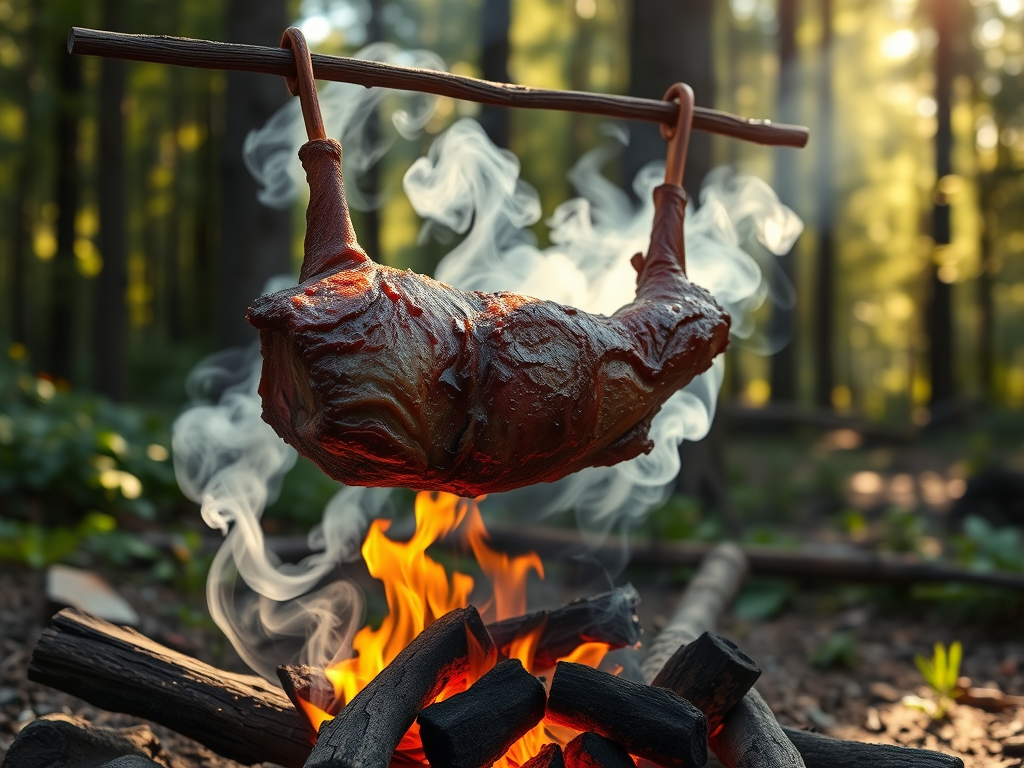
Cooking a beef roast suspended over a campfire is a time-honored technique that combines the primal allure of open flame with the patience and skill of slow roasting. This method, which uses both open flame and coals, creates a unique culinary experience and delivers a roast with unmatched flavor and tenderness. Below, we explore the how and why of this rustic cooking style.
Deep, Smoky Flavor: The Heart of Campfire Roasting
The Science of Smoke and Flavor
When you suspend a beef roast over a campfire, you expose it to a complex environment of heat, smoke, and aromatic compounds released by burning wood. As hardwoods like oak, hickory, or maple combust, they produce smoke rich in phenols, aldehydes, and other flavorful molecules. These compounds settle on the surface of the meat, infusing it with a distinctive smokiness that is both robust and nuanced.
- Wood Choice Matters: Each type of wood imparts its own character. Hickory lends a strong, bacon-like smokiness; oak is mellow and classic; maple adds a subtle sweetness. By choosing your wood, you tailor the flavor profile of your roast.
- Natural Basting: As the roast hangs and rotates, its surface is continually exposed to fresh smoke and heat. The fat renders and drips, basting the meat and carrying smoke particles deeper into the surface.
The Role of Flame and Embers
- Open Flame: The initial searing over open flame caramelizes the exterior, creating a crust that locks in juices and provides a foundation for smoky flavors to adhere.
- Glowing Coals: As the roast is moved over the coals, it cooks more gently, allowing smoke to penetrate without burning the exterior. The steady, radiant heat from embers ensures the meat cooks evenly, while the lower temperature allows for prolonged exposure to smoke.
Why Ovens and Grills Can’t Compare
- Lack of True Smoke: Most home ovens and even many grills do not generate the same volume or complexity of smoke as a wood fire. While some grills use wood chips, the effect is often milder and less integrated.
- Direct Contact with Fire: The suspended method ensures the roast is enveloped in smoke from all sides, not just from below or in a closed chamber. This 360-degree exposure is key to achieving a deep, layered flavor.
The Sensory Experience
- Aroma: The scent of wood smoke mingling with roasting meat is intoxicating, heightening anticipation and appetite.
- Taste: The finished roast boasts a savory, smoky flavor that is both bold and subtle, with hints of caramelization and the unique signature of the chosen wood.
- Texture: The combination of seared crust and slow-roasted interior creates a pleasing contrast—crisp and smoky on the outside, juicy and tender within.
Tradition and Memory
- Evoking the Past: This method connects you to centuries of outdoor cooks and campfire gatherings, where smoke was not just a byproduct but an essential ingredient.
- Creating Memories: The deep, smoky flavor becomes part of the story of the meal, a taste that lingers in memory and beckons you back to the fire.
Suspending a roast over a campfire is the ultimate way to infuse meat with a deep, smoky flavor that is impossible to replicate with modern appliances. The interplay of wood, flame, and embers creates a culinary experience that is as much about tradition and atmosphere as it is about taste.
Even, Gentle Cooking: The Art of Campfire Roasting
The Balance of Heat Sources
When you hang a roast above a campfire, you’re not simply exposing it to raw fire; you’re orchestrating a careful balance between two distinct heat sources:
- Radiant Heat from Flames: The open flames provide intense, direct heat that can quickly sear the surface of the meat. This is ideal for the initial stage of cooking, where you want to caramelize the exterior and lock in juices.
- Steady Warmth from Coals: Once the flames die down, the glowing coals emit a gentler, more consistent heat. This radiant warmth envelops the roast, cooking it slowly and evenly from all sides.
Why Suspension Matters
- Distance from Heat: By suspending the roast, you control its proximity to the fire. Too close, and the meat burns; too far, and it cooks too slowly. The ideal height (typically 18–24 inches above the coals) allows for a steady, moderate temperature that promotes even cooking.
- 360-Degree Exposure: Unlike grilling, where heat comes primarily from below, a suspended roast is surrounded by warmth and smoke. This all-around exposure ensures that no part of the meat is overcooked or left raw.
- Natural Rotation: As the roast hangs, it can be rotated—either manually or with a simple rotisserie mechanism. This rotation further evens out the cooking, preventing hot spots and ensuring that the juices are distributed throughout the meat.
Moisture Retention and Tenderness
- Slow Cooking: Gentle, indirect heat gives the connective tissues in the meat time to break down without drying out the muscle fibers. This results in a roast that is both tender and juicy.
- Self-Basting: As the fat renders, it drips down the surface of the meat, basting it naturally. This continuous coating of fat helps retain moisture and enhances flavor.
- No Scorching: Because the roast is not in direct contact with a grill grate or pan, there’s less risk of burning or charring the exterior before the interior is done.
The Result: Perfect Texture
- Tender Interior: The slow, even heat allows the interior of the roast to reach the desired doneness without becoming tough or dry.
- Crisp, Flavorful Crust: The initial exposure to flame creates a caramelized crust that contrasts beautifully with the soft, succulent inside.
Why Modern Methods Struggle to Replicate This
- Ovens: While ovens can provide steady heat, they lack the radiant, smoky warmth and the ability to surround the meat with heat from all sides.
- Grills: Grills often cook from below, leading to uneven doneness and a greater risk of burning the bottom before the top is cooked through.
Suspending a roast over a campfire harnesses both the searing power of flames and the gentle, enveloping heat of coals. This method ensures the meat cooks evenly, retains its natural juices, and develops a tender, melt-in-your-mouth texture—qualities that are difficult to achieve with modern cooking appliances. The result is a roast that is as satisfying in texture as it is in flavor.
Connection to Tradition: Cooking as Ritual and Heritage
Echoes of Ancient Cooking Practices
Suspending a roast over a campfire is not just a cooking technique—it’s a living link to humanity’s earliest culinary traditions. Long before the invention of ovens, stoves, or even metal cookware, people relied on open fires to prepare their food. Hanging meat over flames or embers was a practical solution, allowing for even cooking and the infusion of smoky flavors. This method is found in cultures across the world, from medieval European feasts to Indigenous campfire gatherings, and it remains largely unchanged in its essentials.
- Universality: The act of roasting meat over fire is a shared human experience, transcending geography and time. Whether it’s a spit-roasted lamb in the Mediterranean, a South American asado, or a North American campfire roast, the core principles are the same.
- Simplicity and Ingenuity: Early cooks used what was available—wood, fire, and simple tools—to create nourishing, flavorful meals. This method honors that resourcefulness.
Fostering a Connection to the Outdoors
Cooking a roast over a campfire immerses you in the natural world. You gather wood, build and tend the fire, and adapt to the elements—wind, weather, and the changing light. This process fosters a sense of respect for nature and an appreciation for the resources it provides.
- Mindfulness: The need to monitor the fire, adjust the roast’s height, and respond to shifting conditions keeps you present and engaged with your surroundings.
- Seasonal Awareness: The flavors of the wood, the crispness of the air, and the rhythm of the day all become part of the meal, grounding you in the moment.
Culinary Traditions Beyond Convenience
Modern cooking often prioritizes speed and convenience, but campfire roasting is intentionally slow. It demands patience and attentiveness, qualities that are increasingly rare in our fast-paced world.
- Ritual and Anticipation: The process of preparing, suspending, and tending a roast over the fire transforms cooking from a chore into a ritual. The anticipation builds as the aroma of smoke and roasting meat fills the air, turning the meal into a communal event.
- Skill and Craft: Mastering this method requires learning to read the fire, judge heat, and respond to the needs of the roast. These are skills passed down through generations, connecting you to cooks of the past.
Turning a Meal into an Event
Unlike the solitary act of setting a timer on an oven, campfire roasting is inherently social. The fire becomes a gathering place, drawing people together to share stories, laughter, and the shared anticipation of a meal well-earned.
- Shared Experience: Friends and family take turns tending the fire, checking the roast, and savoring the process. The meal becomes a collective achievement.
- Memory-Making: The sights, sounds, and smells of campfire cooking linger in memory, creating stories that are retold long after the meal is finished.
Appreciation for the Process
This method encourages a deeper appreciation for food and the effort required to prepare it. The slow pace allows you to savor each stage—from building the fire to carving the finished roast—fostering gratitude for both the meal and the experience.
Cooking a roast hanging over the campfire is a celebration of tradition, patience, and connection—to the past, to nature, and to one another. It transforms a simple meal into a meaningful event, reminding us of the enduring pleasures of fire, food, and fellowship.
Visual and Social Appeal: The Campfire as Centerpiece
The Captivating Spectacle
There is something inherently mesmerizing about a roast suspended over a glowing campfire. The interplay of flickering flames, glowing embers, and the slow rotation of the meat creates a living tableau that captures the attention of everyone present. The sight of juices sizzling and fat dripping onto the coals, sending up occasional bursts of fragrant smoke, adds to the sensory drama.
- Dynamic Movement: Unlike static cooking methods, the gentle turning of the roast—whether by hand or rotisserie—adds a sense of anticipation and progress. Each rotation reveals a new facet of caramelized crust, glistening fat, and browning meat.
- Firelight and Shadows: The fire casts a warm, dancing light that enhances the visual appeal, making the roast appear even more inviting. The shifting shadows and glowing coals create an atmosphere that is both rustic and enchanting.
- Sights and Sounds: The crackle of burning wood, the hiss of fat hitting embers, and the occasional flare-up all contribute to a multisensory experience that is as much about the process as the final product.
The Social Magnetism of the Fire
A campfire has always been a natural gathering point, and the addition of a roasting meal only amplifies its magnetic pull. The communal aspect of campfire roasting is as important as the food itself.
- Shared Anticipation: As the roast cooks, people naturally gather around, drawn by the aroma and the spectacle. Conversations flow, stories are shared, and the group collectively monitors the progress of the meal.
- Participation and Ritual: Tending the fire, basting the roast, and checking its doneness become shared tasks. These rituals foster a sense of teamwork and involvement, turning the meal into a group achievement rather than a solitary effort.
- Building Community: The act of waiting together, savoring the smells and sights, and finally sharing the meal creates bonds and memories. The fire becomes the heart of the gathering, a place where laughter, warmth, and camaraderie flourish.
Transforming a Meal into an Event
Unlike the isolated act of cooking in a kitchen, campfire roasting is inherently public and participatory. The process itself becomes entertainment, a focal point for the group’s attention and excitement.
- Heightened Anticipation: Watching the roast slowly brown and sizzle builds excitement and appetite. The gradual transformation of raw meat into a feast is a visible, communal journey.
- Celebration of Simplicity: The elemental nature of fire, wood, and meat strips away distractions, allowing everyone to appreciate the beauty of simple, honest cooking.
- Memory-Making: The sights, sounds, and smells of a roast over the fire linger in memory, becoming part of the story of the trip or gathering. These shared experiences are often recounted long after the meal is finished.
The visual and social appeal of a roast turning over a campfire lies in its ability to captivate the senses and bring people together. The fire becomes a stage, the roast its star, and the group its audience—united in anticipation, participation, and the shared joy of a meal well-earned. This communal atmosphere is as nourishing to the spirit as the roast is to the body, making campfire cooking an unforgettable experience.
How to Cook a Beef Roast Hanging over the Campfire
Selecting the Right Roast
The Importance of Marbling
- What is Marbling? Marbling refers to the thin streaks of intramuscular fat distributed throughout the meat. These fat deposits melt during cooking, naturally basting the roast from within.
- Why Marbling Matters: When cooking over a campfire—especially with the slow, suspended method—marbling is crucial. The rendered fat keeps the meat moist and tender, preventing it from drying out during the extended exposure to heat. It also imparts a rich, buttery flavor and enhances the overall juiciness of each bite.
- Best Cuts for Marbling:
- Chuck Roast: Known for its deep beefy flavor and generous marbling, making it ideal for slow roasting.
- Ribeye Roast: Exceptionally tender and flavorful, with abundant marbling.
- Sirloin Tip: Leaner than ribeye or chuck but still offers enough marbling for moist results, especially if cooked carefully.
Considering Size and Shape
- Why Size Matters: A roast that’s too large may cook unevenly, with the exterior overcooked before the center reaches the desired doneness. Conversely, a roast that’s too small may dry out or cook too quickly, missing out on the benefits of slow roasting.
- Ideal Weight: A 2–4 pound (900g–1.8kg) roast strikes the right balance. It’s substantial enough to feed several people and to benefit from slow, gentle cooking, but not so large that it becomes difficult to handle or risks uneven cooking.
- Shape Considerations: Uniformly shaped roasts cook more evenly. If your roast is irregular, you can tie it with butcher’s twine to create a more consistent thickness, ensuring all parts cook at the same rate.
Practical Tips for Selection
- Ask Your Butcher: If you’re unsure, ask your butcher for a cut that’s well-marbled and suited for slow roasting. They can also trim or tie the roast for you.
- Bone-In vs. Boneless: Bone-in roasts can add flavor and help retain moisture, but boneless roasts are easier to suspend and carve at the campfire.
- Freshness: Choose the freshest roast possible, as the quality of the meat will shine through with this rustic, simple cooking method.
Why This Matters for Campfire Cooking
- Long Cooking Times: The suspended method relies on slow, gentle heat. Well-marbled, appropriately sized roasts are best equipped to withstand this process, emerging juicy and tender rather than tough or dry.
- Flavor Development: The right cut will absorb smoke and develop a beautiful crust while remaining succulent inside—a hallmark of successful campfire roasting.
Selecting a well-marbled, appropriately sized beef roast is foundational to campfire cooking success. Cuts like chuck, ribeye, or sirloin tip in the 2–4 pound range ensure your roast will be juicy, flavorful, and evenly cooked, making the most of the unique advantages of hanging it over the fire.
Preparing the Fire
Building a Robust Campfire
- Foundation for Cooking: A successful campfire roast begins with a well-built fire. Start by selecting a safe, open area, clear of overhanging branches and dry brush. Arrange your firewood in a way that promotes good airflow—such as a teepee or log cabin structure—to encourage a strong, hot burn.
- Initial Blaze: Allow the fire to burn vigorously at first. This stage is crucial for generating enough heat and producing a substantial bed of coals, which are essential for the slow roasting phase. Avoid rushing this process; a weak fire will not provide the consistent heat needed for even cooking.
- Timing: Plan ahead—building up a deep bed of coals can take 45 minutes to an hour, depending on the size of your fire and the type of wood used.
Letting the Fire Burn Down
- Transition to Coals: Once your fire has burned hot and bright, let it settle. As the larger logs break down, they form glowing embers and coals. These coals are the heart of campfire cooking, providing steady, radiant heat without the unpredictability of open flames.
- Active Flames for Searing: While you want a substantial bed of coals, it’s also important to maintain some active flames on one side of the fire. These flames are used for the initial searing of the roast, which locks in juices and creates a flavorful crust.
Choosing the Right Wood
- Hardwoods for Flavor and Heat: Hardwoods like oak, hickory, and maple are ideal for campfire roasting. They burn hotter and longer than softwoods, producing dense, long-lasting coals and imparting rich, complex flavors to the meat through their smoke.
- Oak: Offers a classic, balanced smokiness.
- Hickory: Provides a bold, bacon-like aroma.
- Maple: Adds a touch of sweetness.
- Avoid Softwoods: Softwoods (like pine or spruce) burn quickly, produce less heat, and can impart unpleasant flavors due to their resins. They also create more soot and can cause flare-ups.
Creating Two Heat Zones
- Why Two Zones? Having both an area of open flame and a bed of coals gives you control over the cooking process. The open flame is used for searing, while the coals provide the gentle, even heat needed for slow roasting.
- How to Arrange:
- Open Flame Zone: Feed one side of the fire with fresh logs to maintain active flames.
- Coal Zone: Let the other side burn down, raking the embers into a flat, even bed.
- Adjusting as You Cook: Throughout the cooking process, you may need to add wood to maintain the flames or rake coals to keep the heat steady. Use a long stick or fire tool to manage the zones without disturbing the roast.
Practical Tips
- Wind and Weather: Shield your fire from wind, which can cause uneven heating or blow ash onto your food. Use rocks or a fire ring if available.
- Safety: Keep water or sand nearby to control the fire if needed, and never leave it unattended.
- Patience: Don’t rush the fire-building stage. A well-prepared fire is the foundation for a perfectly cooked roast.
Preparing the fire is a critical step in campfire roasting. By building a robust fire, letting it burn down to coals, choosing the right hardwoods, and maintaining two distinct heat zones, you create the ideal environment for both searing and slow roasting. This careful preparation ensures your beef roast will be evenly cooked, richly flavored, and tender—making the most of the campfire’s unique culinary magic.
Suspending the Roast
The Importance of Suspension
Suspending the roast above the campfire is a classic technique that allows for even, gentle cooking and optimal smoke exposure. Unlike grilling directly over the flames or placing meat on a grate, hanging the roast ensures it is surrounded by heat and smoke from all sides, resulting in a more uniform cook and deeper flavor.
Equipment and Setup
- Sturdy Tripod or Crossbar:
- Tripod: A metal or wooden tripod is a traditional and reliable structure for suspending a roast. The three-legged design is stable on uneven ground and can support significant weight.
- Crossbar: Alternatively, two forked sticks can be driven into the ground on either side of the fire, with a strong metal or green wood crossbar laid across the top. This method is simple and effective for makeshift campfire setups.
- Butcher’s Twine or Metal Hook:
- Butcher’s Twine: Food-safe, heat-resistant twine is ideal for tying the roast securely. It allows for easy adjustment and can be used to create loops for hanging.
- Metal Hook: A sturdy S-hook or meat hook can be used to pierce or cradle the roast, providing a secure hold and allowing for easy rotation.
Ensuring Free Movement and Rotation
- Why Rotation Matters:
- Even Cooking: As the roast hangs, it can be rotated—either manually or with a simple rotisserie mechanism. This rotation ensures all sides are exposed to the heat and smoke, preventing hot spots and uneven cooking.
- Self-Basting: The natural rotation allows rendered fat to drip and baste the meat as it turns, enhancing moisture and flavor.
- How to Achieve Rotation:
- Manual Turning: Simply twist the twine or hook periodically to rotate the roast.
- Rotisserie Mechanism: For a more advanced setup, a spit or rotisserie can be fashioned to allow for continuous, hands-free rotation.
Adjusting the Height
- Why Height Matters:
- Heat Control: The distance between the roast and the coals/flames is critical. Too close, and the exterior may burn before the interior is cooked; too far, and the roast may cook too slowly or unevenly.
- Ideal Height:
- 18–24 inches above the coals is generally optimal. This range allows the roast to benefit from steady, radiant heat without risking scorching.
- Adjustability: Use a chain, notched stick, or adjustable tripod to raise or lower the roast as needed during cooking. This flexibility is especially useful as the fire changes in intensity over time.
Practical Tips for Suspension
- Balance and Security:
- Ensure the roast is centered and balanced to prevent swinging or uneven cooking.
- Double-check knots or hooks for security—losing a roast into the fire is a campfire tragedy!
- Fire Safety:
- Make sure the tripod or crossbar is stable and not at risk of collapsing.
- Use green wood for crossbars if using wood, as it is less likely to burn through during cooking.
The Result
Suspending the roast over the campfire, with careful attention to height and rotation, creates the perfect environment for slow, even cooking. The meat is gently enveloped in heat and smoke, developing a crisp, flavorful crust and a juicy, tender interior. This method also adds a dramatic, communal element to the cooking process, as everyone gathers around to watch the transformation from raw roast to campfire feast.
Suspending the roast is both a practical and traditional approach that maximizes flavor, tenderness, and the social experience of campfire cooking. By using a sturdy tripod or crossbar, securing the roast well, and adjusting the height for optimal heat, you set the stage for a truly memorable meal.
Cooking Process
Searing
Start over the open flame for 5–10 minutes, rotating the roast to sear all sides. This step locks in juices and adds a smoky crust.
The Purpose of Searing
Searing is the initial, high-heat phase of campfire roasting. When you suspend the beef roast directly over the open flames, the intense heat rapidly browns the exterior of the meat. This process is crucial for several reasons:
- Maillard Reaction: The high temperatures trigger the Maillard reaction—a complex chemical process between amino acids and sugars in the meat. This creates a rich, flavorful crust with deep, savory notes and an appealing color.
- Locking in Juices: Searing quickly caramelizes the outer layer, which helps to “seal” the surface. While it’s a myth that searing completely locks in all juices, it does create a barrier that slows moisture loss during the longer, slower roasting phase.
- Building Flavor: The smoky, charred notes from the open flame add complexity and depth to the roast’s flavor profile, providing a contrast to the gentle smokiness from the coals later on.
How to Sear Effectively
- Positioning: Hang the roast so it’s close enough to the flames to brown quickly, but not so close that it burns. Typically, 8–12 inches above the flames is ideal for this short phase.
- Rotation: Continuously rotate the roast, either by hand or with a rotisserie mechanism. This ensures all sides are evenly exposed to the heat, preventing scorching and promoting uniform browning.
- Timing: Sear each side for about 1–2 minutes, moving the roast as needed to avoid flare-ups or hot spots. The total searing time should be 5–10 minutes, depending on the size and thickness of the roast.
Visual and Sensory Cues
- Color: Look for a deep golden-brown crust forming on the surface. Avoid letting the meat blacken or char excessively, as this can impart bitterness.
- Aroma: The scent will shift from raw beef to a rich, roasted aroma with hints of wood smoke and caramelization.
- Sound: You’ll hear a satisfying sizzle as the fat renders and drips onto the flames, occasionally causing small flare-ups that add to the smoky flavor.
Transitioning to the Next Phase
Once the roast is evenly seared, move it away from the direct flames and suspend it over the bed of glowing coals for the slow roasting phase. The seared crust will help retain moisture and flavor as the meat cooks gently to perfection.
Searing the roast over open flame is a vital first step that develops a flavorful, smoky crust and sets the stage for juicy, tender meat. By rotating the roast and monitoring the heat, you ensure an even, appetizing sear that enhances both the taste and texture of your campfire feast.
Slow Roasting
Move the roast over the coals for indirect, steady heat. Allow it to rotate slowly, either by hand or with a simple rotisserie mechanism. Monitor the fire: Add wood or coals as needed to maintain consistent heat. Baste occasionally with a marinade or its own juices to enhance flavor and moisture.
The Principle of Indirect, Steady Heat
After the initial searing over open flame, the roast is moved to hang above a bed of glowing coals. This is the heart of the slow roasting process:
- Indirect Heat: Unlike direct flame, coals provide a gentler, more even heat source. The radiant warmth from the embers surrounds the roast, cooking it gradually from all sides without burning the exterior.
- Temperature Control: The goal is to maintain a moderate, steady temperature—hot enough to cook the meat through, but low enough to allow the connective tissues to break down slowly, resulting in a tender, juicy roast.
The Importance of Rotation
- Even Cooking: Slow, continuous rotation ensures that every part of the roast is exposed to the same amount of heat and smoke. This prevents hot spots and uneven doneness, which can be a risk with static cooking methods.
- Self-Basting: As the roast turns, rendered fat and juices naturally baste the surface, keeping the meat moist and enhancing the flavor. If using a rotisserie, the rotation can be automated; otherwise, periodic manual turning works well.
Monitoring and Managing the Fire
- Consistent Heat: Campfire coals can lose heat over time. Regularly check the temperature by holding your hand near the roast (carefully!) or using a thermometer. Add small amounts of wood or coals as needed to maintain a steady, moderate heat.
- Fire Maintenance: Rake coals to keep them evenly distributed under the roast. Avoid letting flames flare up directly beneath the meat, as this can cause burning or uneven cooking.
- Wind and Weather: Shield the fire from wind, which can cause temperature fluctuations and uneven cooking.
Basting for Flavor and Moisture
- Why Baste? Basting helps keep the surface of the roast moist, preventing it from drying out during the long cooking process. It also adds layers of flavor, especially if you use a marinade, herb brush, or seasoned butter.
- How to Baste: Use a ladle, brush, or even a bundle of herbs dipped in marinade to coat the roast every 20–30 minutes. If you prefer a pure smoky flavor, simply let the roast self-baste with its own juices as it turns.
- Flavor Variations: Experiment with different basting liquids—wine, beer, garlic butter, or a simple mix of oil and herbs—to create your own signature campfire roast.
The Result: Tender, Flavorful Meat
- Slow Transformation: Over 1–2 hours, the roast will slowly cook through, developing a deep, smoky flavor and a tender, juicy texture.
- Crust and Interior: The combination of the initial sear and the slow, gentle roasting creates a beautiful contrast between the caramelized crust and the succulent interior.
Slow roasting over campfire coals is the key to achieving a perfectly cooked, flavorful beef roast. By harnessing indirect heat, ensuring steady rotation, carefully managing the fire, and basting for moisture and taste, you create a meal that is both rustic and refined—an unforgettable centerpiece for any outdoor gathering.
Cooking Time
Plan for 1–2 hours depending on the roast’s size and desired doneness. Use a meat thermometer to check for an internal temperature of 130–135°F (54–57°C) for medium-rare.
Factors Affecting Cooking Time
1. Size and Shape of the Roast
- Weight: A smaller roast (2–3 pounds) will cook more quickly, often in about 1 hour, while a larger roast (4 pounds or more) may take closer to 2 hours or longer.
- Thickness: Thicker cuts take longer to cook through than thinner, flatter ones. Uniform thickness ensures even cooking.
- Bone-In vs. Boneless: Bone-in roasts may take slightly longer, as the bone can slow heat transfer to the center.
2. Fire and Heat Management
- Consistency of Coals: A steady bed of glowing coals provides even, gentle heat. If the coals cool down, cooking will slow; if they flare up, the exterior may cook too quickly.
- Distance from Heat: The height at which the roast is suspended (typically 18–24 inches above the coals) affects cooking speed. Closer to the coals means faster cooking, but also a higher risk of burning.
- Weather Conditions: Wind, cold, or rain can cool the fire and extend cooking time, while a sheltered, warm environment may speed things up.
3. Desired Doneness
- Medium-Rare: For most campfire roasts, medium-rare is ideal—juicy, tender, and flavorful. This is achieved at an internal temperature of 130–135°F (54–57°C).
- Medium or Well-Done: If you prefer your roast more cooked, aim for 140–145°F (60–63°C) for medium, or 150°F (66°C) and above for well-done. Remember, the roast will continue to cook slightly as it rests.
Using a Meat Thermometer
- Why It’s Essential: Campfire cooking is less predictable than oven roasting. A meat thermometer is the most reliable way to ensure your roast is cooked to your liking and safe to eat.
- How to Use: Insert the thermometer into the thickest part of the roast, avoiding bone or fat for an accurate reading.
- Check Frequently: Start checking the temperature after the first hour, especially for smaller roasts. Continue to monitor every 10–15 minutes as you approach your target temperature.
Resting the Roast
- Carryover Cooking: After removing the roast from the fire, let it rest for 10–15 minutes. The internal temperature will rise by 5–10°F (3–6°C) as juices redistribute, so consider pulling the roast from the fire when it’s 5°F (2–3°C) below your target.
- Juiciness and Texture: Resting ensures the meat is moist and tender when sliced.
Practical Tips
- Don’t Rush: Low and slow is the key to a tender, flavorful roast. Resist the urge to increase the heat to speed up cooking.
- Visual Cues: The exterior should be deeply browned and caramelized, while juices should run clear (not red) when pierced.
- Adjust as Needed: If the roast is browning too quickly, raise it higher above the coals or move some coals away. If it’s cooking too slowly, add more coals or lower the roast slightly.
Cooking a beef roast hanging over the campfire is a process that rewards patience and attentiveness. Plan for 1–2 hours, use a meat thermometer for accuracy, and let the roast rest before serving. This approach ensures a perfectly cooked, juicy, and memorable campfire meal.
Resting and Serving
The Importance of Resting the Roast
- Why Resting Matters: When a roast is cooked—especially over the high, direct heat of a campfire—the juices inside the meat are driven toward the center by the heat. If you slice into the roast immediately after removing it from the fire, these concentrated juices will escape, leaving the meat drier and less flavorful.
- Redistribution of Juices: Allowing the roast to rest for 10–15 minutes gives the juices time to redistribute evenly throughout the meat. This results in slices that are moist, tender, and full of flavor, rather than dry around the edges and soggy in the center.
- Carryover Cooking: During the resting period, the internal temperature of the roast will continue to rise by about 5–10°F (3–6°C). This gentle finish helps bring the roast to perfect doneness without overcooking the exterior.
How to Rest the Roast
- Remove from Heat: Take the roast off the fire and suspend it away from direct heat, or place it on a clean cutting board or plate.
- Tent with Foil (Optional): If you have aluminum foil, loosely tent it over the roast to retain warmth while allowing steam to escape. Avoid wrapping it tightly, as this can soften the crust.
- Timing: Let the roast rest undisturbed for 10–15 minutes. Use this time to prepare sides or set the table.
Slicing and Serving
- Slicing Technique: Use a sharp knife to slice the roast against the grain. Cutting against the grain shortens the muscle fibers, making each bite more tender.
- Portioning: Slice only what you plan to serve immediately, leaving the rest of the roast intact to retain moisture for seconds or leftovers.
- Presentation: Arrange the slices on a platter or rustic wooden board for a classic campfire presentation.
Ideal Campfire Sides
- Roasted Vegetables: Take advantage of the campfire’s heat by roasting root vegetables (potatoes, carrots, onions) in the coals or on a grill grate. Their caramelized flavors pair perfectly with the smoky roast.
- Fresh Bread: Serve with crusty bread—either baked in a Dutch oven over the fire or brought from home—to soak up the savory juices.
- Simple Salads or Pickles: A crisp salad or tangy pickles can balance the richness of the roast and add freshness to the meal.
The Social and Sensory Experience
- Communal Enjoyment: Serving the roast at the campfire turns the meal into a shared event. Friends and family gather around, savoring the aroma, the warmth of the fire, and the satisfaction of a meal cooked together.
- Memory-Making: The act of carving and serving a roast in the open air, surrounded by nature, creates lasting memories and a sense of accomplishment.
Resting the roast is a crucial step that ensures every slice is juicy and flavorful. Serving it with rustic campfire sides completes the experience, transforming a simple meal into a memorable outdoor feast.
Tips for Success
Wind and Weather: Shield the Fire for Consistent Heat
- Why It Matters: Wind can dramatically affect the temperature and stability of your campfire. Gusts can blow heat away from the roast, cause uneven cooking, or even blow ash and debris onto your food. Rain or humidity can dampen coals and make it difficult to maintain a steady fire.
- How to Shield the Fire:
- Build your fire in a sheltered spot, such as behind a natural windbreak (rocks, logs, or a hill).
- Use a portable fire ring, rocks, or a makeshift barrier to block wind.
- In wet weather, keep extra dry wood covered and ready to add as needed.
- Monitor the fire closely and adjust the position of the roast or the fire itself to compensate for shifting wind or weather conditions.
Safety First: Stable and Fire-Safe Setup
- Tripod or Suspension Stability: A heavy roast suspended over a fire requires a sturdy, well-balanced tripod or crossbar. If the structure collapses, it can cause burns, ruin your meal, or even start a wildfire.
- Use strong, fire-resistant materials for your tripod or crossbar.
- Test the stability before hanging the roast, and check periodically during cooking.
- Ensure all knots, hooks, or chains are secure and rated for the weight of the roast.
- Fire Safety:
- Keep a bucket of water, sand, or a fire extinguisher nearby.
- Clear the area around the fire of flammable debris.
- Never leave the fire unattended, and fully extinguish it after cooking.
Experiment with Wood: Flavor as a Creative Element
- Hardwood Choices: Different hardwoods impart distinct flavors to your roast:
- Oak: Classic, balanced smokiness.
- Hickory: Strong, bacon-like aroma.
- Maple: Subtle sweetness.
- Fruitwoods (apple, cherry): Mild, slightly sweet, and aromatic.
- Blending Woods: Try mixing woods for a custom flavor profile. For example, combine oak for heat and hickory for bold smoke.
- Avoid Softwoods: Softwoods like pine or spruce burn quickly, produce less heat, and can impart unpleasant flavors due to resins.
Stay Attentive: The Art of Campfire Cooking
- Constant Observation: Campfire cooking is dynamic. The fire’s intensity, wind direction, and even the roast’s position can change rapidly.
- Regularly check the fire, coals, and roast height.
- Rotate the roast frequently for even cooking.
- Adjust the fire by adding wood or raking coals as needed.
- Respond to Changes: If the roast is browning too quickly, raise it higher or move some coals away. If it’s cooking too slowly, add more coals or lower the roast.
- Engage the Group: Campfire cooking is often a communal activity. Involve others in tending the fire, basting the roast, or monitoring doneness. This not only ensures success but also enhances the social experience.
Success in campfire roasting comes from preparation, adaptability, and attention to detail. By shielding your fire from wind, ensuring a safe and stable setup, experimenting with different woods, and staying attentive throughout the process, you’ll create a delicious, memorable meal and a rewarding outdoor experience.
Conclusion
Cooking a beef roast hanging over the campfire is far more than a rustic technique for preparing food—it is a holistic experience that weaves together tradition, flavor, and the unique pleasures of outdoor living.
More Than a Cooking Method
- A Living Tradition: This approach connects you to centuries of human history, echoing the ways our ancestors gathered around fires to prepare and share meals. Each step—from building the fire to suspending the roast—honors time-tested skills and rituals that have nourished communities for generations.
- A Sensory Journey: The process engages all your senses: the crackle of burning wood, the aroma of smoke mingling with roasting meat, the sight of flames dancing and fat sizzling, and the anticipation that builds as the roast slowly transforms. These sensory details create vivid memories that linger long after the meal is finished.
The Art of Balance
- Mastering Flame and Coals: Success depends on understanding and balancing the two key heat sources: the searing intensity of open flame and the gentle, steady warmth of glowing coals. This balance is not static—it requires constant attention, intuition, and adaptability as the fire evolves.
- Patience and Attentiveness: Unlike modern appliances that promise convenience and automation, campfire roasting demands your presence. You must monitor the fire, adjust the roast’s height, rotate it for even cooking, and respond to changing weather or wind. This slow, attentive process fosters mindfulness and a deeper appreciation for the food you prepare.
Creating Lasting Memories
- A Communal Event: Campfire roasting naturally draws people together. The fire becomes a gathering place for conversation, laughter, and shared anticipation. Friends and family participate in tending the fire, basting the roast, and savoring the results—a collective effort that strengthens bonds and creates stories to be retold.
- A Feast for the Senses and the Soul: The finished roast is more than a meal; it’s a celebration of the journey. The deep, smoky flavor, the tender texture, and the satisfaction of having cooked with your own hands in the open air make each bite more meaningful.
The Joy of Outdoor Living
- Connection to Nature: Cooking outdoors immerses you in the rhythms of the natural world. You become attuned to the weather, the scent of the woods, and the changing light. This connection enhances the meal, grounding you in the present moment.
- Simplicity and Gratitude: Stripped of modern conveniences, campfire cooking reminds you of the beauty in simplicity. It encourages gratitude for the ingredients, the effort, and the company you share.
Cooking a beef roast hanging over the campfire is an experience that transcends mere sustenance. It is a joyful blend of tradition, craftsmanship, and togetherness—an invitation to slow down, savor the process, and create memories as rich as the flavors you enjoy. By embracing the slow, attentive art of campfire roasting, you transform a simple meal into an unforgettable event.



 UTAZCO Overland
Leave a Reply