
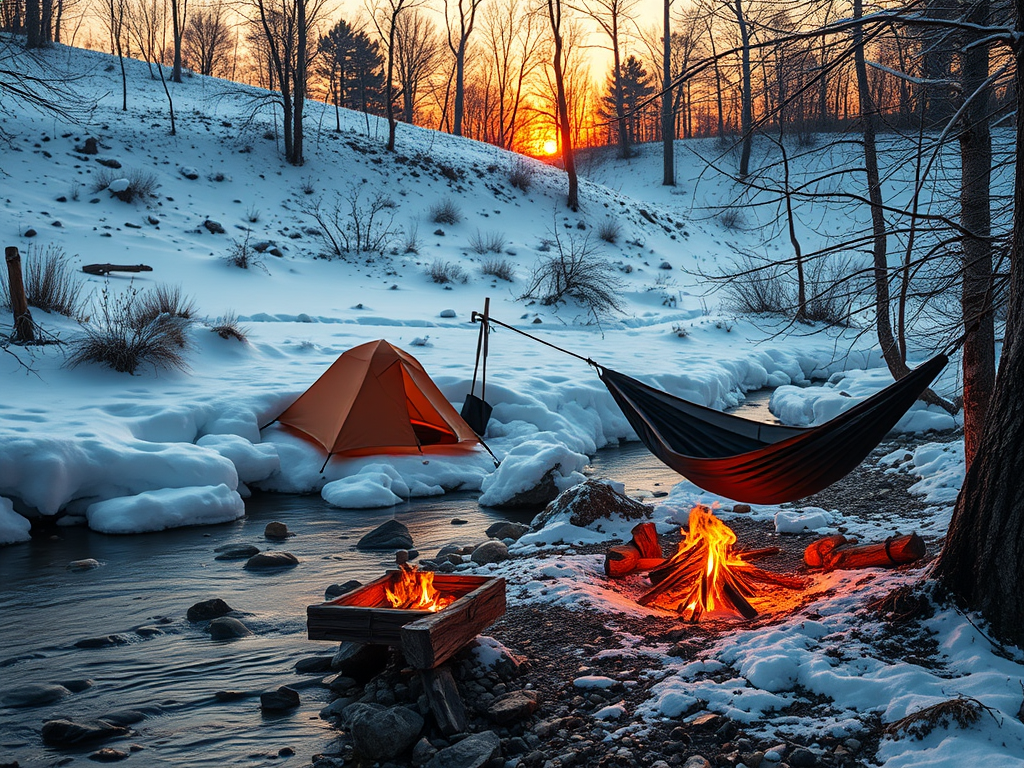
Winter backcountry camping presents unique challenges, especially when deep snow covers the landscape. Two popular shelter options—dispersed hammock camping and traditional tent camping—offer distinct experiences and require different skills and gear. This essay explores the advantages and disadvantages of each method in deep snow conditions.
1. Avoids Sleeping Directly on Snow
The Problem with Sleeping on Snow
When camping in deep snow, one of the primary challenges is managing body heat loss to the cold ground. Snow is an excellent insulator in some contexts, but when compressed under a sleeping pad or tent, it can conduct heat away from the body rapidly. Even with high-quality sleeping pads, some heat inevitably escapes into the snow, leading to cold spots and potential discomfort throughout the night. Additionally, moisture from melting snow can seep into sleeping gear, increasing the risk of hypothermia and making it difficult to stay dry.
How Hammocks Address This Issue
Hammocks offer a unique solution by suspending the camper above the snow entirely. This means:
- No Direct Ground Contact: The camper’s body is never in contact with the snow, eliminating the primary pathway for conductive heat loss.
- Reduced Moisture Exposure: Since the hammock hangs above the snow, there’s less risk of gear becoming wet from melting snow or ground moisture. This is especially important in winter, when staying dry is critical for safety and comfort.
- No Need for Snow Platforms: Tent campers often need to dig out or pack down a platform in deep snow, which is labor-intensive and can still result in uneven or unstable sleeping surfaces. Hammock campers can set up over any depth of snow without site modification, as long as there are suitable anchor points.
Thermal Benefits
By avoiding direct contact with the snow, hammock campers primarily need to insulate themselves from the cold air below, rather than the cold ground. While this still requires careful insulation (such as underquilts or insulated pads), it can be easier to manage than the persistent cold and dampness of sleeping on snow. The air gap beneath the hammock can also be an advantage, as it prevents the compression of insulation that occurs when lying on a pad on the ground.
Comfort and Sleep Quality
Sleeping above the snow can also improve comfort. Hammocks conform to the body, reducing pressure points and allowing for a more restful sleep. The absence of lumps, uneven surfaces, or cold spots commonly found when sleeping on snow further enhances sleep quality.
In summary, by suspending the camper above the snow, hammocks effectively eliminate the major sources of heat loss and discomfort associated with ground sleeping in winter. This advantage makes hammock camping an appealing option for those seeking warmth, dryness, and comfort in deep snow environments—provided that proper insulation is used and suitable trees are available.
2. Minimal Impact on the Environment
Preserving Fragile Winter Ecosystems
Winter backcountry environments are often ecologically sensitive. Deep snow can insulate and protect delicate plant life, animal habitats, and soil structures beneath. However, traditional camping methods—especially those that require clearing snow, digging platforms, or trampling vegetation—can disrupt these natural protections and leave lasting scars on the landscape.
How Hammocks Reduce Environmental Impact
a. No Ground Disturbance: Hammock camping, by design, keeps campers suspended above the ground. This means there’s no need to shovel, dig, or compress snow to create a sleeping platform, as is often required for tents. The snowpack and the underlying vegetation remain undisturbed, allowing the ecosystem to recover quickly after the snow melts.
b. Avoids Soil Compaction and Vegetation Damage: Repeated foot traffic and tent placement can compact snow and, eventually, the soil beneath, damaging root systems and fragile alpine plants. Hammocks, especially when paired with snowshoes or skis for travel, minimize time spent standing in one place and eliminate the need for a large, cleared area.
c. Tree-Friendly Straps: Modern hammock systems use wide, tree-friendly straps that distribute weight and prevent damage to tree bark. This is crucial in winter, when trees may already be stressed by cold and snow load. Thin cords or ropes can cut into bark, potentially girdling and killing trees, but wide straps help avoid this problem.
Leave No Trace Principles
Hammock camping aligns well with Leave No Trace (LNT) principles, which are especially important in winter:
- Plan Ahead and Prepare: Hammock campers can choose sites with minimal impact, avoiding sensitive areas.
- Travel and Camp on Durable Surfaces: By camping above the snow, hammocks avoid disturbing the ground or vegetation.
- Minimize Campfire Impact: Hammock campers often use stoves instead of fires, further reducing impact.
- Respect Wildlife: Less ground disturbance means less disruption to animal habitats beneath the snow.
Visual and Long-Term Impact
When the snow melts in spring, tent sites may reveal trampled vegetation, compacted soil, or even litter left behind. Hammock sites, when properly chosen and used with care, leave almost no trace—no flattened grass, no fire scars, and no disturbed soil. This is especially important in popular or protected backcountry areas, where cumulative impacts from many campers can degrade the environment over time.
In summary, hammock camping in deep snow, when practiced with tree-friendly gear and responsible site selection, is one of the lowest-impact ways to camp in winter. It preserves the integrity of fragile winter ecosystems, aligns with Leave No Trace ethics, and helps ensure that wild places remain pristine for future visitors and wildlife alike.
3. Flexibility in Site Selection
Overcoming Terrain Limitations
One of the greatest challenges of winter camping in deep snow is finding a suitable, level spot to pitch a tent. Deep drifts, uneven snowpack, buried obstacles (like rocks or logs), and steep slopes can make tent setup difficult or even impossible without significant effort. Hammock camping, by contrast, offers remarkable flexibility in site selection because it is not dependent on the condition of the ground.
Advantages of Hammock Site Selection
a. Setup Over Uneven or Deep Snow: Hammocks are suspended between trees, so the depth or unevenness of the snow below is largely irrelevant. Whether the snow is several feet deep, drifted into mounds, or concealing rocks and brush, a hammock can be set up above it all. This eliminates the need to dig out or pack down a tent platform, saving time and energy.
b. Avoidance of Hazardous or Uncomfortable Ground: In winter, the ground beneath the snow may be hazardous—concealing holes, sharp rocks, or unstable surfaces. Hammocks allow campers to avoid these hazards entirely, reducing the risk of injury or discomfort.
c. More Campsite Options: Because hammocks only require two sturdy, well-spaced trees, campers have a wider range of potential campsites. Areas that would be unsuitable for tents—such as sloped hillsides, dense brush, or rocky outcrops—can still be used for hammock camping. This is especially advantageous in dense forests or mountainous terrain where flat, open ground is scarce.
d. Less Environmental Modification: Tent camping in deep snow often requires significant modification of the environment, such as digging, packing, or clearing snow. Hammock campers can leave the landscape untouched, further supporting Leave No Trace principles.
Considerations and Limitations
While hammocks offer great flexibility, they do require:
- Sturdy, Well-Spaced Trees: The primary limitation is the need for two healthy trees spaced an appropriate distance apart (typically 12–18 feet). In treeless environments (alpine, tundra, or above treeline), hammocks are not an option.
- Tree Health and Safety: Campers must ensure trees are alive, strong, and not dead or damaged, as winter conditions can weaken trees or make them more prone to falling.
Practical Examples
- Steep Hillsides: Where tents would slide or be uncomfortable, hammocks can be strung level between trees.
- Deep Drifts: Instead of shoveling out a tent platform, a hammock can be set up above the deepest snow.
- Dense Forests: In areas where undergrowth or fallen logs make ground camping impossible, hammocks can be set up above the obstacles.
In summary, hammock camping in deep snow provides unparalleled flexibility in site selection. As long as there are suitable trees, campers can set up over almost any terrain—saving time, energy, and reducing environmental impact. This flexibility can be a significant advantage in challenging winter backcountry conditions, allowing for safer, more comfortable, and more responsible camping.
4. Quick Setup and Takedown
The Challenge of Tent Setup in Deep Snow
Setting up a tent in deep snow is often a time-consuming and physically demanding process. Campers must first locate a suitable site, then spend considerable effort preparing the ground. This typically involves:
- Digging Out a Platform: Shoveling or packing down snow to create a flat, stable surface for the tent.
- Anchoring: Using snow stakes, deadman anchors, or buried objects to secure the tent, which can be tricky in powdery or unstable snow.
- Clearing Debris: Removing branches, rocks, or other obstacles hidden beneath the snow.
- Leveling: Ensuring the platform is level and compacted enough to prevent the tent from sagging or shifting overnight.
All of these steps can take significant time and energy, especially in cold, windy, or low-light conditions.
Hammock Setup: Streamlined and Efficient
Hammock camping, by contrast, greatly simplifies the shelter setup process in snowy conditions:
a. No Ground Preparation Needed: Since hammocks are suspended above the ground, there’s no need to dig, pack, or level snow. Campers simply find two suitable trees, attach tree-friendly straps, and hang the hammock.
b. Minimal Equipment: Hammock systems typically consist of the hammock itself, straps, an underquilt or pad, and a tarp for weather protection. These components are lightweight, compact, and quick to deploy.
c. Fast Takedown: Packing up a hammock is equally efficient. There’s no need to fill in dug-out platforms, retrieve buried anchors, or shake snow out of tent fabric. Hammock gear can be quickly rolled up and stowed, leaving the site virtually untouched.
Advantages in Challenging Conditions
- Cold and Fatigue: In freezing temperatures, minimizing exposure during setup and takedown is crucial. Hammocks allow campers to get shelter up quickly and retreat to warmth sooner.
- Limited Daylight: Winter days are short. A fast setup means more time for other essential tasks, such as melting snow for water or preparing food.
- Emergency Situations: If weather deteriorates rapidly, the ability to set up shelter quickly can be a critical safety advantage.
Comparison Example
| Task | Tent Camping in Deep Snow | Hammock Camping in Deep Snow |
|---|---|---|
| Site Preparation | 15–30+ minutes | 0 minutes |
| Shelter Setup | 10–20 minutes | 5–10 minutes |
| Takedown | 10–20 minutes | 5–10 minutes |
| Total Time | 35–70+ minutes | 10–20 minutes |
Actual times vary based on experience, conditions, and equipment.
Hammock camping offers a significant advantage in terms of setup and takedown speed, especially in deep snow. By eliminating the need for ground preparation and complex anchoring, hammocks allow campers to establish and break camp quickly and efficiently—saving energy, reducing exposure to the elements, and leaving the environment undisturbed. This efficiency is particularly valuable in the demanding conditions of winter backcountry travel.
1. Dependence on Trees
The Essential Role of Trees in Hammock Camping
Hammocks are designed to be suspended between two anchor points—most commonly, sturdy trees. This fundamental requirement shapes where and how hammock camping can be practiced, especially in winter backcountry environments.
Limitations in Treeless or Sparse Forests
a. Above Treeline: In many mountainous or alpine regions, the treeline marks the elevation above which trees no longer grow due to harsh climatic conditions. In these areas, the landscape is dominated by rocks, snowfields, and low-lying vegetation. Without trees, there are no natural anchor points for a hammock, making hammock camping impossible.
b. Sparse or Damaged Forests: Some forests, especially those affected by wildfire, disease, or logging, may lack enough healthy, well-spaced trees. In winter, snow and ice can further weaken or obscure trees, making it difficult to find safe and reliable anchors.
c. Tree Spacing and Strength: Even in wooded areas, not all trees are suitable. Trees must be:
- Sturdy and Healthy: Dead or damaged trees can break under the load, posing a safety risk.
- Properly Spaced: Ideally, trees should be 12–18 feet apart. Too close or too far apart, and the hammock may not hang correctly.
- Accessible: Deep snow can make it difficult to reach or wrap straps around trees, especially if lower trunks are buried.
Impact on Route Planning and Flexibility
Because of this dependence, hammock campers must plan routes and campsites with tree availability in mind. This can limit options for:
- High-Altitude Expeditions: Where treeless terrain is common.
- Open Meadows or Tundra: Where trees are absent or widely scattered.
- Emergency Shelters: In situations where immediate shelter is needed, lack of trees can be a critical problem.
Workarounds and Alternatives
Some hammock campers carry portable stands or use creative anchoring methods (such as trekking poles, rocks, or snow anchors), but these solutions add weight, complexity, and are often impractical in deep snow or harsh winter conditions.
Comparison with Tent Camping
Tents, by contrast, can be pitched almost anywhere there is enough flat ground, regardless of tree cover. This makes tents more versatile in a wider range of environments, especially above treeline or in open terrain.
The need for suitable trees is a significant limitation of hammock camping in deep snow. While hammocks offer many advantages in forested areas, their dependence on healthy, well-spaced trees restricts campsite options and requires careful planning. In treeless or sparsely wooded environments, tents remain the more practical and reliable shelter choice.
2. Heat Loss from Below
The Unique Challenge of Heat Loss in Hammocks
When camping in deep snow, staying warm is a top priority. While both tent and hammock campers must contend with cold temperatures, hammock campers face a unique challenge: convective heat loss from below. Unlike tents, where the camper is insulated from the ground (which, despite being cold, is a relatively stable thermal mass), hammocks suspend the sleeper in the air, exposing them to cold air circulating beneath.
Mechanisms of Heat Loss
a. Conduction vs. Convection:
- Conduction is the transfer of heat through direct contact. Tent campers lose heat to the ground via conduction, which can be mitigated with insulated pads.
- Convection is the transfer of heat through moving air. In a hammock, cold air flows freely beneath the sleeper, constantly drawing away body heat. This effect is amplified in windy or exposed conditions, which are common in winter.
b. The “Cold Butt Syndrome”: Hammock campers often experience what’s colloquially known as “cold butt syndrome,” where the underside of the body becomes uncomfortably cold due to inadequate insulation and air movement below the hammock.
Insulation Solutions
To combat this, hammock campers must use specialized insulation systems:
a. Underquilts:
- These are insulated blankets designed to hang beneath the hammock, creating a warm air pocket and blocking cold air.
- Underquilts are often filled with down or synthetic insulation and come in various temperature ratings.
- They must be carefully fitted to avoid gaps where cold air can seep in.
b. Sleeping Pads:
- Some campers use closed-cell foam or inflatable sleeping pads inside the hammock for additional insulation.
- Pads can shift during the night, leading to cold spots, and may not conform as well to the hammock’s shape as underquilts.
c. Top Quilts and Sleeping Bags:
- While top quilts or sleeping bags provide insulation above, they do little to address heat loss from below unless paired with an underquilt or pad.
Added Weight and Complexity
a. Increased Gear Load:
- Underquilts and extra insulation add weight and bulk to a winter hammock setup, sometimes negating the lightweight advantage of hammocks over tents.
- Packing and managing multiple insulation layers can be cumbersome, especially in cold, snowy conditions.
b. Setup Complexity:
- Properly attaching and adjusting underquilts requires practice and attention to detail.
- In deep snow, setting up insulation without getting it wet or snowy can be challenging.
Comparison with Tent Camping
Tent campers typically rely on insulated sleeping pads to prevent conductive heat loss to the ground. While this is also important, pads are generally easier to use and less prone to shifting than hammock insulation systems. Tents also provide some protection from wind, reducing convective heat loss.
Heat loss from below is a significant disadvantage of hammock camping in deep snow. The constant movement of cold air beneath the hammock increases the risk of losing body heat, making specialized underquilts or pads essential. These solutions add weight, bulk, and complexity to the setup, and require careful management to ensure warmth and comfort throughout the night. Proper insulation is not optional—it is critical for safety and survival in winter hammock camping.
3. Exposure to Wind and Precipitation
The Challenge of Shelter in Winter Conditions
Winter backcountry environments are often characterized by strong winds, blowing snow, and freezing precipitation. Effective shelter is critical not only for comfort but also for safety, as exposure to wind and moisture can rapidly lead to hypothermia.
Hammocks: Naturally Exposed
a. Open Design: Hammocks, by themselves, are open to the elements. Unlike tents, which provide a fully enclosed space, a hammock without additional protection leaves the camper exposed to wind, snow, and freezing rain from all sides.
b. Wind Chill: Suspended above the ground, hammock campers are especially vulnerable to wind chill. Cold air can circulate freely above, below, and around the hammock, stripping away body heat much faster than still air. This effect is intensified in open or exposed campsites, such as ridgelines or clearings.
c. Blowing Snow and Precipitation: Without barriers, blowing snow can accumulate on the camper, inside the hammock, or on insulation, leading to wet gear and increased heat loss. Freezing rain or sleet can soak insulation and clothing, further increasing the risk of hypothermia.
Mitigation Strategies
To address these vulnerabilities, hammock campers must use additional gear and strategies:
a. Robust Tarps:
- Large, winter-specific tarps are essential for hammock camping in snow. These tarps should be wide and long enough to provide full coverage, with doors or beaks that can be closed to block wind and blowing snow from the ends.
- Tarps must be pitched low and tight to the hammock to minimize gaps where wind and snow can enter.
b. Windbreaks:
- Natural windbreaks, such as dense tree stands, boulders, or terrain features, can help shield the hammock from prevailing winds.
- In some cases, campers may build snow walls or use gear to create artificial windbreaks.
c. Insulation Management:
- Underquilts and top quilts must be protected from moisture. Wet insulation loses its effectiveness, so keeping gear dry is a constant concern.
- Drip lines and careful tarp setup can help prevent water from running down suspension lines into the hammock.
Comparison with Tent Camping
Tents, especially four-season models, are designed to provide a fully enclosed, wind-resistant, and weatherproof shelter. They offer integrated floors, walls, and vestibules that keep wind, snow, and precipitation out. This makes tents inherently more protective in severe winter weather.
Complexity and Weight
- Additional Gear: The need for large tarps, extra guy lines, and possibly snow stakes adds weight and complexity to a hammock setup.
- Setup Skill: Properly pitching a tarp in winter conditions requires skill and experience, especially in deep snow or high winds.
Hammocks on their own offer little protection from wind and precipitation, making them less suitable for exposed or severe winter conditions unless paired with robust tarps and windbreaks. This adds to the complexity, weight, and skill required for safe and comfortable hammock camping in deep snow. Campers must be diligent in their site selection, shelter setup, and insulation management to avoid the risks of wind chill, wet gear, and exposure.
4. Challenging in Extreme Cold
The Unique Demands of Winter Hammock Camping
Camping in extreme cold—temperatures well below freezing—presents significant challenges for any shelter system. Hammocks, while offering certain advantages, are inherently more difficult to keep warm compared to tents, especially in the harshest winter conditions.
Why Hammocks Are Harder to Keep Warm
a. Exposure to Cold Air on All Sides: Unlike tents, which provide a semi-enclosed space and some buffer from the outside air, hammocks suspend the camper in the open, with cold air circulating above, below, and around the body. This 360-degree exposure increases the risk of convective heat loss, making it much harder to retain body warmth.
b. No Ground Insulation: Tents benefit from the insulating properties of the ground and snowpack, especially when paired with high-quality sleeping pads. Hammock campers, on the other hand, have no such buffer; the air beneath the hammock is often much colder than the ground, especially on windy nights.
c. Insulation Compression: In a hammock, the insulation beneath the sleeper (such as a sleeping bag) is compressed by body weight, reducing its effectiveness. This is less of an issue in a tent, where sleeping pads maintain their loft and insulating value.
Insulation Management: A Delicate Balance
a. Underquilts and Top Quilts:
- Hammock campers must use specialized underquilts to insulate the underside of the hammock, as well as top quilts or sleeping bags for above.
- These quilts must be carefully adjusted to avoid gaps, drafts, or compression, all of which can create cold spots.
b. Layering and Redundancy:
- In extreme cold, multiple layers of insulation may be necessary, increasing both the weight and complexity of the setup.
- Managing these layers in a confined hammock can be awkward, especially when wearing bulky winter clothing.
c. Moisture Management:
- Condensation from breath or snow can dampen insulation, drastically reducing its effectiveness. In a tent, condensation is more easily managed and less likely to directly contact sleeping gear.
Practical Challenges
a. Setup and Adjustment:
- Setting up a hammock system with multiple quilts, pads, and a weatherproof tarp in deep snow and freezing temperatures requires dexterity and patience—qualities that are harder to maintain when cold and fatigued.
- Small mistakes, such as a poorly adjusted underquilt or a gap in the tarp, can lead to significant heat loss and a miserable (or dangerous) night.
b. Emergency Situations:
- In the event of gear failure (e.g., a torn underquilt or wet insulation), it is much harder to improvise warmth in a hammock than in a tent, where body heat can be shared or additional insulation can be piled on top.
Comparison with Tent Camping
Tents, especially four-season models, offer several advantages in extreme cold:
- Enclosed Space: Traps some body heat and blocks wind, creating a slightly warmer microclimate.
- Shared Warmth: Multiple campers can share a tent, pooling body heat.
- Easier Insulation: Sleeping pads and bags are easier to use and maintain in a tent, with less risk of shifting or compression.
Maintaining warmth in a hammock during extreme cold is significantly more challenging than in a tent. The open, suspended design exposes the camper to cold air on all sides, demanding meticulous insulation management and increasing the risk of heat loss. Specialized gear, careful setup, and constant vigilance are required to stay warm and safe—making hammock camping in extreme winter conditions a pursuit best reserved for experienced and well-prepared adventurers.
1. Full Enclosure and Protection
The Importance of Shelter in Winter
In deep snow and harsh winter conditions, shelter is not just about comfort—it’s about survival. Exposure to wind, snow, and freezing temperatures can quickly lead to hypothermia and frostbite. A tent’s primary advantage in these conditions is its ability to provide a fully enclosed, protective environment.
How Tents Provide Protection
a. Barrier Against Wind:
- Tents, especially those designed for winter (four-season tents), are constructed with robust fabrics and strong poles to withstand high winds.
- The walls and rainfly act as a physical barrier, blocking cold gusts and reducing wind chill inside the shelter.
- Vestibules and snow flaps can further seal out drafts, creating a calmer, warmer microclimate.
b. Shield from Snow and Spindrift:
- Tents keep falling snow, blowing snow, and spindrift (fine snow carried by wind) out of the sleeping area.
- The rainfly and tent walls prevent snow from accumulating on sleeping bags and gear, keeping everything dry and functional.
- In heavy snowfall, tents can be periodically cleared from the inside, preventing dangerous snow buildup.
c. Protection from Precipitation:
- Tents are designed to be waterproof or highly water-resistant, keeping out rain, sleet, and melting snow.
- Floors with bathtub designs and sealed seams prevent water from seeping in, even if the snow beneath begins to melt.
d. Double-Wall Design for Insulation:
- Many winter tents use a double-wall system: an inner tent (often breathable) and an outer rainfly (waterproof).
- The air gap between the two layers provides extra insulation, reducing heat loss and minimizing condensation inside the tent.
- Double-wall tents also allow for better ventilation, helping to manage moisture from breath and wet gear.
Psychological and Practical Benefits
a. Sense of Security:
- The enclosed space of a tent offers psychological comfort, creating a clear boundary between the camper and the harsh outside world.
- This sense of security can improve sleep quality and morale, which are important for multi-day winter trips.
b. Organization and Shelter for Gear:
- Tents provide a sheltered space for organizing gear, changing clothes, and even cooking (with proper ventilation).
- Vestibules offer additional protected storage for boots, packs, and wet items, keeping the sleeping area dry and uncluttered.
Comparison with Other Shelters
- Versus Hammocks: Hammocks, even with tarps, rarely achieve the same level of full enclosure and protection as a tent. Wind, snow, and cold air can still find their way in, especially in severe weather.
- Versus Snow Shelters: While snow caves and quinzee huts can also provide excellent protection, they require significant time and effort to construct and are not as portable or versatile as tents.
Tents excel in deep snow environments because they provide a fully enclosed, weatherproof, and insulated space. This comprehensive protection from wind, snow, and precipitation is crucial for maintaining warmth, dryness, and safety during winter backcountry camping. The full enclosure of a tent not only shields campers from the elements but also offers practical and psychological benefits that are hard to match with other shelter systems.
2. Versatility in Open Terrain
The Challenge of Site Selection in Winter
Winter backcountry landscapes are often defined by vast, open spaces—snowfields, alpine meadows, and exposed ridgelines—where trees are sparse or absent. In these environments, the ability to set up shelter wherever needed is a major advantage for safety, flexibility, and route planning.
How Tents Excel in Open Terrain
a. Independence from Natural Anchors:
- Unlike hammocks, which require sturdy, well-spaced trees for suspension, tents are self-supporting structures. They rely on poles, stakes, and guy lines, not the surrounding vegetation.
- This means tents can be pitched virtually anywhere there is enough flat ground, regardless of the presence or absence of trees.
b. Adaptability to Various Surfaces:
- Tents can be set up on deep snow, hard-packed snow, ice, rocky ground, or even on top of frozen lakes (with proper precautions).
- In deep snow, campers can use snow stakes, deadman anchors (buried objects like stuff sacks filled with snow), or even skis and poles to secure the tent.
c. Above Treeline and Alpine Environments:
- In mountainous regions, the treeline marks the elevation above which trees do not grow. These areas are often exposed, windy, and covered in snow for much of the year.
- Tents are specifically designed for such conditions, with low profiles, aerodynamic shapes, and reinforced structures to withstand high winds and heavy snow loads.
d. Emergency and Safety Considerations:
- The ability to set up a tent quickly in any open area is crucial in emergencies, such as sudden storms, injuries, or navigation errors.
- Tents provide immediate shelter and protection, even in the most inhospitable terrain.
Practical Examples
- Snowfields: On glaciers or open snowfields, tents can be anchored using snow stakes or buried gear, providing a secure shelter where no trees exist.
- Alpine Meadows: In high mountain meadows, tents can be pitched on snow or frozen ground, offering a base for ski touring or mountaineering.
- Exposed Ridges: On windy ridgelines, tents can be oriented and anchored to minimize wind exposure, something impossible with hammocks.
Comparison with Hammocks
- Hammocks: Limited to forested areas with suitable trees, making them impractical or impossible to use in open terrain, above treeline, or on glaciers.
- Tents: Offer true versatility, functioning in nearly any environment encountered in winter backcountry travel.
Tents are highly versatile in open terrain, able to be pitched on snowfields, above treeline, and in a wide variety of landscapes where other shelter systems—especially hammocks—cannot be used. This adaptability makes tents the shelter of choice for winter expeditions, mountaineering, and any situation where flexibility and reliability are paramount. Their independence from natural anchors and ability to withstand harsh conditions ensure that campers can find safe shelter wherever their journey takes them.
Certainly! Here’s a detailed exploration of that point:
3. Shared Warmth
The Value of Body Heat in Winter Camping
In cold environments, maintaining warmth is a constant challenge. One of the most effective and natural ways to stay warm is by sharing body heat. Tents, especially those designed for multiple occupants, make it possible for campers to benefit from each other’s warmth, which can be a significant advantage in deep snow and freezing temperatures.
How Shared Warmth Works in Tents
a. Pooling Body Heat:
- When two or more people share a tent, each person’s body acts as a small heat source. The combined warmth raises the temperature inside the tent, sometimes by several degrees compared to the outside air.
- This effect is especially noticeable in smaller tents, where the enclosed space allows heat to accumulate more efficiently.
b. Reduced Individual Heat Loss:
- In a shared tent, the air temperature is higher, which reduces the temperature gradient between the camper’s body and the surrounding air. This slows the rate of heat loss from each individual.
- Sleeping close together (while still using individual sleeping bags) further minimizes heat loss, as less surface area is exposed to cold air.
c. Psychological Comfort:
- Sharing a tent with others can provide a sense of security and comfort, which is important for morale during challenging winter trips.
- The presence of companions can also make it easier to monitor each other for signs of cold stress or hypothermia.
Practical Benefits
a. Efficient Use of Gear:
- Sharing a tent means less total shelter weight per person, as one larger tent can replace multiple smaller ones.
- Campers can also share other resources, such as stoves, lights, and repair kits, further reducing individual pack weight.
b. Emergency Situations:
- In the event that someone becomes dangerously cold, sharing a tent allows for rapid warming through close proximity and combined insulation.
- If a sleeping bag or pad fails, the group can pool resources and body heat to help the affected person stay warm.
c. Cooking and Socializing:
- Tents provide a communal space for cooking, eating, and socializing, which can help maintain group cohesion and morale in harsh conditions.
Comparison with Hammock Camping
- Hammocks: Each camper is isolated in their own shelter, making it impossible to share body heat. In extreme cold, this isolation can increase the risk of hypothermia, especially if someone’s insulation system fails.
- Tents: Enable group warmth and support, making them safer and more comfortable for winter camping with companions.
Limitations and Considerations
- Ventilation: While shared warmth is beneficial, tents must still be ventilated to prevent condensation buildup, which can dampen gear and reduce insulation effectiveness.
- Personal Space: Sharing a tent requires a willingness to sacrifice some personal space for the sake of warmth and safety.
The ability to share warmth is a major advantage of tent camping in deep snow. By pooling body heat, campers can create a warmer, safer, and more comfortable environment, reducing individual heat loss and enhancing group safety. This communal aspect of tent camping is especially valuable in winter, where the margin for error is small and the consequences of cold exposure can be severe.
4. Gear Storage and Organization
The Importance of Protected Space in Winter
Winter backcountry camping requires more gear than summer trips: extra insulation, bulky sleeping bags, multiple layers of clothing, stoves, fuel, and safety equipment. Deep snow and harsh weather make it critical to keep this gear dry, organized, and accessible. Tents provide a sheltered environment that is invaluable for managing all these needs.
How Tents Facilitate Gear Storage and Organization
a. Protected Storage for Essential Gear:
- Tents offer a dry, enclosed space to store sleeping bags, clothing, electronics, and other sensitive items that must be kept out of the snow and moisture.
- Vestibules (the covered areas outside the main sleeping compartment) are ideal for stowing boots, packs, skis, and wet gear, keeping the sleeping area clean and dry.
b. Space for Cooking and Food Preparation:
- In severe weather, tents (especially those with large vestibules) can serve as a sheltered area for cooking with a stove, melting snow for water, and preparing meals.
- This protection is crucial for safety and efficiency, as exposure to wind and snow can make cooking outside slow, dangerous, or even impossible.
- Proper ventilation is essential to avoid carbon monoxide buildup when cooking in or near a tent.
c. Changing Clothes and Layer Management:
- The privacy and shelter of a tent make it much easier to change clothes, add or remove layers, and manage moisture without exposing yourself to the elements.
- This is especially important in winter, when even brief exposure to cold wind or snow can lead to rapid heat loss or wet clothing.
d. Organization and Accessibility:
- Tents provide a defined, organized space where gear can be sorted, packed, and accessed easily, reducing the risk of losing items in the snow.
- Many tents have interior pockets, gear lofts, and loops for hanging lights or drying gloves, further aiding organization.
Practical Benefits in Harsh Conditions
- Drying Wet Gear: Damp gloves, socks, or base layers can be hung inside the tent or vestibule to dry overnight, using body heat or residual warmth.
- Protection from Snow Intrusion: Gear left outside can quickly become buried or frozen in blowing snow. Inside a tent, it remains protected and ready for use.
- Emergency Shelter for Gear: In sudden storms or emergencies, having all your critical gear inside the tent ensures it is accessible and not lost or damaged by the weather.
Comparison with Hammock Camping
- Hammocks: Offer limited space for gear storage. Most gear must be hung from trees, stowed under the hammock, or left exposed under a tarp, increasing the risk of snow accumulation, freezing, or loss.
- Tents: Provide a consolidated, weatherproof area for both people and equipment, greatly simplifying camp life in winter.
Tents excel at providing sheltered, organized space for gear storage, cooking, and changing clothes—functions that are especially valuable in deep snow and harsh winter conditions. This protected environment not only keeps gear dry and accessible but also enhances safety, comfort, and efficiency, making tent camping the preferred choice for winter backcountry expeditions where gear management is critical.
Certainly! Here’s a detailed exploration of that point:
1. Requires Site Preparation
The Challenge of Setting Up a Tent in Deep Snow
Unlike summer camping, where a tent can often be pitched directly on the ground with minimal effort, winter camping in deep snow presents unique obstacles. The snowpack is rarely flat, stable, or compact enough to support a tent without significant preparation. This makes site preparation one of the most labor-intensive aspects of tent camping in snowy conditions.
Steps Involved in Site Preparation
a. Selecting a Suitable Location:
- Campers must first find a spot that is safe from avalanche risk, falling branches (widowmakers), and wind exposure.
- The site should be as flat as possible, but deep snow often hides uneven terrain, rocks, or brush.
b. Digging Out a Platform:
- In deep snow, the most common method is to dig out a flat platform large enough for the tent and vestibule(s).
- This can involve shoveling away several feet of snow, which is physically demanding, especially at the end of a long day or in cold, windy conditions.
- The snow removed must be piled somewhere, and care must be taken not to create wind tunnels or block tent ventilation.
c. Packing Down Snow:
- Alternatively, campers may pack down the snow by stomping it with boots or skis. This compacts the snow, creating a firmer surface that will support the tent and prevent it from sinking overnight.
- After packing, it’s best to let the snow “set up” for 15–30 minutes, allowing it to harden before pitching the tent.
d. Leveling and Smoothing:
- The platform must be leveled and smoothed to avoid uncomfortable lumps or slopes that could cause sliding or poor sleep.
- Edges may be built up to create windbreaks or cold-air trenches for added comfort and protection.
e. Anchoring the Tent:
- Standard tent stakes rarely work in deep snow. Campers must use snow stakes, deadman anchors (buried objects like stuff sacks filled with snow), or even skis and poles to secure the tent.
- Setting and retrieving these anchors can be time-consuming, especially if the snow is powdery or icy.
Physical and Time Demands
- Labor-Intensive: Digging, packing, and leveling snow is hard work, particularly in cold temperatures when energy reserves are low.
- Time-Consuming: Site preparation can take anywhere from 20 minutes to over an hour, depending on snow depth, group size, and experience.
- Energy Cost: The extra exertion can increase calorie and water needs, both of which are harder to manage in winter.
Comparison with Hammock Camping
- Hammocks: Require no ground preparation—campers simply hang the hammock between trees, regardless of snow depth or surface conditions.
- Tents: Necessitate significant site modification, which can be a major drawback in deep snow.
Additional Considerations
- Environmental Impact: While snow is a renewable resource, excessive digging or trampling can damage underlying vegetation if the snowpack is thin.
- Safety: Poorly prepared sites can lead to tents collapsing, sliding, or becoming buried in drifting snow overnight.
One of the main disadvantages of tent camping in deep snow is the need for extensive site preparation. Digging out or packing down a stable, level platform is labor-intensive, time-consuming, and physically demanding—especially in harsh winter conditions. This requirement can make tent camping less appealing compared to hammocks, which bypass the need for ground preparation entirely. Proper site preparation, however, is essential for safety, comfort, and the overall success of a winter camping trip.
2. Risk of Condensation
The Problem of Moisture in Winter Tents
Condensation is a common and often underestimated challenge in winter tent camping. In cold environments, the air inside a tent is warmer and more humid than the air outside, especially when multiple people are breathing, cooking, or melting snow inside the shelter. This difference in temperature and humidity leads to condensation forming on the tent’s interior surfaces.
Sources of Moisture
a. Breath:
- Each camper exhales significant moisture overnight—up to a liter of water per person, per night.
- In a closed tent, this moisture-laden air rises and contacts the cold tent walls or rainfly, where it cools and condenses into water droplets or frost.
b. Snowmelt:
- Snow tracked into the tent on boots, clothing, or gear melts from body heat or the warmer air inside, adding to the moisture load.
- Cooking or melting snow for water inside the tent further increases humidity.
c. Wet Gear:
- Damp clothing, gloves, or sleeping bags brought into the tent release moisture as they dry, contributing to condensation.
Effects of Condensation
a. Damp Gear:
- Water droplets or frost can drip onto sleeping bags, clothing, and gear, making them damp or wet.
- Wet insulation loses its effectiveness, increasing the risk of getting cold or even hypothermic.
b. Discomfort:
- Waking up to a damp sleeping bag or wet clothing is uncomfortable and can make it difficult to stay warm.
- Frost that forms on the tent walls can fall onto campers and gear when disturbed.
c. Increased Chilling:
- Moisture on skin or clothing accelerates heat loss, making it harder to stay warm in already challenging conditions.
Mitigation Strategies
a. Ventilation:
- Most winter tents are designed with vents, mesh panels, or adjustable doors to allow humid air to escape.
- Properly using these features, even in cold weather, is crucial to minimize condensation. However, opening vents can let in cold air and snow, so a balance must be struck.
b. Double-Wall Tents:
- Double-wall tents (with an inner tent and separate rainfly) help manage condensation by allowing moisture to pass through the breathable inner tent and condense on the outer fly, away from campers and gear.
- The air gap between the two layers provides some insulation and helps keep the inner tent drier.
c. Managing Moisture Sources:
- Shake off snow from clothing and gear before entering the tent.
- Store wet items in vestibules or stuff sacks to limit moisture release inside the sleeping area.
- Avoid cooking inside the tent if possible, or use a well-ventilated vestibule.
Comparison with Hammock Camping
- Hammocks: While condensation can occur under tarps, the open design allows for better airflow, generally reducing the buildup of moisture compared to enclosed tents.
- Tents: The enclosed space traps more moisture, making condensation a more persistent issue.
Condensation is a significant disadvantage of tent camping in deep snow. Moisture from breath, snowmelt, and wet gear can accumulate inside the tent, leading to damp insulation, discomfort, and increased risk of cold-related problems. Effective ventilation, careful moisture management, and the use of double-wall tents can help mitigate condensation, but it remains a challenge that winter campers must actively address to stay warm, dry, and safe.
3. Heavier and Bulkier
The Weight and Bulk of Winter Tent Camping
One of the most significant disadvantages of tent camping in deep snow is the increased weight and bulk of the required gear. Winter conditions demand more robust, specialized equipment to ensure safety and comfort, which can quickly add up in both pack weight and volume.
Why Winter Tents and Gear Are Heavier
a. Four-Season Tent Construction:
- Winter tents (often called four-season tents) are built to withstand heavy snow loads, high winds, and extreme cold.
- They use stronger, heavier poles (often aluminum or composite), reinforced fabrics, and additional guy lines and attachment points.
- The extra material and structural reinforcements make these tents significantly heavier than three-season models.
b. Double-Wall Design:
- Most winter tents feature a double-wall design (an inner tent and a separate rainfly) for better insulation and condensation management.
- This adds more fabric, zippers, and hardware, increasing both weight and packed size.
c. Larger Size for Gear and Occupants:
- Winter tents are often sized to accommodate more gear inside, as keeping boots, packs, and clothing out of the snow is essential.
- Vestibules and extra space for cooking or organizing gear further increase the tent’s size and weight.
Additional Winter Gear Requirements
a. Snow Stakes and Anchors:
- Standard tent stakes do not hold well in deep snow. Specialized snow stakes (longer, wider, and often made of aluminum or plastic) are required.
- Deadman anchors (such as stuff sacks filled with snow or buried objects) may also be used, adding to the gear list.
b. Shovels:
- A snow shovel is essential for digging out tent platforms, building windbreaks, or excavating the tent after a storm.
- Shovels are bulky and add significant weight, but are non-negotiable for safety and site preparation.
c. Extra Insulation and Pads:
- Sleeping on snow requires thick, insulated sleeping pads—often two per person (a closed-cell foam pad plus an inflatable pad) to prevent heat loss.
- These pads are bulkier and heavier than those used in milder conditions.
Impact on Pack Weight and Volume
- Heavier Loads: The combined weight of a winter tent, snow stakes, shovels, extra insulation, and larger sleeping bags can easily add several kilograms (5–10+ lbs) to a pack.
- Bulkier Packs: The increased volume of winter gear often requires larger backpacks, making travel more cumbersome, especially when skiing or snowshoeing.
Comparison with Hammock Setups
- Hammocks: While winter hammock setups require underquilts, tarps, and insulation, they are often lighter and more compact than a full winter tent system with all the associated gear.
- Tents: The need for robust shelter and site preparation tools makes tent camping heavier and bulkier overall.
Considerations for Group vs. Solo Camping
- Group Camping: The weight of a tent can be shared among group members, making it more manageable.
- Solo Camping: Solo winter tents are still heavier than hammock setups, and the burden cannot be distributed.
Winter tent camping in deep snow requires gear that is heavier and bulkier than what is needed for hammock camping or summer backpacking. The robust construction of four-season tents, specialized stakes, shovels, and extra insulation all contribute to increased pack weight and volume. This can impact mobility, energy expenditure, and overall enjoyment of the trip, making weight and bulk important considerations when planning winter backcountry adventures.
4. Sleeping on Cold Ground
The Challenge of Ground Contact in Winter
One of the most persistent challenges of tent camping in deep snow is the issue of sleeping directly on the cold ground—or, more accurately, on a layer of snow. Snow, while an insulator in some contexts, can also be a relentless sink for body heat, especially when compressed under a sleeping pad and body weight.
Mechanisms of Heat Loss
a. Conductive Heat Loss:
- Heat naturally flows from warmer objects (your body) to colder ones (the snow beneath you).
- When you lie on the ground, your body’s warmth is conducted through your sleeping pad and into the snow, which can be well below freezing.
- This process continues all night, and if insulation is inadequate, it can lead to significant and dangerous heat loss.
b. Compression of Insulation:
- Sleeping bags and pads rely on loft (trapped air) to provide insulation.
- When you lie on a sleeping bag, the insulation beneath you is compressed, reducing its effectiveness and allowing more heat to escape downward.
- Even thick inflatable pads can lose some insulating value if not designed for extreme cold.
The Role and Limitations of Sleeping Pads
a. Types of Pads:
- Closed-cell foam pads: Lightweight and reliable, but often not thick enough alone for deep cold.
- Inflatable pads: Offer more comfort and insulation, but can be punctured and may lose effectiveness if air inside cools.
- Combination: Many winter campers use both types together for maximum insulation.
b. R-Value:
- Sleeping pads are rated by R-value, a measure of thermal resistance. Higher R-values indicate better insulation.
- For winter camping on snow, an R-value of 5 or higher is recommended, but even then, some heat loss is inevitable.
c. Cold Spots and Edge Effects:
- Pads can shift during the night, exposing parts of your body to less-insulated areas.
- Edges of pads may not fully insulate shoulders or hips, leading to cold spots.
Consequences of Inadequate Insulation
a. Discomfort and Poor Sleep:
- Even a small amount of heat loss can make sleeping uncomfortable, leading to tossing, turning, and poor rest.
- Persistent cold from below can make it difficult to fall asleep or stay asleep.
b. Increased Risk of Hypothermia:
- If heat loss is significant, your core temperature can drop, increasing the risk of hypothermia—a serious and potentially life-threatening condition.
c. Dampness and Condensation:
- Body heat can cause the snow beneath the tent to melt slightly, leading to dampness or even puddles under the tent floor.
- Moisture can wick up through the tent floor or pad, further chilling the sleeper and wetting gear.
Comparison with Hammock Camping
- Hammocks: Avoid direct ground contact, eliminating conductive heat loss to snow, but must address convective heat loss from below.
- Tents: Always involve ground contact, making high-quality, well-managed insulation absolutely essential.
Mitigation Strategies
- Use Multiple Pads: Layering a closed-cell foam pad under an inflatable pad increases insulation and provides redundancy.
- Choose High R-Value Pads: Invest in pads specifically designed for winter use.
- Build a Snow Platform: Digging down to a firmer snow layer and letting it set can help reduce uneven melting and cold spots.
- Insulate with Natural Materials: In emergencies, pine boughs or extra clothing can be used under the pad for additional insulation.
Sleeping on cold ground is a significant disadvantage of tent camping in deep snow. Even with insulated pads, conductive heat loss can be substantial, leading to discomfort, poor sleep, and increased risk of cold-related illnesses. Careful selection and management of sleeping pads, along with proper site preparation, are essential to minimize heat loss and stay warm during winter tent camping.
Conclusion
Weighing the Options: Hammock vs. Tent Camping in Deep Snow
Winter backcountry camping in deep snow is a demanding pursuit that requires careful consideration of shelter options. Both dispersed hammock camping and tent camping offer unique benefits and present distinct challenges, making the choice between them highly dependent on the specific context and the camper’s priorities.
Hammock Camping: Strengths and Limitations
Strengths:
- Minimal Ground Impact: Hammocks leave the snowpack and underlying vegetation undisturbed, aligning well with Leave No Trace principles. This is especially important in fragile winter ecosystems where ground disturbance can have lasting effects.
- Avoids Direct Contact with Snow: By suspending the camper above the snow, hammocks eliminate conductive heat loss to the ground and avoid issues with melting snow or dampness beneath the shelter.
- Flexible Site Selection (with Trees): Hammocks can be set up over uneven, deep, or drifted snow without the need for digging or packing a platform, provided there are suitable trees.
- Quick Setup and Takedown: Hammock systems can be deployed and packed away rapidly, saving time and energy in cold conditions.
Limitations:
- Dependence on Trees: Hammocks require healthy, well-spaced trees for setup, making them impractical above treeline, in open snowfields, or in sparse forests.
- Heat Loss from Below: The air circulating beneath a hammock increases convective heat loss, demanding specialized underquilts or pads for insulation. This adds weight, complexity, and requires careful management.
- Exposure to Wind and Precipitation: Without robust tarps and windbreaks, hammocks offer less protection from wind, blowing snow, and freezing rain.
- Challenging in Extreme Cold: Maintaining warmth in a hammock during severe winter conditions is more difficult than in a tent, requiring experience and meticulous insulation management.
Tent Camping: Strengths and Limitations
Strengths:
- Full Enclosure and Protection: Tents provide a weatherproof, enclosed space that shields campers from wind, snow, and precipitation. Double-wall designs offer additional insulation and help manage condensation.
- Versatility in Open Terrain: Tents can be pitched almost anywhere—on snowfields, above treeline, or in open meadows—making them suitable for a wide range of winter environments.
- Shared Warmth: Multiple campers can share a tent, pooling body heat and reducing individual heat loss, which is especially valuable in extreme cold.
- Gear Storage and Organization: Tents offer sheltered space for storing gear, changing clothes, and even cooking, which is crucial for comfort and safety in harsh winter conditions.
Limitations:
- Requires Site Preparation: Setting up a tent in deep snow often involves digging out or packing down a platform, which is labor-intensive and time-consuming.
- Risk of Condensation: Moisture from breath, snowmelt, and wet gear can accumulate inside tents, leading to damp insulation and discomfort.
- Heavier and Bulkier: Winter tents, snow stakes, shovels, and extra insulation add significant weight and bulk to a pack, impacting mobility and energy expenditure.
- Sleeping on Cold Ground: Even with insulated pads, sleeping on snow can lead to significant heat loss from below, requiring careful selection and management of sleeping systems.
Making the Choice: Factors to Consider
The decision between hammock and tent camping in deep snow ultimately depends on several factors:
- Environment: Are there suitable trees for hammocks, or is the terrain open and above treeline? Is the area prone to high winds or heavy snowfall?
- Available Resources: What gear do you have, and how much weight are you willing to carry? Do you have the necessary insulation for a hammock, or a robust winter tent?
- Personal Preferences: Do you value the minimal impact and quick setup of a hammock, or the full protection and shared warmth of a tent? Are you camping solo or with a group?
- Experience Level: Winter hammock camping requires more skill in insulation management and site selection, while tent camping demands more physical effort in site preparation and gear hauling.
Final Thoughts
Both dispersed hammock camping and tent camping can be safe, comfortable, and enjoyable in deep snow with the right preparation and mindset. Understanding the strengths and weaknesses of each approach allows winter campers to make informed decisions that best suit their goals, the environment, and their own comfort and safety. Ultimately, the best shelter is the one that matches your skills, resources, and the unique demands of your winter adventure.


 UTAZCO Overland
Leave a Reply