
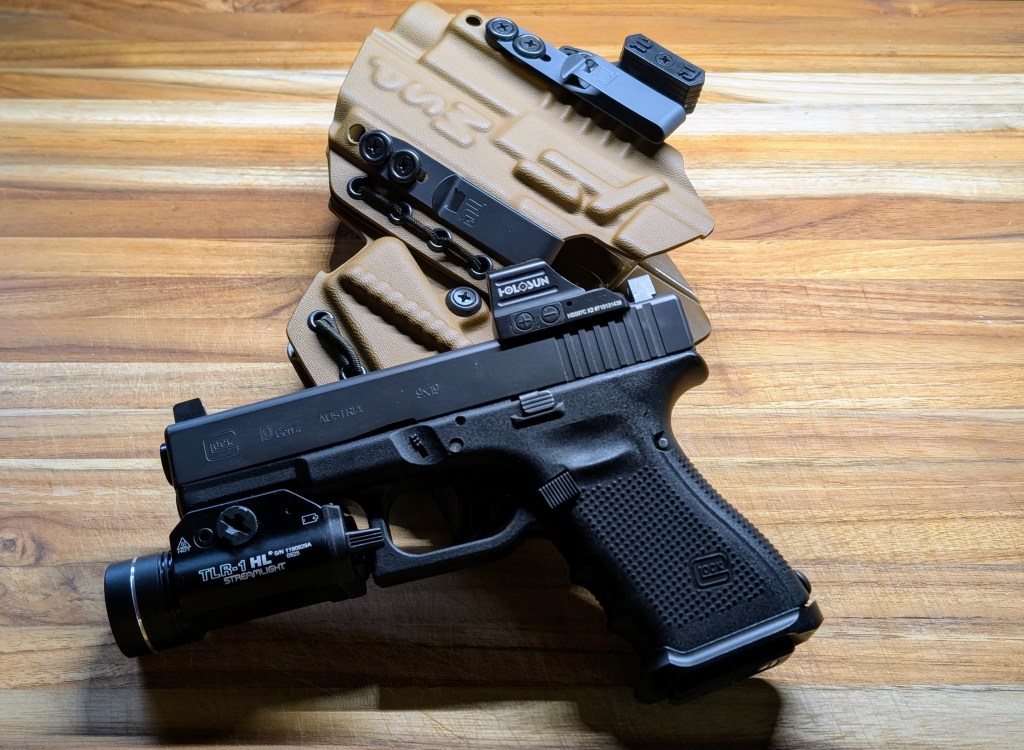
The debate between appendix carry (AIWB – Appendix Inside the Waistband) and strong side carry (typically at the 4-5 o’clock position) is a central topic among concealed carriers. While both methods have their merits, appendix carry offers distinct advantages in terms of speed, concealment, comfort, and safety. This essay explores why appendix carry is often considered superior to strong side 4-5 o’clock carry.
Natural Hand Position: A Detailed Exploration
Anatomical Readiness
When standing or walking, most people’s hands naturally rest near the front of their body, around the beltline. This is the same area where an appendix-carried pistol sits—typically between the 12 and 2 o’clock positions. Because the firearm is located where the hands already tend to be, there is no need for the exaggerated reaching or twisting required by strong side carry. This anatomical alignment means that, under stress, the body can react more instinctively and efficiently.
Reduced Reaction Time
In a defensive encounter, every fraction of a second counts. Appendix carry allows the shooter to move their hand directly from its natural resting position to the grip of the firearm. There is no need to sweep a jacket or shirt as far out of the way, nor to reach behind the hip. This direct path minimizes wasted motion and shaves critical time off the draw stroke.
Improved Draw Stroke Mechanics
The mechanics of drawing from appendix are generally more straightforward:
- The hand moves straight down to the gun.
- The elbow stays close to the body, reducing the chance of telegraphing movement.
- The gun is brought up and out in a linear motion, directly toward the target.
In contrast, strong side carry often requires:
- Reaching behind the hip, which can be awkward or slow, especially when seated or wearing restrictive clothing.
- Sweeping the elbow outward, which can be more visible to an assailant.
- Rotating the wrist and arm in a less natural motion.
Consistency Under Stress
Under adrenaline, fine motor skills degrade and gross motor movements dominate. Appendix carry leverages gross motor skills—simply grabbing the gun from the front of the body—making it easier to perform reliably under pressure. The simplicity and directness of the motion help ensure consistency, even when startled or under duress.
Accessibility in Confined Spaces
Whether seated in a car, at a desk, or in a crowded environment, the natural hand position for appendix carry remains accessible. There’s no need to twist or contort the body to reach the firearm, as is often required with strong side carry. This accessibility can be crucial in situations where mobility is limited.
Appendix carry’s alignment with the body’s natural hand position enables a faster, more intuitive, and more reliable draw. By minimizing unnecessary movement and leveraging instinctive motion, appendix carry gives the concealed carrier a significant advantage in speed and efficiency, especially in high-stress situations.
Reduced Movement: Efficiency and Speed in the Draw
Direct Access Minimizes Motion
When carrying appendix, the firearm is positioned at the front of the body, allowing the shooter to access the grip with a simple downward motion of the hand. This direct access means that the arm and shoulder remain close to the torso, requiring only a small range of motion to establish a firing grip and begin the draw. In contrast, strong side 4-5 o’clock carry requires the shooter to reach behind the hip, which involves a larger, more complex movement pattern.
Less Shoulder and Torso Rotation
Drawing from the strong side typically requires the shooter to rotate the shoulder backward and sometimes twist the torso to clear clothing and reach the firearm. This movement is not only slower but can also be awkward, especially in confined spaces or when seated. Appendix carry eliminates the need for this rotation, allowing the shooter to keep their body square to the threat and maintain better balance and posture throughout the draw.
Reduced Clothing Interference
Because the appendix position is at the front of the body, it is easier to clear cover garments with a simple upward or outward motion. The shooter can use their support hand to lift the shirt or jacket directly in front, which is more efficient than sweeping clothing back and away from the hip. This streamlined motion further reduces the time and effort required to access the firearm.
Improved Draw Consistency
The simplicity of the appendix draw—straight down, grip, and up—means there are fewer variables that can go wrong under stress. With strong side carry, the need to reach behind, clear clothing, and rotate the arm introduces more opportunities for fumbling or snagging, especially when adrenaline is high.
Critical Time Savings
In self-defense situations, the difference between a fast and slow draw can be measured in fractions of a second, but those fractions can be the difference between life and death. The reduced movement required for appendix carry translates directly into faster draw times, giving the defender a crucial edge in reacting to a threat.
Advantages When Seated or Restrained
Appendix carry’s reduced movement is especially advantageous when seated in a vehicle, at a desk, or in any situation where mobility is restricted. The shooter can access and draw the firearm with minimal movement, whereas strong side carry may be blocked by seat backs, armrests, or other obstacles.
Appendix carry’s reduced arm and shoulder movement streamlines the draw process, making it faster, more efficient, and more reliable—especially in high-stress or confined situations. This efficiency is a key reason why many experienced concealed carriers prefer appendix over strong side carry.
Minimized Printing: Enhanced Discretion with Appendix Carry
Flatter Anatomy at the Front
One of the primary reasons appendix carry excels at concealment is the natural shape of the human body. The front of the waist—between the navel and the hip bones—is generally flatter than the sides or back. This flatness provides a more uniform surface for the firearm to rest against, reducing the likelihood that the gun’s outline (or “print”) will show through clothing. In contrast, the hip and lower back curve outward, which can cause the grip or slide of a pistol carried at 4-5 o’clock to protrude and become visible, especially when bending or twisting.
Clothing Drapes More Naturally
Clothing tends to hang straight down from the front of the body, further aiding concealment. Shirts, jackets, and even fitted garments are less likely to catch or bunch around a pistol carried appendix, as opposed to strong side carry where the gun can push the fabric outward or cause it to ride up over the grip.
Modern Holster Design: Claw and Wedge Technology
Advancements in AIWB holster design have significantly improved concealment. Many modern appendix holsters feature a “claw” or “wing”—a small lever that presses against the inside of the belt, rotating the grip of the pistol inward toward the body. This subtle angling tucks the grip closer to the torso, making it much less likely to print, even with slimmer or lighter clothing.
Additionally, some holsters incorporate a “wedge” on the back, which pushes the muzzle outward and the grip inward, further flattening the gun’s profile against the body. These features work together to maximize concealment and comfort.
Less Affected by Body Movement
Appendix carry is less susceptible to printing during common movements such as bending, sitting, or reaching. When carried at the hip or back, the gun can become more visible as the body flexes or twists, causing the grip to stick out. At the appendix position, the gun remains tucked in and covered by clothing, maintaining a discreet profile throughout a wide range of activities.
Versatility with Different Outfits
Because appendix carry minimizes printing so effectively, it allows for greater flexibility in wardrobe choices. Carriers can often wear more fitted shirts or lighter fabrics without worrying about the gun being exposed. This is especially valuable in warm climates or professional settings where layering is impractical.
Appendix carry’s minimized printing is a result of both anatomical advantages and modern holster innovations. By leveraging the body’s natural contours and advanced concealment features, appendix carry allows for discreet, everyday carry—even with a variety of clothing styles and during active movement. This superior concealment is a key reason why many choose appendix over strong side carry.
Better for Different Body Types: Inclusivity and Comfort with Appendix Carry
Breaking the Myth: Not Just for the Slim
A common misconception is that appendix carry (AIWB) is only suitable for slim or athletic individuals. In reality, advances in holster design and thoughtful carry techniques have made appendix carry accessible and comfortable for people of all shapes and sizes. Many larger carriers now find appendix carry not only possible but preferable to strong side carry.
Modern Holster Innovations
Adjustable Ride Height and Cant: Many AIWB holsters now offer adjustable ride height (how high or low the gun sits) and cant (the angle of the gun). This allows users to tailor the holster’s position to their unique body shape, ensuring the gun sits comfortably and remains concealed, regardless of waist size or body contour.
Claw and Wedge Features: Holsters with integrated claws and wedges help tuck the grip into the body and angle the muzzle away from sensitive areas. For larger individuals, this means the gun can be positioned to avoid discomfort from the lower abdomen or thighs, while still maintaining excellent concealment.
Comfort for Larger Carriers
For those with a larger midsection, strong side carry can cause the grip to stick out or print more, especially when sitting or bending. The curve of the hip can push the gun outward, making concealment difficult. Appendix carry, by contrast, allows the gun to rest in the natural hollow at the front of the pelvis, where the body is often flatter. With the right holster and belt, even those with a pronounced belly can achieve a comfortable and discreet carry.
Comfort for Slim Carriers
Slim individuals often struggle with strong side carry because there is less natural padding at the hip, making the gun dig into the body or ride uncomfortably. Appendix carry, especially with a well-designed holster, can be more comfortable because the front of the body provides a more forgiving surface, and the gun is less likely to shift or poke during movement.
Enhanced Concealment Across Body Types
Because appendix carry positions the gun in a flatter area of the body and uses holster features to minimize printing, it often outperforms strong side carry in concealment for both slim and larger carriers. The ability to fine-tune holster placement means that most people can find a “sweet spot” where the gun is both comfortable and invisible under clothing.
Real-World Adaptability
Appendix carry’s adaptability means that people with different body types can experiment with holster position, ride height, and belt tightness to find what works best for them. Many holster manufacturers now offer models specifically designed for larger or smaller frames, further expanding the accessibility of appendix carry.
Thanks to modern holster technology and thoughtful carry techniques, appendix carry is no longer limited by body type. Whether slim, athletic, or larger, most carriers can achieve superior comfort and concealment with appendix carry—often outperforming strong side carry in both respects. This inclusivity is a major reason for the growing popularity of appendix carry among concealed carriers of all shapes and sizes.
Greater Control: Enhanced Retention and Security with Appendix Carry
Constant Visual Awareness
When carrying appendix, the firearm is positioned at the front of the body, within the wearer’s natural field of vision. This means you can easily glance down and confirm the gun’s position at any time, whether standing, sitting, or moving. In contrast, a pistol carried at the 4-5 o’clock position is behind the hip and out of sight, making it more vulnerable to unnoticed exposure or tampering.
Immediate Physical Access
Appendix carry allows both hands to quickly and naturally cover or secure the firearm if needed. If you sense a threat or find yourself in a crowded environment, you can subtly rest your hand or forearm over the gun, instantly increasing retention without drawing attention. This is much harder to do with strong side carry, where reaching behind your back is awkward and conspicuous.
Reduced Risk of Gun Grabs
One of the most significant security advantages of appendix carry is the reduced risk of someone attempting a gun grab from behind. With strong side carry, the grip of the pistol is exposed at your back or hip, making it accessible to someone approaching from your blind spot. In contrast, appendix carry keeps the firearm in a position that is much harder for others to access without your knowledge or intervention.
Defensive Maneuverability
If a physical altercation occurs, having the gun at the front of your body allows you to use your arms, elbows, and torso to shield and protect the weapon. You can quickly drop your elbow or clamp your forearm over the gun, making it extremely difficult for an assailant to reach or dislodge it. This defensive posture is far more effective than trying to protect a gun located behind your back, where your own body can become an obstacle.
Enhanced Awareness in Crowded or Dynamic Environments
In crowded places—public transportation, lines, or busy events—appendix carry provides peace of mind. You are always aware of the gun’s location, and it is less likely to be bumped, brushed, or accidentally exposed by others. This heightened awareness and control are crucial for responsible concealed carry.
Psychological Deterrence
Knowing that your firearm is always within your line of sight and immediate reach can boost your confidence and sense of security. This psychological advantage can translate into more assertive and controlled behavior in potentially dangerous situations, further reducing the likelihood of a successful gun grab or loss of weapon control.
Appendix carry’s front-of-body position offers superior visual and physical control over your firearm, dramatically reducing the risk of gun grabs and accidental exposure. This enhanced retention and security make appendix carry a compelling choice for those who prioritize safety and situational awareness in their concealed carry practice.
Seated Access: Unmatched Accessibility in Everyday Life
Direct, Unobstructed Reach
When seated—whether in a car, at a desk, or in a restaurant—appendix carry positions the firearm at the front of the body, above the thighs and below the beltline. This placement allows for a direct, downward reach to the grip, with minimal interference from clothing, furniture, or seat belts. The hand can naturally and quickly access the firearm without awkward twisting or shifting.
Overcoming Seat Belt Barriers
One of the most significant challenges with strong side carry is the seat belt. In a vehicle, the seat belt typically crosses over the hip or lower back, directly over where a strong side holster sits. This not only makes it difficult to reach the gun but can also trap the firearm, requiring the wearer to unbuckle or contort their body to access it—actions that are slow and potentially dangerous in an emergency. With appendix carry, the seat belt usually runs above or beside the holster, allowing the carrier to draw the firearm without needing to remove the belt or make exaggerated movements.
Desk and Chair Considerations
At a desk or table, strong side carry can be blocked by the chair’s backrest or armrest, or by the table edge itself. Reaching behind the hip is awkward and can be impossible if the chair is close-fitting or has arms. Appendix carry, on the other hand, keeps the firearm in front, where the torso remains mobile and the hand can slip under the table or desk to access the gun. This is especially important in office environments, restaurants, or public spaces where quick, discreet access may be necessary.
Discreet and Natural Movements
Drawing from appendix while seated can be done with subtle, natural movements. The hand simply moves to the front of the waistband, which is a common gesture and less likely to draw attention than reaching behind the back. This discretion is valuable in situations where you may need to prepare for a threat without alarming others.
Consistency Across Positions
Appendix carry offers consistent access to the firearm whether standing, sitting, or even crouching. This consistency builds muscle memory and confidence, as the draw stroke remains largely unchanged regardless of position. Strong side carry, by contrast, often requires the carrier to adjust their draw technique depending on whether they are seated or standing, increasing the risk of fumbling under stress.
Real-World Scenarios
- Driving: If confronted while in your vehicle, appendix carry allows you to draw quickly without removing your seat belt or shifting in your seat.
- Dining Out: In a restaurant booth or at a crowded table, you can access your firearm without bumping into others or struggling with chair arms.
- Office Work: At a desk, you retain full access to your firearm, even if the chair or desk restricts movement to your sides or back.
Appendix carry provides superior access to your firearm while seated, overcoming the obstacles posed by seat belts, chairs, and tables. This advantage ensures that you are always prepared to respond quickly and effectively, no matter your environment or position.
Comfort While Seated: Everyday Ease with Appendix Carry
Avoiding Pressure Points
One of the most common complaints about strong side (4-5 o’clock) carry is discomfort while sitting. When a firearm is positioned at the hip or behind it, sitting down causes the gun to press into the back, hip, or even ribs. This pressure can quickly become painful, especially during long drives, office work, or meals. In contrast, appendix carry places the firearm at the front of the body, where the pelvis and lower abdomen provide a more forgiving surface. The gun rests above the thigh, avoiding the bony protrusions and nerves found at the hip and lower back.
Less Interference from Chairs and Seatbacks
Chairs with firm backs, armrests, or bucket seats (like those in cars) can push a strong side holster up and into the body, causing discomfort and even shifting the holster out of position. Appendix carry avoids this issue entirely, as the gun is positioned away from the chair’s pressure points. Whether you’re in a car, at a desk, or in a restaurant booth, the firearm remains undisturbed and comfortable.
Reduced Risk of “Digging In”
With strong side carry, the grip or slide of the pistol can dig into the ribs or side, especially when leaning or twisting. This is not only uncomfortable but can also lead to bruising or skin irritation over time. Appendix carry, especially with a well-designed holster that uses a wedge or foam pad, distributes the pressure more evenly across the lower abdomen and upper thigh. This design minimizes hot spots and makes it possible to carry comfortably for hours at a time.
Modern Holster Design for Comfort
Today’s appendix holsters are engineered with comfort in mind. Features like adjustable ride height, cant, and the addition of foam wedges or pads allow users to fine-tune the holster’s position for their unique body shape. These innovations help the holster conform to the body’s contours, further reducing discomfort and making appendix carry a practical choice for daily wear.
Everyday Practicality
Comfort while seated isn’t just about avoiding pain—it’s about making concealed carry sustainable for everyday life. If a carry method is uncomfortable, people are less likely to carry consistently. Appendix carry’s comfort advantage means you’re more likely to keep your firearm with you throughout the day, whether you’re commuting, working, or relaxing.
Real-World Scenarios
- Long Drives: Appendix carry allows you to sit for hours in a car without the gun pressing into your back or being obstructed by the seatbelt.
- Office Work: You can remain seated at a desk all day without needing to adjust or remove your holster.
- Dining Out: Sitting in booths or at crowded tables is more comfortable, with no risk of the gun being pushed up or exposed by the chair.
Appendix carry offers superior comfort while seated by avoiding the pressure points and interference common with strong side carry. Modern holster designs further enhance this comfort, making appendix carry a practical and sustainable choice for everyday concealed carry—no matter how much time you spend sitting.
Less Interference with Movement: Freedom and Flexibility in Daily Life
Natural Range of Motion
Appendix carry positions the firearm at the front of the body, typically between the 12 and 2 o’clock positions. This area is less involved in the body’s major bending and twisting motions. As a result, the gun remains relatively stationary and unobtrusive during everyday activities such as bending over to tie your shoes, picking up objects, or reaching for something on a high shelf.
Bending and Squatting
With strong side carry, bending at the waist or squatting can cause the grip or slide of the pistol to dig into the ribs, hip, or lower back. This not only causes discomfort but can also shift the holster out of position or even expose the firearm if your shirt rides up. Appendix carry avoids these issues, as the gun moves with the natural flex of the abdomen and is less likely to be pinched or pressed by the body’s movement.
Twisting and Rotating
Twisting at the waist—such as when getting in and out of a car, turning to look behind you, or reaching across your body—can be awkward and even painful with a strong side holster. The gun may press into your side or back, restrict your movement, or catch on clothing. In contrast, appendix carry keeps the firearm in a position that is less affected by rotational movement, allowing for smoother, more comfortable motion.
Climbing and Physical Activity
For those who lead active lifestyles or have jobs that require frequent movement—such as climbing ladders, crawling, or engaging in physical tasks—appendix carry offers a clear advantage. The gun stays secure and out of the way, reducing the risk of snagging on obstacles or being jostled out of place. This makes appendix carry especially popular among law enforcement, security professionals, and those who value mobility.
Reduced Risk of Exposure
Because appendix carry is less likely to shift or be displaced during movement, there is a lower risk of accidental exposure (“printing” or the gun becoming visible). The holster remains tucked in and covered, even during vigorous activity, maintaining both comfort and discretion.
Everyday Practicality
Whether you’re running errands, playing with children, working around the house, or simply going about your day, appendix carry allows you to move freely and naturally. You’re less likely to need to adjust your holster, worry about discomfort, or change your behavior to accommodate your firearm.
Appendix carry interferes far less with daily movements than strong side carry. By positioning the firearm where it’s least likely to impede bending, twisting, or other activities, appendix carry offers superior comfort, mobility, and discretion—making it an ideal choice for active, everyday concealed carry.
Improved Awareness: Safety Through Visibility and Control
Constant Line of Sight
One of the most significant safety benefits of appendix carry is that the firearm remains within the carrier’s direct line of sight at all times. Whether standing, sitting, or moving, you can easily glance down and verify the position and security of your firearm. This constant visual awareness greatly reduces the risk of negligent exposure—such as your shirt riding up and revealing the gun—or accidental contact with others in crowded spaces.
Reduced Risk of Accidental Contact
With strong side carry, the firearm is positioned behind the hip or back, often outside your field of vision. This makes it easier for the gun to bump into objects, furniture, or even people without your immediate knowledge. In contrast, appendix carry keeps the firearm at the front, where you are more likely to notice and avoid such contact, maintaining both safety and discretion.
Enhanced Control During High-Stress Situations
In stressful or dynamic environments, situational awareness is crucial. Appendix carry allows you to keep your hand near or on your firearm without drawing attention, providing immediate access and control. If you sense a potential threat or find yourself in a crowded area, you can subtly secure your firearm, reducing the risk of accidental exposure or unauthorized access.
Safer Reholstering
Reholstering is one of the most critical moments for firearm safety. With appendix carry, you can clearly see the holster and the mouth of the holster as you reinsert the gun. This visibility allows you to ensure that no clothing, drawstrings, or other obstructions are in the way—significantly reducing the risk of a negligent discharge. You can take your time, use both hands if needed, and maintain full control throughout the process.
In contrast, reholstering at the strong side or behind the back often requires you to work by feel, with limited visibility. This increases the risk of snagging the trigger or missing the holster entirely, especially under stress or in low-light conditions.
Greater Awareness Means Fewer Mistakes
The more aware you are of your firearm’s position and status, the less likely you are to make mistakes. Appendix carry’s front-of-body placement naturally encourages this awareness, helping you maintain safe habits and avoid lapses in judgment that could lead to accidents.
Appendix carry enhances safety by keeping the firearm within your line of sight and immediate control. This improved awareness reduces the risk of negligent exposure, accidental contact, and unsafe reholstering—making appendix carry not just practical, but also one of the safest methods for responsible concealed carry.
Modern Holster Designs: Engineering Safety and Comfort for Appendix Carry
Rigid Trigger Guards: Preventing Negligent Discharges
One of the primary safety concerns with appendix carry has always been the risk of a negligent discharge, especially during holstering. Modern holsters address this with rigid, molded trigger guards—typically made from Kydex or similar durable plastics. These holsters completely cover the trigger and trigger guard area, making it virtually impossible for fingers, clothing, or other objects to inadvertently contact the trigger while the gun is holstered. This design feature is crucial for appendix carry, where the muzzle points toward sensitive areas of the body.
Adjustable Ride Height and Cant: Customizing Fit and Draw
Modern appendix holsters often feature adjustable ride height (how high or low the holster sits on the belt) and cant (the angle at which the gun sits). This adjustability allows users to fine-tune the holster’s position for their unique body shape and comfort needs. By optimizing the ride height and cant, carriers can ensure a secure fit, a smooth draw, and a safe, controlled reholster—reducing the risk of fumbling or awkward movements that could lead to accidents.
Enhanced Retention Systems
Many contemporary holsters include adjustable retention screws or mechanisms, allowing the user to set the amount of force required to draw the firearm. This ensures the gun stays securely in place during movement but can still be drawn quickly when needed. Proper retention is especially important for appendix carry, where the holster is often subjected to more movement and pressure from daily activities.
Claw and Wedge Features: Improving Concealment and Stability
Innovations like the “claw” or “wing” press against the inside of the belt, rotating the grip of the pistol inward and further enhancing concealment. The “wedge” or foam pad on the back of the holster pushes the muzzle outward and the grip inward, improving both comfort and stability. These features help keep the holster in the optimal position, reducing shifting and minimizing the need for adjustment—both of which contribute to safer carry.
Open-Mouth and Reinforced Holster Designs: Safer Reholstering
Many modern appendix holsters are designed with a reinforced, open mouth that maintains its shape even when empty. This allows for safe, one-handed reholstering without the risk of the holster collapsing or snagging the trigger. The ability to reholster slowly and deliberately, with full visibility, is a major safety improvement over older, softer holster designs.
Material Advances: Durability and Hygiene
Materials like Kydex, Boltaron, and injection-molded polymers are not only rigid and protective but also resistant to sweat, moisture, and wear. This durability ensures the holster maintains its protective qualities over time, further reducing safety risks associated with worn or degraded equipment.
Modern holster designs have revolutionized appendix carry safety. Features like rigid trigger guards, adjustable ride height and cant, enhanced retention, and reinforced openings directly address historical safety concerns. These innovations make appendix carry not only more comfortable and concealable but also as safe—or safer—than other carry methods when paired with responsible handling practices.
Certainly! Here’s a more detailed and nuanced conclusion for your essay:
Conclusion: Why Appendix Carry Stands Out
While both appendix and strong side carry methods have their dedicated followers and unique advantages, a comprehensive evaluation reveals that appendix carry consistently excels in the areas most critical to effective concealed carry.
Speed and Efficiency
Appendix carry enables a faster, more intuitive draw due to its natural alignment with the body’s resting hand position and the reduced movement required to access the firearm. In high-stress situations where every fraction of a second matters, this speed can be life-saving.
Superior Concealment
The anatomical advantages of the front of the body, combined with modern holster innovations, make appendix carry exceptionally discreet. It minimizes printing, adapts well to various clothing styles, and is effective for a wide range of body types—dispelling the myth that it’s only for the slim or athletic.
Enhanced Retention and Security
With the firearm always within the carrier’s line of sight and immediate reach, appendix carry offers unmatched retention and control. The risk of a gun grab from behind is dramatically reduced, and the ability to discreetly secure the weapon in crowded or dynamic environments is a significant safety benefit.
Everyday Comfort and Practicality
Contrary to outdated perceptions, appendix carry is often more comfortable, especially when sitting for extended periods or engaging in daily activities. It avoids the pressure points and interference common with strong side carry, making it a practical choice for those who spend much of their day seated or active.
Modern Safety Features
Advancements in holster design—such as rigid trigger guards, adjustable ride height, and reinforced openings—have addressed historical safety concerns. These features, combined with the improved awareness that comes from carrying in the front, make appendix carry as safe as, if not safer than, other methods when practiced responsibly.
The Superior Choice for Most Carriers
While strong side carry remains a viable option for some, especially those with specific needs or preferences, appendix carry’s advantages in speed, concealment, retention, comfort, and safety make it the superior choice for most concealed carriers. Its adaptability, modern holster technology, and alignment with the realities of everyday life ensure that it meets the demands of both new and experienced carriers alike.
For those seeking the most effective, practical, and secure method of concealed carry, appendix carry stands out as the clear leader. It represents the evolution of concealed carry—combining tradition, innovation, and real-world practicality into a method that truly serves the needs of today’s responsible armed citizen.



 UTAZCO Overland
Leave a Reply