

Venturing into remote areas—whether for hiking, off-roading, or backcountry camping—offers adventure and solitude. However, these environments also present unique risks, especially when it comes to communication. In places where cell phones lose signal, the ability to call for help or coordinate with others can mean the difference between a minor inconvenience and a life-threatening emergency. This is where radios like the inexpensive TidRadio TD-H9 become essential tools for safety.
The Limits of Cellular Coverage
While the modern world is increasingly interconnected, the reality is that cellular networks are designed with population density and infrastructure in mind, not the unpredictable contours of wilderness or the remoteness of backcountry roads. Cellular towers are strategically placed to maximize coverage in urban and suburban areas, where the majority of users live and work. However, once you venture beyond the city limits, the landscape changes dramatically. Mountains rise, valleys dip, and dense forests or vast deserts stretch for miles—each presenting unique challenges to radio wave propagation.
In mountainous regions, for example, the very terrain that draws adventurers can block or scatter cellular signals. A single ridge or deep canyon can create a complete dead zone, regardless of how close you might be to a major highway or town. Forests, especially those with thick canopies, can absorb and weaken signals, making even a short hike into the woods enough to lose all bars on your phone. Deserts, though seemingly open, often lack the infrastructure investment needed to support cell towers, leaving huge swathes of land without any coverage at all.
Rural backroads and remote highways are another weak link. These routes may be lifelines for travelers, but they are often low priorities for network expansion due to the sparse population and high cost of installation. As a result, a breakdown or accident on such a road can leave you isolated, unable to call for help or even notify loved ones of your situation.
The consequences of these coverage gaps become starkly apparent in emergencies. An injury on a trail, a vehicle stuck in mud miles from the nearest town, or a sudden change in weather can all escalate from inconvenient to dangerous if you are unable to communicate. The sense of security provided by a smartphone is, in these environments, an illusion. Without a signal, your device becomes little more than a flashlight or a camera.
This vulnerability is not just theoretical. Search and rescue teams frequently report that delayed response times in remote incidents are often due to the victim’s inability to call for help. In some cases, hours or even days can pass before someone stumbles upon the scene or the missing party is reported overdue. The lack of communication can turn a manageable situation into a life-threatening ordeal.
Ultimately, the limits of cellular coverage are a reminder that technology, while powerful, has boundaries defined by geography, economics, and physics. For those who venture into the wild or travel far from the grid, understanding these limits is essential. It underscores the importance of alternative communication tools—like handheld radios—that are designed to function where cell phones cannot, providing a critical safety net when you are miles from help.
Cellular networks are built to serve populated areas, leaving remote regions like mountains, forests, deserts, and rural roads with little or no coverage. Natural obstacles and lack of infrastructure mean that even a short distance from civilization can result in a total loss of signal. In emergencies, this lack of connectivity can quickly turn a minor problem into a dangerous situation, as smartphones become useless without a network. Search and rescue operations are often delayed because victims cannot call for help. These realities highlight the crucial need for alternative communication methods, such as handheld radios, which remain reliable when cell phones fail and can provide a vital safety link far from help.
Radios: Bridging the Communication Gap
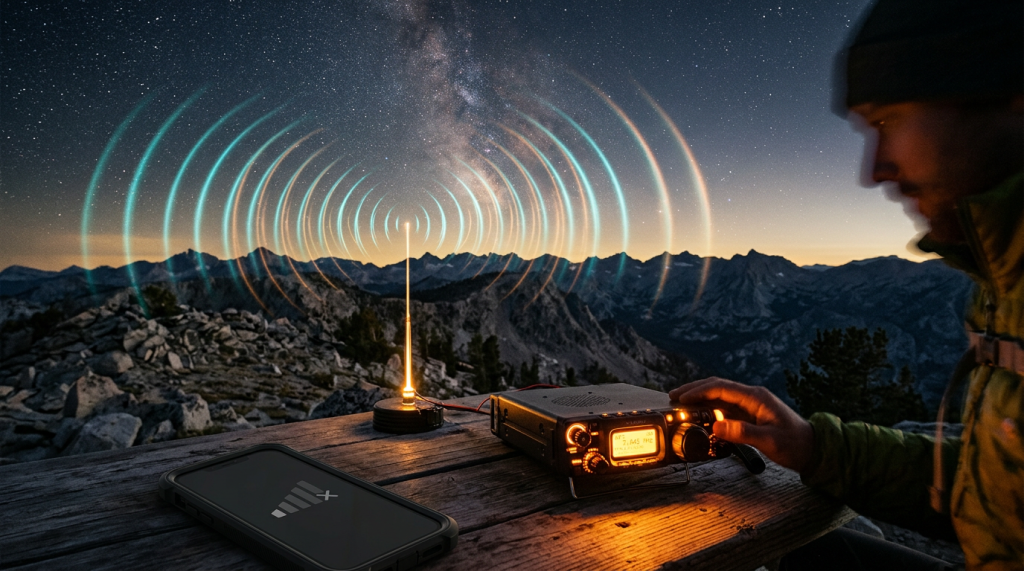
Handheld radios, like the TidRadio TD-H9 or, my favorite, the more advanced BTECH UV-PRO, serve as a crucial link when traditional communication methods fail. Unlike cell phones, which are tethered to the availability of cell towers and the reach of commercial networks, radios function independently by transmitting and receiving signals directly between devices. This independence from infrastructure is what makes them so valuable in remote or unpredictable environments.
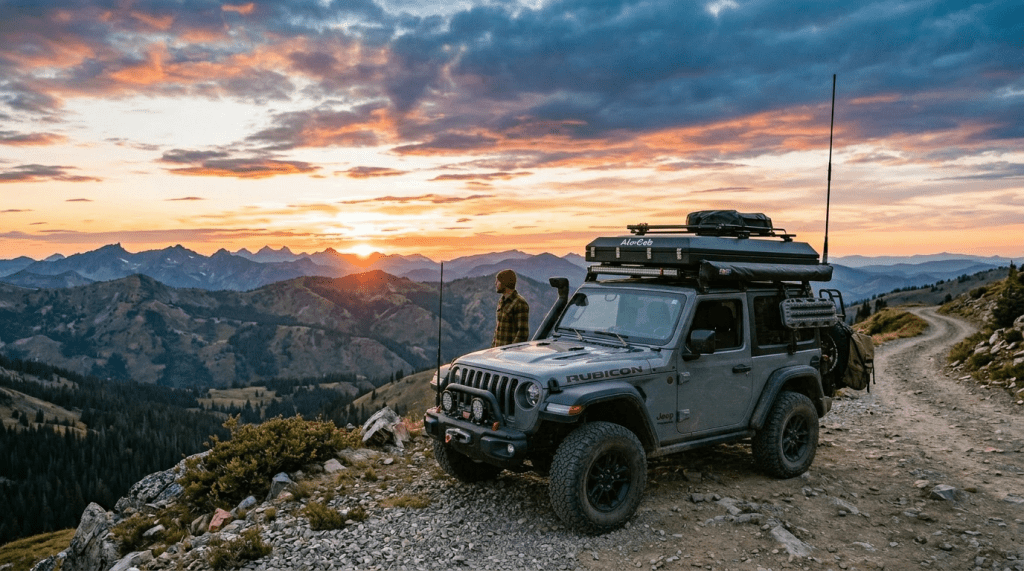
When you’re miles from the nearest cell tower, a radio becomes your lifeline to the outside world. Whether you’re hiking with friends, off-roading in a convoy, or camping in the backcountry, radios allow you to maintain real-time contact with your group. This direct communication is not only convenient for coordinating movements or sharing information about trail conditions, but it can also be critical in emergencies. If someone gets separated, injured, or encounters unexpected obstacles, a quick call over the radio can summon help or alert others to the situation instantly.
Beyond group coordination, radios also open up the possibility of reaching other radio operators in the area. Many outdoor enthusiasts, off-roaders, and even local residents monitor common frequencies, especially in regions known for challenging terrain or limited cell service. In an emergency, broadcasting a call for help on these channels can connect you with someone who is able to assist, relay your message, or contact emergency services on your behalf.
Another significant advantage of modern handheld radios is their ability to receive weather alerts and emergency broadcasts. Many models, including the TD-H9 and UV-PRO, can be programmed to monitor NOAA weather channels or local emergency frequencies. This feature provides timely updates about changing weather conditions, natural disasters, or other hazards, allowing you to make informed decisions and avoid danger before it strikes.
The reliability of radios in harsh conditions is also worth noting. Designed for rugged use, they often feature durable casings, long battery life, and water resistance, ensuring they remain operational when you need them most. Unlike cell phones, which can quickly drain their batteries searching for a signal, radios are optimized for efficient communication over extended periods.
In essence, handheld radios bridge the communication gap left by cellular networks, offering a direct, dependable, and versatile means of staying connected when you’re far from help. They transform isolation into connection, turning a potentially risky adventure into a safer, more manageable experience.
Handheld radios like the TidRadio TD-H9 and BTECH UV-PRO provide a vital means of communication in areas where cell phones are useless. Because they operate independently of cell towers, radios enable direct, real-time contact with your group and can reach other radio users nearby, which is crucial for both coordination and emergencies. They also offer access to weather alerts and emergency broadcasts, helping you stay informed about changing conditions. Built for rugged environments, radios are reliable, durable, and have long battery life, making them an essential safety tool that bridges the gap left by cellular networks and ensures you’re never truly isolated when far from help.
Safety Benefits of Carrying a Radio
Immediate Communication
The most significant safety advantage of carrying a radio in remote or off-grid environments is the ability to communicate instantly. Unlike cell phones, which may require dialing, waiting for a connection, or even struggling with weak signals, radios provide a direct line of contact at the push of a button. This immediacy can be lifesaving when circumstances change rapidly or when an emergency unfolds.
Imagine a scenario where a member of your hiking group slips and sustains an injury on a remote trail. With a radio, you can immediately alert the rest of your party, coordinate a response, and, if necessary, reach out to other radio users in the area for assistance. There is no need to search for a signal or worry about dropped calls; your message is transmitted in real time to everyone tuned to the same frequency. This rapid exchange of information allows for quick decision-making, whether it’s organizing a rescue, relaying your location, or simply reassuring others that help is on the way.
Immediate communication is not only vital in emergencies but also enhances routine safety. For example, if your group splits up to explore different areas, radios allow you to check in regularly, share updates about changing weather, or warn each other about hazards like wildlife or difficult terrain. This constant, reliable connection reduces anxiety and ensures that everyone remains informed and accounted for.
Furthermore, radios can connect you to a broader network beyond your immediate group. In many outdoor communities, it’s common for people to monitor emergency or general-use frequencies. If you find yourself in trouble, a call for help can quickly reach someone nearby who is equipped and willing to assist, even if they are complete strangers. This community aspect of radio use adds another layer of security, transforming isolated wilderness into a space where help is never too far away.
In essence, the ability to communicate instantly with radios transforms the dynamics of safety in remote environments. It eliminates delays, fosters coordination, and ensures that, even when miles from civilization, you are never truly alone in facing the unexpected.
Carrying a radio in remote areas offers the crucial benefit of instant communication, allowing you to reach your group or others nearby at the push of a button. This immediacy is vital in emergencies, enabling quick coordination and response without the delays or signal issues of cell phones. Radios also support routine safety by keeping everyone connected, informed, and able to share updates or warnings. Additionally, they can link you to a wider community of radio users who may be able to help in a crisis, making even the most isolated places feel less risky and ensuring you’re never truly alone when facing unexpected situations.
Extended Range
One of the most compelling advantages of handheld radios like the TD-H9 is their ability to maintain communication over significant distances, even in the absence of any supporting infrastructure. The effective range of a radio is influenced by several factors, including the device’s power output, the frequency band in use, and, most importantly, the surrounding terrain. In open environments such as deserts, plains, or large bodies of water, a radio’s signal can travel for many miles with little obstruction, allowing users to stay in touch even when separated by vast distances.
In more challenging landscapes, such as dense forests, mountainous regions, or urban canyons, the range may be reduced as trees, rocks, and buildings absorb or reflect radio waves. However, even in these conditions, a well-chosen frequency and a powerful radio can often achieve reliable communication over distances that would be impossible for a cell phone without coverage. For example, a group spread out along a winding trail or across a series of ridges can still coordinate and share information, thanks to the radio’s ability to cut through or bounce around obstacles that would otherwise isolate individuals.
The extended range of radios is not just a matter of convenience; it is a critical safety feature. When exploring remote areas, it is common for groups to become separated by distance or terrain. Radios bridge these gaps, ensuring that a call for help, a warning about a hazard, or a simple check-in can reach its intended recipient, even if they are miles away and out of sight. This capability is especially important in emergencies, where time is of the essence and the ability to communicate quickly across distance can make all the difference.
Unlike cell phones, which are rendered useless the moment you step outside the coverage area, radios empower users to maintain a lifeline to others, regardless of how far they roam. This extended reach transforms the way people approach safety and coordination in the outdoors, providing peace of mind and practical support in situations where isolation could otherwise become dangerous.
Handheld radios like the TD-H9 offer the crucial ability to communicate over several miles, even without any infrastructure, making them far more reliable than cell phones in remote areas. While terrain and obstacles can affect range, radios still outperform phones by allowing groups to stay connected across challenging landscapes. This extended range is not just convenient but essential for safety, ensuring that help, warnings, or updates can reach others quickly, even when separated by distance or difficult terrain. Radios thus provide a vital communication lifeline, transforming outdoor safety and coordination where cell phones simply cannot function.
Reliability
Reliability is at the heart of why radios are trusted by outdoor enthusiasts, emergency responders, and professionals who operate in unpredictable or extreme environments. Unlike many consumer electronics, handheld radios are purpose-built to withstand the rigors of field use. Their construction often features reinforced casings that can absorb impacts from drops or knocks, ensuring the device remains functional even after accidental mishandling. This shockproof design is especially important when traversing rocky trails, navigating dense forests, or working in environments where equipment is frequently jostled or exposed to rough treatment.
Water resistance is another hallmark of a reliable radio. Many models are sealed against rain, splashes, and even brief submersion, allowing them to function in wet conditions that would quickly disable a typical smartphone. Whether you’re caught in a sudden downpour, crossing a stream, or dealing with morning dew, you can trust that your radio will continue to operate. This resilience is invaluable during outdoor adventures, where weather can change rapidly and unpredictably.
Battery life is a further testament to the dependability of radios. Designed for extended use, many radios can operate for dozens of hours on a single charge, and some allow for quick battery swaps in the field. Unlike cell phones, which may drain quickly searching for a signal or running background apps, radios are optimized for efficient power consumption. This means you can rely on your device to be ready when you need it most, whether you’re on a multi-day trek or responding to an emergency late in the day.
All of these features combine to make radios a steadfast companion in situations where failure is not an option. Their ruggedness, weather resistance, and long-lasting power ensure that, even in the harshest conditions, you have a dependable means of communication. This reliability provides peace of mind, allowing you to focus on your adventure or mission, knowing that your lifeline to help and coordination will not let you down.
Radios are trusted in extreme and unpredictable environments because they are built to be exceptionally reliable. Their rugged construction protects them from drops and rough handling, while water resistance ensures they keep working in wet or rapidly changing weather conditions. With long battery life and efficient power use, radios remain dependable for extended periods, unlike cell phones that quickly lose charge searching for a signal. These qualities make radios a steadfast and reassuring tool, providing consistent communication and peace of mind when you need it most.
Access to Emergency Channels
One of the most powerful features of modern handheld radios is their ability to tune into emergency and weather channels, transforming them from simple communication tools into vital sources of real-time information and assistance. Unlike cell phones, which rely on internet connectivity or specialized apps to receive alerts, radios can directly access dedicated frequencies used by government agencies, weather services, and emergency responders. This capability is especially valuable in remote areas where traditional communication infrastructure is absent or unreliable.
When you’re out in the wilderness or traveling through isolated regions, conditions can change rapidly and unpredictably. Severe weather, wildfires, flash floods, or other natural hazards may develop with little warning. Radios equipped to receive NOAA weather broadcasts or similar local services provide continuous updates, allowing you to monitor evolving threats and make informed decisions about your route or shelter. This access to timely, authoritative information can be the difference between avoiding danger and stumbling into it unprepared.
Beyond weather alerts, many radios are capable of transmitting and receiving on frequencies monitored by search and rescue teams, park rangers, or local emergency networks. In a crisis, this means you have a direct line to those who can provide help, guidance, or coordinate a rescue. Even if you are unable to reach emergency services directly, your call for assistance can be picked up by other radio users in the area—such as fellow hikers, off-roaders, or amateur radio operators—who can relay your message or come to your aid.
This network of accessible emergency channels creates a safety net that is not dependent on commercial infrastructure or the presence of cell towers. It empowers individuals to stay informed, connected, and capable of summoning help when it matters most. In essence, the ability to access emergency and weather channels elevates the role of the radio from a simple communication device to a critical component of any safety plan for those venturing far from the beaten path.
Modern handheld radios can access emergency and weather channels, providing real-time updates and a direct link to rescue services or other radio users. This feature is especially crucial in remote areas where cell phones and internet-based alerts are unreliable or unavailable. By receiving continuous weather updates and connecting directly with emergency networks, radios help users stay informed about hazards and summon help when needed. This capability turns radios into essential safety tools, offering a dependable lifeline and critical information far from traditional communication infrastructure.
Case Study: The TidRadio TD-H9
The TidRadio TD-H9 has earned a reputation as a reliable companion for those who venture into remote or challenging environments. Its appeal lies in a thoughtful combination of features designed to address the unique demands of outdoor communication. The radio’s dual-band capability, supporting both VHF and UHF frequencies, allows users to adapt to different terrains and communication needs. VHF is often favored for open areas and longer distances, while UHF excels in environments with obstacles like dense forests or urban structures. This flexibility ensures that users can maintain clear contact whether they are traversing wide-open deserts or winding through wooded trails.
Battery life is another standout aspect of the TD-H9. Outfitted with a high-capacity battery, the radio is built to last through extended excursions without frequent recharging. This is particularly important for multi-day trips or situations where access to power is limited. The ability to program channels further enhances its utility, enabling groups to coordinate on private frequencies, avoid interference, and quickly switch between different teams or purposes. The TD-H9’s compact and rugged design means it can withstand the bumps, drops, and exposure to the elements that are inevitable in outdoor adventures, all while remaining lightweight and easy to carry.
When comparing the TidRadio TD-H9 to the BTECH UV-PRO, several distinctions emerge, though both radios are highly regarded in the outdoor and amateur radio communities. The BTECH UV-PRO is often considered a step up in terms of advanced features and user customization. It offers a more refined user interface, additional programmable options, and enhanced audio clarity, which can be especially valuable for users who demand precise control over their communication setup. The UV-PRO also tends to support a broader range of accessories and has a reputation for slightly better build quality, making it a favorite among those who are willing to invest a bit more for premium performance.
However, the TD-H9 holds its own by delivering robust performance at a more accessible price point. For many users, especially those new to handheld radios or seeking a dependable backup device, the TD-H9 strikes an excellent balance between functionality, durability, and affordability. While the BTECH UV-PRO may appeal to enthusiasts who want every possible feature and the highest degree of customization, the TD-H9 remains a practical and trustworthy choice for anyone who needs reliable communication far from the reach of cell towers. Both radios exemplify the importance of having a dedicated, purpose-built device when safety and coordination are paramount, but the choice between them often comes down to personal preference, budget, and the specific demands of the adventure at hand.
The TidRadio TD-H9 is valued by outdoor enthusiasts for its dual-band versatility, long battery life, programmable channels, and rugged, compact design, making it well-suited for reliable communication in remote areas. Compared to the BTECH UV-PRO, which offers more advanced features, greater customization, and slightly higher build quality, the TD-H9 stands out for its affordability and solid performance. While the UV-PRO may attract users seeking premium options and maximum control, the TD-H9 remains a practical, dependable choice for those prioritizing reliability and value in challenging environments. Ultimately, both radios highlight the importance of dedicated communication tools when venturing beyond cell coverage, with the choice depending on individual needs and preferences.
Comparing Communication Options
| Device | Coverage | Reliability | Emergency Use | Group Coordination | Battery Life |
|---|---|---|---|---|---|
| Smartphone | Limited to cell areas | Low (no signal = no use) | Limited (if signal) | App-dependent | Moderate |
| Satellite Phone | Global (with clear sky) | High | High | Limited (one-to-one) | Moderate |
| Handheld Radio (e.g., TD-H9) | Line-of-sight, several miles | High | High (if others nearby) | Excellent | High |
Conclusion
In the vastness of remote landscapes, where the nearest sign of civilization may be hours or even days away, the ability to communicate becomes more than just a convenience—it becomes essential for survival and peace of mind. The unpredictable nature of the outdoors, with its shifting weather, challenging terrain, and potential for accidents, means that being prepared is not just about having the right gear, but also about ensuring you can reach out for help or share critical information at a moment’s notice. In these situations, the limitations of cell phones quickly become apparent, as their dependence on infrastructure leaves them powerless in the very places where you need them most.
Radios like the TidRadio TD-H9 step in to fill this crucial gap. Their independence from cell towers, robust construction, and versatile features transform them into indispensable tools for anyone venturing off the grid. The ability to instantly connect with your group, receive real-time weather updates, or broadcast a call for assistance can make all the difference when facing the unexpected. Even something as simple as performing a “radio check” before setting out can set the tone for a safer, more coordinated adventure, ensuring that everyone is equipped to handle whatever challenges may arise.
Ultimately, carrying a reliable radio is an act of foresight and responsibility. It acknowledges the reality that, in the wild, self-reliance is paramount—but that doesn’t mean you have to be alone. With a dependable radio at your side, you carry with you the assurance that, no matter how far you roam, you remain connected to those who can help, guide, or simply share in the journey. In this way, communication becomes not just a tool, but a lifeline—one that can turn isolation into security and uncertainty into confidence.


 UTAZCO Overland
Leave a Reply