
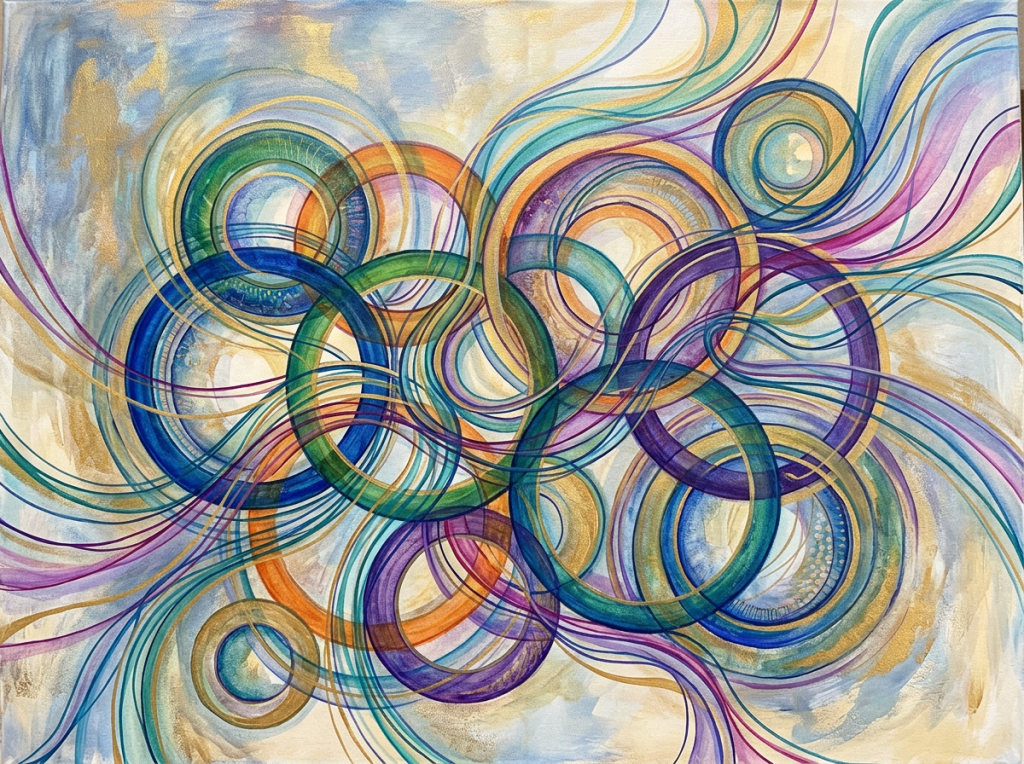
In the search for a meaningful and harmonious life, many cultures have developed concepts that articulate the invisible forces shaping our existence. This universal quest—to understand what lies beneath the surface of daily experience—has led to the emergence of ideas and practices that transcend language, geography, and time. These concepts often serve as bridges between the tangible and intangible, helping individuals and societies make sense of the unseen currents that influence health, relationships, creativity, and even destiny.
Among these, the Japanese notions of Ki (気) and Wa (和), and the Greek concept of Pneuma (πνεῦμα), stand out as profound attempts to name and work with these invisible forces. Each term encapsulates a worldview: Ki as the vital energy that animates all things, Wa as the principle of harmony that binds individuals and communities, and Pneuma as the breath or spirit that infuses life with meaning and purpose. While these ideas arise from distinct cultural and historical contexts, they share a remarkable resonance in their emphasis on awareness, balance, and vitality.
Ki, for example, is not merely a metaphysical abstraction but a lived reality in Japanese culture. It is invoked in martial arts, healing practices, and everyday language to describe the quality of energy present in a person, place, or situation. The cultivation of Ki is seen as essential to health, effectiveness, and even moral character. Similarly, Wa is more than social etiquette; it is a guiding principle that shapes everything from interpersonal relationships to national identity. Wa encourages individuals to look beyond personal desires and consider the greater good, fostering a sense of belonging and mutual respect.
The Greek concept of Pneuma, meanwhile, reflects a different but complementary perspective. In ancient philosophy and medicine, Pneuma was understood as the breath of life, the animating principle that connects the body to the soul and the individual to the cosmos. It was seen as both a physical and spiritual force, essential to vitality and consciousness. The cultivation of Pneuma, through practices such as contemplation, ethical living, and mindful breathing, was regarded as a path to wisdom and fulfillment.
What unites these concepts is their recognition of the subtle, often invisible dimensions of existence. They invite us to attune ourselves to the energies within and around us—to become sensitive to the flow of Ki, the presence of Wa, and the breath of Pneuma. This attunement is not passive; it requires active cultivation through practices such as meditation, mindful movement, deep listening, and ethical action. By doing so, we learn to foster harmony with others, to move gracefully through the challenges of life, and to nurture the spirit that animates our being.
In a world that often prioritizes the visible and measurable, these ancient ideas remind us of the importance of the unseen. They encourage us to look beyond surface appearances and to cultivate a deeper awareness of the forces that shape our lives. In embracing Ki, Wa, and Pneuma, we open ourselves to a richer, more interconnected experience of life—one that honors both the individual and the collective, the material and the spiritual, the seen and the unseen.
Ki: The Flow of Vital Energy
Ki (気), sometimes rendered as “chi” in Chinese traditions, is a concept that permeates Japanese philosophy, medicine, and the martial arts. At its core, Ki refers to the subtle, invisible energy that animates all living things and flows throughout the universe. It is the breath of life, the spark that distinguishes the living from the inanimate, and the thread that connects the individual to the greater whole.
The Nature of Ki
Ki is not something that can be seen or measured with scientific instruments, yet its effects are felt in countless ways. In Japanese thought, Ki is present in every aspect of existence: in the air we breathe, the food we eat, the emotions we feel, and the relationships we nurture. It is both personal and universal, unique to each individual yet shared by all. The quality and flow of Ki within a person are believed to influence health, mood, and even destiny.
Cultivating Awareness of Ki
To live according to Ki is to become sensitive to this vital energy and to learn how to cultivate, balance, and direct it. This cultivation begins with awareness—paying attention to the subtle sensations in the body, the rhythm of the breath, and the quality of one’s thoughts and emotions. Breath, in particular, is seen as a bridge to Ki; deep, mindful breathing is a way to gather and circulate energy, while shallow or erratic breathing can disrupt its flow.
Movement is another key aspect. In martial arts such as Aikido, practitioners learn to sense the Ki of their own bodies and that of their partners. The goal is not to overpower, but to harmonize with the opponent’s energy, redirecting it with minimal effort. This principle extends beyond the dojo: in daily life, moving with intention and mindfulness—whether walking, working, or interacting with others—helps maintain a smooth and balanced flow of Ki.
Practices for Sensing and Directing Ki
- Aikido: This martial art is often described as the “way of harmonizing energy.” Techniques are designed to blend with and redirect an opponent’s force, rather than meeting it head-on. Practitioners develop a heightened sensitivity to the flow of Ki, learning to remain centered and calm even in the midst of conflict.
- Reiki: A healing art based on the transmission of Ki through the hands. Practitioners channel energy to themselves or others, with the intention of restoring balance and promoting healing. Reiki emphasizes the importance of intention, presence, and compassion in working with Ki.
- Traditional Japanese Arts: Calligraphy, tea ceremony, flower arranging, and other arts are seen as ways to cultivate Ki. The focus is on presence, grace, and the harmonious integration of mind, body, and environment.
Ki in Daily Life
Living in accordance with Ki is not limited to formal practices. It can be woven into the fabric of everyday life through simple habits:
- Posture: Maintaining an upright, relaxed posture allows Ki to flow freely through the body, supporting alertness and well-being.
- Breath: Taking time to breathe deeply and consciously, especially in moments of stress, helps restore balance and clarity.
- Mindfulness: Bringing attention to the present moment—whether eating, walking, or conversing—enhances the quality of Ki and fosters a sense of connection.
The Benefits of Attuning to Ki
When we are attuned to Ki, we experience a sense of vitality, presence, and inner harmony. Challenges become opportunities to practice resilience and adaptability. Instead of reacting impulsively, we learn to respond with clarity and purpose, drawing on the wellspring of energy within us. Over time, this attunement fosters not only personal well-being but also a deeper sense of connection to others and to the world at large.
In essence, living according to Ki is about honoring the life force that animates us, cultivating it with care, and allowing it to guide us toward greater health, harmony, and fulfillment.
Certainly! Here is an expanded and more detailed exploration of the section on Wa:
Wa: Harmony Within and Without
Wa (和) is a concept deeply woven into the fabric of Japanese culture, representing much more than just “harmony” or “peace.” It is a guiding principle that shapes social interactions, community life, and even personal conduct. Wa is about creating and maintaining balance—internally, in our own hearts and minds, and externally, in our relationships and communities.
The Essence of Wa
At its core, Wa is the art of living in balance. It is not simply the absence of conflict, but the presence of a positive, active force that seeks to unite rather than divide. Wa is about fostering an environment where differences are acknowledged and respected, but not allowed to become sources of discord. It is a dynamic equilibrium, constantly adjusted through empathy, communication, and mutual understanding.
In Japanese society, Wa is often prioritized over individual expression or personal ambition. This does not mean suppressing one’s identity, but rather recognizing that the well-being of the group is intimately connected to the well-being of each member. The pursuit of Wa encourages people to look beyond their own needs and desires, and to consider how their actions affect others.
Wa in Practice
Living according to Wa involves a set of attitudes and behaviors that promote harmony at every level:
- Deep Listening: Truly hearing what others are saying, not just with the ears but with the heart. This means being present, withholding judgment, and seeking to understand before being understood.
- Consensus Building: In decision-making, Wa encourages the search for solutions that everyone can support, even if it means compromise. The process may be slower, but the result is a stronger, more unified group.
- Humility and Adaptability: Wa requires the humility to admit when one is wrong, and the flexibility to adapt to changing circumstances or the needs of others. It is about smoothing over rough edges, both in oneself and in relationships.
- Non-Confrontational Communication: Rather than direct confrontation, Wa favors subtlety and indirectness, using language and gestures that preserve dignity and avoid unnecessary conflict.
Wa Within: Inner Harmony
Wa is not only about external relationships; it also refers to the harmony we cultivate within ourselves. This means aligning our thoughts, emotions, and actions, and finding a sense of peace amidst the turbulence of daily life. Practices such as meditation, mindful reflection, and self-care help nurture this inner balance, making it easier to extend harmony outward to others.
Wa Without: Social and Communal Harmony
In the broader community, Wa manifests as a collective spirit of cooperation and mutual support. It is seen in the way Japanese people queue patiently, work together in teams, and maintain public spaces. Social rituals, such as bowing and exchanging polite greetings, reinforce the sense of respect and interconnectedness.
Wa also plays a crucial role in conflict resolution. Rather than escalating disputes, the emphasis is on finding solutions that restore balance and preserve relationships. This approach can be seen in everything from family dynamics to business negotiations and even international diplomacy.
The Power and Relevance of Wa
In a world often marked by division, competition, and individualism, Wa offers a powerful alternative. It reminds us that true strength lies not in domination or self-assertion, but in unity and cooperation. Harmony is not a passive state, but an active achievement—one that requires ongoing effort, empathy, and the willingness to adapt.
By embracing Wa, we can create environments—at home, at work, and in society—where everyone feels valued and supported. We learn that our own well-being is inseparable from the well-being of others, and that by working together, we can build a more peaceful and harmonious world.
Certainly! Here is an expanded and more detailed exploration of the section on Pneuma:
Pneuma: The Breath of Spirit
Pneuma (πνεῦμα) is a profound concept in ancient Greek philosophy, medicine, and spirituality. While it is often translated as “breath,” “spirit,” or “soul,” its meaning encompasses all these and more. Pneuma is the vital, animating principle that infuses the body with life and consciousness, connecting the individual not only to their own existence but to the cosmos as a whole.
The Nature of Pneuma
In the ancient Greek worldview, Pneuma was seen as the breath of life—a subtle substance or force that entered the body with each inhalation and circulated through the organism, sustaining vitality and awareness. Philosophers and physicians alike regarded Pneuma as essential to health and well-being. For the Stoics, Pneuma was not only the life force within each person but also the rational, organizing principle of the universe. It was the divine spark that permeated all things, binding them together in a single, living whole.
This understanding of Pneuma as both individual and universal highlights the interconnectedness of all life. Just as each breath sustains the body, so too does the cosmic Pneuma sustain the world. To be alive is to participate in this great web of existence, to be both a unique individual and an inseparable part of the greater whole.
Living According to Pneuma
To live according to Pneuma is to recognize and honor the sacredness of breath and spirit. This begins with the simple act of breathing—becoming aware of the breath as it enters and leaves the body, and appreciating it as a gift that sustains life. Many spiritual traditions, both ancient and modern, use breath as a focal point for meditation and contemplation, recognizing its power to calm the mind, center the emotions, and open the heart.
Beyond the breath, living according to Pneuma means cultivating inner stillness and reflection. It is an invitation to pause amidst the busyness of life, to turn inward, and to consider one’s place in the world. This reflective practice fosters humility, gratitude, and a sense of wonder at the mystery of existence.
Pneuma and Ethical Living
The Stoics, in particular, emphasized that Pneuma is not only a physical or spiritual force but also a moral one. To honor Pneuma is to live with integrity, guided by reason and compassion. It means striving to align one’s actions with the greater good, recognizing that the same spirit that animates oneself also animates others. Ethical action, for the Stoics, was a way of participating in the rational order of the cosmos and fulfilling one’s highest potential.
Practices that nurture Pneuma include:
- Contemplation: Setting aside time for quiet reflection, meditation, or prayer, allowing the mind to settle and the spirit to be renewed.
- Gratitude: Cultivating an attitude of thankfulness for the gift of life, the breath, and the interconnectedness of all beings.
- Ethical Action: Acting with honesty, kindness, and justice, recognizing the divine spark in oneself and others.
- Mindful Breathing: Using the breath as an anchor to the present moment, a reminder of the unity of body, mind, and spirit.
Pneuma in Daily Life
Incorporating Pneuma into daily life transforms ordinary moments into opportunities for spiritual growth. Each breath becomes a reminder of the miracle of existence. Each interaction with others becomes a chance to honor the shared spirit that connects all beings. Even challenges and suffering can be met with resilience and grace, as one draws strength from the deeper well of Pneuma within.
The Relevance of Pneuma Today
In a world often dominated by material concerns and external achievements, the concept of Pneuma calls us back to the inner life. It reminds us that true vitality and fulfillment come not only from what we do, but from how we are—how we breathe, how we relate, and how we live in harmony with the spirit that animates all things. By honoring Pneuma, we cultivate a life of depth, meaning, and connection, guided by the breath of spirit that flows through us and the world.
Integrating Ki, Wa, and Pneuma
While Ki, Wa, and Pneuma originate from different cultural and philosophical traditions—Japanese and Greek—they converge on a profound insight: that life is shaped by subtle, invisible forces, and that our flourishing depends on how we relate to these forces. Integrating these concepts into our lives offers a holistic approach to well-being, one that honors the body, mind, spirit, and community.
The Common Thread: Invisible Forces and Well-Being
At the heart of Ki, Wa, and Pneuma is the recognition that not all that matters can be seen or measured. These concepts invite us to look beyond the surface of things and to become sensitive to the energies, relationships, and spiritual dimensions that animate our existence. They remind us that well-being is not just a matter of physical health or material success, but also of energetic vitality, harmonious relationships, and spiritual fulfillment.
Practical Integration: A Holistic Approach
Attuning to Ki: Nurturing Vital Energy
To attune to Ki is to become aware of the flow of energy within and around us. This can be cultivated through:
- Mindful Movement: Practices such as yoga, tai chi, martial arts, or even mindful walking help us sense and direct our energy, promoting vitality and resilience.
- Breath Awareness: Deep, conscious breathing connects us to our life force, calms the mind, and restores balance.
- Presence: Being fully present in each moment—whether working, resting, or interacting—allows Ki to flow freely and supports a sense of aliveness.
Fostering Wa: Cultivating Harmony
Wa teaches us that harmony is both an inner and outer achievement. We foster Wa by:
- Empathy and Deep Listening: Making an effort to truly understand others’ perspectives, needs, and feelings.
- Cooperation and Consensus: Prioritizing the well-being of the group, seeking solutions that benefit all, and valuing collective success over individual gain.
- Adaptability and Humility: Being willing to adjust our own desires for the sake of harmony, and recognizing the value of compromise and flexibility.
Honoring Pneuma: Nurturing the Spirit
Pneuma calls us to tend to our inner life and spiritual well-being. This involves:
- Reflection and Contemplation: Setting aside time for meditation, journaling, or quiet thought to connect with our deeper values and purpose.
- Ethical Living: Acting with integrity, guided by compassion and reason, and striving to align our actions with our highest ideals.
- Gratitude and Reverence: Recognizing the sacredness of life, appreciating the breath that sustains us, and honoring the interconnectedness of all beings.
The Synergy of Integration
When we integrate Ki, Wa, and Pneuma, we create a synergy that enriches every aspect of our lives:
- Groundedness: Ki roots us in our bodies and the present moment, giving us energy and resilience.
- Connection: Wa weaves us into the fabric of community, fostering relationships of trust, respect, and cooperation.
- Transcendence: Pneuma lifts us beyond the mundane, connecting us to the spiritual dimension and the greater mysteries of existence.
This integration is not a one-time achievement, but a lifelong practice. It requires ongoing attention, reflection, and adjustment as we move through the changing circumstances of life. There will be times when we feel out of balance, disconnected, or spiritually adrift. In these moments, returning to the principles of Ki, Wa, and Pneuma can help us realign and rediscover our sense of purpose and harmony.
A Path Toward Greater Harmony, Vitality, and Meaning
Living according to Ki, Wa, and Pneuma is ultimately about embracing the fullness of life. It is about being rooted in the present, open to connection, and attuned to the deeper currents that shape our existence. By integrating these ancient yet timeless principles, we embark on a path that leads not only to personal well-being, but also to a more harmonious and compassionate world.
Conclusion
In weaving together the wisdom of Ki, Wa, and Pneuma, we discover a holistic vision for living that transcends cultural boundaries and speaks to the universal human longing for vitality, harmony, and meaning. Ki teaches us to honor and cultivate the vital energy that animates our bodies and actions. Wa reminds us that true fulfillment arises from harmonious relationships—with ourselves, with others, and within our communities. Pneuma calls us to recognize the sacredness of spirit and breath, inviting us to live with integrity, reflection, and reverence for the interconnectedness of all life.
By integrating these principles, we create a life that is both grounded and expansive—rooted in mindful presence, enriched by compassionate connection, and uplifted by spiritual purpose. This journey is not a fixed destination, but an ongoing practice of attunement, adaptation, and growth. In embracing the invisible forces that shape our existence, we open ourselves to deeper resilience, greater unity, and a more profound sense of belonging in the world. Ultimately, living according to Ki, Wa, and Pneuma offers a timeless path toward a life of balance, vitality, and enduring meaning.




 UTAZCO Overland
Leave a Reply