
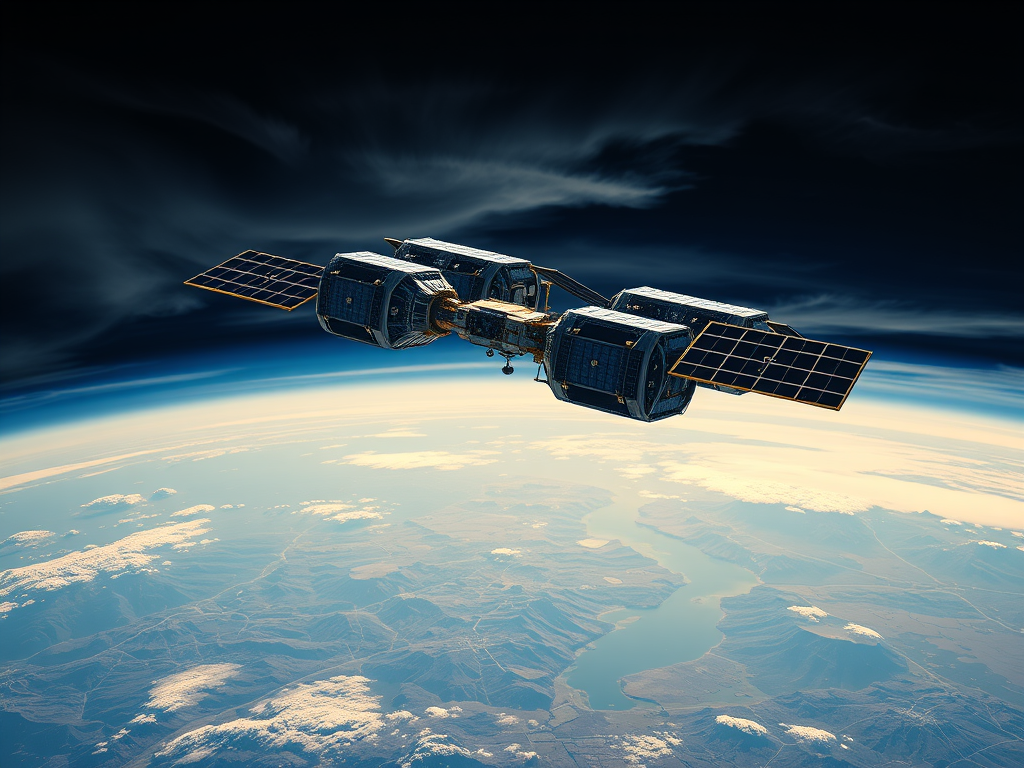
Starlink, SpaceX’s ambitious satellite internet constellation, promises global broadband coverage using thousands of low-Earth orbit (LEO) satellites. With advancements such as satellite-to-satellite laser links and emerging cellular capabilities, Starlink is often touted as a potential backbone for emergency communications. However, despite its promise, several technical, logistical, and regulatory challenges prevent it from being a fully reliable emergency communications infrastructure today. This essay explores these limitations and assesses the prospects for Starlink’s future readiness in this critical role.
The Promise of Starlink for Emergency Communications
Global Coverage and Rapid Deployment
1. Global Coverage: Reaching the Unreachable
Starlink’s constellation of thousands of low-Earth orbit (LEO) satellites is designed to blanket the entire planet with internet coverage. Unlike traditional geostationary satellites, which orbit at 35,786 km and have limited coverage footprints, Starlink’s LEO satellites orbit at altitudes between 340 km and 1,200 km. This dense network of satellites enables several key advantages for emergency communications:
- Universal Reach: Starlink can theoretically provide connectivity to any location on Earth, including polar regions, deserts, oceans, and mountainous terrain—places where terrestrial networks (fiber, cellular towers) are absent or impractical.
- Bypassing Damaged Infrastructure: In disaster scenarios such as earthquakes, hurricanes, or wildfires, ground-based infrastructure is often destroyed or rendered inoperable. Starlink’s space-based network is immune to such terrestrial disruptions, allowing communication links to be restored even when local infrastructure is down.
- Bridging the Digital Divide: Many rural and remote communities lack reliable internet access due to the high cost of laying cables or building towers. Starlink’s global coverage can help bridge this gap, ensuring that emergency alerts and coordination reach even the most isolated populations.
2. Rapid Deployment: Speed and Flexibility in Crisis Response
A critical requirement in emergency situations is the ability to restore communications quickly. Starlink offers several features that make it attractive for rapid deployment:
- Portable User Terminals: Starlink’s user terminals (often called “dishes” or “antennas”) are designed to be relatively portable. Emergency teams can transport them by vehicle, helicopter, or even on foot to affected areas. Once on site, setup typically involves pointing the dish at the sky and powering it up—no need for complex alignment or technical expertise.
- Quick Activation: Unlike traditional satellite systems that may require days or weeks to provision service, Starlink terminals can be activated within minutes of setup, provided there is power and a clear view of the sky. This enables first responders to establish internet connectivity almost immediately upon arrival.
- Scalability: Starlink’s network can support multiple terminals in a given area, allowing for the rapid establishment of communication hubs, field hospitals, or coordination centers. This scalability is crucial when large populations are affected or when multiple agencies are involved in the response.
- Support for Modern Applications: With broadband-level speeds and low latency (typically 20–40 ms), Starlink can support not just voice and text, but also video conferencing, real-time mapping, data uploads, and other bandwidth-intensive applications essential for modern emergency management.
3. Case Studies and Early Deployments
Starlink has already been used in several real-world emergencies, demonstrating its potential:
- Ukraine (2022): During the Russian invasion, Starlink terminals were rapidly deployed to restore internet connectivity in areas where infrastructure was destroyed or jammed.
- Natural Disasters: Starlink has been used to provide connectivity after hurricanes in the United States and volcanic eruptions in Tonga, enabling coordination between relief agencies and affected populations.
4. Potential for Integration with Other Technologies
Starlink’s ongoing development of direct-to-cellular capabilities could further enhance its utility in emergencies. In the future, standard smartphones may be able to connect directly to Starlink satellites, eliminating the need for specialized terminals and making emergency connectivity even more accessible.
Starlink’s promise for emergency communications lies in its ability to provide near-instant, global internet access, bypassing damaged or nonexistent terrestrial infrastructure. Its portable, rapidly deployable terminals and support for modern communication tools make it a powerful asset for first responders and disaster relief teams. However, as discussed elsewhere, realizing this promise at scale still faces significant technical and logistical hurdles.
Advanced Technologies
1. Inter-Satellite Laser Links: Space-Based Data Routing
One of the most significant technological advancements in the Starlink constellation is the implementation of inter-satellite laser links, often referred to as “space lasers.” These are optical communication systems that allow satellites to transmit data directly to one another through tightly focused laser beams.
How It Works:
- Each equipped Starlink satellite can connect to several neighboring satellites using laser links.
- Data can be relayed from one satellite to another across the constellation, effectively creating a mesh network in space.
- This allows information to travel vast distances without needing to touch down at a ground station until it reaches its destination region.
Benefits for Emergency Communications:
- Reduced Latency: By routing data directly between satellites, Starlink can avoid the delays associated with bouncing signals between ground stations, especially over long distances or remote areas.
- Resilience to Ground Disruptions: In disaster scenarios where ground stations are damaged, offline, or inaccessible, the network can still function by routing data through space. This increases the robustness of the system in emergencies.
- Global Data Reach: Laser links enable Starlink to provide connectivity even in regions where regulatory or logistical issues prevent the construction of ground stations, such as over oceans or in politically sensitive areas.
Limitations and Challenges:
- Technical Complexity: Maintaining precise alignment between fast-moving satellites for laser communication is technologically challenging.
- Weather Independence: Unlike radio signals, laser links are not affected by atmospheric conditions since they operate in the vacuum of space, but ground-to-satellite links can still be impacted by weather.
2. Direct-to-Cellular Capabilities: Connecting Standard Mobile Devices
Starlink is developing technology to allow its satellites to communicate directly with standard mobile phones, a feature often called “direct-to-cell” or “satellite-to-cellular” connectivity.
How It Works:
- Satellites are equipped with specialized payloads that can transmit and receive signals in the same frequency bands used by terrestrial cellular networks (such as LTE).
- When a user’s phone is out of range of cell towers, it can connect directly to a passing Starlink satellite, which then relays the signal to the internet or phone network.
Benefits for Emergency Communications:
- No Specialized Equipment Needed: First responders and civilians could use their existing smartphones to access emergency services, send messages, or make calls, even when terrestrial networks are down.
- Wider Coverage: This technology could provide basic connectivity in areas where it is currently impossible or impractical to deploy ground-based cellular infrastructure.
- Seamless Integration: In the future, users may not even notice when their device switches from terrestrial to satellite connectivity, ensuring uninterrupted communication during disasters.
Current Status and Challenges:
- Early Stage: As of now, direct-to-cellular Starlink service is in the testing phase and not widely available.
- Bandwidth and Capacity: Satellite-to-cellular connections will likely offer lower speeds and capacity compared to ground-based networks, especially in densely populated areas or during emergencies with high demand.
- Regulatory Hurdles: Operating in cellular frequency bands from space requires coordination with national regulators and mobile network operators, which can be complex and slow.
3. Synergy and Future Potential
The combination of inter-satellite laser links and direct-to-cellular capabilities could make Starlink a uniquely powerful tool for emergency communications:
- End-to-End Resilience: Data can be routed entirely through space, bypassing damaged ground infrastructure, and delivered directly to users’ mobile devices.
- Rapid Scaling: In a crisis, connectivity could be extended to thousands or millions of users without the need for physical deployment of new towers or cables.
- Support for Modern Applications: Even basic connectivity (text, voice, low-bandwidth data) can be life-saving in emergencies, and Starlink’s evolving technology promises to support these needs globally.
Starlink’s advanced technologies—inter-satellite laser links and direct-to-cellular capabilities—represent a leap forward in resilient, flexible, and accessible communications. While these features are still maturing, they hold the potential to transform how emergency connectivity is delivered, making it possible to reach affected populations and responders anywhere on Earth, even when traditional infrastructure is compromised or destroyed.
Current Limitations of Starlink as Emergency Infrastructure
1. Dependence on Ground Infrastructure
The Role of Ground Stations in Starlink’s Network
While Starlink’s inter-satellite laser links allow satellites to pass data between each other in orbit, the network still fundamentally depends on ground stations—also known as “gateways”—to connect to the broader internet. These ground stations are distributed around the world and serve as the points where data from the satellites is uploaded to and downloaded from the terrestrial internet backbone.
Why Ground Stations Matter
- Internet Backhaul: For any data to reach the global internet, it must eventually be routed through a ground station. Even if a user terminal in a remote area connects to a satellite, and that satellite relays data via lasers to others, the data must ultimately come down to Earth at a ground station to access the internet.
- Regional Coverage: The availability and placement of ground stations determine where Starlink can provide full internet access. In regions without nearby ground stations, connectivity may be limited or unavailable.
Vulnerabilities in Emergency Scenarios
- Physical Damage: In large-scale disasters (earthquakes, floods, hurricanes, war), ground stations themselves can be damaged, destroyed, or rendered inoperable due to power outages or infrastructure collapse.
- Network Isolation: If ground stations in a region are compromised, Starlink users in that area may lose access to the global internet, even if their terminals and satellites are functioning.
- Limited Redundancy: While Starlink’s laser links can route data to ground stations in unaffected regions, this is only possible if those stations are within the network’s reach and have sufficient capacity to handle redirected traffic.
Not Yet Fully Independent
- No True “Space-Only” Internet: Starlink’s current architecture does not allow for a fully space-based internet. All user data must eventually pass through terrestrial infrastructure to reach the wider web.
- Regulatory Constraints: In some countries, Starlink is not permitted to operate ground stations, further limiting its independence and coverage.
Implications for Emergency Communications
- Potential Single Points of Failure: The reliance on ground stations introduces critical points of vulnerability. If these are taken offline, the entire regional Starlink service can be disrupted.
- Partial Resilience: While Starlink is more resilient than traditional terrestrial networks (since satellites are unaffected by ground-level disasters), it is not immune to disruptions that affect its ground infrastructure.
Despite the promise of space-based connectivity, Starlink’s dependence on ground stations for internet backhaul remains a significant limitation. In major emergencies where ground infrastructure is compromised, this reliance can restrict Starlink’s ability to provide uninterrupted service, making it not yet a fully independent or fail-safe solution for emergency communications.
2. Power and Equipment Requirements
Power Needs of Starlink Terminals
Starlink user terminals—commonly referred to as “dishes”—are sophisticated electronic devices that require a continuous and stable power supply to operate. The typical Starlink terminal (as of 2024) consumes between 50 and 100 watts of power, depending on the model and environmental conditions.
Implications in Emergency Scenarios:
- Power Outages: Disasters such as hurricanes, earthquakes, or wildfires often result in widespread and prolonged power outages. In these situations, finding a reliable power source for Starlink terminals can be a significant challenge.
- Alternative Power Solutions: While it is possible to run Starlink terminals off portable generators, vehicle inverters, or solar battery systems, these solutions add logistical complexity and may not always be available or practical, especially in the immediate aftermath of a disaster.
- Battery Limitations: Unlike some emergency communication devices (e.g., satellite phones or handheld radios) that can operate for hours or days on a single battery charge, Starlink terminals are not designed for low-power or battery-only operation over extended periods.
Equipment Size and Portability
Starlink terminals are designed for consumer and fixed-site use, not for ultra-portable, field-deployable scenarios.
- Physical Bulk: The standard Starlink kit includes a dish (about the size of a large pizza box), a mounting tripod, a power supply, and a Wi-Fi router. The combined weight and volume make it less convenient to carry on foot or deploy in rugged terrain compared to handheld radios or compact satellite phones.
- Setup Requirements: The dish must be assembled, positioned, and connected to power and the router. This setup process, while not technically complex, is more involved than simply turning on a handheld device.
- Transport Logistics: Moving multiple Starlink kits into a disaster zone requires vehicles or air transport, which may be limited or unavailable in the early stages of a response.
Line-of-Sight and Environmental Constraints
For optimal performance, Starlink dishes require a clear, unobstructed view of the sky.
- Obstructions: Buildings, trees, mountains, or debris can block the dish’s view of the satellites, causing signal loss or degraded performance.
- Weather Sensitivity: Heavy rain, snow, or dense cloud cover can attenuate the signal, leading to intermittent connectivity or outages—an issue known as “rain fade.”
- Site Selection: In chaotic or debris-strewn environments, finding a suitable location to set up the dish can be difficult, further delaying the restoration of communications.
Comparison to Traditional Emergency Devices
- Handheld Radios: VHF/UHF radios are small, lightweight, and can operate for long periods on battery power. They do not require a clear view of the sky or complex setup.
- Satellite Phones: Devices like Iridium or Inmarsat phones are pocket-sized, battery-powered, and designed for quick deployment in the field. They require only a partial view of the sky and are less sensitive to obstructions.
Summary Table
| Device Type | Power Requirement | Portability | Setup Complexity | Obstruction Sensitivity |
|---|---|---|---|---|
| Starlink Terminal | 50–100W, AC/DC | Bulky | Moderate | High |
| Satellite Phone | Battery (hours) | Handheld | Low | Moderate |
| Handheld Radio | Battery (days) | Handheld | Low | Low |
Starlink’s power and equipment requirements present significant challenges for emergency communications. The need for stable power, the bulkiness of the equipment, and the requirement for a clear sky view make Starlink less practical in many disaster scenarios compared to traditional, portable, battery-powered emergency devices. These limitations can delay or even prevent the rapid restoration of communications when they are needed most.
3. Network Congestion and Prioritization
Shared Bandwidth in a Coverage Area
Starlink’s satellite network operates by dividing the Earth’s surface into “cells” or coverage areas, each served by one or more satellites overhead. Within each cell, all active Starlink users share the available bandwidth provided by those satellites. This design is efficient for general consumer use, but it introduces challenges in high-demand situations—especially during emergencies.
- Finite Capacity: Each satellite has a limited amount of bandwidth it can deliver to users in its coverage area. When the number of active users increases, the available bandwidth per user decreases.
- Dynamic Demand: In normal conditions, user demand is spread out and predictable. However, during emergencies—such as natural disasters, large-scale evacuations, or civil unrest—many people may attempt to use Starlink simultaneously in the same area, overwhelming the system’s capacity.
Congestion During Emergencies
- Sudden Surges: Disasters often trigger a spike in communication needs. First responders, relief agencies, and affected civilians all try to access the network at once, leading to congestion.
- Reduced Performance: As congestion increases, users may experience slower speeds, higher latency, dropped connections, or even complete inability to connect. This can severely hamper emergency response efforts that rely on real-time data, voice, or video communications.
- Urban vs. Rural Impact: Congestion is more likely in densely populated or disaster-affected urban areas, where many users are concentrated within a single satellite’s footprint. In remote areas with fewer users, congestion is less of a concern, but the risk still exists if a disaster draws in large numbers of responders or evacuees.
Prioritization of Emergency Traffic
- Current Limitations: As of now, Starlink’s network does not have a robust, widely deployed system for prioritizing emergency or critical communications over regular consumer traffic. All users within a cell generally compete equally for bandwidth.
- Potential Solutions: In theory, network operators can implement Quality of Service (QoS) protocols to prioritize certain types of traffic (e.g., emergency services, government agencies) or specific user accounts. However, this requires:
- Pre-registration of emergency users or devices
- Real-time identification and management of priority traffic
- Technical and policy frameworks to prevent abuse or misclassification
- Implementation Challenges: Rolling out such prioritization at scale is complex. It involves not only technical upgrades but also coordination with governments, emergency agencies, and possibly international regulators.
Real-World Examples
- Ukraine (2022): During the conflict, Starlink was used extensively for both civilian and military communications. Reports indicated that, at times, network congestion affected performance, especially in areas with high concentrations of users.
- Natural Disasters: In hurricane or wildfire zones, relief organizations have reported variable Starlink performance, sometimes citing slow speeds when many terminals are deployed in a small area.
Comparison to Traditional Emergency Networks
- Dedicated Emergency Channels: Traditional emergency communication systems (e.g., public safety radio, TETRA, FirstNet in the US) are designed with dedicated frequencies and prioritization mechanisms to ensure that critical communications are not disrupted by civilian traffic.
- Starlink’s Consumer Focus: Starlink’s current infrastructure is optimized for general consumer and commercial use, not for the unique demands of emergency response.
Summary Table
| Network Type | Bandwidth Sharing | Emergency Prioritization | Congestion Risk in Emergencies |
|---|---|---|---|
| Starlink | Yes | Limited/None | High |
| Public Safety Radio | No | Yes | Low |
| Cellular (FirstNet, etc.) | Yes | Yes (for authorized) | Moderate |
Starlink’s shared bandwidth model makes it vulnerable to congestion during emergencies, when reliable communication is most critical. The current lack of robust prioritization for emergency traffic means that first responders and relief agencies may find their communications competing with regular users, potentially compromising response efforts. Addressing these issues will require significant technical, operational, and policy developments before Starlink can be considered a truly dependable emergency communications backbone.
4. Regulatory and Security Concerns
Regulatory Barriers to Starlink Operation
1. National Licensing and Permissions Starlink, like all satellite communication services, must comply with the telecommunications regulations of each country in which it operates. This includes obtaining licenses for spectrum use, landing rights for ground stations, and approval for user terminal deployment.
- Country-by-Country Approval: Some nations, such as the United States, Canada, and much of Europe, have granted Starlink permission to operate. Others, including China, Russia, India, and several Middle Eastern countries, have not, or have imposed strict limitations.
- Bans and Restrictions: In certain jurisdictions, Starlink is outright banned or access is heavily restricted. This can be due to concerns over national security, competition with state-owned telecoms, or a desire to control information flow.
- Ground Station Limitations: Even if user terminals are allowed, Starlink’s reliance on ground stations means that, without local regulatory approval, service may be unavailable or degraded in those regions.
2. Emergency and Wartime Restrictions
- Governmental Control: In times of crisis, governments may restrict or shut down satellite communications, including Starlink, to control information or for security reasons.
- Import/Export Controls: Bringing Starlink terminals into certain countries may be illegal or require special permits, complicating rapid deployment for emergency response.
Security Concerns: Cyber and Physical Threats
1. Cybersecurity Risks
- Target for Attack: As a high-profile, global communications network, Starlink is a potential target for cyberattacks by state and non-state actors.
- Vulnerabilities: Possible attack vectors include hacking of user terminals, ground stations, or the satellites themselves. Compromised devices could be used for surveillance, data theft, or network disruption.
- Encryption and Authentication: While Starlink employs encryption, the robustness of its security protocols under sustained, sophisticated attack—especially in hostile environments—remains largely untested at scale.
2. Jamming and Spoofing Threats
- Jamming: Adversaries can use radio frequency interference to disrupt the link between Starlink satellites and ground terminals. This is a known risk in conflict zones or areas with advanced electronic warfare capabilities.
- Spoofing: Attackers could attempt to impersonate Starlink signals, potentially misleading users or intercepting communications.
- Mitigation Measures: While SpaceX is developing anti-jamming and anti-spoofing technologies, these are not foolproof and may not be effective against all threats, especially from well-resourced adversaries.
3. Physical Security of Infrastructure
- Ground Station Vulnerability: Ground stations are fixed, known locations and could be physically targeted in conflict or sabotage scenarios.
- Terminal Seizure: In hostile or authoritarian countries, Starlink terminals could be confiscated, tracked, or used as evidence against users.
Real-World Examples
- Ukraine (2022): Starlink played a critical role in maintaining communications during the Russian invasion. However, there were reports of attempted jamming and concerns about the safety of users operating terminals in occupied areas.
- Authoritarian Regimes: In countries with strict information controls, unauthorized use of Starlink could result in legal penalties or surveillance.
Comparison to Traditional Emergency Networks
| System Type | Regulatory Flexibility | Cybersecurity Maturity | Jamming/Spoofing Resilience |
|---|---|---|---|
| Starlink | Low to Moderate | Evolving | Moderate |
| Public Safety Radio | High (domestic use) | Mature | High |
| Military Satcom | High (authorized use) | Very High | Very High |
Starlink’s global ambitions are constrained by a patchwork of national regulations, making its availability unpredictable in many regions—especially those most in need during emergencies. Security-wise, while Starlink employs modern protections, its resilience against sophisticated cyber, jamming, and spoofing attacks remains largely unproven in real-world, high-threat environments. These regulatory and security concerns are significant obstacles to Starlink’s adoption as a truly reliable emergency communications infrastructure.
5. Cellular Integration Is Nascent
The Vision: Direct-to-Cellular Connectivity
Starlink’s direct-to-cellular initiative aims to allow ordinary mobile phones to connect directly to Starlink satellites, bypassing the need for ground-based cell towers. This would enable users to send texts, make calls, and potentially access data services anywhere on Earth, using their existing devices.
- How It Works: Starlink satellites are being equipped with payloads that can communicate using standard cellular protocols (such as LTE). When a phone is out of range of terrestrial towers, it could connect to a passing satellite, which would relay the signal to the internet or phone network via Starlink’s infrastructure.
Current State of Development
- Early Testing: As of 2024, Starlink has begun testing direct-to-cellular services in partnership with select mobile network operators (e.g., T-Mobile in the US). Initial demonstrations have focused on basic SMS/text messaging, with voice and data services planned for future phases.
- Limited Availability: The service is not yet available to the general public and is only being trialed in specific regions. There are no large-scale deployments or documented use cases in real-world emergencies.
- Device Compatibility: While the goal is to support unmodified, off-the-shelf smartphones, current tests are limited to certain models and network partners. Full compatibility across all devices and carriers is not yet achieved.
Technical and Practical Challenges
- Bandwidth and Latency: Satellite-to-cellular connections inherently offer lower bandwidth and higher latency than terrestrial cell towers. This limits the types of services that can be reliably provided, especially in high-demand situations.
- Coverage and Capacity: Each satellite can only serve a limited number of simultaneous cellular connections within its footprint. In emergencies, when many users may try to connect at once, congestion could quickly become an issue.
- Handover and Continuity: As satellites move rapidly across the sky, maintaining a continuous connection (especially for voice or data) requires seamless handover between satellites—a complex technical challenge that is still being refined.
- Integration with Terrestrial Networks: For calls or messages to reach recipients on traditional networks, Starlink must integrate with terrestrial mobile operators. This requires complex agreements, technical interoperability, and regulatory approval in each country.
Emergency Use: Not Yet Proven
- Lack of Field Testing: There have been no large-scale deployments of Starlink’s direct-to-cellular service in disaster zones or emergency scenarios. Its reliability, performance, and user experience under real-world stress remain unproven.
- Fallback Limitations: In the absence of mature direct-to-cellular service, emergency responders and civilians must still rely on traditional satellite phones, radios, or Starlink user terminals, which have their own limitations in portability and power requirements.
Comparison to Existing Solutions
| Technology | Device Needed | Availability | Emergency Proven? | Bandwidth/Latency |
|---|---|---|---|---|
| Starlink Direct-to-Cell | Standard smartphone* | Limited | No | Low/High |
| Satellite Phone (Iridium) | Dedicated handset | Global | Yes | Low/High |
| Terrestrial Cellular | Standard smartphone | Widespread | Yes | High/Low |
*Full compatibility not yet achieved.
Future Potential
- Universal Access: If Starlink’s direct-to-cellular service matures, it could revolutionize emergency communications by allowing anyone with a phone to connect from anywhere, without special equipment.
- Seamless Experience: The ultimate goal is for users to be unaware of whether they are connected via terrestrial towers or satellites, ensuring uninterrupted service during disasters.
- Policy and Partnership Needs: Achieving this vision will require extensive collaboration with mobile operators, regulators, and device manufacturers worldwide.
Starlink’s cellular integration is a promising but still nascent technology. It is not yet widely available, compatible with all devices, or tested in real-world emergencies. Until these hurdles are overcome, direct-to-cellular Starlink remains a future possibility rather than a present solution for emergency communications.
Comparison with Existing Emergency Communication Systems
Traditional Emergency Communication Technologies
1. VHF/UHF Radios
Overview: VHF (Very High Frequency) and UHF (Ultra High Frequency) radios are the backbone of emergency communications for first responders, search and rescue teams, and disaster relief organizations.
Key Strengths:
- Proven Reliability: These radios have been used for decades in countless disaster scenarios, from hurricanes and earthquakes to wildfires and floods.
- Minimal Infrastructure: They can operate in simplex mode (radio-to-radio) without any supporting infrastructure, or in duplex mode using repeaters if available.
- Low Power Requirements: Handheld radios can run for many hours or even days on battery power, and can be recharged with small solar panels or vehicle adapters.
- Instant Communication: Push-to-talk functionality allows for immediate voice communication, which is critical in fast-moving emergencies.
- Resilience: Radios are rugged, weather-resistant, and can function in harsh environments.
Limitations:
- Limited Range: Typically a few kilometers without repeaters; range can be extended with mobile or fixed repeaters, but these require additional setup.
- Voice Only: Primarily support voice; data capabilities are extremely limited (e.g., short text messages).
2. Satellite Phones (e.g., Iridium, Inmarsat)
Overview: Satellite phones connect directly to satellites in orbit, providing global voice and low-bandwidth data services.
Key Strengths:
- Global Coverage: Can be used virtually anywhere on Earth with a clear view of the sky, including oceans, deserts, and polar regions.
- Independence from Local Infrastructure: Do not rely on terrestrial cell towers or internet connections.
- Portability: Handheld, battery-powered, and easy to carry.
- Proven in Disasters: Used in major events like the 2010 Haiti earthquake, 2004 Indian Ocean tsunami, and countless other crises.
Limitations:
- Limited Bandwidth: Mostly support voice and SMS; data speeds are slow and not suitable for high-bandwidth applications.
- Signal Obstruction: Performance can be degraded by dense foliage, urban canyons, or being indoors.
- Cost: Devices and airtime are expensive compared to terrestrial alternatives.
3. Mesh Networks
Overview: Mesh networks use a series of interconnected nodes (phones, radios, or dedicated devices) to relay messages across a network, even if some nodes are out of range of others.
Key Strengths:
- Infrastructure-Free: Can be set up ad hoc, with each device acting as a relay.
- Resilience: If one node fails, data can route through others.
- Scalability: Can cover large areas with enough nodes.
- Low Power: Many mesh devices are designed for long battery life.
Limitations:
- Range and Bandwidth: Limited by device power and density of nodes.
- Complexity: Requires compatible devices and some technical know-how.
Why Traditional Systems Excel in Emergencies
- Proven Track Record: These systems have been tested and refined through decades of real-world use in disaster zones, military operations, and remote expeditions.
- Minimal Infrastructure Needs: They can function with little or no external infrastructure, making them ideal when local networks are down or destroyed.
- Ease of Deployment: Handheld radios and satellite phones are lightweight, battery-powered, and can be quickly distributed and used by responders or civilians.
- Low Power Consumption: Designed for field use, they can operate for long periods on batteries or small solar panels.
- Simplicity: Operation is straightforward, with minimal training required for basic use.
Starlink: Capabilities and Limitations in Comparison
Capabilities
- High Bandwidth: Starlink offers broadband internet speeds, enabling video calls, real-time mapping, large data transfers, and other modern applications not possible with traditional systems.
- Global Aspirations: The satellite constellation aims for worldwide coverage, including remote and underserved areas.
- Modern Applications: Supports cloud-based coordination, telemedicine, and other advanced tools valuable in large-scale disaster response.
Limitations
- Infrastructure Dependence: Still relies on ground stations and stable power, making it less resilient in infrastructure-compromised environments.
- Portability and Power: Starlink terminals are bulkier and require more power than radios or satellite phones, complicating rapid deployment in austere environments.
- Setup Complexity: Requires assembly, alignment, and a clear view of the sky, which can be challenging in debris-filled or obstructed disaster zones.
- Maturity and Testing: Starlink has not yet been proven in as many diverse, high-stress emergency scenarios as traditional systems.
- Congestion and Prioritization: Lacks robust mechanisms for prioritizing emergency traffic, risking congestion during crises.
Summary Table
| System | Bandwidth | Power Needs | Portability | Infrastructure Dependence | Proven in Emergencies |
|---|---|---|---|---|---|
| VHF/UHF Radio | Low | Very Low | High | None/Low | Yes |
| Satellite Phone | Low | Low | High | None | Yes |
| Mesh Network | Low | Low | Moderate | None/Low | Yes |
| Starlink | High | High | Moderate | Moderate | Limited |
Traditional emergency communication systems are simple, robust, and field-proven, making them indispensable in disaster scenarios. Their independence from infrastructure, low power needs, and ease of deployment ensure reliable operation when it matters most.
Starlink, while offering transformative potential with high-bandwidth, modern connectivity, is still maturing. Its current limitations in power, portability, infrastructure dependence, and lack of extensive real-world testing mean it cannot yet match the reliability or simplicity of traditional systems in emergency contexts. For now, Starlink is best viewed as a powerful supplement—rather than a replacement—for established emergency communication tools.
Will Starlink Ever Be Ready?
Technical Trajectory
Starlink’s rapid technological evolution holds promise for overcoming many of its current limitations. Let’s examine the key areas where future improvements could make Starlink a more robust and reliable emergency communications solution.
1. Fully Autonomous Satellite Routing
Current Limitation: Today, Starlink satellites use inter-satellite laser links to pass data between satellites, but the network still ultimately depends on ground stations for internet backhaul. This means that if ground stations are compromised or unavailable (due to disaster, war, or regulatory restrictions), connectivity can be lost or degraded.
Future Potential:
- Space-Based Internet Backbone: With further advances, Starlink could develop a more autonomous, space-based routing system. Data could be relayed across multiple satellites and only downlinked to ground stations in unaffected regions, bypassing compromised or hostile areas.
- Reduced Single Points of Failure: This would make the network far more resilient to localized disasters or attacks, as the loss of a few ground stations would not cripple service in a region.
- Global Data Reach: Autonomous routing could also enable Starlink to provide service in countries where ground stations are not permitted, increasing its utility in politically sensitive or disaster-prone areas.
2. Smaller, More Portable, and Lower-Power Terminals
Current Limitation: Starlink terminals are relatively bulky and require significant power (50–100W), making them less practical for rapid deployment in austere or chaotic environments.
Future Potential:
- Miniaturization: Advances in antenna design, power management, and electronics could yield much smaller, lighter terminals—potentially even handheld or backpack-sized units.
- Lower Power Consumption: Improved efficiency could allow terminals to run on small batteries or solar panels, making them viable in off-grid or disaster-stricken areas.
- Rapid Setup: Plug-and-play designs with automatic alignment and weatherproofing would further simplify deployment, allowing non-technical users to establish connectivity quickly.
3. Mature Direct-to-Cellular Service Compatible with Standard Phones
Current Limitation: Direct-to-cellular Starlink service is in its infancy, with limited trials and no widespread, real-world emergency deployments. Compatibility with all phones and carriers is not yet achieved.
Future Potential:
- Universal Device Access: If Starlink can enable any standard smartphone to connect directly to its satellites, it would eliminate the need for specialized equipment in emergencies.
- Seamless Integration: Users could move between terrestrial and satellite coverage without noticing, ensuring uninterrupted communication during disasters.
- Scalable Emergency Response: Relief agencies could instantly reach affected populations, coordinate rescue efforts, and disseminate information without distributing extra hardware.
4. Built-In Prioritization for Emergency Services
Current Limitation: Starlink currently lacks robust mechanisms for prioritizing emergency or critical communications over regular consumer traffic, risking congestion during crises.
Future Potential:
- Quality of Service (QoS) Protocols: Starlink could implement advanced QoS systems to automatically detect and prioritize emergency traffic, ensuring that first responders and critical infrastructure maintain connectivity even during network surges.
- Pre-Registered Emergency Devices: Governments and relief organizations could register devices or accounts for priority access, similar to how FirstNet operates for cellular networks in the US.
- Dynamic Bandwidth Allocation: The network could dynamically allocate bandwidth based on real-time needs, shifting resources to disaster zones as required.
Challenges and Realistic Outlook
While these advancements are technically feasible, several challenges remain:
- Physical Constraints: Power requirements and the need for a clear sky view may always limit Starlink’s utility in certain environments (e.g., dense urban areas, forests, or indoors).
- Regulatory and Security Hurdles: Global regulatory approval, spectrum management, and robust security against jamming/cyberattacks are ongoing challenges that require international cooperation and continuous innovation.
- Cost and Accessibility: Making advanced terminals affordable and widely available, especially in developing regions, will be essential for true global emergency readiness.
Estimated Timeline
Given SpaceX’s pace of innovation, significant progress in these areas could be seen within the next 5–10 years. However, full parity with traditional emergency systems—especially in terms of simplicity, resilience, and independence—may take longer and will likely require a hybrid approach, combining Starlink with legacy technologies.
Starlink’s technical trajectory is promising, with clear pathways to overcoming many current limitations. If SpaceX can deliver on autonomous routing, portable terminals, mature direct-to-cellular service, and emergency prioritization, Starlink could become a cornerstone of global emergency communications. However, practical, regulatory, and physical challenges mean that, for the foreseeable future, it will serve best as a powerful supplement—rather than a complete replacement—for traditional, proven emergency communication systems.
Remaining Hurdles
Despite Starlink’s rapid technological progress and future potential, several fundamental challenges may persist and limit its effectiveness as a universal emergency communications solution.
1. Physical Vulnerabilities: Power and Sky Visibility
Power Requirements:
- Persistent Challenge: Starlink terminals require a continuous and relatively high power supply (typically 50–100W). In disaster zones, power infrastructure is often damaged or destroyed, and fuel for generators or batteries may be scarce.
- Off-Grid Limitations: While advances in energy efficiency and portable solar solutions may help, there will always be situations—such as extended outages, cloudy weather, or fuel shortages—where powering a Starlink terminal is difficult or impossible.
- Comparison: Traditional emergency devices (handheld radios, satellite phones) are designed for ultra-low power consumption and can operate for days on a single battery charge, making them more reliable in austere environments.
Sky Visibility:
- Line-of-Sight Requirement: Starlink dishes need a clear, unobstructed view of the sky to maintain a stable connection with satellites. In urban environments, dense forests, mountainous terrain, or areas with heavy debris, finding a suitable location can be challenging.
- Weather Sensitivity: Severe weather (heavy rain, snow, or dust storms) can degrade signal quality or cause outages—a phenomenon known as “rain fade.”
- Mobility Constraints: Unlike handheld radios or satellite phones, which can often be used indoors or under partial cover, Starlink terminals must be set up outdoors in an open area, limiting their flexibility in certain emergency scenarios.
2. Regulatory Barriers: Global Deployment Limitations
National Regulations:
- Licensing and Permissions: Starlink must obtain regulatory approval in each country where it operates. Some governments are slow to grant licenses, impose strict conditions, or outright ban foreign satellite services due to security, economic, or political concerns.
- Ground Station Restrictions: Even if user terminals are allowed, Starlink’s reliance on ground stations means that service may be unavailable or degraded in countries that do not permit local ground infrastructure.
- Import/Export Controls: In some regions, importing Starlink terminals is illegal or requires special permits, complicating rapid deployment during emergencies.
Emergency and Wartime Controls:
- Government Shutdowns: In times of crisis, governments may restrict or disable satellite communications to control information flow or for national security reasons.
- Legal Risks: Unauthorized use of Starlink in certain countries could expose users to legal penalties, confiscation of equipment, or surveillance.
Impact: These regulatory hurdles mean that, even if the technology is ready, Starlink may not be available where it is most needed—especially in authoritarian or conflict-prone regions.
3. Network Congestion: Traffic Management in Emergencies
Shared Bandwidth Model:
- Finite Capacity: Each Starlink satellite serves a specific coverage area, and all users within that area share the available bandwidth. In normal conditions, this is manageable, but during emergencies, demand can spike dramatically.
- Congestion Risks: When many users (civilians, first responders, relief agencies) attempt to connect simultaneously in a disaster zone, the network can become congested. This leads to slower speeds, higher latency, dropped connections, or even service denial for some users.
Prioritization Challenges:
- Lack of Robust QoS: Currently, Starlink does not have a mature, widely deployed system for prioritizing emergency or critical communications over regular consumer traffic.
- Implementation Complexity: Developing and enforcing effective Quality of Service (QoS) protocols for emergencies is technically and administratively complex. It requires pre-registration of emergency users, real-time traffic management, and safeguards against abuse.
Comparison: Traditional emergency networks (e.g., public safety radio, FirstNet) are designed with dedicated channels and prioritization mechanisms to ensure that critical communications are not disrupted by civilian traffic. Starlink’s consumer-focused model lacks this level of reliability under stress.
Summary Table
| Hurdle | Description | Impact on Emergency Use |
|---|---|---|
| Physical Vulnerabilities | Power needs, sky visibility, weather sensitivity | Limits deployment in austere/disrupted environments |
| Regulatory Barriers | Licensing, import/export controls, government shutdowns | May block or restrict service in key regions |
| Network Congestion | Shared bandwidth, lack of emergency prioritization | Reduces reliability during high-demand crises |
While Starlink’s technology is advancing rapidly, these persistent hurdles—physical vulnerabilities, regulatory barriers, and network congestion—are deeply rooted in the realities of physics, geopolitics, and network management. They may never be fully eliminated, meaning that Starlink, even at its most advanced, will likely remain a supplement to, rather than a replacement for, traditional emergency communication systems in the most challenging scenarios.
Conclusion
Starlink’s Transformative Potential
Starlink’s low-Earth orbit satellite constellation is a technological breakthrough, offering high-speed, low-latency internet access to virtually any point on the globe. This capability is revolutionary, especially for remote, underserved, or disaster-stricken regions where traditional infrastructure is absent or destroyed. In theory, Starlink could enable:
- Rapid restoration of communications after disasters
- Global coordination for relief agencies and governments
- Access to modern digital tools (video, mapping, cloud services) in the field
- Bridging the digital divide for isolated communities
Why Starlink Is Not Yet the Backbone of Emergency Communications
Despite its promise, Starlink faces several critical limitations that prevent it from serving as the primary emergency communications infrastructure:
1. Technical Limitations
- Power and Equipment: Starlink terminals require stable power and a clear sky view, which are often unavailable in disaster zones. The equipment is bulkier and more complex than handheld radios or satellite phones.
- Network Congestion: In emergencies, surges in demand can overwhelm available bandwidth, and there is currently no robust system for prioritizing emergency traffic.
- Physical Vulnerabilities: Weather, debris, and environmental obstacles can disrupt Starlink’s service more easily than traditional radio or satellite phone systems.
2. Logistical Challenges
- Deployment Complexity: Setting up Starlink requires transporting and assembling equipment, finding suitable locations, and ensuring power—tasks that can be difficult in chaotic or dangerous environments.
- Portability: Starlink terminals are less portable than traditional emergency devices, making rapid, widespread deployment harder.
3. Regulatory and Security Barriers
- Licensing and Permissions: Starlink cannot operate freely in every country. Regulatory hurdles, import/export restrictions, and government-imposed shutdowns can block or limit service where it may be most needed.
- Security Risks: The system’s resilience to cyberattacks, jamming, and spoofing in hostile environments is not yet proven at scale.
The Role of Traditional Emergency Communication Systems
Established systems—VHF/UHF radios, satellite phones, and mesh networks—remain the gold standard for emergency communications because they are:
- Proven in real-world disasters
- Simple to operate and deploy
- Low-power and highly portable
- Less dependent on external infrastructure
- Designed for resilience and prioritization of critical traffic
These attributes make them indispensable for first responders and relief agencies, especially in the initial hours and days after a disaster.
Starlink as a Supplement, Not a Replacement
Given its current state, Starlink is best viewed as a powerful supplement to traditional emergency communications:
- Enhancing Capabilities: It can provide high-bandwidth internet for command centers, field hospitals, and coordination hubs, supporting applications that radios and satellite phones cannot.
- Filling Gaps: In areas where traditional infrastructure is completely destroyed or absent, Starlink can offer a lifeline for digital communications.
- Supporting Recovery: As disaster response transitions to recovery and rebuilding, Starlink’s broadband capabilities become increasingly valuable.
What Will It Take for Starlink to Be Truly Ready?
Starlink’s ultimate readiness as a backbone for emergency communications will depend on:
- Technological Progress: Continued advances in terminal portability, power efficiency, autonomous satellite routing, direct-to-cellular integration, and emergency traffic prioritization.
- Regulatory Adaptation: Greater international cooperation and streamlined licensing to allow rapid deployment and operation in crisis zones.
- Real-World Validation: Extensive testing and proven performance in diverse, high-stress emergency scenarios to build trust and refine protocols.
Final Perspective
Starlink is a game-changer for global connectivity and holds immense promise for the future of emergency communications. However, its current limitations mean it cannot yet replace the reliability, simplicity, and resilience of traditional systems. As technology and policy evolve, Starlink’s role will likely grow, but for now, it should be integrated as a complementary tool—one that enhances, rather than supplants, the established backbone of emergency communications.



 UTAZCO Overland
Leave a Reply