
The most recent and tragic incident involving the Sig P320 family occurred at a Wyoming Air Force base, where an Air Force sergeant—an airman serving his country—was fatally shot by his own holstered M18 sidearm. According to initial reports, the sergeant was in the process of placing his holstered pistol on his desk when the firearm discharged, striking and ultimately killing him. The incident is under investigation, but early accounts suggest that the trigger was not touched during the event, reigniting concerns about the safety of the P320/M18 platform, especially in military service. This heartbreaking loss has sent shockwaves through the Air Force community and the broader public, intensifying calls for a thorough and transparent inquiry into the circumstances and the firearm’s design.
My thoughts are with the sergeant’s family, friends, and fellow service members during this incredibly difficult time. The loss of a dedicated airman in such a tragic and unexpected manner is a sobering reminder of the importance of firearm safety and the profound impact these incidents have on individuals and communities alike.
Disclaimer: This essay is not intended as an indictment of any individual, organization, or manufacturer. It represents my good-faith effort to separate facts from speculation and to analyze the possible root causes of the reported incidents. The goal is to encourage informed discussion and understanding, not to assign blame.
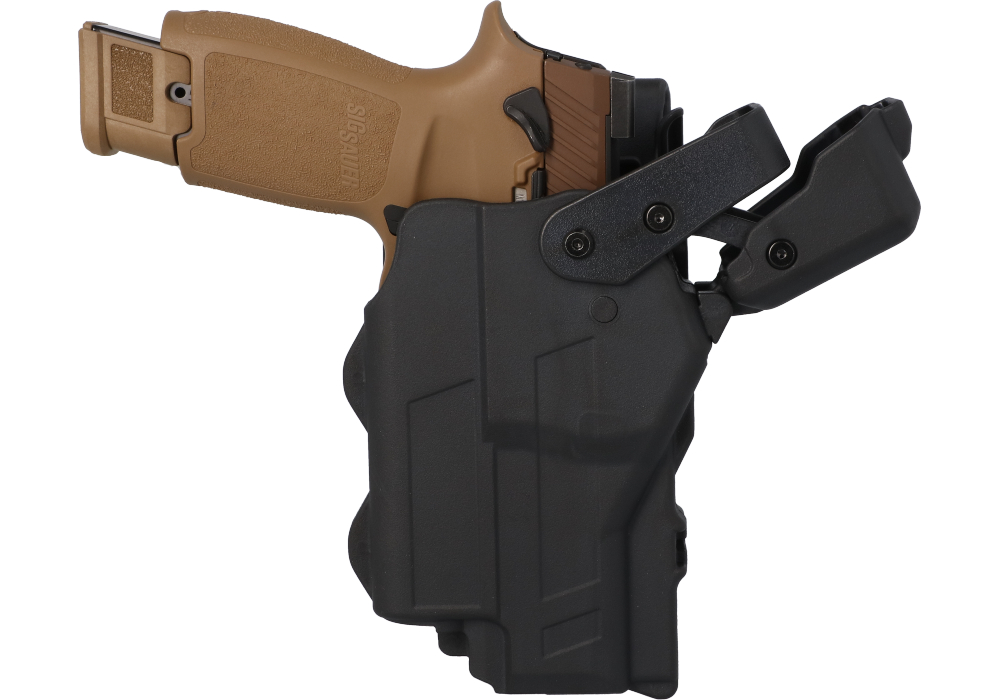
The Sig Sauer P320, a popular striker-fired pistol, has recently been the subject of controversy due to reports of the firearm discharging without a trigger pull. These alleged incidents have resulted in injuries and, in at least one case, a fatality.
Background: The Sig P320 and Its Popularity
Introduction of the Sig P320
The Sig Sauer P320 was officially launched in 2014 as a striker-fired, polymer-framed, semi-automatic pistol. It was designed to compete with other popular striker-fired pistols like the Glock 17 and Smith & Wesson M&P series. Sig Sauer, a company with a long-standing reputation for quality firearms, aimed to create a pistol that would appeal to a broad range of users, from civilians to law enforcement and military personnel.
Modular Design: A Key Innovation
One of the most significant innovations of the P320 is its modular design. Unlike most handguns, the P320’s serialized component is a removable stainless steel fire control unit (FCU). This allows users to easily swap out grip modules, slides, and barrels, effectively changing the size, caliber, and ergonomics of the pistol without purchasing a new firearm. The P320 can be configured as a full-size duty pistol, a compact concealed-carry weapon, or anything in between.
Benefits of Modularity:
- Customization: Users can tailor the pistol to their hand size, preferred caliber (9mm, .357 SIG, .40 S&W, .45 ACP), and intended use.
- Cost-Effectiveness: Instead of buying multiple guns, users can purchase conversion kits.
- Ease of Maintenance: The FCU can be easily removed for cleaning or repair.
Rapid Adoption by Law Enforcement
Law enforcement agencies across the United States and internationally were quick to adopt the P320. Its modularity, reliability, and ease of use made it attractive for departments with diverse personnel needs. Agencies could issue the same platform in different sizes or calibers, simplifying training and logistics.
Military Adoption: The M17/M18
The P320’s biggest endorsement came in 2017, when it won the U.S. Army’s Modular Handgun System (MHS) competition. The Army selected a modified version of the P320, designated the M17 (full-size) and M18 (compact), to replace the Beretta M9 as the standard-issue sidearm. This contract was one of the most significant in recent firearms history and led to further adoption by other branches of the U.S. military.
Why the Military Chose the P320:
- Modularity: The Army valued the ability to adapt the pistol to different missions and users.
- Performance: The P320 met or exceeded military standards for accuracy, reliability, and durability.
- Future-Proofing: The design allows for easy upgrades and integration of new technologies.
Civilian Market Success
The P320’s military and law enforcement endorsements boosted its popularity among civilian shooters. Its reputation for reliability, combined with its modularity and competitive pricing, made it a top choice for personal defense, competition, and recreational shooting.
The Sig P320’s rapid rise in popularity is rooted in its innovative modular design, adaptability, and strong endorsements from law enforcement and the military. Its selection as the U.S. Army’s M17/M18 service pistol cemented its status as one of the most influential handguns of the 21st century, leading to widespread use and a large, dedicated user base.
The Allegations: Discharges Without Trigger Pull
Reported Incidents
Overview of Allegations
Since the Sig P320’s introduction, a number of users—including law enforcement officers and civilians—have reported incidents in which the pistol allegedly discharged without the trigger being intentionally pulled. These reports have surfaced in news articles, legal filings, and online forums, and have become a significant point of concern for both current and prospective owners of the P320.
Nature of the Incidents
The alleged unintentional discharges typically occur in the following scenarios:
- Holstering or Unholstering: Several incidents have been reported while the user was holstering or drawing the firearm, often during routine duty or training.
- Carrying in a Holster: Some users claim the pistol discharged while simply being carried in a holster, with no manipulation of the trigger or controls.
- Handling or Moving the Firearm: A few reports involve the gun discharging while being handled, but not during the act of firing or dry-firing.
Documented Cases and Evidence
- Video Evidence: In a handful of cases, surveillance or body camera footage has captured the moment of discharge. These videos are often cited in lawsuits and media reports as evidence that the trigger was not touched at the time of firing.
- Injuries: Numerous individuals have suffered gunshot wounds to the leg, foot, or other body parts as a result of these alleged discharges. Many of these incidents have resulted in medical treatment, lost work time, and, in some cases, permanent disability.
- Fatality: At least one documented case involves the death of a law enforcement officer. According to reports and legal filings, the officer’s P320 discharged while holstered, fatally wounding the officer. This incident has been referenced in lawsuits and has heightened scrutiny of the pistol’s safety.
Legal and Institutional Responses
- Lawsuits: Dozens of lawsuits have been filed against Sig Sauer, with plaintiffs ranging from individual civilians to police departments. The lawsuits typically allege that the P320 is defective and unreasonably dangerous, and seek damages for injuries or wrongful death.
- Agency Actions: Some law enforcement agencies have temporarily suspended use of the P320, issued safety bulletins, or switched to alternative sidearms pending investigation.
- Sig Sauer’s Response: The company has consistently maintained that the P320 is safe when used as intended, and that independent testing has not replicated the alleged defect in upgraded models. Sig Sauer has also pointed to the possibility of user error, holster interference, or aftermarket modifications as contributing factors.
Public and Media Reaction
The combination of lawsuits, video evidence, and media coverage has fueled public concern and debate. Gun owners, trainers, and industry experts have weighed in, with opinions ranging from calls for recalls to defenses of the pistol’s design and safety record.
The reported incidents of the Sig P320 discharging without a trigger pull are serious and have resulted in real harm, including at least one fatality. While some cases are supported by video evidence, the overall number of incidents remains small relative to the vast number of P320s in circulation. Nonetheless, these allegations have prompted legal action, institutional reviews, and ongoing debate about the pistol’s safety and design.
Lawsuits and Media Attention
Proliferation of Lawsuits
Since the first reports of alleged unintentional discharges, Sig Sauer has faced a growing number of lawsuits from both civilians and law enforcement officers. These lawsuits typically allege that the P320 is defective and unreasonably dangerous, and they seek compensation for injuries, lost wages, medical expenses, and, in some cases, punitive damages.
- Law Enforcement Plaintiffs: Many plaintiffs are police officers who claim their P320 discharged while holstered or during routine handling, resulting in injuries—often to the leg or foot. Some lawsuits have been filed by entire police departments or unions, seeking to recover costs related to injuries, lost work time, and the need to replace or modify issued firearms.
- Civilian Plaintiffs: Civilians have also filed lawsuits after suffering injuries they attribute to unintentional discharges. These cases often involve claims that the gun fired while being holstered, carried, or handled in a safe manner.
- Wrongful Death Claims: At least one high-profile lawsuit involves the family of a law enforcement officer who was fatally wounded by an alleged unintentional discharge of a P320.
Legal Arguments and Evidence
The lawsuits generally focus on several key arguments:
- Design Defect: Plaintiffs allege that the P320’s design allows it to fire without a trigger pull, even after the 2017 voluntary upgrade.
- Failure to Warn: Some lawsuits claim Sig Sauer failed to adequately warn users about the potential for unintentional discharges.
- Negligence: Plaintiffs argue that Sig Sauer was negligent in designing, manufacturing, and marketing the P320.
Evidence presented in these cases often includes:
- Surveillance or body camera footage showing the moment of discharge.
- Expert testimony from firearms engineers and safety specialists.
- Internal documents obtained through discovery, sometimes revealing company knowledge of prior incidents or design concerns.
Sig Sauer’s Legal Response
Sig Sauer has consistently denied that the P320 is defective, pointing to extensive internal and independent testing that has not replicated the alleged defect in upgraded models. The company often argues that:
- User error, holster interference, or aftermarket modifications are more likely explanations for the incidents.
- The P320 meets or exceeds all industry safety standards, including those set by the U.S. military and law enforcement agencies.
- The number of incidents is extremely small compared to the hundreds of thousands of P320s in circulation.
Media Coverage and Public Perception
The lawsuits have attracted significant media attention, especially when supported by dramatic video evidence or involving law enforcement officers. Major news outlets, firearms publications, and online forums have all covered the controversy, often highlighting:
- Personal stories of injury or loss, which humanize the issue and generate public sympathy.
- Expert debates about firearm safety, design, and responsibility.
- Comparisons to other high-profile firearm recalls or lawsuits, such as the Remington Model 700 or Taurus pistol cases.
This media coverage has amplified public concern, sometimes leading to:
- Calls for recalls or government intervention.
- Increased scrutiny of law enforcement agencies that continue to issue the P320.
- Speculation and rumor in online communities, sometimes blurring the line between fact and conjecture.
Impact on Sig Sauer and the Firearms Industry
The combination of lawsuits and media attention has had tangible effects:
- Reputational Damage: Sig Sauer’s reputation has been challenged, especially among law enforcement and civilian users concerned about safety.
- Policy Changes: Some police departments have suspended use of the P320, issued safety bulletins, or switched to other sidearms.
- Industry Debate: The controversy has sparked broader discussions about firearm safety standards, testing protocols, and the responsibilities of manufacturers.
The wave of lawsuits and intense media scrutiny has kept the Sig P320 controversy in the public eye. While the legal process continues to unfold, the combination of personal injury claims, expert testimony, and widespread reporting has shaped public perception and fueled ongoing debate about the safety of one of the most widely used handguns in America.
Separating Fact from Fiction
Facts
Drop Safety Issue (2017)
When the Sig P320 was first released, it underwent standard industry safety testing, which it passed. However, in 2017, independent testers and law enforcement agencies discovered that the pistol could discharge if dropped at a very specific angle—typically striking the rear of the slide or the back of the grip on a hard surface. This phenomenon, known as a “drop fire,” was demonstrated in controlled tests and even captured on video by reviewers and police departments.
Sig Sauer responded by acknowledging the issue and launching a voluntary upgrade program. The upgrade included several internal modifications:
- A lighter trigger
- A new striker design
- A modified sear and disconnect safety These changes were intended to reduce the risk of an unintentional discharge if the pistol was dropped. The U.S. military’s M17/M18 variants, which were adopted around the same time, already incorporated these safety improvements.
Post-Upgrade Reports
Despite the 2017 upgrade, reports of unintentional discharges continued, though at a much lower frequency. Notably, some of these incidents involved upgraded P320s, raising questions about whether the design changes fully addressed the problem. In a handful of cases, surveillance or body camera footage has captured the moment of discharge, showing the firearm firing while holstered or being handled, with no clear evidence of the trigger being pulled.
These post-upgrade incidents have become the focal point of ongoing lawsuits and media scrutiny. While the number of such cases is small compared to the total number of P320s in circulation, their existence—especially when supported by video evidence—has kept concerns alive within the firearms community and among law enforcement agencies.
Injuries and Fatality
The consequences of these alleged unintentional discharges have been severe in some cases. Documented injuries include gunshot wounds to the legs, feet, and other body parts, often occurring while the firearm was holstered or being handled in a routine manner. These injuries have resulted in medical treatment, lost work time, and, in some cases, permanent disability.
Most notably, at least one fatality has been linked to an alleged unintentional discharge of a holstered P320/M18. In this tragic incident, an Air Force sergeant at a Wyoming base was fatally shot when his holstered M18 discharged as he placed it on his desk. This incident, currently under investigation, has intensified scrutiny of the P320’s safety and prompted renewed calls for transparency and further testing.
In summary, the facts show that the original P320 design had a documented drop safety issue, which Sig Sauer addressed through a voluntary upgrade. However, a small number of post-upgrade incidents—some with video evidence—continue to raise questions about the pistol’s safety. These incidents have resulted in real injuries and at least one death, underscoring the seriousness of the allegations and the need for ongoing investigation and transparency.
Fiction
“All P320s Are Unsafe”
A common misconception, fueled by sensational headlines and viral social media posts, is that all Sig P320 pistols are inherently unsafe and prone to firing without a trigger pull. This narrative is not supported by the available data or the experience of the vast majority of P320 owners.
Scale of Use vs. Incidents: Since its introduction in 2014, hundreds of thousands of P320s have been sold and are in active use by civilians, law enforcement agencies, and military units worldwide. The U.S. Army alone has issued tens of thousands of M17 and M18 pistols (military variants of the P320) to its personnel. Despite this enormous user base, the number of reported unintentional discharges—especially those with credible evidence suggesting no trigger pull—is extremely small.
Law Enforcement and Military Experience: Most law enforcement agencies and military units that have adopted the P320 have not reported widespread or systemic issues. The pistol has passed rigorous testing protocols, including those required by the U.S. military, which are among the most demanding in the world. The continued use of the P320 by these organizations suggests a general confidence in its safety and reliability.
Statistical Perspective: When compared to the total number of P320s in circulation, the number of alleged unintentional discharges represents but a tiny fraction of overall use. This does not diminish the seriousness of the incidents that have occurred, but it does provide important context: the vast majority of P320s function safely and as intended.
“No User Error Involved”
Another misconception is that all reported incidents are solely due to a design flaw, with no possibility of user error or external factors. This oversimplifies the complex reality of firearm safety and use.
User Error Accidental discharges can and do occur with all types of firearms, often as a result of lapses in safe handling practices. Stress, fatigue, distraction, or unfamiliarity with the firearm can lead to unintentional trigger pulls that may not be immediately recognized by the user. In high-stress environments, such as law enforcement or military operations, these factors can be amplified.
Holster Interference: Holster design and condition play a critical role in firearm safety. A poorly designed, worn, or damaged holster can allow foreign objects (such as drawstrings, clothing, or gear) to enter the trigger guard and depress the trigger during holstering or drawing. Some incidents attributed to “no trigger pull” discharges have later been linked to holster interference upon closer investigation.
Aftermarket Modifications: Many firearm owners customize their pistols with aftermarket triggers, springs, or other components. These modifications can unintentionally compromise the safety mechanisms built into the original design. In some reported cases, P320s involved in alleged unintentional discharges had been modified, raising questions about whether the modifications contributed to the incident.
Confirmation Bias and Reporting: Once a narrative takes hold—such as the idea that the P320 is prone to firing on its own—there is a tendency for users to attribute any accidental discharge to a design flaw, even when other explanations are possible. This confirmation bias can influence both individual reports and broader public perception.
While the P320 has been involved in a small number of high-profile incidents, the idea that all P320s are unsafe is not supported by the evidence. Most users, including those in demanding professional roles, have not experienced unintentional discharges. Furthermore, it is important to consider the roles of user error, holster interference, and aftermarket modifications in any accidental discharge investigation. Separating fact from fiction is essential for a balanced understanding of the P320’s safety record.
Analyzing the Most Likely Scenarios
1. Mechanical Malfunction
Understanding Mechanical Malfunction in Firearms
A mechanical malfunction refers to a failure or defect in the internal components of a firearm that causes it to operate in an unintended manner. In the context of the Sig P320, this would mean the pistol discharges a round without the trigger being intentionally pulled, due to a failure in its safety mechanisms or firing system.
The P320’s Safety Features
The Sig P320 was designed with several passive safety features, including:
- Striker Safety: Prevents the striker from moving forward unless the trigger is pulled.
- Disconnect Safety: Ensures the gun cannot fire unless the slide and barrel are fully in battery (locked position).
- Drop Safety: Prevents the gun from firing if dropped.
These features are intended to make unintentional discharges due to mechanical failure extremely unlikely. However, no mechanical system is infallible, and even the most robust designs can experience rare failures due to manufacturing defects, wear, or unforeseen interactions between parts.
Evidence of Mechanical Malfunction
In the case of the P320, some incidents—particularly those captured on surveillance or body camera footage—appear to show the firearm discharging while holstered or being handled, with no visible trigger manipulation. These videos have been cited in lawsuits and media reports as possible evidence of a mechanical malfunction.
- Forensic Analysis: In some cases, forensic examination of the firearm after an incident has not revealed any obvious defects, while in others, subtle issues such as worn or out-of-spec parts have been identified.
- Statistical Rarity: Despite these reports, the overall rate of such incidents is extremely low compared to the total number of P320s in circulation. This suggests that if mechanical malfunctions are occurring, they are exceedingly rare.
Possible Causes of Malfunction
- Manufacturing Defects: Even with modern quality control, occasional defects can slip through, such as improperly hardened parts, out-of-tolerance components, or assembly errors.
- Wear and Tear: Over time, repeated use can cause parts to wear down, potentially compromising safety features if not properly maintained or replaced.
- Contamination: Dirt, debris, or foreign objects inside the mechanism can interfere with the proper function of safeties or the trigger system.
- Design Tolerances: In rare cases, the interaction of parts within design tolerances can still produce unexpected results, especially if combined with unique circumstances (e.g., a specific way the gun is holstered or handled).
Precedent in Firearms History
Mechanical malfunctions leading to unintentional discharges are not unique to the P320. Other firearms, including models from reputable manufacturers, have experienced similar issues, sometimes resulting in recalls or design changes. The key difference with the P320 is the high-profile nature of the incidents and the widespread attention they have received.
While mechanical malfunction is a plausible explanation for some of the reported P320 incidents—especially those with supporting video evidence—such occurrences are statistically uncommon. The vast majority of P320s function safely and as intended, but the possibility of rare mechanical failures cannot be entirely ruled out. This underscores the importance of regular maintenance, prompt attention to any unusual behavior in a firearm, and thorough investigation of any incident involving an unintentional discharge.
2. Unintentional Trigger Activation
The Nature of Unintentional Trigger Activation
Unintentional trigger activation occurs when the trigger is pressed without the user’s conscious intent, often due to external objects or circumstances rather than a deliberate finger pull. In the context of the Sig P320, many incidents initially described as “discharges without a trigger pull” are later found to involve some form of inadvertent trigger contact.
Common Scenarios Leading to Unintentional Trigger Activation
1. Holstering and Drawing: The process of holstering or drawing a firearm is one of the most common times for unintentional trigger activation. If the holster is poorly designed, worn out, or not properly fitted to the firearm, the edge of the holster or a rigid part can enter the trigger guard and press the trigger as the gun is inserted or removed. This is especially true with soft or flexible holsters, which can collapse and deform around the trigger area.
2. Clothing and Gear Interference: Loose clothing, jacket drawstrings, undershirts, or other gear can inadvertently get inside the trigger guard. When the user holsters the firearm, these objects can become trapped and exert pressure on the trigger, causing a discharge. This risk is heightened in cold weather or tactical environments where users wear multiple layers or carry additional equipment.
3. Foreign Objects in the Holster: Debris such as coins, keys, or other small objects can fall into a holster and lodge near the trigger. If unnoticed, these objects can press against the trigger when the firearm is holstered or carried, leading to an unintentional discharge.
4. Improper Handling: Failing to keep the finger off the trigger during holstering, drawing, or reholstering is a classic cause of accidental discharges. Under stress or in high-pressure situations, even experienced users can make mistakes, especially if their training is insufficient or if they are fatigued.
Why These Incidents Are Misattributed
Lack of Immediate Awareness: In the moment, users may not realize that something has pressed the trigger. The discharge can seem to occur “out of nowhere,” leading to the belief that the gun fired on its own.
Surprise and Stress: The shock of an unexpected discharge can cloud memory and perception. Under stress, people may genuinely believe they did not touch the trigger, even if they did so reflexively or inadvertently.
Video Evidence Limitations: Even when incidents are captured on video, small objects or subtle movements may not be visible, making it difficult to conclusively determine what caused the trigger to be pressed.
The Role of Holster and Equipment Selection
Importance of Quality Holsters: A well-designed, rigid holster that fully covers the trigger guard is essential for safe carry. Holsters should be regularly inspected for wear, deformation, or damage that could compromise safety.
Proper Gear Management: Users should ensure that clothing, drawstrings, and other gear are kept clear of the holster and trigger guard area. Many trainers recommend removing or modifying clothing features that could pose a risk.
Training and Best Practices
Safe Handling Habits: Consistent training to keep the finger off the trigger until ready to fire, and to visually and physically check the holster and trigger area before holstering, are critical safety practices.
Regular Equipment Checks: Routine inspection and maintenance of both the firearm and holster can prevent many unintentional discharges.
Unintentional trigger activation is a well-documented phenomenon and is likely responsible for many incidents initially attributed to mechanical malfunction or design flaws. While the Sig P320 has been at the center of recent controversy, these risks are not unique to any one firearm and underscore the importance of proper equipment, training, and vigilance in safe firearm handling.
3. User Error
The Human Factor in Firearm Safety
User error is a leading cause of accidental discharges across all firearm platforms, including the Sig P320. Even with the most advanced safety features, the human element remains a critical variable. Stress, improper handling, and insufficient training can all contribute to situations where the trigger is unintentionally pulled, sometimes without the user’s conscious awareness.
Stressful Situations and Startle Response
High-Stress Environments: Law enforcement officers, military personnel, and even civilians can find themselves in high-stress situations where adrenaline is elevated and fine motor skills are compromised. In such moments, the body’s natural “fight or flight” response can lead to involuntary muscle contractions or startle responses.
Startle Reflex: If a user is startled—by a loud noise, sudden movement, or unexpected physical contact—they may inadvertently contract their hand muscles, including those controlling the trigger finger. This phenomenon, known as “startle discharge,” has been documented in both training and real-world encounters.
Improper Handling Techniques
Finger Placement: One of the cardinal rules of firearm safety is to keep the finger off the trigger until ready to shoot. However, under stress or due to poor habits, users may rest their finger on or near the trigger, increasing the risk of an accidental pull.
Reholstering and Drawing: Improper technique during holstering or drawing can lead to the finger slipping onto the trigger. In some cases, users may not realize their finger is in contact with the trigger, especially if they are distracted or in a hurry.
Grip and Control Issues: A weak or improper grip can cause the firearm to shift in the hand, potentially leading to unintentional trigger contact. This is particularly true for users with limited experience or those handling a new or unfamiliar firearm.
Lack of Training and Familiarity
Insufficient Training: Regular, high-quality training is essential for safe firearm handling. Users who have not received adequate instruction may not fully understand or internalize safe handling practices, increasing the likelihood of user error.
Unfamiliarity with the Platform: Switching between different firearm models or platforms can lead to confusion about controls, trigger feel, and safety mechanisms. Users accustomed to one type of trigger or safety may inadvertently mishandle a different design.
Cognitive and Physical Factors
Fatigue and Distraction: Tiredness, distraction, or multitasking can degrade situational awareness and motor control, making accidental trigger pulls more likely.
Medical Conditions: Certain medical conditions, such as hand tremors or neurological disorders, can also increase the risk of unintentional discharges due to loss of fine motor control.
Recognition and Reporting
Unrecognized Trigger Pulls: In the aftermath of an accidental discharge, users may genuinely believe they did not touch the trigger, especially if the event was sudden or stressful. Memory can be unreliable under stress, and the shock of the incident may cloud accurate recall.
Attribution to Mechanical Failure: Because of the stigma or potential consequences associated with admitting user error, some individuals may attribute the discharge to a mechanical malfunction, even when user error was the true cause.
Mitigating User Error
Ongoing Training: Regular, scenario-based training helps reinforce safe handling habits and prepares users to respond appropriately under stress.
Consistent Practice: Frequent practice with the specific firearm carried or used ensures familiarity with its controls, trigger characteristics, and safety features.
Mindfulness and Discipline: Cultivating a disciplined, mindful approach to firearm handling—always treating the gun as loaded, keeping the finger off the trigger, and maintaining awareness of surroundings—can significantly reduce the risk of user error.
User error remains a significant factor in accidental discharges, including those involving the Sig P320. Stress, improper handling, lack of training, and cognitive or physical limitations can all contribute to unintentional trigger pulls. Recognizing the role of human factors is essential for understanding these incidents and for developing effective strategies to prevent them.
4. Aftermarket Modifications
The Prevalence of Aftermarket Modifications
Aftermarket modifications are common in the firearms community, as many owners seek to personalize their pistols for improved performance, aesthetics, or ergonomics. The Sig P320, with its modular design, is especially popular among enthusiasts who wish to swap out triggers, springs, grip modules, or other internal components. While these modifications can enhance certain aspects of the firearm, they also introduce new variables that can affect safety and reliability.
Types of Common Modifications
- Aftermarket Triggers: Many companies offer replacement triggers for the P320, promising a lighter, crisper, or shorter trigger pull. These triggers may alter the geometry or engagement surfaces compared to the factory design.
- Reduced-Power Springs: Some users install lighter springs to reduce trigger pull weight or improve reset speed. However, lighter springs can reduce the force needed to move internal components, potentially making the gun more susceptible to unintentional discharges.
- Custom Grip Modules and Frames: While grip modules are designed to be easily swapped, some aftermarket frames may not perfectly replicate the tolerances of the original, potentially affecting the alignment of internal parts.
- Other Internal Parts: Modifications to the sear, striker, or safety components can have unintended consequences if not properly engineered and installed.
How Modifications Can Compromise Safety
Bypassing or Weakening Safeties: Aftermarket triggers or internal parts may not fully engage the P320’s passive safety mechanisms, such as the striker safety or disconnect safety. If tolerances are off or engagement surfaces are altered, the gun may become more prone to firing when dropped, jarred, or subjected to external pressure.
Unintended Interactions: Mixing parts from different manufacturers or combining multiple modifications can create unforeseen interactions. For example, a lighter trigger combined with a reduced-power striker spring may result in a trigger that is too sensitive or a striker that is not reliably blocked.
Installation Errors: Even high-quality aftermarket parts can be rendered unsafe if installed incorrectly. Improper assembly, failure to test function, or neglecting to check for proper engagement of safeties can all lead to dangerous malfunctions.
Documented Incidents and Investigations
In several reported cases of alleged unintentional discharges involving the P320, subsequent investigation revealed that the firearm had been modified with aftermarket components. In some instances, these modifications were directly implicated in the failure of safety mechanisms or in making the trigger more susceptible to unintentional activation.
- Expert Testimony: Firearms experts called in for legal cases have sometimes found that modified P320s did not meet factory safety standards, and that the modifications contributed to the incident.
- Manufacturer Warnings: Sig Sauer, like most firearm manufacturers, explicitly warns that unauthorized modifications can void warranties and compromise safety. The company’s testing and certification only apply to unmodified, factory-assembled pistols.
The Broader Context
Aftermarket modifications are not unique to the P320; similar issues have arisen with other popular handguns. However, the modularity and popularity of the P320 make it especially susceptible to user-driven changes. While many modifications are safe when properly designed and installed, the risk of compromising safety increases with each deviation from the original engineering.
Best Practices and Recommendations
- Use Factory Parts: For critical components like triggers and internal safeties, it is safest to use factory-original parts or those from highly reputable manufacturers with proven safety records.
- Professional Installation: If modifications are desired, they should be installed by qualified gunsmiths who can verify proper function and safety engagement.
- Thorough Testing: After any modification, the firearm should be thoroughly tested for safe operation, including drop safety and proper engagement of all safeties.
- Awareness of Legal and Warranty Implications: Owners should be aware that modifications can affect legal liability and may void manufacturer warranties.
Aftermarket modifications can enhance the performance or feel of a Sig P320, but they also introduce risks that can compromise the pistol’s original safety mechanisms. Some incidents of unintentional discharge have been linked to such modifications, underscoring the importance of caution, professional installation, and rigorous testing whenever altering a firearm’s critical components.
Conclusion
The ongoing controversy over the Sig P320’s alleged unintentional discharges highlights the multifaceted nature of firearm safety and reliability. The initial drop safety flaw discovered in early P320 models was a genuine and well-documented issue. Sig Sauer’s response—a voluntary upgrade program and design improvements—demonstrates the company’s acknowledgment of the problem and its commitment to user safety. Since these changes, the overwhelming majority of P320s in civilian, law enforcement, and military service have not exhibited spontaneous or unexplained discharges.
However, the persistence of reported incidents, including some with video evidence and tragic outcomes, means the debate cannot be dismissed as mere rumor or user error. The reality is nuanced: while mechanical malfunctions are possible, they are exceedingly rare given the scale of P320 adoption and the robust safety features built into the design. Far more commonly, incidents are linked to unintentional trigger activation—often due to holster interference, clothing, or foreign objects—or to user error under stress, distraction, or insufficient training. Aftermarket modifications further complicate the picture, as they can inadvertently bypass or weaken factory safety mechanisms, introducing new risks not present in the original design.
Each reported case of an unintentional discharge deserves thorough, unbiased investigation. This means examining the firearm for mechanical defects, reviewing holster and gear choices, considering the user’s actions and training, and checking for any modifications. Only by considering all possible contributing factors can the true cause be determined and appropriate corrective actions taken.
Ultimately, the Sig P320 controversy serves as a reminder that firearm safety is a shared responsibility. Manufacturers must rigorously test and continually improve their products. Users must commit to ongoing training, proper maintenance, and the use of quality holsters and accessories. Law enforcement and military agencies should foster a culture of safety, transparency, and accountability. By addressing both human and mechanical factors, the risk of accidental discharges can be minimized—not just with the P320, but with all firearms.
In the end, the lessons learned from the P320’s story reinforce the timeless principles of firearm safety: treat every gun as if it is loaded, keep your finger off the trigger until ready to shoot, and always be aware of your equipment and environment. These fundamentals, combined with careful investigation and a willingness to adapt, are the best defense against tragedy—no matter the make or model of the firearm.



 UTAZCO Overland
Leave a Reply