
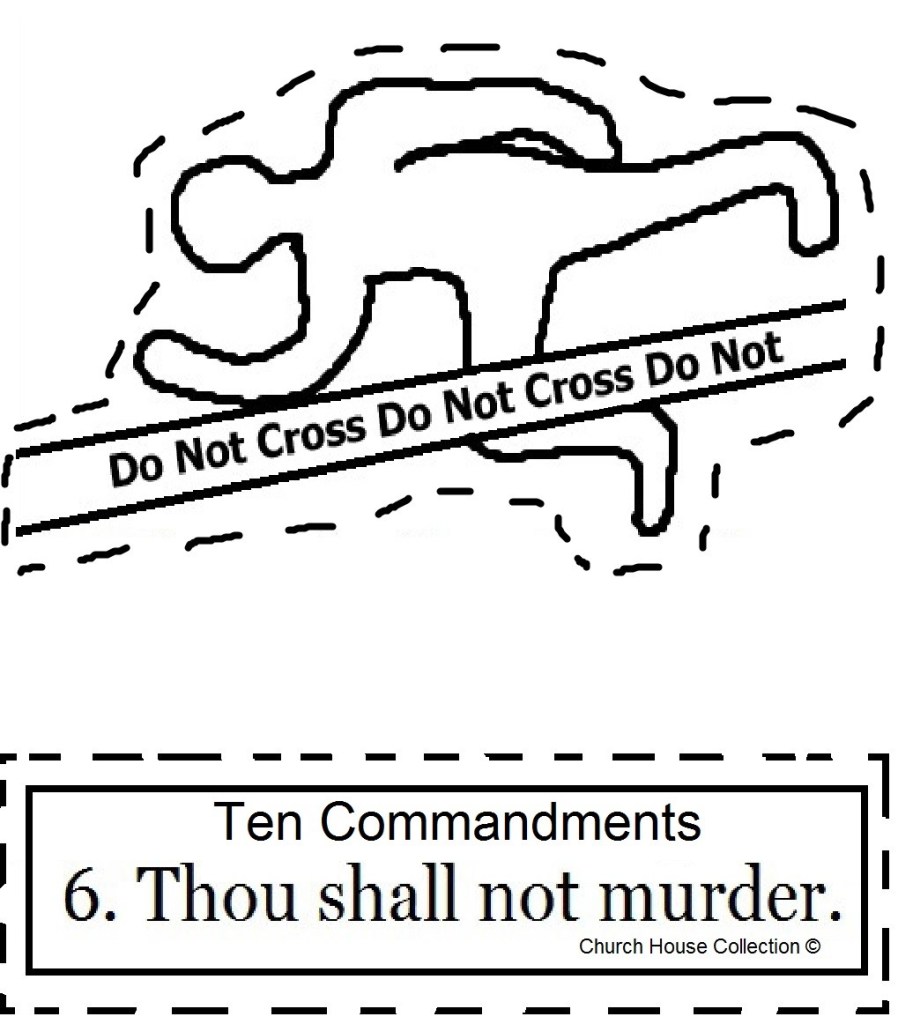
Hebrew Kill Vs Murder
The translation of the Sixth Commandment as “Thou shalt not murder” rather than “Thou shalt not kill” is a subject of significant theological and linguistic analysis within Catholic teaching. This distinction is crucial because it reflects a deeper understanding of the moral and ethical implications of the commandment, aligning with the broader context of biblical teachings and the Church’s moral theology.
Translating the Commandment as “Thou shalt not murder” hinges on the specific Hebrew term used in the original text: “רצח” (ratsach). This term is crucial in understanding the commandment’s intent and scope, as it carries a more specific connotation than the broader term “kill.” It is typically associated with the unlawful, premeditated killing of another person, which we understand as murder. This term implies a moral and legal violation, focusing on the intentional and unjust taking of an innocent life. The choice of this word in the commandment highlights the severity and moral gravity of murder, distinguishing it from other forms of killing that may not carry the same ethical weight.
The broader term “kill” could encompass a wide range of actions, including accidental deaths, acts of self-defense, or killings in wartime, which may not necessarily be considered morally wrong or unlawful. By specifying “murder,” the commandment narrows its focus to acts that are inherently unjust and morally reprehensible, thereby providing a clearer ethical directive.
In Catholic moral theology, this distinction is significant because it acknowledges that not all acts of killing are morally equivalent. The Church teaches that murder is intrinsically evil and always gravely sinful because it involves the deliberate and unjust taking of an innocent life. This aligns with the Church’s emphasis on the sanctity and dignity of human life, which must be respected and protected.
However, the Church also recognizes that there are circumstances where killing may be morally permissible or even necessary. For example, in cases of self-defense, the Church teaches that individuals have the right to protect themselves or others from an unjust aggressor, even if this results in the aggressor’s death. The principle of legitimate defense is grounded in the idea that the intention is not to kill but to preserve life, and the use of force must be proportionate and necessary.
Similarly, the concept of a just war acknowledges that there may be situations where military action is required to protect innocent lives and restore justice. The Church outlines specific criteria for a just war, including a just cause, legitimate authority, right intention, probability of success, proportionality, and last resort. Even in war, the Church emphasizes the importance of minimizing harm to civilians and seeking peaceful resolutions whenever possible.
By translating the commandment as “Thou shalt not murder,” the Church provides a more precise ethical framework for understanding the commandment’s implications. This translation acknowledges the moral distinctions between different types of killing and reinforces the Church’s commitment to upholding the sanctity of life while allowing for the complexity of moral decision-making in situations involving the taking of life.
The linguistic nuance of translating “רצח” (ratsach) as “murder” rather than “kill” is essential for capturing the moral gravity of the Sixth Commandment. It underscores the prohibition against the intentional and unjust taking of innocent life while recognizing that not all acts of killing are morally equivalent. This distinction aligns with Catholic moral theology, which seeks to balance the protection of life with the pursuit of justice and peace.
New Testament
The translation of the Sixth Commandment as “murder” rather than “kill” not only reflects a more precise understanding of the original Hebrew text but also aligns with the broader biblical context and the teachings of Jesus in the New Testament. This alignment is particularly evident in the Sermon on the Mount, where Jesus deepens the understanding of the commandment by addressing the internal dispositions that can lead to the act of murder.
In Matthew 5:21-26, Jesus says, “You have heard that it was said to those of old, ‘You shall not murder; and whoever murders will be liable to judgment.’ But I say to you that everyone who is angry with his brother will be liable to judgment.” Here, Jesus expands the commandment beyond the physical act of murder to include the attitudes and emotions that precede it, such as anger and hatred. By doing so, He emphasizes that the moral life is not only about external actions but also about the internal state of the heart.
This teaching highlights the sanctity of life by addressing the root causes of violence and conflict. Jesus calls His followers to examine their hearts and to cultivate attitudes of forgiveness, reconciliation, and love. By focusing on these underlying attitudes, Jesus underscores the importance of fostering relationships grounded in respect and compassion, which are essential for preventing the escalation of anger into violence.
Furthermore, Jesus’ emphasis on reconciliation is a call to actively seek peace and harmony in relationships. In the same passage, He advises, “So if you are offering your gift at the altar and there remember that your brother has something against you, leave your gift there before the altar and go. First be reconciled to your brother, and then come and offer your gift.” This directive underscores the priority of mending broken relationships and the importance of addressing grievances before they lead to greater harm.
By aligning the commandment with these teachings, the translation as “murder” reinforces the idea that the prohibition is not merely about refraining from a specific act but about cultivating a way of life that honors the dignity and worth of every person. It calls for an interior transformation that aligns one’s thoughts and emotions with the values of the Kingdom of God, where love and respect for others are paramount.
This interpretation also reflects the broader biblical theme of the sanctity of life, which is a consistent thread throughout both the Old and New Testaments. The commandment against murder is part of a larger divine mandate to protect and cherish human life, recognizing each person as made in the image of God. By addressing the internal attitudes that can lead to murder, Jesus reinforces this divine mandate and calls His followers to a higher standard of moral integrity.
Translating the Sixth Commandment as “murder” aligns with the teachings of Jesus in the New Testament by emphasizing the importance of addressing the internal attitudes that lead to violence. This interpretation highlights the commandment’s focus on the sanctity of life and the call to foster relationships grounded in respect and compassion. By doing so, it challenges individuals to cultivate a heart of love and reconciliation, reflecting the values of the Kingdom of God in their interactions with others.
Catechism
The Catechism of the Catholic Church provides a nuanced understanding of the Sixth Commandment by emphasizing the absolute prohibition against murder while also recognizing the complexity of moral decision-making in situations involving the taking of life. This dual emphasis reflects the Church’s commitment to upholding the sanctity of life and the dignity of the human person, as well as its acknowledgment of the moral intricacies that can arise in real-world situations.
The Catechism clearly states that “the deliberate murder of an innocent person is gravely contrary to the dignity of the human being, to the golden rule, and to the holiness of the Creator” (CCC 2261). This teaching underscores the Church’s unwavering stance that murder, defined as the intentional and unjust taking of an innocent life, is intrinsically evil and cannot be justified under any circumstances. This prohibition is rooted in the belief that every human being is made in the image and likeness of God, and thus possesses an inherent dignity that must be respected and protected.
However, the Catechism also acknowledges that there are situations where the taking of life may be morally permissible, reflecting the complexity of moral decision-making. For instance, the Church recognizes the right to self-defense as a legitimate reason for using force, even if it results in the death of an aggressor. The Catechism explains that “legitimate defense can be not only a right but a grave duty for one who is responsible for the lives of others” (CCC 2265). In such cases, the intention is not to kill but to protect oneself or others from harm, and the use of force must be proportionate and necessary.
Similarly, the Church’s teaching on just war theory provides a framework for evaluating the morality of military action. The Catechism outlines specific criteria that must be met for a war to be considered just, including a just cause, legitimate authority, right intention, probability of success, proportionality, and last resort (CCC 2309). These criteria are designed to ensure that the decision to go to war is made with the utmost care and consideration for the protection of innocent life and the pursuit of peace.
By addressing these complex situations, the Catechism reflects the Church’s understanding that moral decision-making often involves weighing different values and principles. While the prohibition against murder is absolute, the Church recognizes that the moral landscape is not always black and white, and that individuals may face difficult choices where the taking of life may be justified to protect the greater good.
This nuanced approach underscores the Church’s commitment to protecting innocent life while also acknowledging the moral responsibilities that come with making decisions in situations involving the taking of life. It calls for a careful discernment of intentions, circumstances, and consequences, guided by the principles of justice, love, and respect for human dignity.
The Catechism of the Catholic Church reflects a comprehensive understanding of the Sixth Commandment by emphasizing the absolute prohibition against murder while recognizing the complexity of moral decision-making in situations involving the taking of life. This teaching underscores the Church’s commitment to upholding the sanctity of life and the dignity of the human person, while also providing guidance for navigating the moral intricacies that can arise in real-world situations.
Conclusion
The translation of the Sixth Commandment as “Thou shalt not murder” rather than “Thou shalt not kill” is a critical distinction that aligns with both the original Hebrew text and the Catholic Church’s moral and theological teachings. This translation is not merely a linguistic preference but a reflection of the commandment’s deeper ethical implications and its role in guiding moral behavior.
Firstly, the term “murder” specifically refers to the intentional and unlawful taking of an innocent human life. This specificity is crucial because it highlights the moral gravity of such an act, distinguishing it from other forms of killing that may occur in different contexts, such as self-defense or wartime, which may not carry the same moral culpability. By focusing on “murder,” the commandment underscores the inherent wrongness of deliberately taking an innocent life, which is considered a grave sin in Catholic teaching.
This distinction is essential for understanding the commandment’s ethical implications. It emphasizes that the prohibition is not against all forms of killing but specifically against murder, which is characterized by its intentionality and injustice. This focus allows for a more nuanced approach to moral decision-making, recognizing that there are complex situations where the taking of life may be morally permissible or even necessary, such as in self-defense or a just war. The Church’s teachings provide guidance for navigating these complexities, ensuring that decisions are made with careful consideration of moral principles and the sanctity of life.
By translating the commandment as “Thou shalt not murder,” the Church upholds the sanctity of life, a core tenet of Catholic moral theology. This emphasis on the value and dignity of human life is reflected in the Church’s broader teachings on issues such as abortion, euthanasia, and capital punishment, where the protection of innocent life is paramount. The commandment serves as a moral foundation for these teachings, reinforcing the belief that life is a sacred gift from God that must be respected and protected.
Moreover, this translation calls for a deeper commitment to fostering relationships grounded in respect, compassion, and love. By addressing the root causes of violence, such as anger and hatred, the commandment encourages individuals to cultivate attitudes that promote peace and reconciliation. This aligns with the teachings of Jesus, who emphasized the importance of love for one’s neighbor and the pursuit of harmony in relationships.
The translation of the Sixth Commandment as “Thou shalt not murder” is a more accurate reflection of the original Hebrew text and aligns with the Catholic Church’s moral and theological teachings. This distinction is crucial for understanding the commandment’s ethical implications, as it emphasizes the prohibition against the intentional and unjust taking of innocent life while recognizing the complexity of moral decision-making in situations involving killing. By focusing on the prohibition of murder, the Church upholds the sanctity of life and calls for a deeper commitment to fostering relationships grounded in respect, compassion, and love. This approach not only guides individual moral behavior but also contributes to the building of a more just and peaceful society.



 UTAZCO Overland
Leave a Reply