
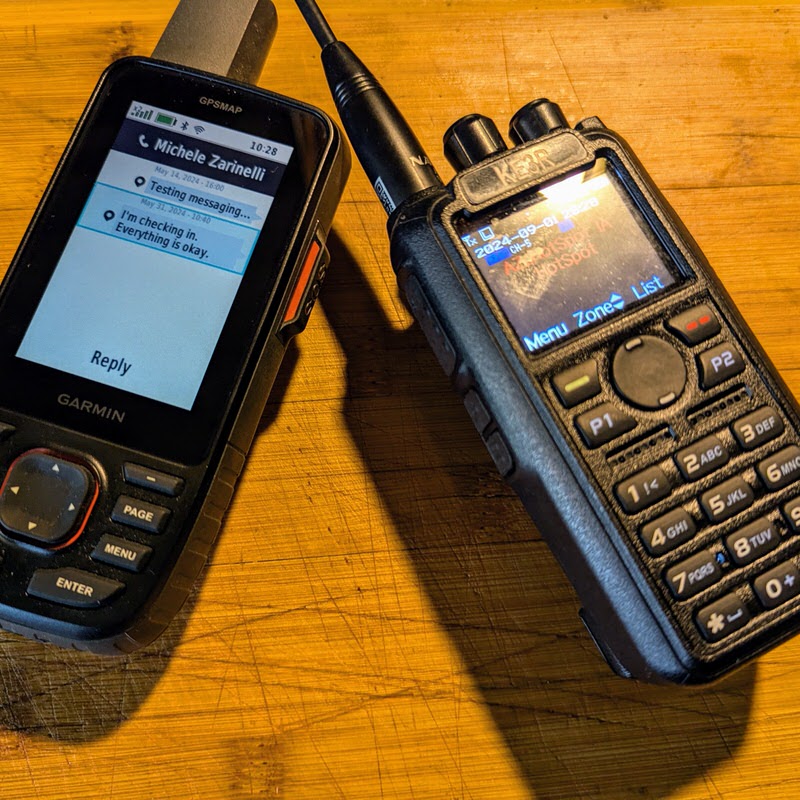
In the realm of communication, particularly in remote and emergency situations, the choice between satellite messengers and radios (such as ham and GMRS) is crucial. Each technology offers distinct advantages and disadvantages, making them suitable for different scenarios. This essay delves into the comparative analysis of satellite messengers and radios, highlighting their respective strengths and weaknesses.
Advantages of Satellite Messengers
Global Coverage
One of the most compelling advantages of satellite messengers is their ability to provide near-global coverage. Unlike traditional communication methods that rely on terrestrial infrastructure such as cell towers or radio repeaters, satellite messengers connect directly to satellites orbiting the Earth. This allows users to send and receive messages from virtually anywhere on the planet, including the most remote and inaccessible regions.
For instance, adventurers exploring the Arctic, mountaineers scaling high peaks, or sailors navigating open oceans can maintain communication with the outside world. This global reach is particularly crucial for emergency situations where immediate contact with rescue services can mean the difference between life and death. The ability to communicate from any location ensures that users are never truly isolated, no matter how far off the beaten path they venture.
Reliability
Satellite messengers offer a high level of reliability, largely because they are less affected by environmental interferences that can hinder other forms of communication. Terrestrial communication methods, such as cell phones and radios, can be obstructed by physical barriers like mountains, dense forests, and urban structures. In contrast, satellite messengers only require a clear view of the sky to function effectively.
This reliability is particularly beneficial in emergency scenarios where consistent and dependable communication is essential. For example, during natural disasters like earthquakes or hurricanes, terrestrial communication infrastructure can be damaged or destroyed, rendering traditional communication methods useless. Satellite messengers, however, remain operational, providing a critical lifeline for affected individuals.
Ease of Use
Modern satellite messengers are designed with user-friendliness in mind. Many models feature interfaces that resemble those of smartphones, making them intuitive and easy to navigate. This simplicity is a significant advantage, especially for individuals who may not have technical expertise.
The setup process for satellite messengers is typically straightforward, often requiring just a few steps to get started. Users can quickly learn how to send messages, share their location, and activate emergency features. This ease of use ensures that even in high-stress situations, individuals can operate the device effectively without needing extensive training or technical knowledge.
Emergency Services
One of the standout features of satellite messengers is their integrated SOS functionality. Many models come equipped with a dedicated SOS button that, when pressed, sends an emergency alert to a monitoring center. This alert includes the user’s exact GPS coordinates, enabling rescue services to locate and assist them promptly.
This feature is invaluable in critical situations where immediate help is required. For example, if a hiker suffers a severe injury in a remote area, they can activate the SOS button to summon emergency medical assistance. The precise location data provided by the satellite messenger ensures that rescuers can reach the individual quickly, potentially saving lives.
Text Messaging and Tracking
Satellite messengers often support text messaging and real-time tracking, providing additional layers of communication and safety. The ability to send and receive text messages allows users to stay in touch with family, friends, and colleagues, even when they are far from civilization. This feature is particularly useful for adventurers, travelers, and professionals working in remote locations.
Real-time tracking is another valuable feature, enabling users to share their location with others. This can be particularly reassuring for loved ones who want to monitor the user’s progress and ensure their safety. For example, a solo traveler can use the tracking feature to update their family on their whereabouts, providing peace of mind and an added layer of security.
The advantages of satellite messengers are numerous and significant, making them an essential tool for anyone venturing into remote or challenging environments. Their global coverage, reliability, ease of use, emergency services, and support for text messaging and tracking collectively ensure that users can maintain communication and safety, no matter where they are. These features make satellite messengers an invaluable asset for adventurers, travelers, and professionals alike, providing a reliable and effective means of communication in any situation.
Disadvantages of Satellite Messengers
Cost
One of the primary disadvantages of satellite messengers is their cost. The initial purchase price of these devices can be quite high, often ranging from 200 to 600 or more, depending on the model and features. This upfront cost can be a significant barrier for some users, particularly those who may only need the device for occasional use.
In addition to the initial purchase price, satellite messengers typically require a subscription to a satellite network service. These subscription fees can vary widely, with basic plans starting around 10 to 15 per month and more comprehensive plans costing upwards of 50 to 100 per month. Some services also charge additional fees for certain features, such as real-time tracking or higher message limits.
For individuals or organizations that need to equip multiple users with satellite messengers, these costs can quickly add up. While the benefits of global coverage and reliable communication are substantial, the financial investment required can be a significant drawback for budget-conscious users.
Battery Life
Another notable disadvantage of satellite messengers is their battery life. While battery technology is continually improving, the battery life of satellite messengers can still be limited, particularly when using power-intensive features like real-time tracking or frequent messaging.
For example, a satellite messenger that is actively tracking and transmitting location data may only last for a day or two on a single charge. In contrast, devices that are used more sparingly, such as for occasional check-ins or emergency alerts, may last for several days or even weeks. However, the need to conserve battery life can be a concern for users on extended trips or in situations where recharging options are limited.
To mitigate this issue, users often need to carry extra batteries, portable chargers, or solar panels to ensure their device remains operational. This adds to the overall weight and complexity of their gear, which can be a drawback for those who prioritize lightweight and minimalist setups.
Message Delays
While satellite messengers provide reliable communication in remote areas, they are not always instantaneous. Depending on the satellite network and environmental conditions, there can be delays in sending and receiving messages. These delays can range from a few minutes to over an hour, depending on factors such as satellite positioning, signal obstructions, and network congestion.
In time-sensitive situations, these message delays can be problematic. For example, if a user is in an emergency and needs immediate assistance, a delay in the SOS signal reaching the monitoring center could impact the response time. Similarly, delays in receiving messages from loved ones or colleagues can cause anxiety and uncertainty.
It’s important for users to understand that satellite communication is not as instantaneous as cellular or radio communication. While the delays are generally manageable, they can be a critical factor in certain scenarios where every minute counts.
While satellite messengers offer numerous advantages, including global coverage, reliability, and emergency services, they also come with notable disadvantages. The high cost of both the initial purchase and ongoing subscription fees can be a significant barrier for some users. Limited battery life, particularly when using power-intensive features, necessitates carrying extra batteries or charging solutions, adding to the overall weight and complexity of the user’s gear. Additionally, message delays can be problematic in time-sensitive situations, impacting the effectiveness of communication.
Understanding these disadvantages is crucial for potential users to make informed decisions about whether a satellite messenger is the right tool for their needs. By weighing the pros and cons, individuals can better assess how to integrate satellite messengers into their communication strategies, ensuring they are prepared for any situation they may encounter.
Advantages of Radios (Ham, GMRS, etc.)
Cost-Effective
One of the most significant advantages of radios, particularly GMRS (General Mobile Radio Service) and ham radios, is their cost-effectiveness. The initial purchase price of these radios is generally lower than that of satellite messengers, with many quality models available for under $100. This makes them accessible to a broader range of users.
Moreover, radios do not require ongoing subscription fees, which can be a substantial financial burden with satellite messengers. Once a user has purchased a radio and obtained any necessary licenses (in the case of ham radios), there are no additional costs for using the device. This makes radios a cost-effective long-term solution for communication, especially for individuals or organizations that need to equip multiple users.
Real-Time Communication
Radios provide real-time, two-way communication, which is a critical advantage in many situations. Unlike satellite messengers, which can experience delays in message transmission, radios allow for instantaneous communication. This immediacy is particularly crucial in emergencies where quick decision-making and coordination are essential.
For example, during a search and rescue operation, team members can use radios to communicate in real-time, sharing vital information and coordinating their efforts. This real-time communication can significantly enhance the efficiency and effectiveness of the response, potentially saving lives.
Community Support
The ham radio community is renowned for its strong network of operators who are often willing to provide assistance and relay messages over long distances. This community support can be invaluable in emergencies or during large-scale events where communication infrastructure is overwhelmed or unavailable.
Ham radio operators, also known as “hams,” often participate in emergency preparedness and disaster response efforts. They can set up temporary communication networks, relay messages between affected areas and emergency services, and provide critical information to those in need. This sense of community and willingness to help others is a unique and valuable aspect of the ham radio world.
Battery Efficiency
Radios typically have longer battery life compared to satellite messengers, especially when used intermittently. Many radios are designed to be energy-efficient, allowing them to operate for extended periods without frequent recharging. This makes them more reliable for long-term use, particularly in situations where access to power sources is limited.
For instance, a ham radio operator on a multi-day hiking trip can rely on their radio for communication without worrying about the battery running out. Additionally, many radios can be powered by standard batteries, which are easy to carry and replace, further enhancing their practicality for extended use.
No Dependency on Satellites
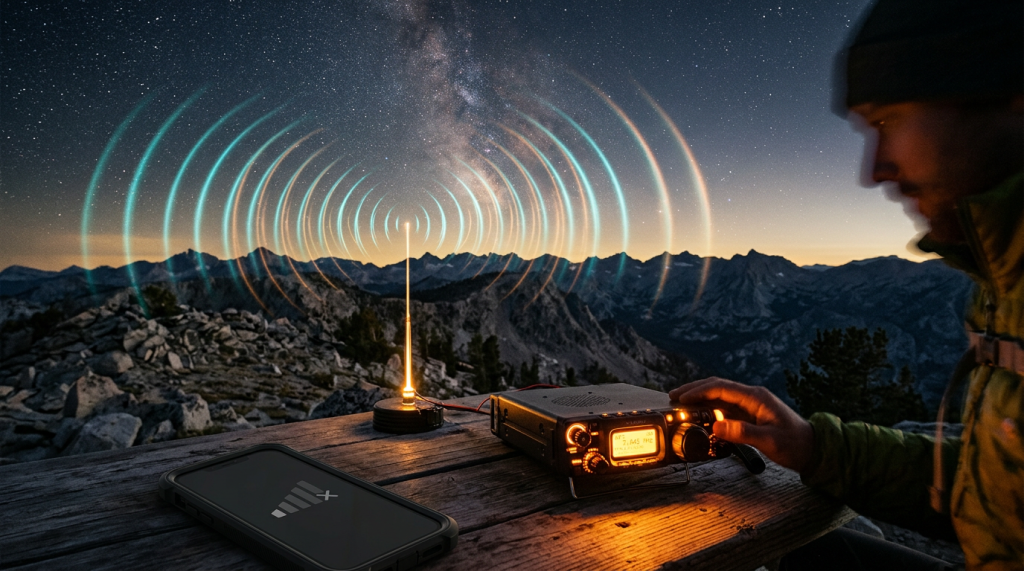
Radios operate independently of satellite networks, relying on terrestrial repeaters and direct line-of-sight communication. This independence can be advantageous in situations where satellite networks are compromised or unavailable, such as during solar storms or satellite malfunctions.
For example, in a densely forested area or a deep canyon where satellite signals may be obstructed, radios can still function effectively using repeaters or direct communication between units. This makes radios a versatile and reliable communication tool in a wide range of environments.
The advantages of radios, including GMRS and ham radios, make them a valuable communication tool for various scenarios. Their cost-effectiveness, real-time communication capabilities, strong community support, battery efficiency, and independence from satellite networks collectively ensure that users have a reliable and practical means of communication.
Radios are particularly well-suited for emergency situations, outdoor adventures, and community events where immediate and dependable communication is essential. By understanding and leveraging these advantages, individuals and organizations can enhance their communication strategies, ensuring they are prepared for any situation they may encounter.
Disadvantages of Radios (Ham, GMRS, etc.)
Limited Range
One of the most significant disadvantages of radios, including GMRS and ham radios, is their limited range. The effective range of these radios can be significantly impacted by terrain, atmospheric conditions, and physical obstructions. For instance, dense forests, mountains, and urban structures can all impede radio signals, reducing the effective communication distance.
While repeaters can extend the range of radio communications, they are not always available, especially in remote or sparsely populated areas. Repeaters are typically installed in strategic locations to maximize coverage, but their availability is often limited to more developed regions. In remote wilderness areas or during expeditions in uncharted territories, the lack of repeaters can severely restrict the range of radio communications.
This limitation can be particularly problematic in emergency situations where long-distance communication is crucial. For example, a hiker in a remote mountain range may find it challenging to communicate with rescue teams if the terrain obstructs the radio signal and no repeaters are available.
Licensing Requirements
Operating certain types of radios, such as ham radios, requires a license. Obtaining a ham radio license involves passing an exam that tests the user’s knowledge of radio theory, regulations, and operating practices. This can be a barrier for some users, particularly those who are new to radio communications or who may not have the time or resources to study for and pass the exam.
The licensing process ensures that operators are knowledgeable and adhere to regulatory guidelines, which helps maintain the integrity and reliability of the radio spectrum. However, the requirement for a license can deter some potential users who may find the process daunting or unnecessary for their needs.
In contrast, GMRS radios also require a license, but the process is simpler and does not involve an exam. Users must pay a fee and register with the Federal Communications Commission (FCC) in the United States. While this is less of a barrier than the ham radio licensing process, it still adds an extra step for users who simply want a straightforward communication solution.
Technical Knowledge
Radios often require a higher level of technical knowledge to operate effectively. Users need to understand various aspects of radio communication, including frequencies, modes of operation, and troubleshooting techniques. This technical complexity can be a disadvantage for individuals who are not familiar with radio technology.
For example, ham radio operators need to know how to select appropriate frequencies, adjust power levels, and use different modes such as single sideband (SSB) or frequency modulation (FM). They also need to be able to troubleshoot common issues, such as interference or poor signal quality. This level of technical knowledge can be intimidating for beginners and may require significant time and effort to acquire.
Additionally, setting up and maintaining radio equipment can be complex. Antennas need to be properly installed and tuned, and users must be able to diagnose and fix issues that may arise. This technical barrier can deter some individuals from using radios, especially if they are looking for a simple and user-friendly communication solution.
Interference
Radios are susceptible to interference from various sources, including other electronic devices, weather conditions, and physical obstructions. This interference can degrade the quality of communication and reduce the reliability of radio signals.
For instance, electronic devices such as computers, power lines, and other radios can generate electromagnetic interference (EMI) that disrupts radio signals. Weather conditions, such as thunderstorms or solar activity, can also impact radio communications by causing static or signal fading. Physical obstructions, such as buildings, hills, and dense vegetation, can block or reflect radio waves, further reducing signal quality.
Interference can be particularly problematic in urban environments where there are many potential sources of EMI. In such settings, radio users may experience frequent disruptions and poor signal quality, making communication less reliable. While experienced operators can often mitigate some types of interference through technical adjustments, it remains a persistent challenge for radio communications.
While radios, including GMRS and ham radios, offer numerous advantages, they also come with notable disadvantages. Limited range due to terrain and atmospheric conditions can restrict their effectiveness, particularly in remote areas. Licensing requirements for ham radios can be a barrier for some users, and the need for technical knowledge can be intimidating for beginners. Additionally, radios are susceptible to interference from various sources, which can degrade the quality and reliability of communication.
Understanding these disadvantages is crucial for potential users to make informed decisions about whether radios are the right communication tool for their needs. By weighing the pros and cons, individuals can better assess how to integrate radios into their communication strategies, ensuring they are prepared for any situation they may encounter.
Conclusion
In the ever-evolving landscape of communication technologies, both satellite messengers and radios (such as ham and GMRS radios) offer distinct advantages and disadvantages that make them suitable for different scenarios. Understanding these strengths and weaknesses is crucial for users to make informed decisions about which technology best meets their specific needs.
Satellite Messengers: Strengths and Weaknesses
Strengths:
- Global Coverage: Satellite messengers provide near-global coverage, making them invaluable for adventurers, travelers, and professionals operating in remote areas where terrestrial communication infrastructure is nonexistent. This global reach ensures that users can maintain communication regardless of their location on the planet.
- Reliability: Satellite messengers are less susceptible to environmental interferences such as mountains, dense forests, or urban structures. As long as the device has a clear view of the sky, it can maintain communication, providing a dependable lifeline in critical situations.
- Ease of Use: Modern satellite messengers are designed with user-friendly interfaces, often resembling smartphones. This simplicity ensures that even individuals with little technical knowledge can operate the device effectively, making it accessible to a wide range of users.
- Emergency Services: Many satellite messengers come equipped with SOS features that can alert emergency services with the user’s exact location. This capability can be a lifesaver in critical situations where immediate assistance is required.
- Text Messaging and Tracking: Satellite messengers often support text messaging and real-time tracking, allowing users to stay in touch with loved ones and share their location. This feature is particularly useful for adventurers and travelers who want to keep others informed of their whereabouts.
Weaknesses:
- Cost: The initial purchase price and ongoing subscription fees for satellite network access can be significant barriers for some users. This financial investment may not be justifiable for individuals who only need occasional communication capabilities.
- Battery Life: While improving, the battery life of satellite messengers can be limited, especially when using power-intensive features like real-time tracking. This necessitates carrying extra batteries or charging solutions, adding to the overall weight and complexity of the user’s gear.
- Message Delays: Depending on the satellite network and conditions, there can be delays in sending and receiving messages. These delays can be problematic in time-sensitive situations where immediate communication is essential.
Radios: Strengths and Weaknesses
Strengths:
- Cost-Effective: Radios, particularly GMRS and ham radios, are generally more affordable than satellite messengers. The absence of subscription fees makes them a cost-effective long-term solution for communication.
- Real-Time Communication: Radios provide real-time, two-way communication, which is crucial in emergencies where immediate feedback is necessary. This capability facilitates quicker decision-making and coordination, enhancing the effectiveness of response efforts.
- Community Support: The ham radio community is known for its strong network of operators who can provide assistance and relay messages over long distances. This community support can be invaluable in emergencies or during large-scale events where communication infrastructure is overwhelmed or unavailable.
- Battery Efficiency: Radios typically have longer battery life compared to satellite messengers, especially when used intermittently. This makes them more reliable for extended use without frequent recharging, particularly in situations where access to power sources is limited.
- No Dependency on Satellites: Radios operate independently of satellite networks, relying on terrestrial repeaters and direct line-of-sight communication. This independence can be advantageous in situations where satellite networks are compromised or unavailable.
Weaknesses:
- Limited Range: The effective range of radios can be significantly impacted by terrain, atmospheric conditions, and physical obstructions. While repeaters can extend range, they are not always available in remote areas, limiting the effectiveness of radio communication.
- Licensing Requirements: Operating certain types of radios, such as ham radios, requires a license. This involves passing an exam and adhering to regulatory guidelines, which can be a barrier for some users.
- Technical Knowledge: Radios often require a higher level of technical knowledge to operate effectively. Users need to understand frequencies, modes of operation, and troubleshooting techniques, which can be intimidating for beginners.
- Interference: Radios are susceptible to interference from other electronic devices, weather conditions, and physical obstructions. This can degrade the quality of communication and reliability, particularly in urban environments.
The Optimal Solution: Combining Technologies
By integrating both satellite messengers and radios, users can leverage the strengths of each technology to create a more robust and versatile communication system. Here are some scenarios where a combination of both might be advantageous:
- Expedition Teams: For teams embarking on expeditions in remote areas, satellite messengers can provide a reliable means of communication with the outside world, while radios can facilitate real-time communication between team members. This ensures that the team can stay connected both internally and externally, enhancing safety and coordination.
- Disaster Response: In disaster-stricken areas where traditional communication infrastructure is compromised, satellite messengers can be used to communicate with emergency services and coordinate relief efforts. Radios can be used for on-the-ground coordination among responders, enabling efficient and immediate communication.
- Outdoor Enthusiasts: Hikers, climbers, and adventurers can benefit from carrying both a satellite messenger and a radio. The satellite messenger ensures they can call for help and share their location if they encounter trouble, while the radio allows for real-time communication with their group or other nearby adventurers.
- Maritime Use: Sailors and boaters can use satellite messengers to stay in touch with shore-based contacts and emergency services, while radios can be used for communication with other vessels and marinas. This dual approach ensures comprehensive coverage and enhances safety at sea.
Ultimately, the choice between satellite messengers and radios depends on the specific needs and circumstances of the user. For those who require global coverage and reliable communication in remote areas, satellite messengers are an excellent choice. Conversely, for users who need cost-effective, real-time communication with strong community support, radios are a valuable tool. In many cases, a combination of both technologies may provide the most robust communication solution. By leveraging the strengths of each, users can ensure reliable and effective communication in any situation.


 UTAZCO Overland
Leave a Reply