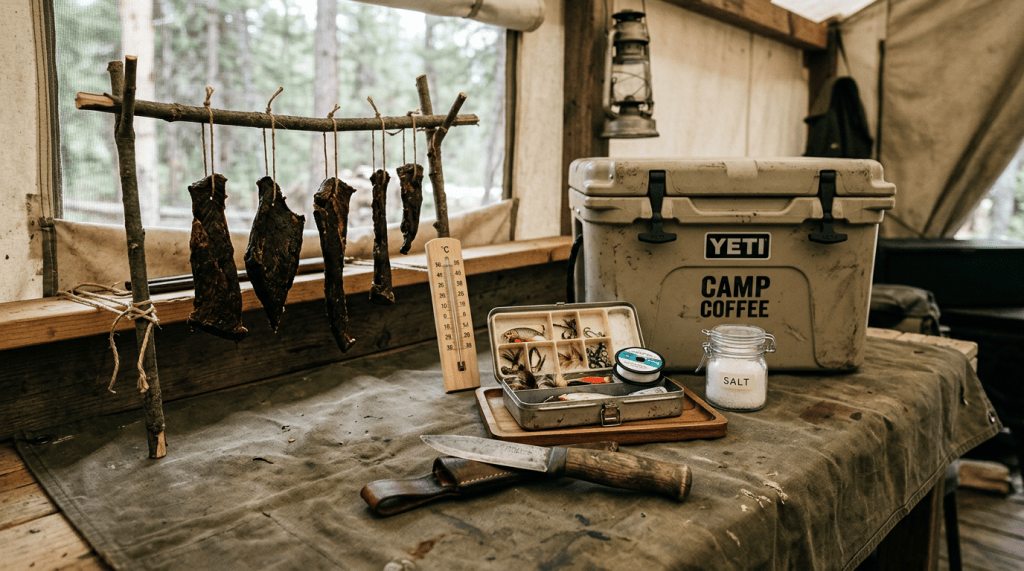

Overlanding strips away the safety net of modern infrastructure in ways that are both liberating and unforgiving. When you are weeks or months into a trip, navigating remote border crossings or camping deep in a national forest far from the nearest town, a bout of food poisoning ceases to be a minor inconvenience and transforms into a genuine medical emergency. Dehydration from vomiting and diarrhea can become severe within hours, and when the nearest clinic is a full day’s drive away on corrugated gravel, the situation escalates quickly. Yet despite these stakes, food safety rarely receives the same attention as tire choices, suspension upgrades, or recovery gear. Overlanders obsess over which winch to buy and debate the merits of different roof racks, but the cooler jammed in the back seat with a bag of thawing chicken and wilting lettuce often goes unexamined. This oversight is a mistake with consequences that extend well beyond an upset stomach.
The way you store, handle, and prepare food in your vehicle or campsite directly affects not only your physical health but your morale and the viability of the entire journey. A single episode of foodborne illness can sideline you for two or three days — days spent miserable in a tent or cramped vehicle, nursing dehydration, too weak to drive safely. If you are traveling with a family or in a group, one contaminated meal can cascade through the party, turning a shared adventure into a collective misery. Beyond the immediate health impact, poor food hygiene erodes the psychological comfort of the trip. When you begin to distrust your own cooler, when you hesitate before eating something that may or may not have spent too long in the sun, you lose the carefree enjoyment that drew you to overlanding in the first place. Food should be one of the pleasures of the road — a hot meal at the end of a long driving day, the ritual of cooking under an open sky. That pleasure depends entirely on confidence that what you are eating is safe.
Safe food practice on the road is not about replicating a home kitchen in the wilderness, nor is it about imposing sterile, clinical protocols on a campsite. It is about understanding a handful of core principles — how bacteria multiply, how contamination spreads, how temperature governs spoilage — and then adapting those principles to the very different constraints of mobile living. The overlander contends with limited refrigeration, often no running water, ambient temperatures that swing from near-freezing at altitude to scorching in desert lowlands, pervasive dust and sand, insects that appear the moment food is exposed, and wildlife ranging from curious raccoons to dangerous bears. A stainless-steel kitchen with a reliable power grid solves none of these problems. What solves them is knowledge applied with discipline.
That discipline is built through preparation before the trip and reinforced through habit every single day on the road. It means checking your fridge thermometer before you open the cooler, washing your hands with soap and clean water before chopping vegetables, keeping raw meat sealed and separated at every stage, and packing out every scrap of food waste when you break camp. None of these actions are difficult. None require expensive equipment. But each one must become automatic, performed without deliberation, the same way you check your mirrors before changing lanes. Master those principles and you gain something more valuable than any piece of gear you can bolt to your vehicle: the confidence to eat well, eat safely, and eat with enjoyment anywhere the road takes you.
Bacteria, Cross-Contamination, and Temperature Danger Zones
At the heart of food safety is microbiology — the behavior of microorganisms that are invisible to the naked eye, impossible to taste or smell in their early stages, and utterly indifferent to how adventurous or well-intentioned the traveler happens to be. The three bacterial families that account for the vast majority of foodborne illness are Salmonella, Escherichia coli, and Listeria. Each operates somewhat differently, but all three share a common requirement: they need warmth, moisture, and time. Given those three ingredients, a single bacterial cell can multiply into millions within hours, each generation dividing roughly every twenty minutes under ideal conditions. The food looks the same. It smells the same. It tastes the same. And yet it has become a vehicle for illness that can strike within hours of ingestion.
The single most critical concept to internalize is the temperature danger zone — the range between 40°F and 140°F (4°C–60°C) in which bacteria multiply most rapidly. This is not a narrow band. It encompasses virtually every ambient temperature a human finds comfortable, which is precisely why it is so dangerous: the conditions that feel pleasant for you are the same conditions that bacteria find ideal. A perishable item — anything containing protein or moisture, from sliced turkey to a bowl of hummus — left in this range for more than two hours is a ticking clock. The bacterial load may not yet be high enough to cause symptoms, but the exponential curve is steepening with every passing minute. At higher ambient temperatures, above 90°F (32°C), that safe window shrinks to just one hour. This is the reality that overlanders face in desert environments or tropical lowlands, where the inside of a vehicle parked in direct sunlight can exceed 122°F (50°C) within minutes. A cooler left on a truck bed in the Namibian sun does not simply become less cold — it becomes an incubator.
What makes the temperature danger zone particularly insidious in overlanding is the frequency of temperature fluctuation. Every time you open a cooler, warm air rushes in and cold air escapes. Every stop at a market where food is loaded into bags at ambient temperature and then placed in a cooler introduces a warm bridge. Even a powered fridge set to the correct temperature can experience brief warming cycles when the compressor cycles off or when the vehicle is turned off during a long hike. These fluctuations are not catastrophic in isolation, but they accumulate. A cooler that oscillates between 37°F and 54°F (3°C and 12°C) over the course of a day is not maintaining cold chain — it is repeatedly passing through the danger zone, giving bacteria successive windows of opportunity. Understanding this rhythm is essential, because the goal is not merely to keep food cold at the moment of consumption but to keep it cold as consistently as possible throughout its entire journey from market to mouth.
Cross-contamination is the invisible threat that compounds the temperature problem. Bacteria do not generate spontaneously in food — they are introduced, most commonly through contact with contaminated surfaces, raw animal products, or unwashed hands. The mechanism is straightforward and devastatingly easy to replicate in the field. Raw chicken placed on a cutting board leaves behind a residue of Campylobacter or Salmonella that is invisible, odorless, and persistent. If that same board is used twenty minutes later to slice tomatoes for a salad without being washed in between, the bacteria transfer is direct and complete. The tomatoes are eaten raw, the bacteria enter the digestive system, and illness follows. In a home kitchen, where surfaces are easily cleaned and running water is always available, this kind of lapse is relatively easy to correct. In the field, where water may be rationed, where cleaning supplies are limited, and where the same folding table serves as kitchen, dining room, and sometimes sleeping platform, the opportunities for cross-contamination multiply.
The danger extends beyond cutting boards and knives. Hands are the most efficient vector for bacterial transfer, and overlanding ensures that your hands are constantly exposed to contaminated surfaces — the dusty steering wheel, the fuel pump handle, the public tap at a rest stop, the soil at a campsite. Each of these contact points introduces bacteria that, unless removed through thorough hand-washing, are deposited directly onto food during preparation. The critical window is the moment between touching something and touching food. In a home kitchen, that window is measured in seconds. On the road, where hand-washing stations must be improvised and water must be carried, the temptation to skip the wash or settle for a quick rinse with minimal soap is powerful. That temptation is where contamination takes root.
Compounding these mechanical risks is the physiological vulnerability of the overlander’s own body. Travel fatigue, disrupted sleep, altitude changes, prolonged dehydration, and the stress of navigating unfamiliar environments all suppress immune function to varying degrees. The same contaminated meal that might produce mild symptoms in a well-rested person at home can cause severe illness in a traveler whose defenses are already compromised. This is not speculation — it is immunology. The body’s ability to neutralize a bacterial challenge depends on white blood cell activity, mucosal barrier integrity, and gut flora balance, all of which are degraded by the cumulative stress of long-term travel. The overlander who believes they have an “iron stomach” from years of eating street food is often simply someone who has not yet encountered the right combination of bacterial load and immune suppression.
Understanding these risks is not about cultivating fear or approaching every meal with suspicion. Fear leads to avoidance, and avoidance leads to a monotonous diet of packaged snacks that undermines both nutrition and morale. What is needed instead is a calm, systematic awareness — a mental framework that shapes every food-related decision from the moment you buy ingredients at a market to the moment you wash the last pot after dinner. That framework begins with two questions that should precede every action: how long has this food been in the danger zone, and what has it touched since it was last safe? If you can answer those two questions honestly, you can manage nearly every food safety risk the road presents.
Coolers, Powered Fridges, and Ice Management
Refrigeration is the overlander’s first line of defense against spoilage, and the decisions you make about cold storage ripple outward into almost every other aspect of food management on the road. The options fall along a spectrum: traditional ice coolers, portable 12-volt compressor fridges, and dual-zone units that combine fridge and freezer compartments in a single housing. Each has genuine strengths, each carries real limitations, and the choice between them depends not on budget alone but on the nature of your trip — its duration, your route, your vehicle’s electrical capacity, and how central fresh food is to your daily routine.
A quality cooler — rotomolded, thick-walled, with a tightly sealed lid — remains the most accessible and forgiving option for shorter trips. Rotomolded construction, the same process used to make whitewater kayak hulls, creates a seamless insulation chamber that eliminates the weak points where cheaper coolers lose cold air through seams and joints. When managed carefully, a high-end cooler can hold ice for four or five days even in hot conditions, but “managed carefully” is the operative phrase. The single greatest cause of ice loss is unnecessary opening. Every time the lid lifts, a cascade of cold air spills out — cold air is denser than warm air and sits at the bottom of the cooler like water in a bowl — and is replaced by warm ambient air that begins melting ice on contact. Experienced overlanders learn to plan their cooler access: everything needed for a meal is retrieved in one opening rather than three or four separate trips. Some pair a large cooler used as a “deep storage” unit that is opened rarely with a smaller daily-access cooler that contains only the items needed for the next twenty-four hours, drastically reducing the thermal disruption to the main supply.
The physics of ice management reward attention to detail. Block ice — whether purchased as a solid block or frozen at home in large containers — lasts substantially longer than cubed ice because of its lower surface-area-to-volume ratio. A single large block exposes far less surface to warm air than an equivalent mass of small cubes, and the melting process is correspondingly slower. Some overlanders freeze gallon-sized water jugs to create reusable ice blocks that double as drinking water as they slowly melt. Packing the cooler tightly is equally important. Air is the enemy of ice retention — it conducts heat far more efficiently than solid food, and empty spaces within a cooler allow warm air to circulate around ice, accelerating the melt. A tightly packed cooler with no visible gaps between items holds its temperature dramatically longer than one with food loosely scattered inside. Pre-chiling the cooler itself before loading — filling it with ice the night before and draining the meltwater in the morning — drops the interior temperature to near freezing before the first item goes in, buying hours of additional cold retention.
Placement and protection extend ice life further. A cooler sitting in direct sunlight on a vehicle’s metal tray can absorb radiant heat that overwhelms even the best insulation. Moving the cooler into shade, or covering it with a reflective blanket or tarp, reduces this solar loading significantly. Even the color of the cooler matters in extreme conditions: white or light-colored exteriors reflect heat while dark ones absorb it. Elevating the cooler off hot ground — a piece of wood, a folded towel — prevents conductive heat transfer from sun-baked earth. None of these measures is complicated, but together they can add a full day of ice life to a cooler that would otherwise fail on day three.
Powered fridges represent a significant investment — both in purchase price and in the electrical infrastructure required to run them — but they fundamentally change the cold storage equation. A 12-volt compressor fridge, the type used in virtually all serious overlanding applications, operates on the same principle as your household refrigerator: a compressor circulates refrigerant through an evaporator coil, extracting heat from the interior and dumping it into the surrounding air. The key advantage is consistency. Where a cooler’s temperature rises steadily as ice melts, a compressor fridge maintains a set temperature within a degree or two regardless of ambient conditions, cycling on and off as needed. This consistency eliminates the cumulative warming problem that undermines ice-based storage and removes the anxiety of watching a dwindling ice supply on a multi-day stretch between resupply points.
The electrical demands of a compressor fridge are modest but non-negotiable. A typical unit draws between 30 and 50 watts while the compressor is running, but because the compressor cycles on and off rather than running continuously, the average draw over a twenty-four-hour period is far lower — often 15 to 25 amp-hours from a 12-volt system. In a well-designed electrical setup with a secondary battery and adequate charging — whether from the vehicle’s alternator while driving, a solar panel array, or both — this draw is easily sustained indefinitely. The critical failure point is not the fridge itself but the power system feeding it. An undersized battery, a poorly wired connection, or a charging system that cannot keep pace with consumption will cause the fridge to cycle into low-voltage protection and shut down, potentially for hours, with the food inside warming toward the danger zone. Understanding your electrical system’s capacity and monitoring it with a battery monitor is as essential as understanding the fridge’s temperature setting.
The trade-off with powered fridges is complexity and the risk of mechanical failure. A compressor fridge has moving parts — the compressor itself, fans, control electronics — any of which can fail, especially in the vibration-heavy environment of an overland vehicle corrugating down a dirt track. Wiring connections can corrode, fuses can blow, and condenser coils can become clogged with the dust that overlanding generates in abundance. None of these failures is catastrophic in isolation, but each one can render the fridge inoperable at the worst possible moment. This is why many experienced overlanders carry a basic diagnostic kit — spare fuses, a multimeter, contact cleaner — and why some maintain a secondary cold storage option, even if it is only a small cooler with a few days of ice, as a backup against the day the fridge fails.
Dual-zone units, which house an independent fridge compartment and freezer compartment within a single housing, offer the most versatility but also the greatest power consumption. A freezer compartment demands that the compressor maintain temperatures well below freezing, which requires more energy and more frequent cycling. For overlanders who travel with frozen meat, frozen vegetables, or who simply want the ability to make ice in the field, a dual-zone unit is transformative. For those whose diet is primarily shelf-stable with occasional fresh produce, a single-zone fridge is sufficient and simpler to power.
Whichever system you choose, a cheap fridge thermometer is the single most important accessory you can buy. Digital thermometers with external probes can be routed through the cooler’s drain hole or the fridge’s door seal, giving you a continuous temperature reading without opening the lid. Trusting your cooler’s “feel” — pressing your hand against the lid and deciding it “seems cold enough” — is how people get sick. A cooler that feels cold to the touch can still have a core temperature of 50°F (10°C) if the ice has melted unevenly, creating warm pockets surrounded by cold surfaces. Know your actual temperature at all times. Check it before you open the cooler, immediately after you close it, and periodically during the day. The thirty seconds it takes to glance at a thermometer is the difference between confidence and a gamble.
Containers, Vacuum Sealing, and Rodent-Proofing

Not all food requires refrigeration, but all food requires protection. Dry storage encompasses everything from rice, pasta, and canned goods to spices, oils, flour, dried fruit, nuts, powdered milk, and coffee. These items form the backbone of the overlander’s mobile pantry — calorie-dense, nutritionally adequate, and inherently resistant to spoilage when stored correctly. But “stored correctly” is doing significant work in that sentence. Dry goods are not invulnerable. They are susceptible to four persistent enemies: moisture, air, heat, and pests, and the overland environment presents all four in abundance.
Moisture is the most immediate threat. Humidity — whether from coastal air, tropical climates, or simply the condensation that forms when a warm vehicle cools overnight — attacks dry food through two mechanisms. Direct exposure causes clumping, mold, and the slow collapse of texture that turns crisp crackers into soft, stale wafers. More insidiously, moisture creates the conditions for mycotoxin production. Certain molds, particularly Aspergillus species that produce aflatoxins, thrive in warm, damp grain products and can cause serious liver damage over time. The danger is invisible: a bag of flour that appears dry on the surface may harbor mold colonies within, especially if it has been stored in a humid environment for weeks. This is why airtight storage is not optional — it is the minimum standard.
Airtight containers — hard-sided, with silicone gasket seals and locking latches — are the baseline of dry storage. They serve a dual function: keeping external moisture out and preventing internal moisture from migrating between food items. A bag of dried apricots stored next to a box of saltine crackers will, in a sealed container, reach a moisture equilibrium that benefits neither. In an unsealed environment, the apricots lose moisture to the air while the crackers absorb it, and both degrade. Hard-sided containers with gasket seals prevent this exchange entirely. They also create a physical barrier against insects — weevils, flour beetles, and moths — that can infest dry goods with alarming speed in warm climates. A single infested package, introduced to a storage system without barriers, can colonize an entire pantry within days.
The choice of container material matters. Food-grade polypropylene is the most common: lightweight, durable, and resistant to staining and odor absorption. Transparent containers allow you to inventory contents without opening them, reducing air exposure, but they also allow light to penetrate, which can degrade light-sensitive items like spices and cooking oils over time. Opaque containers are preferable for long-term storage of such items. Some overlanders favor stainless steel canisters, which offer complete light and odor protection but are heavier and more expensive. Whatever the material, the seal is the critical feature. A container with a cracked gasket or a lid that does not seat fully is not an airtight container — it is a decorative box.
Vacuum sealing elevates dry storage from adequate to excellent by removing air entirely from the equation. A vacuum sealer draws out atmospheric oxygen and compresses the packaging tightly around the food, eliminating the air gaps where moisture condensation, oxidation, and insect eggs find their foothold. The results are dramatic. Vacuum-sealed flour, rice, and pasta can remain shelf-stable for years rather than months. Nuts and seeds, which go rancid relatively quickly due to the oxidation of their unsaturated fats, retain freshness for months longer when vacuum-sealed. Dried herbs and spices, which lose their volatile aromatic compounds through exposure to air, stay potent far longer in an oxygen-free environment. The process itself is simple and inexpensive — a compact vacuum sealer and a roll of bag material weigh less than a kilogram and occupy minimal space in a vehicle — and the payoff in food quality and longevity is substantial.
Vacuum sealing also serves a secondary function that is easy to overlook: it compresses bulky items into flat, stackable packages that organize efficiently in limited storage space. A two-kilogram bag of rice, loosely packed, is an awkward, shifting mass that resists stacking. Vacuum-sealed, it becomes a rigid slab that slots neatly into a container or drawer. For overlanders living out of drawers and cubbies built into a vehicle’s interior, this organizational benefit alone justifies the investment.
Heat degrades dry food through a different mechanism than moisture. Elevated temperatures accelerate the chemical reactions — oxidation, lipid peroxidation, Maillard browning — that cause food to lose flavor, nutritional value, and eventually become unsafe. Cooking oils are particularly vulnerable: a bottle of olive oil stored at 104°F (40°C) for weeks will develop off-flavors that no amount of seasoning can disguise. Spices lose their volatile compounds and become flavorless dust. Even canned goods, which are highly shelf-stable, degrade faster in sustained heat — the seals can weaken, the contents can discolor, and nutritional content declines. The practical response is to store dry goods in the coolest part of the vehicle, away from engine heat, exhaust routing, and direct sun exposure through windows. If your vehicle has storage compartments mounted on the chassis or tucked beneath a sleeping platform away from solar gain, those are the priority locations for your pantry.
In the field, rodent-proofing becomes a serious concern that many first-time overlanders underestimate. Mice are extraordinary problem-solvers with a biological imperative to find calorie-dense food. They can chew through plastic bags, thin cardboard, foil packaging, and even soft aluminum in their search for sustenance. A mouse that discovers food in your vehicle will return, and it will bring companions. Their gnawing damage extends beyond food theft — they chew through wiring insulation, creating electrical fire hazards, and they nest in warm engine bays, causing mechanical failures. The food supply is the attractant; the consequences extend far beyond the pantry.
Hard containers with locking lids are the standard response to rodent pressure. A quality container with a latching mechanism defeats the chewing and prying that defeat bags and boxes. Some overlanders go further, storing all food in sealed metal ammunition cans — military surplus .30 or .50 caliber cans that are airtight, watertight, rodent-proof, and virtually indestructible. They are heavy, but the weight is a reasonable price for the assurance that no mouse, rat, or squirrel will breach them. Ammunition cans also serve as effective wildlife deterrence in bear and raccoon country, though they are not a substitute for proper bear-safe storage where that is required by law.
The principle that unifies all of these practices is simple but absolute: no food item should be accessible to anything other than you. This means inspecting your storage system regularly for signs of chewing, for the fine droppings that indicate rodent activity, for the webbing and larvae that signal moth infestation. It means sealing every package after use, returning every container to its designated storage location, and never leaving food exposed on a table or counter when you step away from camp. Discipline in dry storage is less dramatic than the discipline of cold chain management, but it is no less important, and the consequences of neglect — ruined food, infested supplies, gnawed wiring — are the kind of problems that compound rapidly in a mobile environment where replacement options are limited.
Bear Hangs, Scent-Proof Bags, and Campsite Placement
Food storage takes on an entirely different dimension in bear country — and in the territories of other large omnivores such as boars, javelinas, and even determined raccoons — because the consequences of failure extend beyond your own health. A bear that associates your campsite with food is a bear that has learned to seek out humans as a food source, a behavioral shift that is difficult to reverse and almost always ends with the animal being relocated or destroyed. Every poorly stored cooler, every unwashed pot left on a table, every wrapper dropped on the trail is a lesson that teaches the next bear to approach the next group of campers with expectation rather than caution. In many wilderness areas across North America, Europe, and parts of Asia, proper food storage is not a recommendation but a legal requirement backed by fines that can run into hundreds or thousands of dollars. The law exists not to burden the traveler but to protect the wildlife — and, candidly, to protect you from the consequences of a three-hundred-kilogram animal deciding that your tent contains something worth investigating.
The traditional bear hang — suspending food at least four meters off the ground and two meters horizontally from the nearest branch, using a rope and a stuff sack — remains effective when executed correctly, though “correctly” is doing a great deal of work in that sentence. The technique requires a suitable tree with a branch strong enough to bear the weight of your food but high enough and far enough from the trunk that a bear cannot reach it from the ground or pull the branch toward itself. It requires a length of paracord or lightweight rope, the skill to throw it over the branch on the first attempt (a skill that eludes most people until they have practiced it repeatedly in daylight before needing it in the dark), and the patience to adjust the height and position until the geometry is right. In dense forest with mature conifers, the bear hang is straightforward. In sparse scrubland, in rocky terrain above the treeline, or in the flat, treeless expanses that characterise much of the overlanding landscape, finding a suitable branch at all can be impossible. A bear hang attempted in inadequate terrain — a branch too low, too close to the trunk, or too weak — is worse than no hang at all, because it creates a false sense of security while leaving food accessible to a determined animal.
Bear canisters represent the modern alternative to the bear hang, and they are the preferred solution in many national parks, wilderness areas, and backcountry zones where regulations specify approved food storage methods. A bear canister is a hard-sided container, typically made from high-density polyethylene or polycarbonate, certified to withstand sustained assault from a bear’s claws, teeth, and weight. The animals are extraordinarily powerful — a grizzly can exert over 600 pounds of bite force — but a properly certified canister is designed to frustrate that power by presenting a smooth, rounded surface that offers no purchase for claws and a lid mechanism that resists prying and biting from every angle. The canister is placed on the ground, ideally in shade and away from trails, and left overnight. By morning, a bear may have rolled it, batted it, and investigated it thoroughly, but the contents remain sealed.
The limitations of bear canisters are practical rather than conceptual. They are bulky — a canister that holds enough food for two people for three days may occupy the equivalent volume of a small sleeping bag — and they are heavy, often weighing over two kilograms when empty. For overlanders traveling by vehicle, the weight is less of a concern than the volume, but in a packed cargo area every cubic centimeter counts. Some canisters are designed to nest inside one another when empty, reducing their stored footprint. Others double as a seat or a small table when placed upside down. These are minor conveniences, but they reflect a design philosophy that acknowledges the canister’s permanent place in the overland kit.
Scent-proof bags, such as those designed for use inside bear canisters or as standalone barriers, add another layer of protection by containing the odors that attract animals from a distance. A bear’s sense of smell is estimated to be seven times more acute than a bloodhound’s — roughly 2,100 times more sensitive than a human’s — and they can detect food odors from over thirty kilometers away under favorable wind conditions. A standard stuff sack or dry bag does nothing to contain scent; the volatile organic compounds that comprise food odor pass through fabric as easily as air passes through a screen. Scent-proof bags are constructed from multiple layers of activated carbon and airtight membranes that adsorb and trap these molecules, creating a barrier that dramatically reduces the distance from which an animal can detect your food. Used inside a bear canister, they provide a second line of defense in the unlikely event the canister is breached. Used alone — hung from a tree in a bear hang or stored inside a vehicle — they reduce the scent radius that draws animals to your camp. No scent-proof bag is truly scent-free, and an experienced bear can still detect food at close range, but the reduction in detection distance is the difference between an animal investigating your camp from across a valley and an animal investigating it from five meters from your tent.
Campsite placement is the final and perhaps most underappreciated element of wildlife food safety. The principle is straightforward: separate the areas where you eat, cook, and store food from the area where you sleep, with sufficient distance and terrain between them that an animal attracted to food odors will not encounter your tent first. The widely accepted guideline is a minimum of sixty meters — roughly seventy big steps — between the cooking area and the sleeping area, with food storage located a similar distance in a third direction. This triangle of separation means that a bear drawn to the smell of a frying pan will arrive at the cooking area, find nothing accessible, and move on, rather than arriving at your tent and finding you inside it. Wind direction matters: the cooking area should be downwind from the sleeping area so that food odors are carried away from the tent rather than toward it. When the wind shifts — and it will, invariably, at three in the morning — the separation distance provides the margin of safety that wind direction alone cannot guarantee.
Food waste management closes the loop. A gnawed chicken bone, a handful of scraped vegetables, a thin film of grease on a pan — these are, to a bear’s nose, announcements of a meal. Cooking grease is particularly problematic: a pan wiped with a paper towel and left on a table leaves behind a residue that persists for days, attracting insects, rodents, and larger animals long after the meal is finished. Every food-related waste item — scraps, wrappers, grease-soaked paper, coffee grounds, fruit peels — must be packed out in sealed bags or disposed of in bear-proof receptacles where they exist. In areas without waste infrastructure, the expectation is absolute: you carry everything out. This is not merely a rule imposed by park authorities. It is a direct extension of the overlander’s responsibility to the landscapes they traverse — the same ethic that demands you drive through mud rather than around it to avoid widening the track, the same ethic that insists you use established campsites rather than creating new ones. The wilderness does not exist for your convenience. Your passage through it should leave no trace that you were there, and proper food waste management is the most tangible expression of that principle.
Clean Zones, Sanitizing, and Waste Management
The absence of running water and a fixed kitchen does not excuse poor hygiene — it demands more deliberate hygiene than a home kitchen ever could. In a house, the tap runs indefinitely, soap is always within reach, and a contaminated surface can be washed and re-washed in seconds. In the field, water is finite, soap must be carried, and every cleaning action consumes a resource that may be difficult to replenish. This scarcity, paradoxically, makes discipline more important, not less, because the margin for error shrinks when the tools for correction are limited. The overlander who develops rigorous prep protocols before the trip — and maintains them without exception every day on the road — is the overlander who never faces the consequences of a momentary lapse.
Establishing a clean zone for food preparation begins with a clean surface, and a clean surface is not the same as a surface that merely looks clean. The folding table at a campsite may have been exposed to dust, pollen, insect residue, animal droppings, and the chemical traces of whatever was stored on it during transit. Wiping it with a dry cloth removes visible debris; it does nothing to address the invisible microbial film that accumulates on any surface exposed to the open air. The minimum protocol is to wash the surface with soap and clean water, rinse it, and then apply a sanitizing solution before placing any food or food-contact item on it. This sequence — clean, rinse, sanitize — is the same protocol used in commercial kitchens, and its application in the field is no less critical. A portable cutting board, dedicated exclusively to food preparation and thoroughly cleaned after each use, provides a controlled surface that can be sanitized independently of the table beneath it. Some overlanders carry two boards of different colors — one for raw protein, one for ready-to-eat items — and treat the separation as an absolute rule that admits no exceptions. A board used for raw chicken is never, under any circumstances, used for salad vegetables until it has been washed, rinsed, and sanitized. The few seconds it takes to switch boards or wash between tasks is the difference between a safe meal and a trip-ending illness.
Hand-washing stations can be improvised from simple materials that every overlander should carry: a water jug fitted with a spigot or push-tap, a supply of biodegradable soap, and a clean towel. The station should be positioned away from the cooking area — not directly beside it, where splashing water can contaminate food — but close enough to be used conveniently before and after food handling. The technique matters as much as the frequency. Wet hands, apply soap, and scrub vigorously for at least twenty seconds, covering the backs of the hands, between the fingers, and beneath the nails where bacteria harbor and multiply. Rinse thoroughly under running water — not in a bowl of standing water, which quickly becomes contaminated — and dry with a clean towel. This process, performed before touching any food item, after handling raw meat, after touching waste, after using the toilet, and after any contact with animals or their waste, eliminates the single most common vector for foodborne illness: the contaminated hand.
In situations where water is scarce — desert crossings, remote stretches between resupply points — an alcohol-based hand sanitizer serves as a backup, though it carries important limitations. Sanitizer with at least 60% alcohol content is effective against many bacteria and viruses, but it does not destroy all pathogens, notably Clostridium difficile spores and certain parasitic organisms. More critically, sanitizer is ineffective on visibly dirty or greasy hands, because the organic material creates a barrier between the alcohol and the microorganisms it is meant to kill. When hands are soiled, there is no substitute for soap and water. The practical approach is to carry both: a sanitizer for quick use between washing opportunities, and a dedicated water supply reserved specifically for hand-washing when conditions allow.
Sanitizing food-contact surfaces requires more than a rinse and more than soap alone. Soap removes visible soil and many bacteria, but it does not sterilize — it reduces the microbial load rather than eliminating it. For true sanitization, a chemical agent is required, and the most widely recommended, cheapest, and most reliable option available to the overlander is a dilute bleach solution. The preparation is straightforward: add roughly one tablespoon of unscented household sodium hypochlorite bleach — the kind used for laundry, not the scented or splashless varieties designed for household cleaning — to one gallon (approximately four liters) of clean water. The solution should be mixed fresh every twenty-four hours, because bleach loses its effectiveness as it ages, particularly in warm conditions. To sanitize a cutting board, utensil, or countertop, apply the solution generously with a clean cloth or spray bottle, allow it to sit in contact with the surface for at least one minute — this contact time is essential for the hypochlorous acid to penetrate bacterial cell walls and destroy them — and then allow the surface to air dry. Do not rinse the solution off before it has had time to work; rinsing removes the active agent before it has completed its task. This single habit, maintained consistently at every meal, eliminates a vast percentage of the contamination risk that plagues food preparation in the field.
Some overlanders carry a small spray bottle of this solution in their cooking kit at all times, refilling it from a stored supply of bleach and water at regular intervals. Others prepare it in bulk at the start of each trip and store it in an opaque, sealed container to slow degradation. The approach matters less than the consistency. A sanitizing solution that exists in a bottle but is never used because the cook is tired, or because the last meal was prepared without incident, provides no protection. The habit must be automatic — applied before the first ingredient is chopped and after the last pot is washed — regardless of how long the day has been or how remote the campsite.
Waste management closes the loop on food preparation hygiene, and it is the protocol most frequently neglected by overlanders who have otherwise mastered cold storage, dry storage, and surface sanitization. The reasoning is understandable: waste is an afterthought, a task that feels less urgent than the immediate business of cooking and eating. But waste is precisely the element that undermines everything that came before it. Food scraps left at a campsite attract animals — insects within minutes, rodents within hours, larger wildlife within days — and each return visit by an animal reinforces the association between your campsite and a food reward. Grease and cooking oil poured onto the ground contaminate soil and, where it percolates into water sources, can poison aquatic organisms and render water undrinkable. Packaging waste — foil, plastic wrap, zip-lock bags, paper towels soiled with food residue — accumulates silently and, if not managed, becomes the visual and olfactory signature of an established campsite that wildlife learns to recognize.
The practical response is to carry dedicated waste bags, separate from general trash, and to treat food waste with the same discipline you apply to food storage. Every food scrap, every grease-soaked paper towel, every bone and fruit peel goes into a sealed bag immediately after it is generated. Cooking grease is collected in a dedicated container — a sealable plastic bottle or a purpose-built grease trap — and disposed of at the next town with waste facilities, never poured on the ground or into a fire. Packaging from perishable items is rinsed if possible to remove food residue before being packed out. In areas without waste infrastructure — deep backcountry, desert crossings, remote border regions — the expectation is absolute: you carry everything out. Every wrapper. Every peel. Every bone. Every drop of grease. This is not a suggestion offered for the environmentally sensitive; it is the baseline expectation of every wilderness management authority in the world, and it is the practice that distinguishes the responsible overlander from the casual tourist whose passage degrades the landscapes they visit.
Meat, Dairy, Eggs, and How to Handle Them Safely
Some foods demand more respect than others, and the distinction between high-risk and low-risk items is not a matter of preference or culinary tradition — it is a reflection of biological reality. Raw meat, poultry, and seafood are the highest-risk items in any food safety framework because they are the most likely vectors for pathogenic bacteria. Chicken commonly carries Salmonella and Campylobacter; ground beef can harbor E. coli O157:H7, a strain capable of causing kidney failure; pork may contain Trichinella parasites; and raw seafood — particularly shellfish — can transmit Vibrio species and norovirus. In a home kitchen, where refrigeration is reliable, surfaces are easily sanitized, and medical help is a short drive away, the risks associated with these items are manageable. On the road, where cold chain may be inconsistent, cleaning facilities are improvised, and the nearest hospital may be a full day’s travel away, those same items become significantly more dangerous unless handled with deliberate care.
The safest approach to fresh meat on the road is to treat it as a single-use item: buy it no more than a day before you plan to consume it, cook it thoroughly, and eat it immediately. Do not plan to save leftovers for the following day unless you can verify that the remaining portion was refrigerated continuously and promptly after cooking. The storage hierarchy within the cooler matters enormously. Raw meat should always occupy the lowest position — the bottom shelf, the deepest section — because gravity is relentless and meat juices that drip downward will contaminate everything they contact. Place raw meat in a sealed container or a heavy-duty zip-lock bag before it enters the cooler, and ideally before it enters the vehicle. The goal is redundancy: even if the bag leaks, even if the container tips, the contamination is contained within a secondary barrier rather than spreading across the cooler’s contents.
Cooking temperature is the final line of defense, and it is the one you control completely. A probe thermometer — a thin metal shaft with a digital readout, weighing less than fifty grams and costing very little — removes the guesswork that leads people to undercook or overcook their food. Chicken and poultry must reach an internal temperature of 165°F (74°C) throughout, with no exceptions and no reliance on color as a indicator. The flesh can appear white and firm while the core remains below safe temperature, particularly in thick cuts or bone-in pieces. Ground beef should reach 160°F (71°C), and whole cuts of beef or lamb, if served rare, should reach at least 145°F (63°C) at the center with a three-minute rest time. Seafood should reach 145°F (63°C) throughout, with flesh that is opaque and flakes easily when tested with a fork. These numbers are not arbitrary — they represent the temperatures at which specific pathogens are killed within minutes — and they apply whether you are cooking over a campfire, on a portable gas stove, or on a charcoal grill. A thermometer inserted into the thickest part of the item, away from bone and fat, gives you the answer in seconds. A visual estimate gives you nothing but optimism.
The handling of meat before it reaches the cooler deserves equal attention. At a market or butcher shop, place the wrapped meat in a separate bag from all other purchases — vegetables, bread, dry goods — so that even if the packaging leaks during transport, the contamination cannot reach ready-to-eat items. At the vehicle, load the meat into the cooler immediately rather than leaving it on a seat or tailgate where it warms in ambient temperature. If the journey from market to campsite is more than thirty minutes, ensure the cooler is cold and loaded with sufficient ice to absorb the thermal load of the warm meat. The critical window is the period between purchase and refrigeration; every minute of delay is a minute in which bacterial populations on the meat’s surface are doubling.
Dairy products occupy a middle ground on the risk spectrum, and their safety depends largely on the type of product and the integrity of its packaging. Pasteurized milk, yogurt, and hard cheeses — cheddar, Parmesan, Gruyère, aged Gouda — are relatively forgiving. Their low moisture content, acidic pH, or bacterial cultures create environments that are inhospitable to most pathogens, and they can tolerate brief periods outside the refrigerator without significant risk, provided they are returned to cold storage promptly. Hard cheeses, in particular, are durable travel companions: they resist drying, maintain their flavor for days, and can be eaten without further preparation. Vacuum-sealed portions extend their life further and prevent the surface mold that develops when exposed to air.
Soft cheeses — brie, camembert, fresh mozzarella, ricotta, cream cheese — are a different proposition entirely. Their high moisture content and neutral pH create conditions that bacteria find far more hospitable, and they should be treated with the same caution as fresh meat. Consume them early in a trip, keep them refrigerated continuously, and discard them if there is any doubt about their temperature history. Yogurt, despite its acidic environment, is similarly perishable and should be consumed within a few days of opening. Sour cream, mayonnaise-based sauces, and cream-based dressings fall into the same category: enjoy them at the beginning of a trip when refrigeration is fresh, and do not rely on them after several days on the road.
Raw, unpasteurized dairy — often sold at roadside stands, farm shops, and local markets as “artisan” or “traditional” products — is a risk most overlanders are well-advised to avoid entirely, regardless of how appealing the presentation. Unpasteurized milk can harbor Listeria, Salmonella, E. coli, and Brucella, and the absence of pasteurization means these organisms are present in the product as sold. The flavor may be exceptional. The risk is not worth it, particularly in regions where medical facilities are distant and antibiotic availability may be limited. If you encounter unpasteurized dairy and are tempted, consider that the same product pasteurized at home is safe and retains most of its flavor — a small camping stove and a pot can accomplish what the farmstand cannot guarantee.
Eggs present a practical challenge that varies by geography and confuses many overlanders. In much of Europe, eggs are sold unrefrigerated at room temperature because they have not been washed after collection. The natural bloom — a protective coating that seals the shell’s pores — remains intact, preventing bacteria from entering the egg. These eggs can safely be stored at ambient temperature for several weeks. In North America, Australia, and parts of Asia, eggs are commercially washed and sanitized, which removes the bloom and necessitates refrigeration to prevent bacterial ingress through the now-exposed pores. The overlander crossing between these systems must understand the local practice: in a country where eggs are displayed on an open shelf at room temperature, store them the same way; in a country where eggs are refrigerated in the supermarket, keep them cold. The failure to understand this distinction — refrigerating European eggs that were never chilled, or leaving American eggs at ambient temperature — can compromise safety in either direction.
Hard-boiled eggs, peeled and lightly seasoned with salt, make excellent trail snacks and sidestep the handling risks of raw eggs entirely. They are portable, calorie-dense, require no further preparation, and can be consumed without utensils. Boil them thoroughly — ten minutes at a rolling boil for eggs at room temperature, twelve for eggs straight from the refrigerator — and cool them quickly in cold water to stop the cooking process and prevent the gray-green ring around the yolk that signals overcooking. Store them in a sealed container in the cooler, and consume them within two days. Their versatility extends beyond snacking: sliced hard-boiled eggs added to a rice bowl or a salad elevate a simple meal into something more satisfying, and they require no cooking equipment beyond the pot of water used to boil them.
Long-Term Strategies: Dehydrated Meals and Shelf-Stable Staples
As trips extend beyond a few days, the logistics of fresh food become burdensome in ways that are not immediately obvious at the planning stage. A head of lettuce that was crisp on day one is wilted by day three. Tomatoes soften and leak. Avocados pass from unripe to overripe in what feels like an afternoon. Berries mold with a speed that seems almost deliberate. The cooler, which was a source of confidence at the start of the trip, becomes a source of anxiety — a box of diminishing possibilities that demands constant monitoring and generates a steady stream of waste. Long-term overlanders, those traveling for weeks or months rather than a long weekend, learn quickly that fresh food is a luxury best enjoyed early in each resupply cycle and that the backbone of daily nutrition must come from sources that do not depend on cold chain. The shift toward shelf-stable and dehydrated options is not a compromise born of laziness or budget constraint. It is a deliberate strategy that, when executed well, provides reliable nutrition, reduces waste, simplifies logistics, and — perhaps most importantly — eliminates the daily stress of monitoring a cooler’s temperature and estimating how many days of freshness remain.
Dehydrated and freeze-dried meals have undergone a transformation in the past two decades that makes them genuinely worth eating, a development that would have seemed unlikely to anyone who remembers the tasteless, chalky rations of earlier generations. Modern dehydrated meals, produced by companies that specialize in outdoor nutrition, are complete dishes — pasta bolognese, Thai green curry, chicken tikka masala, beef stroganoff, vegetable pad thai — that rehydrate with boiling water in ten to fifteen minutes and deliver flavors, textures, and nutritional profiles that approach home cooking. The technology has improved dramatically: freeze-drying, which removes moisture through sublimation rather than evaporation, preserves cellular structure far better than simple dehydration, resulting in meals that rehydrate to something recognizably close to their original form. The weight advantage is substantial. A dehydrated meal serving two people typically weighs between 150 and 250 grams dry, compared to a kilogram or more for the equivalent fresh ingredients, and it occupies a fraction of the volume. For overlanders where payload and cargo space are constrained — which is to say, all overlanders — this efficiency is transformative.
The shelf life of commercially produced dehydrated and freeze-dried meals is measured in years, typically five to ten depending on packaging and storage conditions. This longevity makes them ideal for pre-positioning in a vehicle’s permanent pantry, for stocking a cache at a remote campsite, or for carrying as emergency reserves that sit unused for months until the day they become essential. The packaging is designed to be resealable and self-standing, requiring no additional container, and the preparation demands nothing more than a heat source and clean water — both of which the overlander already carries for other purposes. The primary limitation is cost: a single dehydrated meal from a reputable brand may cost three to five times more than the equivalent meal prepared from scratch with fresh ingredients. For daily use over months, this cost adds up, which is why most experienced overlanders use dehydrated meals selectively — for exhausting driving days when cooking from scratch is impractical, for remote campsites where water is limited, or for situations where the simplicity of boil-and-eat outweighs the desire for a freshly prepared meal.
Shelf-stable staples — rice, lentils, dried beans, canned meats, tinned fish, nut butters, honey, olive oil, dried pasta, and powdered milk — form the foundation of a long-term mobile pantry, and the overlander who learns to build meals from these ingredients gains a degree of self-sufficiency that fresh food cannot provide. These items share a common set of virtues: they are calorie-dense, nutritionally adequate when combined thoughtfully, resistant to spoilage without refrigeration, and available in virtually every market in the world, from European supermarkets to roadside stalls in sub-Saharan Africa. A two-kilogram bag of rice, a one-kilogram bag of red lentils, two cans of chickpeas, a jar of peanut butter, and a bottle of olive oil will sustain a single overlander for a week on modest portions, and the entire supply weighs less than five kilograms and occupies roughly the volume of a small sleeping bag.
The challenge of a shelf-stable diet is not nutrition but monotony. Eating rice and lentils for the seventh consecutive day, however well-seasoned, becomes a test of willpower rather than a pleasure. The antidote is a curated spice kit — small containers of cumin, coriander, turmeric, chili flakes, smoked paprika, dried oregano, cinnamon, and salt — that transforms identical base ingredients into recognizably different meals. Cumin and coriander turn lentils into a dal. Chilli flakes and garlic powder turn rice and canned tuna into a pasta-like dish. Smoked paprika and dried oregano elevate a simple bean stew into something with depth and warmth. The spice kit weighs almost nothing — a full set of eight or ten spices in small containers totals under two hundred grams — and its value to morale is immeasurable. The overlander who masters a repertoire of one-pot meals — a lentil dal with rice, a pasta with tinned tuna and chili flakes, a rice-and-bean bowl with peanut sauce, a couscous with canned chickpeas and dried apricots — eats well for weeks without touching a fresh ingredient, and the ritual of cooking these meals becomes one of the genuine pleasures of the day rather than a chore to be endured.
Dehydrating your own food before a trip offers a third path that combines the convenience of commercial dehydrated meals with the flavor profiles and ingredient control of home cooking. A domestic food dehydrator — a simple appliance consisting of stacked trays and a fan — can transform sliced vegetables, cooked ground meat, cooked rice, beans, and even complete casseroles into shelf-stable ingredients that rehydrate quickly on the road. The process is straightforward: cook the food to its final state, spread it in thin layers on the dehydrator trays, and run the machine at 135°F to 155°F (57°C to 68°C) for eight to fourteen hours until the food is completely dry and brittle. The result is lighter and more compact than any commercial alternative, because you control the moisture content and can dry food to a degree that commercial producers, constrained by shelf-life requirements and texture expectations, often do not reach.
The practical applications are extensive. Dehydrated cooked ground beef rehydrates in minutes and can be added to pasta sauce, tacos, or rice bowls. Dehydrated sautéed onions, peppers, and mushrooms reconstitute into a flavor base for countless dishes. Dehydrated cooked lentils and beans reduce to a fraction of their original volume and weight while retaining their nutritional value and, critically, their ability to be reheated with boiling water rather than requiring the long cooking times that raw dried legumes demand. Even full casseroles — lasagna, shepherd’s pie, macaroni and cheese — can be dehydrated, crumbled or sliced, and rehydrated into recognizable versions of their original form, though the texture inevitably suffers compared to freshly prepared food. The key advantage is the elimination of the cooler entirely: a dehydrated meal kit, vacuum-sealed and stored in a dry compartment, requires no ice, no power, and no monitoring. It sits inert and ready for months until the moment it is needed.
The preparation time required for home dehydration is significant — an afternoon of cooking and twelve hours of machine time — but it is a one-time investment that pays dividends across an entire trip. The dehydrated ingredients can be vacuum-sealed in portion-sized bags, labelled with contents and date, and stored in the vehicle’s permanent pantry alongside commercial options. For overlanders who plan their routes through regions where resupply is infrequent or where market availability is limited, a home-dehydrated food supply provides a buffer of security that no amount of fresh food, however carefully stored, can match. The discipline of preparation before departure is, in the end, the same discipline that governs every other aspect of food safety on the road: plan ahead, execute with care, and trust the system you have built.
Conclusion
Food safety on the road is not a matter of luck, nor is it a matter of instinct or intuition that some travelers possess and others lack. It is a system — a set of practices rooted in microbiology, refined through experience, and maintained through discipline — that, once internalized, becomes second nature. The overlander who understands the temperature danger zone, who maintains clean prep zones, who stores food against wildlife with the same care they give to route planning and vehicle maintenance, and who plans meals with shelf-stability as a guiding principle is not merely cautious. They are self-reliant in a way that fundamentally deepens the freedom that overlanding promises. Freedom, after all, is not simply the absence of constraint. It is the capacity to sustain yourself wherever the road leads, to eat well in a desert campsite as comfortably as in a well-served restaurant, to know that the meal you have just prepared is as safe as it is satisfying.
The practices described in this essay — cold chain management, dry storage discipline, wildlife food protocols, surface sanitization, careful handling of high-risk foods, and the strategic use of shelf-stable staples — are not complicated. None of them require expensive equipment, advanced training, or extraordinary physical effort. What they require is consistency: the willingness to perform each action every time, without exception, regardless of fatigue, weather, or the temptation to take a shortcut because the last meal was fine and the one before that was fine too. It is precisely this consistency that separates the disciplined overlander from the casual traveler who knows the principles but applies them intermittently. Food safety is binary in its consequences. A cooler that was managed correctly for nine days but neglected on the tenth can make you just as ill as a cooler that was never managed at all. The system works only when it works completely, every time, without qualification.
The accumulation of these small disciplines produces something that is difficult to measure but impossible to overstate: a quiet confidence that permeates every aspect of the journey. When you know that your food is stored safely, that your cooking surfaces are clean, that your waste is managed responsibly, and that your campsite is placed with awareness of the wildlife around you, you are free to focus on the things that drew you to overlanding in the first place — the landscape unfolding through the windshield, the conversation with a fellow traveler at a border crossing, the silence of a campsite at dusk, the satisfaction of a meal cooked under an open sky after a long day on the road. That freedom is not automatic. It is earned, meal by meal, day by day, through the cumulative application of practices that, individually, are unremarkable but collectively form the infrastructure of self-reliance.
Every meal prepared safely in a remote campsite is proof that the journey is sustainable. It is evidence — tangible, repeatable, and entirely within your control — that you can sustain yourself indefinitely, that the road does not demand a compromise between adventure and health, between remoteness and safety, between the wildness of the landscape and the discipline of your daily routine. Every cooler managed, every bear hang set, every surface sanitized, every packet of rice retrieved from a rodent-proof container and cooked in a pot washed with bleached water and eaten from a clean board — these small acts accumulate into something larger than their individual parts. They become a way of moving through the world that respects both your own well-being and the landscapes you traverse, a way that leaves no trace, that teaches no animal to associate humans with food, that contaminates no soil or water, and that sustains your body and your morale across the full span of the journey.
The overlander who masters food safety does not do so because they are afraid of illness, though the fear of illness is a reasonable motivator. They do so because they understand that the ability to feed oneself safely and well, in any condition, at any location, for any duration, is the foundation upon which every other overlanding skill depends. You can navigate a mountain pass with confidence only if you are well-nourished and symptom-free. You can recover a stuck vehicle with focus only if your body is not compromised by the meal you ate last night. You can enjoy the sunrise over a salt flat only if the thought of breakfast does not fill you with anxiety. Food safety is not a peripheral concern or an afterthought bolted onto the adventure. It is the ground floor of the building, the keystone of the arch, the thing that holds everything else together while remaining largely invisible when it is working correctly.
That invisibility is, in the end, the measure of success. The best food safety system is the one you never think about because it operates automatically, because every habit has been practiced so many times that it requires no conscious effort, because the cooler is always the right temperature, the hands are always washed, the surfaces are always sanitized, and the food is always stored with care. When the system disappears into routine, when the discipline becomes as natural as buckling a seatbelt or checking your mirrors, you have achieved something more than food safety. You have achieved the confidence to go anywhere, stay as long as you choose, and eat well throughout — and that confidence is the foundation on which every other adventure is built.