
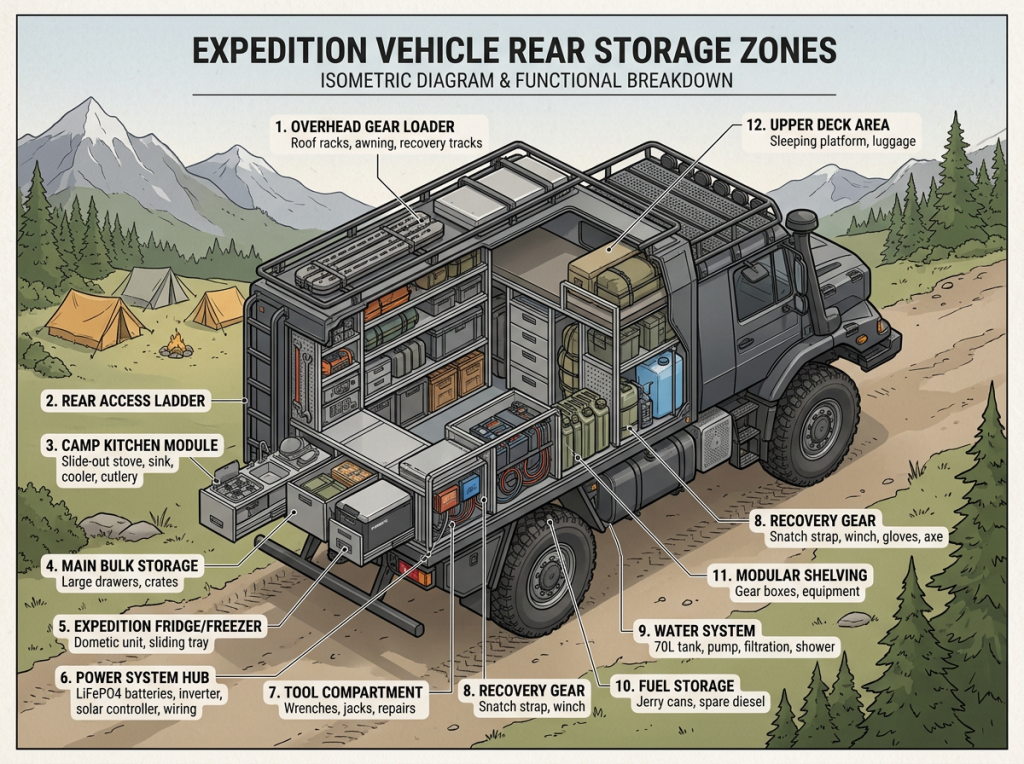
A well-designed kitchen is more than a convenience—it’s the heart of any overlanding adventure. Whether you’re brewing coffee at sunrise or preparing a hearty meal after a long day on the trail, a functional kitchen transforms the experience from mere survival to genuine enjoyment. The right setup brings comfort, efficiency, and a sense of home, no matter how remote your location.
Core Principles: Foundations of a Great Setup
At the heart of every successful overlanding kitchen are four guiding principles that shape both the design and the day-to-day experience: durability, modularity, weight distribution, and ease of access. Each principle addresses a unique challenge posed by the demands of vehicle-based adventure travel.
Durability is non-negotiable in the overlanding world. The constant vibration from rough trails, exposure to dust, rain, and sun, and the repeated packing and unpacking of gear all conspire to test the resilience of every component. A kitchen built with robust materials—think stainless steel, reinforced plastics, and heavy-duty fabrics—will outlast one assembled from lightweight or fragile parts. This resilience not only protects your investment but also ensures that your kitchen remains functional when you need it most, far from the nearest replacement parts or repair shops.
Modularity brings adaptability to the setup. Overlanding trips vary widely: a solo weekend escape demands a different kitchen than a month-long group expedition. Modular components—such as removable drawers, stackable crates, or clip-on prep surfaces—allow you to tailor your kitchen to the specific journey at hand. This flexibility extends the usefulness of your gear, letting you scale up or down without a complete redesign. It also makes it easier to upgrade individual elements as your needs evolve or as new products become available.
Weight distribution is a principle that often separates novice setups from those crafted by experienced travelers. Every kilogram added to your vehicle affects handling, fuel efficiency, and safety. Placing heavy items low and close to the vehicle’s center of gravity minimizes sway and reduces the risk of rollovers, especially on uneven terrain. Thoughtful distribution also prevents overloading one side or axle, which can lead to mechanical issues or even structural damage over time. A well-balanced kitchen setup is not just about convenience—it’s a matter of safety and vehicle longevity.
Ease of access is the final, but equally crucial, pillar. When hunger strikes or weather turns, the last thing you want is to dig through a jumble of gear to find a lighter or a spatula. An intuitive layout, with frequently used items within arm’s reach and clear organization for everything else, transforms cooking from a chore into a pleasure. Quick access also means you’re more likely to keep things tidy, reducing the risk of losing small items or attracting wildlife with forgotten crumbs.
Together, these principles form the blueprint for a kitchen that is not only practical and reliable but also a joy to use. Every decision—from the type of stove you select to the placement of your spice rack—should be filtered through the lens of durability, modularity, weight distribution, and ease of access, ensuring your overlanding kitchen is ready for whatever the journey brings.
A successful overlanding kitchen is built on four essential principles: durability, modularity, weight distribution, and ease of access. Durable materials ensure the kitchen withstands harsh conditions and frequent use. Modularity allows the setup to adapt to different trips and needs, making it easy to expand or reconfigure. Proper weight distribution is crucial for vehicle safety and performance, requiring heavy items to be stored low and centrally. Finally, ease of access ensures that cooking and cleanup are efficient and enjoyable, with everything organized and within reach. Together, these principles create a kitchen that is reliable, adaptable, safe, and a pleasure to use on any adventure.
Storage Systems: Organizing for Efficiency
The organization of an overlanding kitchen hinges on the thoughtful integration of storage systems that balance accessibility, security, and adaptability. Drawer systems, whether custom-built or purchased as modular kits, are often the centerpiece of a well-organized setup. These drawers transform the often-underutilized space in a vehicle’s cargo area into neatly segmented compartments, making it easy to store and retrieve utensils, cookware, and pantry staples. Their ability to keep items secure during bumpy rides is invaluable, preventing the chaos of spilled contents and damaged gear.
Complementing drawers, MOLLE panels introduce a layer of modularity and visibility. Originally designed for military use, these panels allow users to attach pouches, tools, and small containers directly to the vehicle’s interior walls or the sides of drawer systems. This approach keeps frequently used items—like knives, spices, or cleaning supplies—within immediate reach, reducing the time spent searching for essentials and allowing for quick reconfiguration as needs change.
Crates offer a different kind of flexibility. Lightweight and stackable, they are ideal for bulkier items or for organizing food and supplies by category. Their portability means they can be easily removed from the vehicle and set up at camp, serving as temporary pantries or prep stations. This mobility is particularly useful when cooking away from the vehicle or when space inside is at a premium.
Fold-out tables, meanwhile, address the perennial challenge of limited workspace. Integrated into drawer systems or attached to the vehicle’s exterior, these tables deploy quickly to provide sturdy surfaces for meal prep, cooking, or dining. When not in use, they fold away seamlessly, preserving valuable storage space and maintaining a tidy interior.
Together, these storage solutions create a harmonious system where every item has its place, movement is efficient, and the kitchen remains adaptable to the ever-changing demands of life on the road. The interplay between fixed and portable elements ensures that the kitchen can be both highly organized during transit and fully functional at camp, supporting a seamless transition from travel to mealtime.
| Storage Type | Pros | Cons |
|---|---|---|
| Drawer Systems | Organized, secure, custom fit | Can be heavy, costly |
| MOLLE Panels | Modular, visible, flexible | Limited weight capacity |
| Crates | Affordable, portable | Less secure, can shift |
| Fold-Out Tables | Space-saving, quick setup | Limited surface area |
Efficient storage in an overlanding kitchen relies on a combination of systems that maximize space, security, and accessibility. Drawer systems provide organized, secure compartments for kitchen essentials, while MOLLE panels add modularity and keep frequently used items visible and within reach. Crates offer portable, stackable storage for bulkier supplies and can be easily moved outside the vehicle for use at camp. Fold-out tables solve workspace limitations by offering quick, sturdy surfaces that tuck away when not needed. Together, these solutions create an organized, adaptable kitchen that transitions smoothly from travel to camp life.
Heat Sources: Cooking in the Wild
Selecting the appropriate heat source is a foundational decision in building an overlanding kitchen, as it directly impacts not only what and how you cook, but also your safety and adaptability in diverse environments. Propane stoves are a perennial favorite among overlanders for their reliability and simplicity. Fueled by canisters that are widely available in many regions, these stoves ignite quickly, offer consistent heat, and are easy to control, making them ideal for everything from boiling water to simmering delicate sauces. Their straightforward operation and minimal maintenance requirements make them especially appealing for those who value convenience and predictability.
For travelers venturing into remote or international territories, multi-fuel burners present a compelling alternative. These versatile stoves can operate on a range of fuels—including gasoline, diesel, kerosene, and white gas—allowing users to adapt to whatever is locally available. This adaptability is invaluable when crossing borders or exploring areas where propane canisters may be scarce or incompatible with local fittings. While multi-fuel burners often require more maintenance and a bit of a learning curve, their flexibility can mean the difference between a hot meal and going without.
Fire pits, on the other hand, evoke the timeless ritual of cooking over an open flame. Beyond their practical function, they create a sense of ambiance and camaraderie that is hard to replicate with a stove. Fire pits can be used for grilling, roasting, or simply as a heat source for warmth and light. However, their use is highly dependent on local fire regulations and environmental conditions. In dry or fire-prone areas, open flames may be prohibited, and responsible use is essential to prevent wildfires and minimize environmental impact.
Many seasoned overlanders opt for hybrid setups, combining two or more heat sources to maximize flexibility and ensure redundancy. For example, a propane stove might serve as the primary cooking appliance, while a compact multi-fuel burner is kept as a backup for emergencies or extended trips. A portable fire pit might be included for evenings when conditions allow for a campfire experience. This layered approach ensures that, regardless of fuel availability, weather, or regulations, the ability to prepare hot meals is never compromised.
Ultimately, the choice of heat source shapes the rhythm and possibilities of camp life. It requires careful consideration of travel destinations, group size, cooking preferences, and safety requirements, all with the goal of creating a kitchen that is as versatile and resilient as the journey itself.
Choosing the right heat source is central to an overlanding kitchen’s effectiveness, influencing both cooking options and safety. Propane stoves are popular for their reliability and ease of use, while multi-fuel burners offer adaptability for international or remote travel where fuel types may vary. Fire pits provide a traditional, communal cooking experience but depend on local regulations and environmental safety. Many overlanders combine multiple heat sources to ensure flexibility and backup options. Ultimately, the selection should reflect the journey’s demands, balancing convenience, adaptability, and safety to create a resilient and versatile camp kitchen.
Prep Surfaces: Where the Magic Happens
The quality and design of prep surfaces can make or break the overlanding cooking experience. In the confined and ever-changing environment of a vehicle-based kitchen, every inch of workspace is precious, and the right surfaces can transform a chaotic meal prep into an efficient, enjoyable process.
Cutting boards are the unsung heroes of camp cooking. Beyond their obvious role in chopping vegetables or slicing meat, many modern overlanding setups feature cutting boards that serve multiple purposes. Some are designed to fit perfectly over sinks, instantly converting cleaning space into a prep area, while others slide out from under drawers or counters, providing a stable surface that tucks away when not in use. The best cutting boards are durable, easy to clean, and sized to match the available space, ensuring they’re always ready for action without getting in the way.
Foldable counters address the challenge of limited workspace by offering expansion only when it’s needed. These counters can be attached to drawer systems, the side of a vehicle, or even integrated into storage boxes. When deployed, they provide ample room for assembling ingredients, laying out utensils, or even serving meals. Once the cooking is done, they collapse or fold away, preserving valuable storage space and keeping the kitchen area uncluttered. The flexibility of foldable counters is especially valuable on longer trips or when cooking for larger groups, as they adapt to the demands of the moment.
Tailgate solutions take advantage of the vehicle’s existing features, turning the tailgate into a versatile platform for food prep, cooking, or dining. Some setups include built-in cutting boards, slide-out tables, or even integrated sinks, all accessible as soon as the tailgate is lowered. This approach not only maximizes the utility of the vehicle but also creates a natural gathering spot at camp, where the kitchen becomes the social hub. The elevation and sturdiness of a tailgate make it an ideal surface for everything from kneading dough to setting out a buffet, and its proximity to storage areas ensures that everything needed is close at hand.
Together, these prep surfaces create a dynamic and efficient workspace that adapts to the unique challenges of overlanding. By thoughtfully integrating cutting boards, foldable counters, and tailgate solutions, travelers can enjoy the pleasures of cooking in the wild without sacrificing organization or comfort. The result is a kitchen that feels both functional and inviting, no matter how far from home the journey leads.
Prep surfaces are essential to an efficient overlanding kitchen, turning limited vehicle space into a practical and enjoyable cooking area. Cutting boards often serve multiple roles, doubling as sink covers or slide-out surfaces to maximize utility. Foldable counters provide extra workspace when needed and tuck away to save space, adapting to different cooking demands. Tailgate solutions make use of the vehicle’s built-in features, offering sturdy platforms for food prep and socializing at camp. Together, these elements create a flexible, organized, and inviting kitchen environment, making meal preparation in the wild both manageable and enjoyable.
Water Management: The Lifeblood of Camp Cooking
Water management is a cornerstone of any overlanding kitchen, underpinning not just the ability to cook and clean, but also the health and safety of everyone on the journey. In remote environments, where access to clean water is never guaranteed, a well-thought-out system ensures that every drop is accounted for and put to good use.
Filtration is often the first line of defense against waterborne contaminants. Whether using compact, portable filters or more elaborate built-in filtration systems, the goal is to make water from streams, lakes, or questionable taps safe for drinking and cooking. Modern filters can remove bacteria, protozoa, and even some viruses, providing peace of mind and reducing reliance on bottled water. For those traveling through regions with unpredictable water quality, filtration is not just a convenience—it’s a necessity.
Storage solutions are equally critical. Fixed water tanks, often mounted under or inside the vehicle, provide a large, reliable reservoir that can sustain a group for days or even weeks. These tanks are especially valuable on extended expeditions or in arid regions where resupply points are few and far between. Their robust construction and integrated plumbing make dispensing water easy, but they do require careful planning to avoid overloading the vehicle or upsetting its balance.
Jerry cans offer a different kind of flexibility. Their portability allows for easy refilling at streams, public taps, or stores, and they can be distributed around the vehicle to optimize weight distribution. Jerry cans are also useful for separating drinking water from water used for cleaning or showering, helping to manage consumption and prevent cross-contamination. Their standardized sizes and rugged design make them a staple in overlanding circles.
Gravity-fed systems round out the water management toolkit by providing a simple, power-free way to dispense water. By elevating a water container and letting gravity do the work, these systems can supply a steady flow for washing hands, rinsing dishes, or even taking a quick camp shower. They are reliable, easy to set up, and require minimal maintenance, making them ideal for both short stops and longer stays.
Together, these elements form a comprehensive approach to water management that balances capacity, safety, and convenience. By integrating filtration, storage tanks, jerry cans, and gravity-fed systems, overlanders can confidently tackle the challenges of remote travel, ensuring that clean water is always available for every aspect of camp life. This thoughtful management not only supports cooking and hygiene but also enhances the overall comfort and sustainability of the journey.
Effective water management is essential for any overlanding kitchen, ensuring safe cooking, cleaning, and drinking in remote areas. Filtration systems protect against contaminants and make local water sources usable, while fixed storage tanks provide large, reliable reserves for extended trips. Jerry cans add flexibility, allowing for easy refills and smart distribution of water around the vehicle. Gravity-fed systems offer a simple, maintenance-free way to dispense water for various camp needs. Together, these strategies create a balanced, reliable approach that supports health, convenience, and comfort throughout the journey.
Safety Considerations: Protecting People and Nature
Safety in an overlanding kitchen is a multifaceted responsibility, encompassing not only the well-being of the travelers but also the protection of the natural environments they explore. The unique challenges of cooking in remote or wild settings demand a proactive approach to risk management, beginning with fire safety. Open flames and portable stoves, while essential for preparing meals, can quickly become hazards if not handled with care. It is crucial to equip the kitchen area with a reliable fire extinguisher and to be familiar with its operation. Equally important is an awareness of local fire regulations, which may restrict the use of open flames during dry seasons or in sensitive habitats. Adhering to these rules not only prevents accidental wildfires but also demonstrates respect for the landscapes that make overlanding so rewarding.
Ventilation is another critical aspect, especially when cooking inside or near the vehicle. The combustion of fuels such as propane or gasoline produces carbon monoxide, a colorless and odorless gas that can be deadly in enclosed spaces. Ensuring that cooking is done in well-ventilated areas—whether by opening windows, using roof vents, or setting up stoves outside—greatly reduces the risk of carbon monoxide buildup. This practice also helps dissipate heat and cooking odors, making the living space more comfortable and pleasant.
Wildlife precautions are equally vital, as improper food storage or waste disposal can attract animals, posing risks to both people and the creatures themselves. In bear country, for example, leaving food unsecured can lead to dangerous encounters, while even in less hazardous regions, rodents and insects can quickly become a nuisance. Using bear-proof containers, locking food inside vehicles, and thoroughly cleaning up after meals are essential habits. These measures not only protect travelers from unwanted visitors but also help preserve the natural behaviors of wildlife, ensuring that animals do not become dependent on human food or lose their fear of people.
Ultimately, safety in the overlanding kitchen is about foresight and respect—anticipating potential hazards, preparing for emergencies, and minimizing the impact on the environment. By integrating fire safety, proper ventilation, and wildlife precautions into daily routines, overlanders can enjoy the freedom of the open road while safeguarding themselves, their companions, and the wild places they cherish.
Safety in an overlanding kitchen involves protecting both people and the environment through careful planning and responsible practices. Fire safety is essential, requiring the use of extinguishers and adherence to local regulations to prevent accidents and wildfires. Proper ventilation is crucial to avoid dangerous carbon monoxide buildup when cooking near or inside vehicles. Additionally, secure food storage and thorough cleanup are necessary to prevent attracting wildlife, which protects both travelers and animals. By prioritizing these safety measures, overlanders can enjoy their adventures while minimizing risks and respecting the natural world.
Example Layouts: Minimalist vs. Expedition
Minimalist Setup
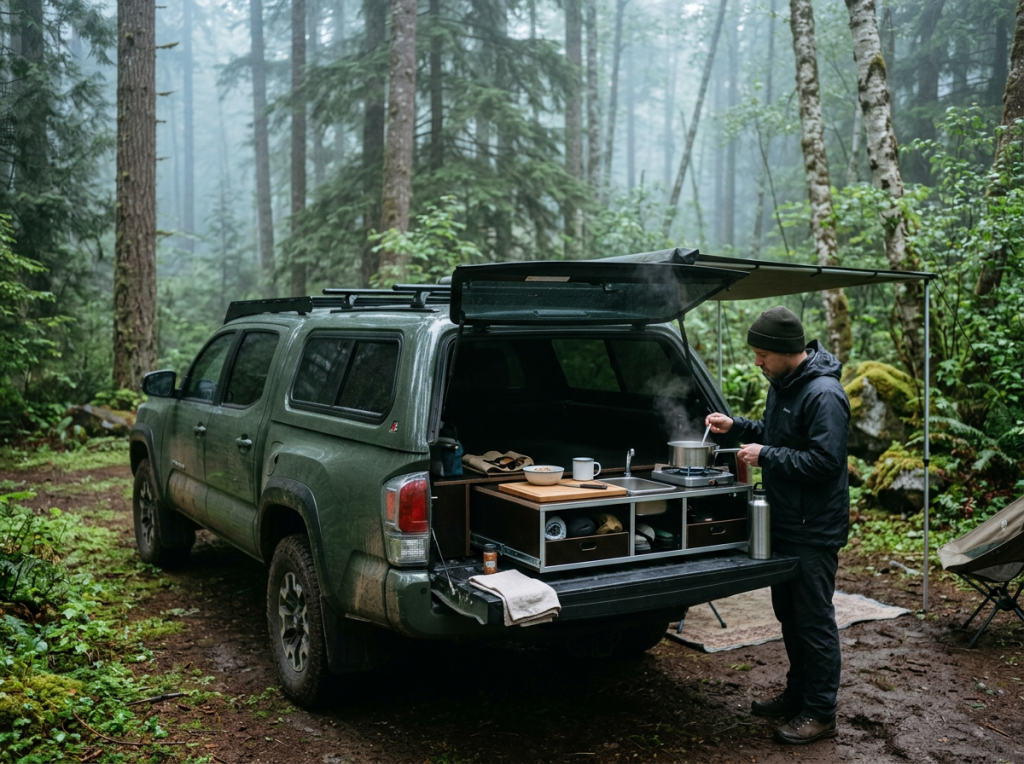
A minimalist overlanding kitchen setup is designed for travelers who value simplicity, speed, and efficiency above all else. This approach is particularly well-suited to solo adventurers, couples, or those embarking on short trips where space and weight are at a premium. The core philosophy is to carry only what is absolutely necessary, reducing both the physical and mental load of camp life.
At the heart of the minimalist kitchen is a single-burner stove, chosen for its compact size and straightforward operation. This stove is typically lightweight and easy to pack, yet versatile enough to handle basic cooking tasks, from boiling water for coffee to preparing a simple one-pot meal. The single burner encourages streamlined meal planning, often favoring recipes that require minimal ingredients and cookware.
Water management in this setup is handled by a 10-liter jerry can, which strikes a balance between portability and sufficient capacity for a day or two of cooking, cleaning, and drinking. The jerry can’s manageable size makes it easy to refill at public taps or natural sources, and it can be stowed securely within the vehicle without taking up excessive space.
Food storage and organization are simplified with a single crate, which holds both food supplies and essential utensils. This crate can be quickly removed from the vehicle and set up at camp, serving as both pantry and prep station. The use of one crate encourages careful packing and prioritization, ensuring that only the most useful and versatile items make the cut.
A collapsible sink adds a touch of convenience without sacrificing space. When not in use, it folds down to a fraction of its size, but when expanded, it provides a dedicated area for washing dishes or rinsing produce. This helps keep the rest of the kitchen area clean and organized, even in the most compact setups.
Finally, a compact cutting board rounds out the minimalist kitchen. Chosen for its durability and small footprint, it provides a stable surface for food prep and can often double as a serving tray or even a makeshift plate in a pinch.
Altogether, the minimalist setup is about embracing the essentials and letting go of excess. It allows for quick setup and teardown, easy packing, and a focus on the experience of travel rather than the logistics of camp life. While it may lack some of the comforts and conveniences of a larger kitchen, it offers unmatched freedom and flexibility, making it ideal for those who prefer to travel light and move fast.
A minimalist overlanding kitchen setup focuses on carrying only the essentials, making it ideal for solo travelers, couples, or short trips where space and weight are limited. It typically includes a single-burner stove for simple meals, a 10-liter jerry can for manageable water storage, and a single crate to organize food and utensils. A collapsible sink provides convenience without taking up space, while a compact cutting board serves multiple purposes. This approach streamlines packing, setup, and cleanup, prioritizing efficiency and freedom over comfort, and is perfect for those who value simplicity and quick mobility on their journeys.
Full Expedition Kitchen
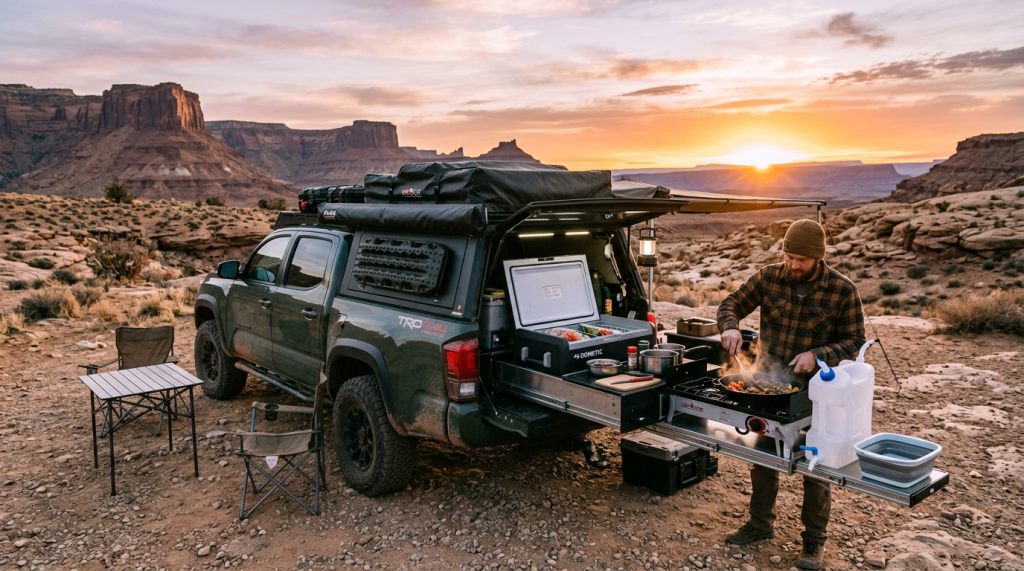
A full expedition kitchen is designed for extended journeys, larger groups, or travelers who want to bring the comforts and capabilities of a home kitchen into the wild. This setup is all about maximizing functionality, organization, and self-sufficiency, allowing for a wide range of cooking styles and the ability to handle diverse culinary needs, even in remote locations.
At the center of this kitchen is a dual-burner stove equipped with a windscreen, which provides the power and flexibility to prepare more elaborate meals. With two burners, it’s possible to cook multiple dishes simultaneously—boiling pasta while sautéing vegetables, for example—making it easier to feed a group or enjoy more varied menus. The windscreen ensures reliable performance in challenging weather, maintaining consistent heat and fuel efficiency.
Organization is elevated by a custom drawer system, often built to fit the specific dimensions of the vehicle. These drawers not only keep cookware, utensils, and pantry items neatly arranged and secure during travel, but they also frequently incorporate an integrated sink. This built-in sink streamlines dishwashing and food prep, with plumbing that connects directly to a large-capacity water tank. A 40-liter water tank, complete with a filtration system, provides ample clean water for drinking, cooking, and cleaning over many days. The filtration system is especially valuable for long expeditions, allowing travelers to safely refill from natural sources and reducing dependence on bottled water.
Workspace is expanded through fold-out counters and tables, which can be deployed at camp to create a generous area for meal prep, serving, or dining. These surfaces are sturdy and easy to clean, supporting everything from chopping vegetables to laying out a buffet for a group. When not in use, they fold away to preserve space and maintain a tidy setup.
For quick access to frequently used items, a MOLLE panel is mounted within the kitchen area. This modular system allows utensils, spices, and small tools to be stored visibly and within arm’s reach, speeding up meal prep and making it easy to adapt the kitchen layout as needs change. The MOLLE panel’s flexibility is especially useful on longer trips, where organization and efficiency become increasingly important.
Finally, the inclusion of a portable fire pit adds a communal and versatile element to the expedition kitchen. Beyond its role in group cooking—such as grilling, roasting, or baking—it serves as a gathering point for warmth and socializing after the day’s adventures. The fire pit also provides a backup cooking method, ensuring that meals can still be prepared if stove fuel runs low or if a traditional campfire experience is desired.
Altogether, the full expedition kitchen transforms the overlanding experience, supporting ambitious culinary endeavors and group meals while maintaining order and convenience. It’s a setup that prioritizes comfort, capability, and resilience, making it possible to thrive in the wild for extended periods without sacrificing the pleasures of good food and good company.
A full expedition kitchen is built for longer journeys and larger groups, offering the functionality and comfort of a home kitchen in remote settings. It features a dual-burner stove with windscreen for versatile cooking, a custom drawer system with an integrated sink for organized storage and easy cleanup, and a large 40-liter water tank with filtration for reliable water supply. Fold-out counters and tables provide ample workspace, while a MOLLE panel keeps utensils and spices accessible. A portable fire pit adds options for group cooking and socializing. This comprehensive setup supports complex meals, efficient organization, and group comfort, making extended overland travel both practical and enjoyable.
Conclusion: Make It Your Own
Crafting the ideal overlanding kitchen is a deeply personal process, shaped by the unique contours of your adventures and the rhythms of your daily life on the road. There is no universal blueprint that fits every journey; instead, the best setups are those that reflect the realities of your terrain, the duration of your trips, the number of people you’re feeding, and your own culinary preferences. A solo traveler navigating rugged mountain passes may prioritize compactness and speed, while a family exploring open deserts for weeks at a time might value storage capacity, comfort, and the ability to prepare more elaborate meals.
The principles of durability, modularity, weight distribution, and ease of access provide a solid starting point, but the real magic happens when you begin to experiment and adapt. Perhaps you discover that a fold-out counter transforms your meal prep, or that a gravity-fed water system saves time and hassle at camp. You might find joy in organizing spices on a MOLLE panel, or realize that a collapsible sink is indispensable for keeping things tidy. Over time, your kitchen will evolve, shaped by trial and error, new destinations, and changing needs.
Ultimately, the goal is to create a space that feels intuitive and welcoming—a kitchen that supports not just the practicalities of cooking, but also the pleasures of sharing meals and stories under the open sky. Don’t be afraid to refine your setup as you go, swapping out gear, rethinking layouts, and embracing new ideas. The perfect overlanding kitchen is the one that feels like home, no matter how far you roam or how wild the landscape becomes.


 UTAZCO Overland
Leave a Reply