
Summary
Illumination tools are indispensable in any context where firearms may be used in low-light conditions. The ability to positively identify a potential threat before engaging is not just a tactical necessity but a moral and legal imperative. Darkness, by its very nature, introduces ambiguity and risk, making the choice and use of lighting tools a subject of serious consideration for home defenders, law enforcement officers, military personnel, and responsible armed citizens alike.
Weapon-mounted lights (WMLs) and handheld flashlights are the two primary solutions for low-light illumination in conjunction with firearms. While some frame the discussion as a binary choice, the reality is more nuanced. Each tool offers unique advantages and presents specific limitations, and their optimal use often depends on the context, environment, and the user’s training.
Weapon-mounted lights are designed to be affixed directly to the firearm, allowing the user to illuminate a target while maintaining a two-handed firing grip. This integration offers several clear advantages. First, it enables rapid target identification and engagement, as the light is always aligned with the muzzle. In high-stress situations—such as a home invasion or a dynamic law enforcement encounter—this can be a decisive factor, allowing the user to keep both hands on the weapon and maintain maximum control. WMLs also facilitate the use of cover and movement, as the shooter does not need to juggle a separate light source.
However, weapon-mounted lights are not without drawbacks. The most significant is that illuminating an area with a WML means pointing the firearm at whatever is being lit. This can create serious safety and legal concerns, especially in situations where the presence of a threat is uncertain. For example, using a WML to search a home after hearing a suspicious noise could result in unintentionally muzzling a family member or innocent person. Additionally, WMLs can be less versatile for general utility tasks—such as searching for a lost item or navigating a dark hallway—where pointing a firearm would be inappropriate or unsafe.
Handheld flashlights, on the other hand, offer greater flexibility and a higher margin of safety in many scenarios. Because the light is independent of the firearm, the user can illuminate areas, objects, or people without necessarily pointing a weapon at them. This is particularly important in situations where threat identification is ambiguous or when interacting with non-hostile individuals. Handheld lights are also useful for a wide range of non-tactical tasks, making them a more versatile everyday tool.
The primary limitation of handheld flashlights in a defensive context is that they typically require the user to adopt a one-handed shooting grip or to use a less stable two-handed technique, such as the Harries or Rogers methods. This can reduce accuracy and weapon control, especially under stress. Additionally, managing a flashlight and a firearm simultaneously demands a higher level of training and coordination, which may not be realistic for all users.
In practice, the most effective approach is often to integrate both tools into one’s equipment and training regimen. Handheld flashlights are ideal for initial investigation, general navigation, and situations where the presence of a threat is uncertain. If a threat is identified and a firearm must be drawn, a weapon-mounted light can provide immediate, hands-free illumination for target identification and engagement. This layered approach maximizes both safety and tactical effectiveness, allowing the user to adapt to a wide range of scenarios.
Ultimately, the choice between weapon-mounted lights and handheld flashlights should not be seen as mutually exclusive. Instead, understanding the strengths and limitations of each—and training accordingly—enables responsible armed citizens and professionals to make informed decisions that prioritize both safety and effectiveness in low-light environments.
Understanding Weapon-Mounted Lights
What Is a Weapon-Mounted Light?
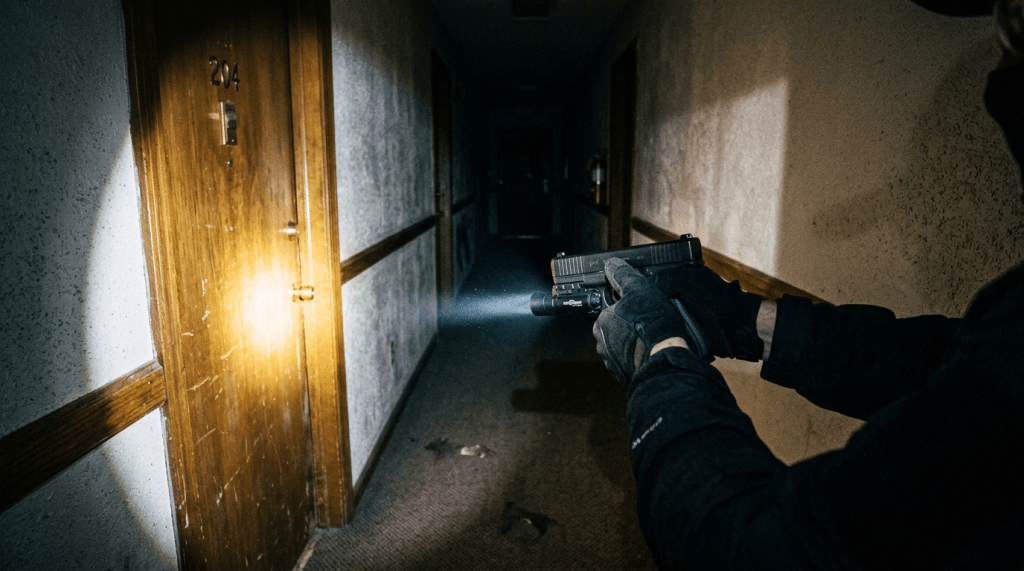
A weapon-mounted light, often abbreviated as WML, is a specialized illumination device engineered to attach securely to a firearm, most commonly via an accessory rail system such as the ubiquitous Picatinny or M-LOK rails found on modern handguns, rifles, and shotguns. The primary function of a WML is to provide a powerful, focused beam of light that travels in line with the firearm’s bore, ensuring that whatever the muzzle is pointed at is also illuminated. This alignment is crucial in low-light or no-light environments, where the ability to quickly and accurately identify potential threats can mean the difference between life and death.
Modern weapon-mounted lights are the product of decades of technological advancement. They are typically compact, rugged, and constructed from durable materials such as aircraft-grade aluminum to withstand the recoil and harsh conditions associated with firearms use. The light output, measured in lumens, is often intense—far surpassing that of standard household flashlights—enabling the user to not only see but also potentially disorient an adversary with a sudden burst of brightness. Many WMLs feature user-friendly controls, such as ambidextrous switches or pressure pads, allowing for momentary or constant-on activation without requiring the shooter to alter their grip or compromise weapon control.
The integration of a light directly onto the firearm offers several practical advantages. It allows the shooter to maintain a proper two-handed grip, which is essential for accuracy, recoil management, and overall weapon control. This is particularly important in high-stress situations, where fine motor skills deteriorate and simplicity of operation becomes paramount. With a WML, the act of illuminating a target is seamlessly combined with aiming, reducing the cognitive load on the user and enabling faster, more decisive action.
Weapon-mounted lights are available in a variety of configurations to suit different firearms and operational needs. Some models are designed specifically for handguns, with low-profile housings that minimize bulk and facilitate concealed carry. Others are tailored for long guns, offering higher output and additional features such as integrated laser aiming modules or strobe functions. Leading manufacturers in this field, such as SureFire, Streamlight, and Modlite, have established reputations for reliability and innovation, continually pushing the boundaries of what these compact lighting tools can achieve.
A weapon-mounted light is more than just a flashlight attached to a gun. It is a purpose-built tool that enhances the user’s ability to identify, assess, and, if necessary, engage threats in environments where visibility is compromised. Its design reflects a careful balance between power, durability, ergonomics, and ease of use, making it an essential component of modern defensive and tactical firearms setups.
Advantages of a Weapon-Mounted Light
Improved Shooting Grip
The integration of a weapon-mounted light fundamentally transforms the way a shooter handles their firearm in low-light situations. By affixing the light directly to the weapon, the user is able to maintain a natural, two-handed grip—often referred to as the “master grip”—which is the foundation of effective marksmanship. This grip maximizes stability, control, and recoil management, all of which are critical for accurate and rapid follow-up shots, especially under stress.
In contrast, traditional handheld flashlight techniques, such as the Harries, Rogers, or FBI methods, require the shooter to divide their attention and dexterity between holding the firearm and manipulating a separate light source. These techniques often force the shooter into awkward or less stable positions, compromising the support hand’s ability to assist with recoil control and sight alignment. The result can be diminished accuracy, slower target acquisition, and increased fatigue during prolonged use.
With a weapon-mounted light, the illumination is always perfectly aligned with the muzzle, ensuring that wherever the firearm is pointed, the target area is fully lit. This seamless integration allows the shooter to focus entirely on the fundamentals of shooting—grip, stance, sight picture, and trigger control—without the distraction or physical challenge of managing a separate flashlight. The shooter’s support hand remains firmly on the firearm, providing the leverage and steadiness needed for precise shot placement.
Moreover, the ability to activate the light with a simple press of a switch or pressure pad—often designed for ambidextrous use—means that the shooter does not have to break their grip or shift their hands to illuminate a threat. This efficiency is especially valuable in high-adrenaline encounters, where fine motor skills are degraded and every fraction of a second counts.
Ultimately, the weapon-mounted light’s contribution to improved shooting grip is not just a matter of comfort or convenience. It directly enhances the shooter’s ability to perform under pressure, increasing both accuracy and safety in situations where positive threat identification and decisive action are required.
A weapon-mounted light allows shooters to maintain a stable, two-handed grip on their firearm in low-light situations, which greatly improves control, accuracy, and recoil management. Unlike handheld flashlight techniques that force shooters into awkward positions and divide their focus, a weapon-mounted light keeps illumination aligned with the muzzle and lets the shooter concentrate on proper marksmanship. This integration not only streamlines operation and reduces fatigue but also enhances performance and safety under stress, making it easier to identify threats and respond effectively.
Faster Target Engagement
The alignment of a weapon-mounted light with the firearm’s muzzle creates a direct relationship between where the shooter is aiming and what is illuminated. This synergy is especially significant in high-stress, low-light scenarios, where every moment counts and hesitation can have serious consequences. When the shooter brings the firearm up to a ready position, the beam of the weapon-mounted light instantly reveals whatever is in the line of fire, eliminating the need to coordinate the movement of a separate flashlight with the firearm.
This integration streamlines the process of target identification and engagement. As soon as the shooter points the firearm, the area of interest is illuminated, allowing for immediate assessment of whether a potential threat is present. If a threat is identified, the shooter can transition seamlessly from identification to engagement, without having to adjust their grip or reposition a handheld light. This efficiency is particularly valuable in dynamic situations, such as home defense or law enforcement operations, where threats may appear suddenly and require split-second decisions.
Additionally, the consistent alignment of the light and muzzle reduces the cognitive load on the shooter. There is no need to mentally reconcile two separate points of focus—the firearm and the flashlight—because both are always directed at the same target. This not only speeds up the process of acquiring and engaging targets but also minimizes the risk of errors or hesitation caused by fumbling with equipment.
In essence, the weapon-mounted light acts as an extension of the shooter’s intent, ensuring that wherever the firearm is directed, the shooter has a clear and immediate view of the potential threat. This capability can be the difference between a successful defensive action and a missed opportunity, making weapon-mounted lights a critical asset for anyone who may need to respond quickly and decisively in the dark.
A weapon-mounted light, aligned with the firearm’s muzzle, ensures that whatever the shooter aims at is immediately illuminated. This direct alignment speeds up target identification and engagement, especially in high-stress, low-light situations, by removing the need to coordinate a separate flashlight. As a result, shooters can quickly assess and respond to threats without fumbling or hesitation, making weapon-mounted lights invaluable for fast, decisive action in the dark.
Enhanced Weapon Control
Enhanced weapon control is a critical benefit of using a weapon-mounted light, particularly because it allows the shooter to maintain a solid two-handed grip on the firearm. This grip is foundational to effective shooting, as it stabilizes the weapon, absorbs recoil, and enables the shooter to recover quickly between shots. When both hands are firmly on the firearm, the shooter can better manage the upward and rearward force generated by each shot, keeping the muzzle on target and reducing the time needed to realign the sights for follow-up shots.
This advantage is especially pronounced with handguns, which are inherently more challenging to control than long guns due to their lighter weight and shorter sight radius. With a handgun, the quality of the grip directly influences how well the shooter can manage recoil and maintain accuracy. If the shooter is forced to use one hand to operate a separate flashlight, the support hand is no longer available to help control the firearm. This can lead to increased muzzle rise, slower recovery between shots, and a greater likelihood of shots straying from the intended target.
By contrast, a weapon-mounted light allows the shooter to keep both hands on the gun at all times, maximizing leverage and stability. This not only improves the shooter’s ability to deliver accurate, rapid fire but also enhances safety, as the firearm is less likely to be dropped or mishandled under stress. The confidence that comes from having full control of the weapon can also reduce anxiety and hesitation, allowing the shooter to focus on threat assessment and decision-making rather than struggling with equipment.
In dynamic or high-pressure situations, such as defensive encounters or law enforcement operations, the ability to maintain optimal weapon control can be the deciding factor in achieving a successful outcome. The integration of a weapon-mounted light ensures that the shooter does not have to compromise grip or control for the sake of illumination, making it a valuable asset for anyone who may need to use a firearm in low-light conditions.
A weapon-mounted light allows shooters to maintain a solid two-handed grip, which is essential for stabilizing the firearm, managing recoil, and enabling quick, accurate follow-up shots—especially with handguns. This full control improves both performance and safety, as the shooter doesn’t have to sacrifice grip to operate a separate flashlight. In high-pressure situations, this advantage can be crucial, making weapon-mounted lights a valuable tool for effective firearm use in low-light conditions.
Reduced Complexity During Stress
In moments of acute stress, such as those encountered during a defensive shooting or a sudden threat in the dark, the body’s physiological response can significantly impair fine motor skills. Adrenaline surges, heart rate spikes, and tunnel vision can all make even simple tasks feel far more complicated. Under these conditions, the ability to perform complex, coordinated actions—like manipulating a firearm and a separate flashlight at the same time—becomes much more difficult.
When a shooter is forced to manage both a gun and a handheld light, they must constantly shift their attention and dexterity between the two objects. This can lead to fumbling, dropped equipment, or improper grip, all of which can compromise safety and effectiveness. The need to coordinate the direction of the light with the aim of the firearm adds another layer of complexity, increasing the risk of hesitation or mistakes at a critical moment.
A weapon-mounted light streamlines this process by integrating illumination directly with the firearm. The shooter no longer has to worry about aligning two separate tools or maintaining a grip on both. Instead, activating the light becomes a simple, instinctive action—often just a press of a finger or thumb—allowing the shooter to keep their focus on the threat and their hands firmly on the weapon. This reduction in cognitive and physical demands is especially valuable when time is of the essence and the margin for error is slim.
By minimizing the number of tasks the shooter must perform under stress, a weapon-mounted light helps ensure that their response is as efficient and effective as possible. It allows them to devote their attention to assessing the situation, making decisions, and, if necessary, defending themselves, rather than struggling with equipment. In this way, the integration of a light onto the firearm is not just a matter of convenience—it is a critical factor in maximizing performance and safety when it matters most.
During high-stress situations, fine motor skills often deteriorate, making it difficult to coordinate handling both a firearm and a separate flashlight. A weapon-mounted light simplifies this process by combining illumination and aiming into one action, allowing the shooter to focus on the threat and maintain control of the weapon. This integration reduces the risk of mistakes and enhances both safety and effectiveness when quick, decisive action is needed most.
Disadvantages of a Weapon-Mounted Light
The Muzzle Covers Everything You Illuminate
One of the most critical disadvantages of a weapon-mounted light is the inherent safety risk that comes from the fact that the light’s beam is always aligned with the firearm’s muzzle. This means that in order to illuminate or identify anything in the dark, the shooter must also point the gun at it. In practical terms, this creates a significant dilemma, especially in situations where the nature of the potential threat is unknown.
Consider a scenario where you hear an unexpected noise in your home late at night. Your instinct may be to investigate, and a weapon-mounted light can certainly help you see what’s in the darkness. However, as you move through your home, every time you use the light to check a corner, hallway, or room, you are also directing the muzzle of your firearm at whatever is in that space. If the source of the noise turns out to be a family member returning home late, a pet wandering the house, or even just an object that has fallen, you have inadvertently violated one of the cardinal rules of firearm safety: never point a gun at anything you are not willing to destroy.
This risk is not just theoretical. In the stress and confusion of a low-light encounter, the line between threat and non-threat can be blurred, and the consequences of a negligent discharge or a mistaken identification can be tragic. The use of a weapon-mounted light as a general-purpose flashlight is therefore highly problematic. It is not appropriate for routine searching or navigation in environments where innocent people or valuable property may be present.
The safety concern is compounded by the fact that, in the heat of the moment, even experienced shooters can make mistakes. The natural desire to see what’s ahead can override training, leading to situations where the muzzle is unintentionally swept across people or objects that should never be in the line of fire. This is why many experts emphasize that weapon-mounted lights should be used with extreme caution and only in circumstances where a potential threat has already been identified or is highly likely.
Ultimately, while weapon-mounted lights offer undeniable tactical advantages, their use demands a heightened level of discipline and awareness. The risk of violating fundamental safety principles is ever-present, and users must be constantly vigilant to ensure that the convenience of integrated illumination does not come at the expense of safety.
A major disadvantage of weapon-mounted lights is that illuminating anything requires pointing the firearm at it, which poses serious safety risks—especially when the threat is unclear. This can lead to unintentionally aiming at family members, pets, or objects, violating a core rule of firearm safety. Using a weapon-mounted light as a general-purpose flashlight is therefore dangerous, and even experienced shooters can make mistakes under stress. As a result, weapon-mounted lights require strict discipline and should only be used when a real threat is likely, to avoid compromising safety.
Limited Utility for Everyday Tasks
The inherent design of a weapon-mounted light restricts its usefulness to situations where the presence of a firearm is appropriate and justified. Because the light is physically attached to the gun, it cannot be conveniently or safely used for the countless everyday tasks that require illumination. For example, if you need to check a fuse box during a power outage, using a weapon-mounted light would mean bringing a firearm into a non-threatening, routine environment—something that is not only impractical but also potentially alarming or dangerous to others around you.
Similarly, activities like searching a campsite at night, reading a map, or inspecting the engine of a vehicle are all common scenarios where a flashlight is needed, but the presence of a firearm would be unnecessary and even inappropriate. The bulk and weight of a firearm, combined with the safety concerns of handling a loaded weapon in these situations, make a weapon-mounted light a poor substitute for a dedicated handheld flashlight. In fact, attempting to use a weapon-mounted light for such tasks could lead to accidental muzzle sweeps of people or property, further compounding safety risks.
Moreover, the social and legal implications of brandishing a firearm simply to use its attached light cannot be overlooked. In public or shared spaces, drawing a gun to illuminate a dark area could easily be misinterpreted as a threat, potentially escalating a benign situation into a dangerous one. Even in private settings, the routine handling of a firearm for non-defensive purposes increases the risk of negligent discharges or other accidents.
Ultimately, while weapon-mounted lights excel in tactical or defensive scenarios where rapid threat identification is critical, their utility does not extend to the everyday, non-tactical uses that make handheld flashlights so indispensable. For most daily tasks, a compact, easily accessible handheld light remains the safer, more practical, and socially responsible choice.
Weapon-mounted lights are only practical in situations where having a firearm is justified, making them unsuitable for everyday tasks like checking a fuse box, reading a map, or searching a campsite. Using a gun-mounted light for routine activities is not only impractical and potentially dangerous, but it can also alarm others or create legal issues. For daily illumination needs, a handheld flashlight is far safer, more convenient, and socially appropriate.
Added Weight and Bulk
Even though advancements in technology have made weapon-mounted lights more compact and lightweight than ever before, their addition to a firearm inevitably increases both the weight and the overall dimensions of the weapon. This extra mass, while often modest, can noticeably affect the balance and handling characteristics of the firearm, especially for handguns where even small changes in weight distribution can influence how the gun feels during use.
For those who carry a firearm concealed, the presence of a weapon-mounted light introduces additional challenges. The increased bulk can make the firearm more difficult to conceal effectively under everyday clothing, potentially leading to printing—the visible outline of the gun through fabric—which can compromise discretion. The added size may also make the firearm less comfortable to carry for extended periods, as it can dig into the body or shift awkwardly during movement.
Furthermore, the integration of a weapon-mounted light typically necessitates the use of a specialized holster designed to accommodate both the firearm and the attached light. These holsters are often larger and less readily available than standard models, limiting options for users and sometimes increasing cost. The process of drawing and reholstering the firearm can also be affected, as the holster must securely retain the weapon with the light attached, which can alter the draw stroke or require additional training to master.
In sum, while the tactical advantages of a weapon-mounted light are clear, the trade-offs in terms of added weight, bulk, and the need for specialized gear can be significant—particularly for those who prioritize comfort, concealment, and ease of everyday carry. These factors must be carefully considered by anyone thinking about equipping their firearm with a weapon-mounted light, as they can impact both the practicality and the overall user experience.
Although weapon-mounted lights are now more compact, they still add weight and bulk to a firearm, which can affect its balance and handling—especially for handguns. For concealed-carry users, this extra size makes the gun harder to hide and less comfortable to carry, often requiring a specialized, bulkier holster. These factors can complicate daily carry and should be carefully weighed against the tactical benefits of having a weapon-mounted light.
Increased Equipment Cost
Choosing to equip a firearm with a weapon-mounted light represents a meaningful financial investment that extends well beyond the initial purchase of the light itself. High-quality weapon lights from reputable manufacturers are engineered to withstand the rigors of recoil, harsh environments, and frequent use, which means they often come with a premium price tag. Opting for a cheaper, less reliable model can compromise performance and safety, making it essential for serious users to invest in proven, durable equipment.
However, the expenses do not stop at the light. Once a weapon-mounted light is added, the firearm’s dimensions change, necessitating a new holster specifically designed to accommodate both the gun and the attached light. These specialized holsters are typically more expensive and less widely available than standard models, and finding one that fits both the firearm and the chosen light can require additional research and expense.
There are also ongoing costs to consider. Weapon-mounted lights rely on batteries, and maintaining peak performance means keeping fresh, reliable power sources on hand. Some lights use proprietary batteries, which can be more costly and harder to find than standard options. Over time, the need for replacement batteries or even bulbs adds to the total cost of ownership.
Training is another critical, often overlooked, aspect of the investment. Using a weapon-mounted light effectively and safely requires practice, both in terms of manipulating the light’s controls and integrating its use into defensive shooting techniques. This may mean additional range time, specialized low-light training courses, or even private instruction—all of which come with their own costs.
Altogether, the decision to add a weapon-mounted light is not just about buying a single accessory. It involves a series of related purchases and commitments, each of which contributes to the overall expense. For those who are serious about maximizing their defensive capabilities, these costs are often justified, but they should be anticipated and factored into any decision about upgrading a firearm setup.
Equipping a firearm with a weapon-mounted light involves significant costs beyond just buying the light itself. High-quality lights are expensive, and adding one usually requires purchasing a specialized holster, ongoing batteries or replacement parts, and investing in extra training to use the setup safely and effectively. These combined expenses can add up quickly, making the overall investment much greater than it might first appear.
Understanding Handheld Flashlights
What Is a Handheld Flashlight?
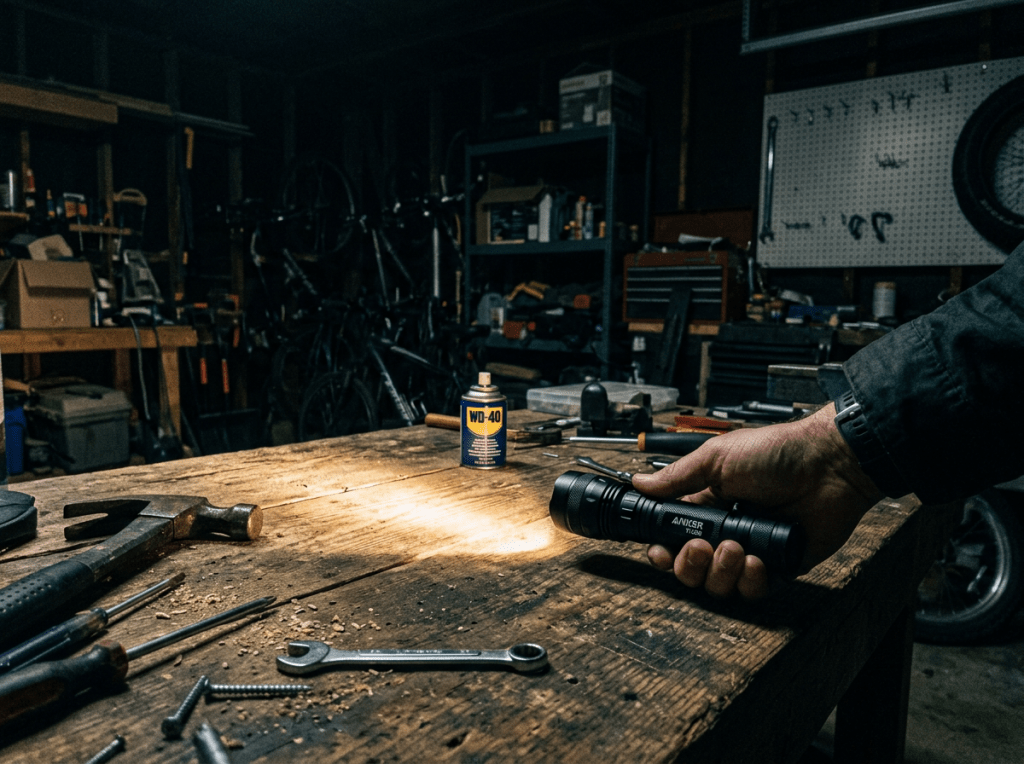
A handheld flashlight is a portable, self-contained source of light designed to be operated independently of any other equipment, including firearms. Unlike weapon-mounted lights, which are physically attached to a gun and serve a specialized tactical purpose, handheld flashlights are versatile tools that can be used in virtually any situation where illumination is needed. Their design typically features a cylindrical body that fits comfortably in the hand, with a simple on/off switch and, in many modern models, multiple brightness settings or beam patterns to suit different tasks.
The utility of handheld flashlights extends far beyond tactical or defensive scenarios. They are indispensable for everyday activities such as navigating dark environments, searching for lost items, performing repairs, or providing emergency lighting during power outages. Because they are not tied to a firearm, handheld flashlights can be safely and appropriately used in any setting—at home, at work, outdoors, or in public spaces—without raising concerns or causing alarm.
For those who carry firearms, handheld flashlights offer a critical advantage: they allow the user to illuminate an area or identify a potential threat without having to draw or point a weapon. This is especially important in situations where the presence of a threat is uncertain, or where innocent people may be present. The ability to use a light independently of a firearm supports responsible decision-making and adherence to fundamental safety principles, such as never pointing a gun at anything you do not intend to shoot.
Handheld flashlights have evolved significantly over the years, with advancements in LED technology, battery efficiency, and rugged construction making them more powerful, reliable, and compact than ever before. Many models are designed to withstand harsh conditions, featuring water-resistant or impact-resistant housings, and can be easily carried in a pocket, bag, or on a belt for quick access.
Ultimately, the handheld flashlight remains a foundational piece of equipment for anyone who values preparedness and safety. Its standalone nature ensures that it is always appropriate to use, regardless of the context, making it an essential tool for both armed and unarmed individuals alike.
A handheld flashlight is a versatile, portable light source that operates independently of any firearm, making it suitable for a wide range of everyday and emergency situations. Unlike weapon-mounted lights, handheld flashlights can be safely used in any environment without causing concern, and they allow users—including those who carry firearms—to illuminate areas or identify potential threats without pointing a weapon. Modern handheld flashlights are powerful, durable, and compact, making them essential tools for both armed and unarmed individuals who prioritize safety and preparedness.
Advantages of a Handheld Flashlight
Superior Identification Capability
A handheld flashlight’s most significant advantage lies in its ability to provide illumination completely independent of a firearm, which fundamentally enhances both safety and versatility. When investigating a suspicious noise in the middle of the night, searching a darkened room, or simply trying to identify someone approaching your property, a handheld flashlight allows you to direct light exactly where it’s needed without the inherent risk of pointing a gun at whatever you’re trying to see. This separation of light and lethal force is crucial, especially in environments where the presence of family members, friends, or bystanders is possible.
By using a handheld flashlight, you can thoroughly scan an area, illuminate corners, or check behind obstacles without ever having to draw or aim a firearm. This not only reduces the risk of a tragic accident but also helps de-escalate situations that might otherwise become tense or dangerous if a weapon were introduced prematurely. The ability to identify people, objects, or potential threats from a safe distance, and without the implication of force, supports responsible decision-making and upholds the core tenets of firearm safety—most notably, the rule that you should never point a gun at anything you do not intend to shoot.
Furthermore, handheld flashlights are invaluable in ambiguous situations where the nature of a potential threat is unclear. For example, if you hear a noise in your backyard, using a handheld light allows you to investigate without alarming neighbors or family members by brandishing a firearm. This approach not only keeps everyone safer but also helps maintain a sense of normalcy and calm, as the presence of a flashlight is far less likely to be misinterpreted than the presence of a gun.
In essence, the superior identification capability of a handheld flashlight empowers users to gather information, make informed decisions, and maintain control over a situation—all while adhering to the highest standards of safety and responsibility. This makes the handheld flashlight an indispensable tool for anyone who values both preparedness and the ethical handling of firearms.
A handheld flashlight’s key advantage is that it provides light without involving a firearm, greatly increasing safety and flexibility. It allows users to investigate, search, or identify people without the risk or implication of pointing a gun, which helps prevent accidents and de-escalates potentially tense situations. This separation of light and force supports responsible decision-making and aligns with safe firearm handling, making handheld flashlights essential for anyone prioritizing safety and preparedness.
Everyday Practicality
The primary strength of a handheld flashlight is its ability to deliver illumination independently of any weapon, which fundamentally transforms how people approach low-light situations. When you hold a flashlight in your hand, you have the freedom to direct its beam wherever you need it—whether that’s down a hallway, into a dark corner, or across a yard—without the burden or danger of having a firearm involved. This independence is especially important in everyday life, where most situations requiring light are not emergencies and do not justify the presence of a gun.
By using a handheld flashlight, you can safely investigate noises, search for lost items, or check on family members without creating unnecessary alarm or risk. If you hear a bump in the night, for example, you can illuminate the area to determine if it’s just a pet, a family member, or something else entirely, all without ever drawing a weapon. This approach not only prevents the possibility of a tragic accident but also helps keep interactions calm and non-threatening. The mere act of shining a flashlight is far less likely to escalate a situation or be misinterpreted as a show of force compared to brandishing a firearm.
This separation between light and lethal force is also crucial for responsible firearm handling. It allows you to adhere to the fundamental safety rule of never pointing a gun at anything you do not intend to shoot. In ambiguous or uncertain situations, where the presence of a threat is unclear, a handheld flashlight gives you the ability to gather information and make informed decisions without the pressure or risk that comes with having a firearm in hand. This not only protects those around you but also supports your own peace of mind, knowing that you are acting with caution and care.
Ultimately, the flexibility and safety offered by a handheld flashlight make it an indispensable tool for anyone who values preparedness and ethical conduct. It empowers you to respond effectively to the unknown, maintain control over your environment, and uphold the highest standards of safety—qualities that are essential whether you are armed or not.
A handheld flashlight’s main advantage is that it provides light without involving a firearm, allowing you to safely investigate, search, or identify people without risk or escalation. This separation of illumination from lethal force prevents accidents, supports calm interactions, and upholds safe firearm practices, making handheld flashlights essential for anyone focused on safety and responsible decision-making.
Greater Flexibility
The independent nature of a handheld flashlight offers a level of flexibility that simply isn’t possible with a weapon-mounted light. Because the flashlight is not physically attached to a firearm, you can direct its beam wherever you need it—regardless of where your gun is pointed. This means you can illuminate areas to your left or right, above your head, or even behind you, all without having to move or reposition your firearm. This capability is especially valuable in situations where you need to search a wide area, investigate multiple points of interest, or maintain awareness of your surroundings without compromising your defensive posture.
For example, if you’re clearing a room or moving through a dark environment, you might want to check behind furniture, illuminate a staircase, or scan a ceiling corner where a threat could be hiding. With a handheld light, you can do all of this while keeping your firearm safely pointed in a low-ready or safe direction, minimizing the risk of accidentally muzzling something or someone you don’t intend to shoot. This not only enhances safety but also allows you to gather more information about your environment, which is critical for making sound tactical decisions.
In addition, the ability to separate your light source from your weapon can be used to your advantage in certain tactical scenarios. For instance, you might use the flashlight to create a distraction or to draw attention away from your actual position, giving you the opportunity to observe a threat’s reaction or to reposition yourself more safely. You can also use the light to signal to others, communicate silently, or illuminate a path for teammates or family members without ever having to expose your firearm.
Ultimately, the greater flexibility provided by a handheld flashlight means you’re not limited by the direction of your muzzle. You can adapt to changing circumstances, investigate potential threats more thoroughly, and maintain a higher level of control over both your light and your weapon. This adaptability is a significant advantage, particularly in complex or unpredictable situations where the ability to respond creatively and safely can make all the difference.
Useful Even When Unarmed
A handheld flashlight’s utility extends far beyond situations involving firearms, making it an indispensable tool in everyday life. Unlike a weapon-mounted light, which is only functional when attached to a gun and is generally reserved for defensive or tactical scenarios, a handheld flashlight can be used in countless ordinary and emergency situations. Whether you’re navigating a dark parking lot, searching for something under the couch, dealing with a power outage, or assisting someone on the roadside at night, a handheld flashlight provides immediate, practical illumination without any association with a weapon.
This versatility means that a handheld flashlight is always relevant, regardless of your circumstances or environment. You don’t need to be armed or even think about self-defense to benefit from having a reliable source of light. Its usefulness is universal—children, adults, and seniors alike can carry and operate a handheld flashlight safely. It can be kept in a pocket, purse, glove compartment, or backpack, ready to be deployed at a moment’s notice for any task that requires visibility.
Moreover, the non-threatening nature of a handheld flashlight makes it appropriate for use in public spaces, workplaces, and social settings where the presence of a firearm would be unnecessary or even alarming. You can use it to help others, signal for assistance, or simply light your way without drawing unwanted attention or causing concern. In contrast, a weapon-mounted light is not only impractical but also potentially dangerous or illegal to use in most non-defensive situations, as it requires the presence and handling of a firearm.
Ultimately, the enduring value of a handheld flashlight lies in its independence from any weapon system. It is a tool for everyone, in any situation, and its usefulness is limited only by the imagination and needs of the user. This makes it a fundamental piece of everyday carry gear and emergency preparedness, ensuring that you are never left in the dark, whether you are armed or not.
A handheld flashlight is valuable in everyday life because it provides practical illumination in countless situations, regardless of whether you’re armed. Unlike weapon-mounted lights, which are only useful with a firearm and mostly for tactical scenarios, handheld flashlights can be safely and appropriately used by anyone, anywhere, for tasks ranging from finding lost items to handling emergencies. Their versatility and non-threatening nature make them essential tools for daily use and preparedness.
Disadvantages of a Handheld Flashlight
Reduced Shooting Efficiency
When a situation escalates to the point where a firearm must be used in conjunction with a handheld flashlight, the limitations of this setup become immediately apparent. The act of holding a flashlight in one hand and a gun in the other fundamentally alters the shooter’s mechanics. Instead of being able to employ a stable, two-handed grip—which is the gold standard for accuracy, recoil management, and rapid follow-up shots—the shooter is forced to rely on a one-handed grip or adopt a specialized technique that attempts to compensate for the lack of support.
There are several established methods for using a handheld flashlight alongside a firearm, such as the Harries, Rogers, or FBI techniques. Each of these methods seeks to provide some measure of stability and control, but none can truly match the consistency and steadiness of a proper two-handed grip. The shooter’s support hand, which would normally help absorb recoil and keep the sights aligned, is now occupied with managing the flashlight. This division of focus and physical effort can lead to diminished accuracy, slower target acquisition, and increased fatigue—especially in high-stress or prolonged encounters.
Additionally, the need to manipulate both the flashlight and the firearm simultaneously introduces complexity at a time when simplicity is most valuable. Under stress, fine motor skills deteriorate, and the likelihood of fumbling or making mistakes increases. The shooter may struggle to keep the light directed at the target while also maintaining a safe and effective grip on the firearm. This can result in the light drifting off target, the gun being improperly aligned, or even the accidental dropping of the flashlight.
Ultimately, while handheld flashlights offer unmatched versatility and safety in most situations, their use in conjunction with a firearm comes with significant trade-offs. The reduction in shooting efficiency is a critical consideration for anyone who may need to defend themselves in low-light conditions, underscoring the importance of training and practice to mitigate these challenges as much as possible.
Using a handheld flashlight with a firearm reduces shooting efficiency because it prevents a stable two-handed grip, making it harder to control recoil, maintain accuracy, and quickly acquire targets. Specialized techniques can help, but none fully match the steadiness of a traditional grip. Managing both the light and the gun adds complexity and increases the risk of mistakes, especially under stress, making this setup less effective in defensive situations.
Increased Training Requirements
Mastering the use of a handheld flashlight in conjunction with a firearm is not something that comes naturally or can be improvised in the heat of the moment. It demands a deliberate commitment to training, as the coordination required to manage both tools simultaneously is far more complex than simply operating a firearm alone. Each of the established techniques—whether it’s the Harries, Rogers, FBI, or neck-index method—offers its own approach to balancing illumination and weapon control, but none are intuitive without practice.
For example, the Harries technique involves bracing the back of the hands together to create a semblance of stability, while the Rogers method requires a specific grip on the flashlight that allows for momentary activation. The FBI technique keeps the light away from the body to reduce the risk of drawing fire, and the neck-index method positions the light near the head for quick alignment with the eyes. Each method has its own learning curve, and each presents unique challenges in terms of maintaining a consistent beam on the target, managing recoil, and transitioning between searching and shooting.
Training with these techniques is not just about learning the motions; it’s about building muscle memory so that, under stress, the actions become automatic. Stressful situations degrade fine motor skills and decision-making, so only repeated, realistic practice can ensure that the shooter can effectively use both the flashlight and the firearm when it matters most. This means dedicating time at the range to low-light drills, practicing drawing and activating the flashlight, and integrating these movements into defensive scenarios.
Additionally, training must address the transitions between searching, identifying, and engaging a threat, as well as the safe manipulation of both the firearm and the flashlight. This level of preparation is essential for minimizing the risk of fumbling, dropping equipment, or making critical errors in judgment during a real encounter.
Ultimately, the increased training requirements for using a handheld flashlight with a firearm are significant. Those who wish to be proficient must invest in regular, focused practice to ensure that their skills are reliable under pressure. This commitment to training is essential for maximizing the effectiveness of handheld light techniques and for maintaining the highest standards of safety and performance in low-light defensive situations.
Effectively using a handheld flashlight with a firearm requires dedicated and repeated training, as the coordination and techniques involved are complex and not intuitive. Methods like Harries, Rogers, FBI, and neck-index each have unique challenges and demand practice to build the muscle memory needed for reliable performance under stress. Regular, focused training is essential to ensure safe, efficient use of both tools in low-light defensive situations.
More Equipment to Manage
When considering the use of a handheld flashlight, one of the primary challenges is the necessity to manage an additional piece of equipment. Unlike weapon-mounted or headlamps, a handheld flashlight is not integrated into your primary gear setup. This means you must consciously remember to bring it, ensure it is accessible, and keep track of its location on your person or in your bag. In high-stress or rapidly changing scenarios—such as emergencies, tactical situations, or even simple outdoor navigation at night—this extra step can introduce friction and delay.
The process of retrieving a handheld flashlight often requires you to divert your attention from the situation at hand. For example, if you are suddenly plunged into darkness or need to illuminate a threat or hazard, you must first locate the flashlight, extract it from a pocket or pouch, and then activate it. Each of these steps takes time and can be complicated by adrenaline, low visibility, or the need to use your hands for other tasks, such as operating a weapon, carrying equipment, or assisting others.
Furthermore, once the flashlight is in use, you are now dedicating one hand to holding and manipulating it. This can limit your dexterity and ability to perform other actions simultaneously. In contrast, integrated lighting solutions allow for hands-free operation, enabling you to maintain a two-handed grip on tools or weapons, climb, or render aid without sacrificing illumination.
The need to manage a handheld flashlight adds cognitive and physical load, potentially slowing your response and reducing your effectiveness during critical moments. This is especially pronounced in situations where every second counts and multitasking is essential.
Potentially Slower Engagement
When using a handheld flashlight in conjunction with a firearm, the separation of these two tools introduces a layer of complexity that can slow down your response time in a defensive encounter. During a search or low-light navigation, your attention is divided between illuminating your environment and maintaining readiness with your firearm. If a threat suddenly appears, you must quickly transition from a searching posture—where one hand is occupied with the flashlight—to an engagement posture that allows for accurate and controlled use of your weapon.
This transition often involves shifting your grip, possibly repositioning the flashlight or even dropping it, and establishing a proper two-handed hold on your firearm if the situation allows. Each of these movements takes time and can be further complicated by stress, adrenaline, and the unpredictable nature of real-world encounters. In contrast, a weapon-mounted light allows you to instantly illuminate and engage with a single motion, as the light is already aligned with your firearm and controlled by your shooting hand.
The delay caused by managing two separate tools may be negligible in some situations, but in high-stakes defensive scenarios where fractions of a second matter, it can be significant. This potential lag in response could affect your ability to identify, assess, and respond to threats effectively, making it a critical consideration for those who prioritize speed and efficiency in self-defense or tactical operations.
Using a handheld flashlight with a firearm can slow your response in defensive situations because you must manage two separate tools. Transitioning from searching to engaging a threat requires extra movements, such as shifting your grip or repositioning the flashlight, which takes time and can be complicated by stress. In contrast, a weapon-mounted light allows for faster, more efficient engagement since the light and firearm are already aligned. This delay may be critical in high-stakes scenarios where speed is essential for effective threat response.
The Argument for Carrying Both
Complementary Rather Than Competing Tools
The discussion around whether to carry a weapon-mounted light or a handheld flashlight often frames the two as mutually exclusive options, but many seasoned professionals argue that this is a misconception. Rather than being in competition, these tools are best understood as complementary, each excelling in different roles and scenarios.
A handheld flashlight is fundamentally designed for tasks that require discretion, flexibility, and non-threatening illumination. It allows you to search, navigate, and identify people or objects without necessarily pointing a firearm at them. This is especially important in situations where you are unsure whether a threat exists, such as investigating a suspicious noise at home or moving through a darkened area. The handheld light gives you the ability to interact with your environment and others in a non-confrontational way, preserving safety and legality.
On the other hand, a weapon-mounted light is purpose-built for moments when a defensive posture is required. Its primary advantage is that it allows you to maintain a proper two-handed grip on your firearm while providing immediate, aligned illumination. This is crucial if a threat is confirmed and you need to respond with force, as it maximizes your control, accuracy, and speed. The weapon-mounted light is not as well-suited for general searching or identification, since using it for those purposes would mean pointing your firearm at everything you illuminate—a practice that is unsafe and often legally questionable.
By carrying both tools, you are prepared for the full spectrum of low-light encounters. You can use the handheld flashlight for general navigation and identification, reserving the weapon-mounted light for situations where you must engage a threat. This approach allows you to adapt fluidly as circumstances change, ensuring that you are neither over-committed to a defensive posture nor underprepared if a situation escalates. Ultimately, carrying both a handheld and a weapon-mounted light is about maximizing your capability and safety, rather than choosing one tool at the expense of the other.
Carrying both a handheld flashlight and a weapon-mounted light is not an either-or decision; instead, these tools complement each other by serving different purposes. The handheld flashlight is ideal for searching, navigation, and identification without pointing a firearm at everything, making it safer and more versatile in uncertain situations. The weapon-mounted light, meanwhile, is designed for confirmed threats, allowing for a secure two-handed shooting grip and immediate illumination. Using both ensures you are prepared for a range of low-light scenarios, maximizing both safety and effectiveness as situations evolve.
Redundancy Is Valuable
Redundancy in lighting tools is a crucial consideration, especially in situations where reliable illumination can directly impact safety and effectiveness. No matter how high-quality or well-maintained your equipment is, failures are always a possibility. Batteries can unexpectedly run out of power, switches may become unresponsive, and even the most robust electronics are susceptible to damage from impact, moisture, or simple wear and tear. In high-stress or unpredictable environments, these failures can occur at the worst possible moment, leaving you without the ability to see or identify potential threats and hazards.
By carrying both a handheld flashlight and a weapon-mounted light, you create a safety net against these kinds of failures. If one light stops working—whether due to a dead battery, a broken switch, or any other malfunction—you immediately have a backup available. This redundancy ensures that you are not left in the dark, literally or figuratively, when you need illumination the most. It also allows you to continue your task or defend yourself without having to fumble for spare batteries or attempt repairs under pressure.
Moreover, redundancy is not just about equipment failure; it also provides flexibility in how you use your lights. You might use one light for extended searching or navigation, preserving the other for critical moments. If one light begins to dim or show signs of malfunction, you can seamlessly transition to the backup without losing situational awareness. In essence, having both a handheld and a weapon-mounted light is a proactive measure that acknowledges the reality of equipment limitations and prioritizes preparedness, ensuring that you are never caught off guard by the unexpected loss of illumination.
Having both a handheld flashlight and a weapon-mounted light provides essential redundancy, ensuring you have a backup if one fails due to dead batteries, malfunction, or damage. This preparedness is vital in critical situations where reliable illumination is necessary for safety and effectiveness. Redundancy not only guards against equipment failure but also offers flexibility, allowing you to use one light for searching and the other for emergencies, so you’re never left without light when it matters most.
Considerations for Home Defense
Weapon-Mounted Lights Shine in Defensive Roles
In the context of home defense, weapon-mounted lights provide a significant tactical edge by integrating illumination directly with the firearm. This integration means that as you move through your home in low-light conditions, you can keep both hands on your weapon, maximizing stability, control, and accuracy. The ability to maintain a proper two-handed grip is especially important in high-stress situations, where fine motor skills may deteriorate and every advantage counts.
A weapon-mounted light also ensures that wherever your firearm is pointed, your field of vision is illuminated. This alignment is crucial for positive threat identification, reducing the risk of misidentifying a family member or innocent person as a threat. The light’s beam can be quickly activated with a finger or thumb, allowing for immediate illumination without shifting your grip or fumbling for a separate device. This seamless operation is particularly valuable in the chaos and adrenaline of a defensive encounter, where time is critical and distractions can be dangerous.
Furthermore, the psychological impact of a sudden, bright light can be significant. An intruder confronted with a powerful weapon-mounted light may be momentarily disoriented or deterred, giving the defender a crucial advantage. The ability to control both the firearm and the light as a single unit streamlines decision-making and response, allowing the defender to focus on assessing the situation and taking appropriate action.
Ultimately, weapon-mounted lights are purpose-built for defensive roles, offering a blend of control, speed, and safety that is difficult to match with handheld options alone. In the confined and unpredictable environment of a home, these advantages can make a decisive difference in the outcome of a defensive encounter.
Weapon-mounted lights offer a major advantage in home defense by allowing you to keep both hands on your firearm, which improves control, stability, and accuracy in stressful situations. They ensure your target area is illuminated wherever you point your weapon, aiding in quick and positive threat identification and reducing the risk of mistakes. The light can be activated instantly without changing your grip, and its sudden brightness can disorient intruders. Overall, weapon-mounted lights streamline defensive actions and provide a level of speed and safety that handheld lights alone cannot match, making them especially effective in the unpredictable environment of home defense.
Handheld Lights Remain Essential
Even within the home, the need for a handheld flashlight remains critical because not every situation that calls for illumination is inherently dangerous or justifies the presence of a firearm. Everyday occurrences—such as a child waking up in the night, a pet making noise, or a power outage—often require you to investigate without the assumption of a threat. In these moments, using a weapon-mounted light would mean pointing your firearm at the source of the disturbance, which is both unsafe and potentially unlawful.
A handheld flashlight allows you to move through your home, check on family members, or inspect suspicious noises with complete control and without escalating the situation. It provides the flexibility to illuminate areas, objects, or people without the risk of a negligent discharge or the psychological impact of introducing a firearm into a non-threatening scenario. This separation of tools helps maintain a clear distinction between investigation and defense, ensuring that your response is proportional to the situation at hand.
Moreover, the use of a handheld light supports responsible firearm handling by reinforcing the principle that a firearm should only be pointed at something you are willing to destroy. By reserving the weapon-mounted light for genuine threats and relying on the handheld flashlight for routine checks, you minimize the risk of tragic mistakes and foster a safer environment for everyone in the home. In essence, the handheld flashlight is not just a backup or secondary tool; it is an essential part of a thoughtful and layered approach to home safety.
A handheld flashlight is essential for home use because many situations requiring light, such as checking on family members or investigating noises, do not justify pointing a firearm at the source. Using a handheld light allows you to safely and responsibly illuminate your surroundings without escalating the situation or risking negligent firearm use. This approach maintains a clear boundary between investigation and defense, supporting safer and more thoughtful home security practices.
Considerations for Concealed Carry
Practical Constraints Matter
When it comes to concealed carry, practical limitations play a significant role in determining whether a weapon-mounted light is a viable option. Many compact and subcompact handguns, which are popular choices for everyday concealed carry due to their smaller size and lighter weight, are not designed to easily accept weapon-mounted lights. Even when a light can be attached, it often adds bulk and alters the profile of the firearm, making it more challenging to conceal effectively under regular clothing. The added size can print through garments, draw unwanted attention, or simply make carrying uncomfortable for extended periods.
These constraints lead many concealed carriers to focus on carrying a high-quality handheld flashlight instead. A handheld light is far more versatile and can be carried independently of the firearm, fitting easily into a pocket, bag, or on a belt. This approach allows the carrier to maintain the advantages of discreet, comfortable concealment while still having access to reliable illumination when needed. The handheld flashlight can be used for a wide range of everyday tasks, from navigating dark parking lots to searching for dropped items, without the complications or safety concerns associated with drawing a firearm.
For those who carry larger pistols or dedicate certain firearms to home defense, weapon-mounted lights may still be a practical and effective choice. However, for the majority of concealed carriers, the balance between concealability, comfort, and readiness often tips in favor of the handheld flashlight. This strategy ensures that illumination is always available without compromising the primary goal of remaining discreet and prepared in public settings.
For concealed carry, weapon-mounted lights are often impractical because they add bulk and make smaller handguns harder to conceal comfortably. As a result, most concealed carriers prefer a quality handheld flashlight, which is versatile, easy to carry, and provides needed illumination without compromising concealment or comfort. While weapon-mounted lights may suit larger pistols or home-defense firearms, handheld flashlights are generally the better choice for everyday concealed carry, balancing discretion, readiness, and practicality.
Conclusion
The decision between carrying a weapon-mounted light or a handheld flashlight is best understood as a matter of complementing strengths rather than picking a single superior option. Weapon-mounted lights excel in situations where rapid response and firearm control are paramount, allowing for quick target engagement and seamless operation under stress. However, their integration with the firearm means that using them for general searching or identification can be unsafe, as it involves pointing the weapon at whatever you wish to illuminate—a practice that carries both ethical and legal risks.
Handheld flashlights, on the other hand, shine in their adaptability and safety. They allow you to investigate, navigate, and identify without the need to draw or point a firearm, making them invaluable for both everyday tasks and ambiguous situations where a threat has not been confirmed. The main challenge with handheld lights is the difficulty of using them in tandem with a firearm, which can slow down your response if a defensive encounter arises.
For those who are committed to being prepared for low-light scenarios, relying on both tools is often the most prudent approach. This combination ensures that you have the right tool for any situation, whether it’s a routine check or a genuine threat. The real skill lies in understanding the strengths and limitations of each light, and in knowing when to transition from one to the other. Ultimately, effective low-light preparedness is less about choosing between a weapon-mounted light and a handheld flashlight, and more about integrating both into your overall strategy for safety and readiness.


 UTAZCO Overland
Leave a Reply