
Camping in the wilCamping in the wilderness offers an opportunity to connect with nature, escape from the hustle and bustle of daily life, and explore the great outdoors. One of the most comfortable and lightweight options for wilderness camping is a hammock. However, finding and choosing the perfect camp spot for a hammock requires careful consideration and planning. This essay will guide you through the process of identifying the ideal location for your hammock camping experience.
Understanding Hammock Camping
Hammock camping offers a range of advantages that make it appealing to many outdoor enthusiasts. One of the most significant benefits is comfort. Unlike sleeping on the ground, where rocks, roots, and uneven surfaces can disrupt rest, a hammock naturally conforms to the shape of your body, eliminating pressure points and providing gentle support. This can result in a more restful sleep, particularly in areas where finding a flat, soft spot for a tent would be challenging.
Versatility is another key advantage. Hammocks can be set up in locations where tents simply aren’t practical, such as on steep slopes, over rocky ground, or in areas prone to flooding. As long as there are two sturdy anchor points—typically trees—campers can create a comfortable sleeping setup almost anywhere, opening up a wider range of camping locations.
The lightweight and compact nature of hammock camping gear is especially attractive to backpackers and minimalist campers. Hammocks, along with their suspension systems, generally weigh less and take up less space in a pack compared to traditional tents and sleeping pads. This reduction in bulk and weight can make a significant difference on long hikes or multi-day trips.
From an environmental perspective, hammock camping is often considered a “leave no trace” option. Because hammocks are suspended above the ground, they minimize the impact on vegetation and soil, preventing the kind of damage that can occur when tents are pitched repeatedly in the same spot. When used with wide, tree-friendly straps, hammocks distribute weight evenly and avoid harming tree bark, making them a sustainable choice for eco-conscious campers.
Finally, ventilation is a natural benefit of sleeping above the ground. Air circulates freely around the hammock, which helps keep campers cool and comfortable, especially in warm or humid climates. This increased airflow can reduce condensation and stuffiness, creating a fresher and more pleasant sleeping environment compared to the often enclosed space of a tent.
Hammock camping is popular among outdoor enthusiasts due to its comfort, as hammocks conform to the body and eliminate pressure points, leading to better sleep even on uneven terrain. It is highly versatile, allowing campers to set up in places where tents are impractical, as long as there are sturdy anchor points. Hammock gear is lightweight and compact, making it ideal for backpackers and those seeking to minimize pack weight. Environmentally, hammocks are a “leave no trace” option, minimizing ground impact and protecting vegetation when used with tree-friendly straps. Additionally, hammocks offer excellent ventilation, keeping campers cool and reducing condensation, which creates a fresher and more comfortable sleeping environment compared to tents.
Unique Experiences
Hammock camping offers a distinctive way to connect with the natural world, creating a sense of immersion that is often less pronounced in traditional tent camping. When you sleep in a hammock, you are surrounded by the sights, sounds, and even the scents of the outdoors, with nothing but a thin layer of fabric separating you from the environment. The open design of most hammock setups allows for unobstructed views, whether you’re gazing out at a forest, a mountain range, or a lakeshore. The gentle sway of the hammock, responding to the breeze or your own movements, can be soothing and heighten your awareness of the natural rhythms around you, making the experience feel more intimate and immediate.
Elevation is another unique aspect of hammock camping. By sleeping suspended above the ground, you avoid many of the discomforts and nuisances that can come with ground-based camping. Crawling insects and small animals are less likely to disturb you, and you’re protected from ground moisture, mud, or puddles that might form during rain. This elevated position can also provide a sense of security and novelty, as it’s a departure from the usual experience of sleeping directly on the earth.
Perhaps one of the most magical experiences hammock camping can offer is stargazing. Without the opaque walls and roof of a tent, you have a clear, panoramic view of the night sky. On clear nights, you can lie back and watch the stars, planets, and even meteor showers from the comfort of your hammock. This unobstructed view not only enhances your appreciation for the beauty of the night but also fosters a deeper sense of connection to the world beyond, turning a simple night’s sleep into a memorable and awe-inspiring experience.
Hammock camping provides a unique and immersive connection to nature, allowing campers to fully experience the sights, sounds, and scents of the outdoors with minimal barriers. The open design offers unobstructed views and a soothing, gentle sway that enhances the feeling of being part of the environment. Sleeping elevated above the ground keeps campers away from insects, small animals, and ground moisture, adding comfort and a sense of novelty. One of the most memorable aspects is the ability to stargaze freely, as the lack of tent walls gives a panoramic view of the night sky, making the experience both magical and deeply connected to the natural world.
Considerations and Challenges
Hammock camping, while rewarding, comes with its own set of considerations and challenges that set it apart from traditional tent camping. One of the primary requirements is finding suitable anchor points. Hammocks depend on two sturdy, well-spaced trees or other strong supports to hang properly. This means that in environments where trees are sparse or absent—such as deserts, high alpine zones, or open grasslands—setting up a hammock can be difficult or even impossible. Campers must be prepared to adapt their plans or carry alternative shelter options if they anticipate traveling through such areas.
Weather protection is another important factor. Unlike tents, which provide a built-in barrier against rain and wind, hammocks leave you more exposed to the elements. To stay dry during rain, you’ll need to set up a tarp or rain fly above your hammock, ensuring it’s large enough to cover you and your gear. Cold weather presents its own challenge, as the air circulating beneath the hammock can quickly sap body heat. Insulation becomes crucial, often requiring the use of underquilts or sleeping pads specifically designed for hammocks. Without these, even mild temperatures can feel uncomfortably cold.
Bug protection is also a key concern. While tents typically have integrated mesh to keep insects at bay, hammocks expose you to mosquitoes and other pests unless you use a dedicated bug net. In areas with high insect activity, this extra layer is essential for a comfortable night’s sleep and to avoid bites.
There is a learning curve associated with hammock camping. Achieving the right hang angle, tension, and height takes practice, and improper setup can lead to discomfort or even accidents. Campers new to hammocks may need to experiment with different suspension systems, sleeping positions, and gear combinations to find what works best for them. This trial-and-error process is part of the experience but can be frustrating for beginners.
Finally, ethical considerations are important. Hammock campers must use wide, tree-friendly straps to prevent damage to tree bark and ensure the long-term health of the environment. It’s also essential to be aware of and respect local regulations, as some parks and wilderness areas restrict or prohibit hammock use to protect trees and natural habitats. Practicing leave no trace principles not only preserves the environment for future campers but also helps maintain access to these beautiful places.
Hammock camping presents unique challenges compared to tent camping, such as the need for two sturdy, well-spaced anchor points, which can be difficult to find in treeless environments. Campers must also address weather exposure by using tarps for rain and underquilts or pads for insulation against cold air beneath the hammock. Bug protection requires a dedicated net, as hammocks leave you more exposed than tents. There is a learning curve to achieving a comfortable and safe setup, and beginners may need to experiment with gear and techniques. Ethical considerations are also important: using tree-friendly straps and following local regulations helps protect the environment and ensures hammock camping remains sustainable and accessible.
Essential Gear for Hammock Camping
When preparing for hammock camping, selecting the right gear is crucial to ensure comfort, safety, and protection from the elements. The foundation of any hammock camping setup is, of course, the hammock itself. It’s important to choose a hammock specifically designed for camping, made from strong yet lightweight materials such as ripstop nylon or polyester. These materials not only support your weight securely but also pack down small, making them easy to carry on backpacking trips.
Equally important is the suspension system, which typically consists of tree-friendly straps and sturdy carabiners. The straps should be wide enough to distribute weight and prevent damage to tree bark, adhering to leave no trace principles. Carabiners or other connectors must be strong and reliable, ensuring that your hammock remains securely attached throughout the night. The ease and adjustability of the suspension system can make a significant difference in how quickly and safely you can set up camp.
Weather protection is another essential consideration. A rain tarp or rain fly is necessary to shield you from precipitation and wind. The tarp should be large enough to cover both the hammock and your gear, and it must be pitched correctly to prevent water from pooling or dripping onto you during a storm. In addition to rain protection, insulation is vital, especially in cooler conditions. Because air circulates beneath the hammock, you lose heat more quickly than when sleeping on the ground. An underquilt, which hangs beneath the hammock, provides a layer of insulation that traps warmth without being compressed by your body weight. Alternatively, a sleeping pad can be placed inside the hammock for similar insulation, though it may shift during the night.
Bug protection is often overlooked until it becomes a necessity. Many camping hammocks are compatible with separate bug nets, which enclose the hammock and keep mosquitoes and other insects at bay. In areas with high insect activity, a bug net can make the difference between a restful night and a sleepless, itchy ordeal.
Finally, warmth from above is just as important as insulation from below. A top quilt, designed specifically for hammock camping, or a traditional sleeping bag, will keep you warm and comfortable throughout the night. Top quilts are often preferred because they are lighter and easier to use in a hammock, but a sleeping bag can also be effective if it’s not too restrictive.
Altogether, these pieces of gear work in harmony to create a hammock camping system that is lightweight, comfortable, and adaptable to a variety of conditions, ensuring that you can fully enjoy the unique experience of sleeping suspended in nature.
Comparison to Tent Camping
| Aspect | Hammock Camping | Tent Camping |
|---|---|---|
| Comfort | Hammock camping offers a unique level of comfort by conforming to the natural curves of your body, eliminating pressure points and keeping you suspended above rocks, roots, and uneven terrain. This can lead to a more restful sleep, especially in challenging environments where finding a flat spot is difficult. | Tent camping relies on the availability of a flat, clear surface. Even with a sleeping pad, the ground can feel hard, and you may still notice rocks, roots, or slopes beneath you, which can impact sleep quality. |
| Weight | Hammock setups are generally lighter and more compact than tents, making them a popular choice for backpackers and those seeking to minimize pack weight and bulk. The absence of poles and heavy ground cloths contributes to this weight savings. | Tents, especially those designed for multiple people or with extra features, can be heavier and bulkier. Poles, stakes, and ground tarps add to the overall weight, which can be a concern for long-distance hikers. |
| Setup Locations | Hammocks require two sturdy anchor points, such as trees or posts, which means they can be set up in areas where the ground is rocky, wet, or sloped. However, in treeless environments, hammocks are not practical. | Tents need a flat, clear patch of ground that is free from rocks, roots, and excessive moisture. This can limit campsite options, especially in rugged or densely vegetated areas. |
| Weather Protection | Weather protection in hammock camping depends on additional gear like tarps for rain and underquilts or sleeping pads for insulation. Proper setup is essential to stay dry and warm, as exposure to wind and rain is greater when suspended. | Tents typically come with built-in rainflies and floors that provide immediate protection from rain, wind, and ground moisture. Insulation from the ground is also easier to achieve with sleeping pads. |
| Bug Protection | Hammocks often require a separate bug net to keep insects at bay, as the open design leaves you exposed. Some camping hammocks come with integrated nets, but this is not always standard. | Most tents are designed with built-in mesh panels and doors, offering comprehensive protection from insects and other small creatures without the need for extra gear. |
| Environmental Impact | When used with wide, tree-friendly straps, hammocks have minimal impact on the environment, as they do not compress vegetation or disturb the soil. This makes them a more sustainable option in many settings. | Tents can damage ground vegetation and compact soil, especially in popular or sensitive areas where repeated use leads to visible wear. Careful site selection and responsible camping practices are necessary to minimize this impact. |
In Summary
Hammock camping stands out as a highly adaptable and comfortable approach to spending nights outdoors, offering a distinct alternative to the more conventional tent camping experience. Its flexibility is evident in the way it allows campers to set up virtually anywhere that provides two sturdy anchor points, such as trees, making it possible to camp on uneven, rocky, or wet terrain where tents would be impractical or uncomfortable. This adaptability opens up a wider range of campsite options and encourages exploration beyond the limitations of flat, clear ground.
Comfort is another hallmark of hammock camping. The gentle suspension above the ground eliminates the discomfort of sleeping on hard or uneven surfaces, as the hammock naturally conforms to the contours of the body. This can lead to a more restful and restorative sleep, especially after a long day of hiking or outdoor activity. The sensation of being cradled and the subtle sway of the hammock can also be soothing, enhancing the overall sense of relaxation and connection with nature.
From an environmental perspective, hammock camping is often considered a more sustainable choice. By suspending the camper above the ground, hammocks avoid compressing vegetation and disturbing the soil, which helps preserve the natural state of campsites. When used with wide, tree-friendly straps, hammocks minimize damage to tree bark and further reduce their ecological footprint, aligning well with leave no trace principles and responsible outdoor ethics.
However, hammock camping does require a certain level of specialized gear and knowledge. Campers need to be equipped with not only a suitable hammock but also a reliable suspension system, weather protection such as tarps and underquilts, and often a bug net for insect-prone areas. Understanding how to properly set up and adjust the hammock for comfort and safety is essential, as is knowing how to insulate against cold air circulating beneath the hammock. These considerations introduce a learning curve, but with a bit of practice and preparation, they become second nature.
Ultimately, for those willing to invest in the right equipment and learn the necessary skills, hammock camping can provide a uniquely rewarding outdoor experience. It offers a sense of freedom, comfort, and closeness to nature that is difficult to replicate with traditional tents, making it an appealing option for both seasoned adventurers and those seeking a new way to enjoy the outdoors.
Advantages of Hammock Camping
Hammock camping distinguishes itself through several notable advantages, particularly in terms of environmental stewardship, personal comfort, and the practicalities of packing light for extended journeys. One of the most compelling reasons outdoor enthusiasts are drawn to hammock camping is its minimal ecological impact. Unlike tents, which often necessitate clearing a patch of ground and can compress or damage vegetation, hammocks are suspended above the earth, leaving the terrain beneath them virtually untouched. This approach not only preserves the delicate balance of natural habitats but also aligns with the principles of leave no trace, making hammock camping a responsible choice for those who wish to minimize their footprint in the wilderness.
Comfort is another area where hammock camping excels. The design of a hammock naturally supports the body in a gentle, curved position, which many people find more restful than lying on the hard, uneven ground. This ergonomic support can alleviate pressure points and reduce the aches and pains that sometimes accompany a night spent in a tent. The gentle rocking motion of a hammock can also promote relaxation and deeper sleep, enhancing the restorative benefits of spending time outdoors. Additionally, the open design of a hammock allows for superior ventilation. Air circulates freely around you, which helps regulate body temperature on warm nights and provides a refreshing, immersive experience of the surrounding environment.
From a practical standpoint, hammock camping offers significant advantages in terms of weight and bulk. Hammocks are generally lighter and more compact than tents, especially when you factor in the absence of poles, stakes, and heavy ground cloths. The need for additional gear such as sleeping pads or air mattresses is often eliminated, further reducing the load in your backpack. This reduction in weight is particularly valuable on long hikes or multi-day backpacking trips, where carrying less can translate to greater endurance, increased mobility, and a more enjoyable journey overall. The simplicity and efficiency of a hammock setup can make the logistics of camping easier, allowing you to focus more on the adventure and less on the burden of your gear.
Hammock camping stands out for its minimal environmental impact, as it avoids disturbing the ground and vegetation, making it a responsible, leave-no-trace option. It offers superior comfort by supporting the body in a natural, curved position, reducing pressure points and promoting better sleep, while also providing excellent ventilation. Hammock setups are typically lighter and more compact than tents, eliminating the need for bulky gear like poles and pads, which is especially beneficial for long hikes and backpacking trips. This combination of environmental stewardship, comfort, and practicality makes hammock camping an appealing choice for outdoor enthusiasts.
Unique Considerations for Hammock Camping
Hammock camping, despite its many appealing qualities, introduces a set of unique challenges that require thoughtful planning and adaptability. The most fundamental requirement is the presence of two reliable suspension points. In the majority of natural settings, trees serve this purpose, but alternatives such as sturdy posts, large rocks, or even vehicles can be used if the situation allows. The strength and stability of these anchor points are critical, as they must safely support your weight throughout the night. The ideal distance between these points is typically between 10 and 15 feet, which allows the hammock to hang with the proper tension and sag for optimal comfort. If the points are too close or too far apart, achieving a comfortable and secure setup becomes much more difficult.
Weather is another significant factor that can influence the hammock camping experience. While hammocks excel in warm, dry conditions, they can present challenges when temperatures drop or rain moves in. Unlike tents, which provide a barrier against wind and retain some warmth, hammocks leave you exposed to the elements, particularly from below. The air circulating beneath the hammock can quickly draw away body heat, making even mild nights feel chilly. To address this, experienced hammock campers often rely on underquilts, which hang beneath the hammock to trap warmth, or sleeping pads that provide insulation. Rain protection is equally important, and a well-pitched tarp is essential to keep both you and your gear dry during storms. The effectiveness of your weather protection setup can make the difference between a comfortable night and a miserable one.
Site selection becomes a more nuanced process with hammock camping. Beyond simply finding two suitable suspension points, you must also consider the broader environment. Exposure to wind can make a site uncomfortable or even dangerous in severe weather, while low-lying areas may be prone to flooding during heavy rain. Proximity to water sources is convenient but can also mean more insects or increased humidity. Additionally, it’s important to be mindful of your impact on the landscape and to follow local regulations, as some parks and protected areas restrict hammock use to prevent damage to trees and sensitive habitats. Ensuring that your straps are wide enough to avoid harming tree bark and that you’re not setting up in a way that could disrupt wildlife or other campers is part of responsible site selection.
Ultimately, a successful hammock camping experience hinges on understanding these considerations and preparing accordingly. While the rewards include a lighter pack, a comfortable night’s sleep, and a minimal environmental footprint, achieving these benefits requires a willingness to plan ahead and adapt to the unique demands of this camping style. With the right knowledge and preparation, hammock camping can transform your time outdoors into a truly enjoyable and memorable adventure.
Hammock camping requires careful planning and adaptability due to its unique challenges. Campers must find two strong, well-spaced anchor points—usually trees, but sometimes posts, rocks, or vehicles—that can safely support their weight, with an ideal distance of 10 to 15 feet for comfort. Weather protection is crucial, as hammocks expose campers to wind and cold from below, making insulation and a rain tarp essential for comfort. Site selection involves considering wind, potential flooding, proximity to water, and environmental impact, while also following local regulations and using tree-friendly straps. With thoughtful preparation and attention to these factors, hammock camping can offer a lightweight, comfortable, and environmentally friendly outdoor experience.
Location, Location, Location
The location of your hammock camp spot is a crucial factor that can significantly impact your camping experience. The perfect location will depend on the type of wilderness you are exploring, and it requires careful consideration of several factors.
Forested Areas
Forested areas are often considered the ideal environment for hammock camping, thanks to the abundance of natural suspension points provided by trees. However, selecting the right trees is crucial for both safety and comfort. Not every tree is appropriate for supporting a hammock. The best choices are healthy, living trees with a substantial diameter—generally at least six inches across. Trees of this size are more likely to withstand the tension and weight placed on them by a hammock and its occupant. It’s important to avoid trees that appear diseased, dead, or damaged, as these may be structurally compromised and could break or fall unexpectedly, posing a serious risk.
Beyond the health and strength of the trees, their spacing plays a significant role in the overall comfort of your setup. The optimal distance between trees is typically in the range of ten to fifteen feet. This spacing allows the hammock to hang with the right amount of sag, creating a gentle curve that supports your body ergonomically. If the trees are positioned too closely, the hammock will be forced into a tight, U-shaped curve, which can be uncomfortable and restrict movement. On the other hand, if the trees are too far apart, you may struggle to attach the hammock securely, and the resulting setup could be too flat, reducing comfort and potentially causing the hammock to sag excessively or even touch the ground.
In addition to these practical considerations, choosing the right trees and spacing also helps minimize your impact on the forest environment. Using wide, tree-friendly straps distributes the load and protects the bark, ensuring that the trees remain healthy for future campers and wildlife. By carefully selecting your suspension points and paying attention to the details of your setup, you can enjoy the tranquility and beauty of forested areas while ensuring a safe, comfortable, and environmentally responsible hammock camping experience.
Forested areas are ideal for hammock camping due to the abundance of trees, but choosing the right trees is essential for safety and comfort. Healthy, living trees with a diameter of at least six inches are best, as they can support the weight and tension of a hammock, while diseased or dead trees should be avoided. Proper spacing—typically ten to fifteen feet apart—ensures the hammock hangs comfortably without being too tight or too flat. Using wide, tree-friendly straps helps protect the trees and minimizes environmental impact. Careful selection of trees and setup details allows for a safe, comfortable, and eco-friendly hammock camping experience in the forest.
Desert or Mountainous Areas
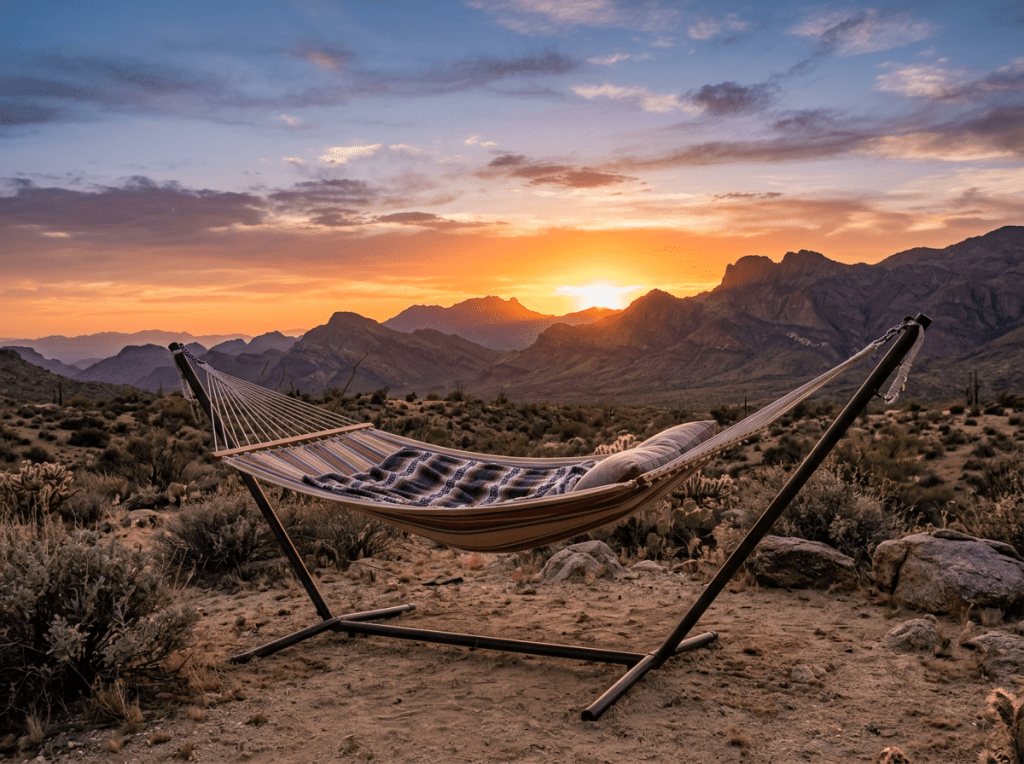
Camping with a hammock in desert or mountainous regions presents a unique set of challenges, primarily due to the scarcity of large, sturdy trees that are typically relied upon in forested environments. In these landscapes, creativity and adaptability become essential as you search for alternative suspension points. Rock formations often serve as a practical solution, provided they are stable and firmly anchored in the ground. Large boulders or outcrops can be used to anchor one or both ends of your hammock, but it’s important to ensure that your setup does not contribute to erosion or damage the rock surface. Using climbing slings, webbing, or ropes, you can secure your hammock to these features, taking care to distribute weight evenly and avoid sharp edges that might fray your gear.
Occasionally, you may encounter sturdy shrubs or small trees that appear suitable for hammock suspension. However, these must be approached with caution. Not all vegetation in arid or alpine environments is robust enough to support the dynamic forces exerted by a hammock. Before committing to a setup, thoroughly test the strength and stability of any potential anchor by applying your weight gradually and checking for signs of movement or weakness. This precaution helps prevent accidents and ensures that you’re not inadvertently damaging fragile plants.
In particularly barren areas, you might need to incorporate man-made structures into your setup. Vehicles, trail posts, or even purpose-built hammock stands can serve as reliable anchor points when natural options are limited. Combining these with available natural features can expand your options and allow you to camp comfortably in otherwise inhospitable terrain. Regardless of the solution you choose, the security and stability of your suspension system are paramount. Double-check all knots, straps, and anchor points before settling in for the night to ensure a safe and restful sleep, even in the most challenging environments.
Hammock camping in desert or mountainous regions is challenging due to the lack of large, sturdy trees, requiring campers to find alternative suspension points. Stable rock formations, large boulders, or outcrops can be used if they are secure and won’t be damaged, while sturdy shrubs or small trees may work but must be carefully tested for strength. In very barren areas, man-made structures like vehicles, trail posts, or hammock stands may be necessary. Regardless of the anchors used, ensuring the security and stability of your setup is crucial for safety and comfort in these demanding environments.
Using a Hammock Stand for Camping
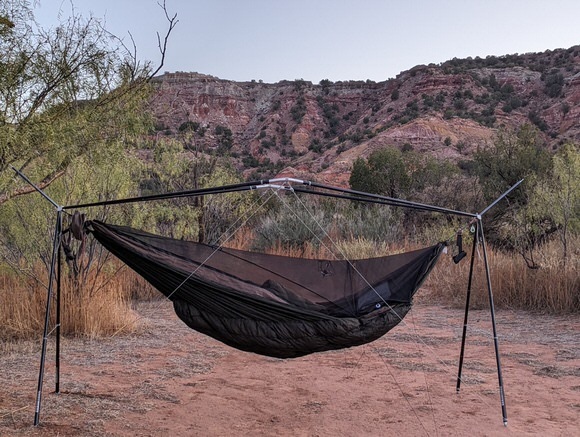
In situations where natural suspension points like trees or sturdy rocks are unavailable, such as open deserts, grasslands, or certain alpine environments, hammock camping can become a challenge. This is where a hammock stand becomes an invaluable piece of equipment. Unlike traditional setups that rely on the landscape, a hammock stand provides a portable, reliable structure for hanging your hammock virtually anywhere. This flexibility is especially advantageous for car campers or overlanders, who are less constrained by the weight and bulk of their gear and can afford to bring along larger, heavier items.
A hammock stand allows you to enjoy the comfort and versatility of hammock camping even in places where trees are sparse or entirely absent. For example, in a wide-open canyon or a sandy desert, you can set up your stand on level ground and have a secure, stable place to sleep. Modern hammock stands, such as the one shown in the image below, are designed to be both sturdy and easy to assemble, often breaking down into manageable components for transport.
Using a stand also eliminates concerns about damaging trees or violating park regulations that restrict hammock use to protect natural resources. It ensures that your setup is always consistent and safe, regardless of the terrain. For those who prioritize comfort and convenience, or who frequently camp in environments with limited natural anchors, investing in a quality hammock stand can greatly expand your camping options and enhance your overall outdoor experience.
Advantages of Using a Hammock Stand
A hammock stand fundamentally transforms the hammock camping experience by removing the dependence on natural anchor points, granting you the freedom to set up your hammock wherever there is a patch of flat ground. This flexibility is particularly valuable in environments where trees are sparse, too fragile, or entirely absent, such as open fields, deserts, beaches, or even your own backyard. With a stand, you are no longer constrained by the landscape, and you can choose your campsite based on other preferences, like views, proximity to amenities, or shelter from the wind, rather than being limited to where suitable trees happen to be.
From an environmental perspective, hammock stands offer a significant advantage by eliminating any risk of harming trees. Traditional hammock setups, even when using wide, tree-friendly straps, can still cause wear or damage to bark, especially in heavily trafficked areas or with repeated use. By relying on a stand, you avoid placing any stress on living trees, making this approach ideal for parks and protected areas where tree conservation is a concern or where regulations prohibit attaching hammocks to trees altogether. This not only helps preserve the natural environment but also ensures that you are following best practices for responsible outdoor recreation.
In terms of stability and security, hammock stands provide a consistent and reliable setup every time. Unlike trees, which can vary in strength, health, and spacing, a well-designed stand is engineered to support your weight safely and to keep the hammock at the optimal tension and height. There is no need to worry about whether a tree is strong enough, whether your straps might slip, or whether the bark might give way during the night. This peace of mind can be especially reassuring for new hammock campers or for those who want a hassle-free experience. The stand’s structure ensures that your hammock remains securely in place, regardless of external conditions, and allows you to relax and sleep comfortably without concern for the integrity of your suspension points.
A hammock stand transforms hammock camping by allowing you to set up anywhere with flat ground, freeing you from the need for natural anchor points like trees. This flexibility is especially useful in places where trees are scarce or protected, such as deserts, beaches, or parks with tree conservation rules. Hammock stands also prevent any risk of tree damage, making them environmentally friendly and compliant with regulations. Additionally, stands provide consistent stability and security, ensuring your hammock is always safely and comfortably suspended, which is reassuring for both beginners and those seeking a hassle-free camping experience.
Considerations When Using a Hammock Stand
While hammock stands bring a new level of convenience and flexibility to hammock camping, they also introduce a few important factors that should be thoughtfully considered before heading out. One of the most significant aspects is the added weight and bulk that a stand brings to your gear. Unlike a simple hammock and suspension system, which can be packed down to a compact size and carried easily on your back, a hammock stand is typically much heavier and takes up more space. This makes it impractical for backpacking or hiking trips where every ounce and inch in your pack matters. However, for car camping or overlanding, where gear can be transported in a vehicle and weight is less of an issue, the extra bulk of a stand is far less problematic and can be well worth the trade-off for the added comfort and flexibility.
Another key consideration is compatibility and quality. Not all hammock stands are universally compatible with every type of hammock. Some stands are designed specifically for gathered-end hammocks, while others may accommodate spreader-bar styles or even double hammocks. It’s essential to ensure that the stand you choose matches the design and length of your hammock and that it is rated to safely support your weight. Investing in a well-constructed, durable stand will not only provide peace of mind but also enhance your overall camping experience by ensuring stability and longevity.
Even though a hammock stand frees you from the need to find perfectly spaced trees, it still requires a relatively flat and unobstructed area for setup. Uneven ground can make the stand unstable, and cluttered or rocky terrain can complicate assembly and use. Additionally, environmental factors such as wind exposure should not be overlooked. A hammock suspended on a stand may be more vulnerable to strong gusts than one nestled between trees, which can act as natural windbreaks. It’s important to assess your surroundings and, if possible, position your stand in a sheltered spot or use additional measures to secure it in windy conditions.
Ultimately, using a hammock stand for camping—especially when car camping or overlanding—can greatly enhance your comfort and freedom in choosing a campsite. By carefully selecting a stand that suits your hammock and being mindful of the setup environment, you can enjoy all the benefits of hammock camping without being limited by the natural features of your location. Thoughtful planning and site selection remain crucial, whether you’re in a dense forest, a wide-open desert, or a scenic mountain overlook, ensuring that your hammock camping experience is both safe and enjoyable.
While hammock stands add convenience and flexibility to hammock camping, they also come with important considerations. Stands are heavier and bulkier than traditional hammock setups, making them unsuitable for backpacking but practical for car camping or overlanding. Compatibility is key, as not all stands fit every hammock type, so it’s important to choose one that matches your hammock’s design and can safely support your weight. A flat, clear area is still needed for setup, and stands may be more exposed to wind than hammocks hung between trees. With careful planning and the right stand, you can enjoy the comfort and freedom of hammock camping in a wider range of locations, as long as you remain mindful of your environment and setup.
Environmental Considerations
Environmental considerations are central to a successful and enjoyable hammock camping experience, shaping not only where you can set up but also how comfortable and safe your stay will be. The process goes far beyond simply finding two sturdy points for suspension; it involves a holistic assessment of the campsite and its surroundings.
Selecting an area that is free from obstacles is an important first step. Even though you’ll be sleeping above the ground, the space beneath and around your hammock should be clear of rocks, roots, and uneven terrain. This ensures you have a safe and comfortable area for moving around, cooking, and relaxing during the day. It also minimizes the risk of injury should you accidentally fall out of your hammock, as landing on a flat, unobstructed surface is far less hazardous than landing on jagged rocks or tangled roots.
Wind direction is another critical factor to consider. Exposure to strong winds can make your hammock sway uncomfortably and can quickly sap warmth from your body, especially in cooler weather. A well-chosen site will offer some natural protection from prevailing winds, such as a stand of dense trees, a hillside, or large boulders. These natural windbreaks not only enhance comfort but also contribute to your safety by reducing the risk of your hammock being destabilized by sudden gusts.
Sun exposure also plays a significant role in campsite selection. While a sunny spot might seem inviting, especially on a chilly morning, it can become excessively hot and uncomfortable as the day progresses. Choosing a location that offers some shade, perhaps from smaller trees or nearby cliffs, can help regulate the temperature in your hammock and protect you from the sun’s harsh rays. However, it’s wise to avoid setting up directly beneath large, old trees, as falling branches—sometimes called “widowmakers”—can pose a serious risk, particularly during windy conditions.
Rainwater runoff is a final, but equally important, environmental consideration. Setting up your hammock in a low-lying area or depression can lead to problems if it rains, as water may pool beneath you or even cause flash flooding in extreme cases. Instead, look for higher ground and pay attention to the natural slope of the terrain, ensuring that water will flow away from your campsite rather than toward it. This not only keeps you dry and comfortable but also helps protect your gear and maintain the integrity of your campsite.
By thoughtfully evaluating these environmental factors—obstacle-free ground, wind protection, sun exposure, and rainwater runoff—you can choose a hammock camp spot that maximizes comfort and safety. This careful planning not only enhances your own experience but also demonstrates respect for the natural environment, ensuring that your impact is minimal and that the site remains pristine for future campers.
Environmental considerations are crucial for a safe and comfortable hammock camping experience. Beyond finding two sturdy suspension points, campers should choose a site free of obstacles like rocks and roots to ensure safety and ease of movement. Wind direction matters, as natural windbreaks can protect against discomfort and cold. Sun exposure should be balanced—some shade helps regulate temperature, but avoid setting up directly under large, old trees due to the risk of falling branches. Avoid low-lying areas to prevent problems with rainwater runoff and potential flooding. Thoughtful assessment of these factors not only improves your own comfort and safety but also helps preserve the environment for future campers.
Safety and Regulations
Safety and regulatory awareness are foundational elements of responsible hammock camping, shaping both your personal wellbeing and your impact on the environment. When it comes to safety, the process begins with a careful evaluation of your chosen campsite. It’s essential to avoid locations that present obvious hazards, such as the edges of cliffs, unstable slopes, or areas with loose rocks that could shift unexpectedly. These spots not only increase the risk of falls but can also be prone to landslides or rockfalls, especially after heavy rain or wind. Equally important is the condition of the trees you select for suspension. Only healthy, living trees with sufficient diameter and robust root systems should be used, as dead or diseased trees may not be able to support your weight and could fall without warning.
Wildlife considerations are another key aspect of safety in the backcountry. While observing animals in their natural habitat can be a highlight of any outdoor adventure, it’s crucial to maintain a respectful distance and avoid behaviors that might attract them to your campsite. Setting up camp away from animal trails, water sources, or areas with clear signs of animal activity—such as tracks, droppings, or chewed vegetation—reduces the likelihood of unwanted encounters. Proper food storage is also vital; using bear-proof containers or hanging food away from your sleeping area helps prevent animals from associating your camp with an easy meal, which is safer for both you and the wildlife.
On the regulatory side, it’s important to recognize that rules regarding hammock camping can vary widely depending on the location. Some parks and wilderness areas may prohibit hammocks altogether to protect sensitive habitats or prevent damage to trees, while others may allow them with specific restrictions. For example, many areas require the use of wide, tree-friendly straps that distribute weight and minimize harm to tree bark, as opposed to ropes or thin cords that can cut into and damage the trees. Failing to use the proper equipment not only risks fines or penalties but also undermines conservation efforts.
Additionally, certain locations may require permits for overnight camping, especially in popular or ecologically sensitive areas. These permits help manage the number of visitors and ensure that everyone is aware of the rules and best practices for minimizing their impact. Checking with local park authorities or forest services before your trip is the best way to stay informed about current regulations and any seasonal restrictions that might be in place.
By making safety and regulatory compliance a priority, you not only protect yourself and your fellow campers but also contribute to the preservation of natural spaces. This approach ensures that hammock camping remains a sustainable and enjoyable activity for everyone, now and in the future.
Safety and regulatory awareness are essential for responsible hammock camping. Campers should carefully choose campsites away from hazards like cliffs, unstable slopes, or dead trees, and always use healthy, sturdy trees for suspension. Wildlife safety involves keeping a respectful distance, avoiding animal trails, and storing food securely to prevent attracting animals. Regulations vary by location; some areas prohibit hammocks or require tree-friendly straps to protect trees, and permits may be needed in sensitive or popular spots. Prioritizing safety and following local rules not only protects campers but also helps preserve natural areas for future enjoyment.
Conclusion
Selecting the ideal wilderness camp spot for hammock camping is a process that goes far beyond simply finding two trees. It involves a thoughtful assessment of the landscape, taking into account not only the physical requirements for hanging your hammock but also the broader environmental context. The terrain should be evaluated for both comfort and practicality, ensuring that the area is free from hazards and provides enough space for all your camping activities. Environmental factors such as wind exposure, sun, and potential rainwater runoff must be considered to guarantee a restful and safe night outdoors.
Safety remains a top priority throughout this process. Choosing healthy, robust trees or secure alternative anchor points, staying clear of dangerous terrain, and being mindful of wildlife activity all contribute to a secure camping experience. Equally important is an awareness of local regulations, which can vary significantly from one park or wilderness area to another. Adhering to these rules, whether they pertain to the use of tree-friendly straps, designated camping zones, or required permits, not only protects the environment but also ensures that you are a responsible and welcome visitor.
The rewards of this careful planning are substantial. Hammock camping allows you to immerse yourself in the natural world in a way that is both comfortable and environmentally conscious. The gentle sway of a hammock, the unobstructed views of the sky, and the sounds of the wilderness all combine to create a camping experience that is both intimate and memorable. Whether you find yourself suspended between trees in a lush forest or enjoying the vast openness of a desert, hammock camping offers a unique perspective on the outdoors, fostering a deeper connection with nature and a greater appreciation for the landscapes you explore. By approaching your campsite selection with care and respect, you set the stage for countless nights of adventure, relaxation, and discovery.



 UTAZCO Overland
Leave a Reply