
“SHTF” stands for “Shit Hits The Fan,” a term commonly used in preparedness and survival communities to describe scenarios where normal societal, economic, and/or governmental structures break down on a large scale, leading to chaos, danger, and the need for self-reliance.
Some of the most commonly discussed scenarios for societal collapse and SHTF events can be:
Economic Collapse
- Hyperinflation or deflation causing currency to become worthless
- Mass unemployment, bank failures, and loss of savings
- Breakdown of supply chains, leading to shortages of food, fuel, and medicine
Pandemic or Widespread Disease
- Highly contagious and deadly disease overwhelms healthcare systems
- Quarantines, travel bans, and panic buying
- Breakdown of public order due to fear and resource scarcity
Natural Disasters
- Mega-earthquakes, supervolcano eruptions, or tsunamis
- Widespread destruction of infrastructure and homes
- Long-term disruption of food, water, and power supplies
Grid Down/EMP (Electromagnetic Pulse) Event
- Solar flare or nuclear EMP disables electrical grids
- Loss of communication, transportation, and utilities
- Rapid descent into chaos as modern conveniences disappear
War or Civil Conflict
- Invasion by foreign powers or civil war
- Martial law, curfews, and breakdown of civil liberties
- Mass displacement and refugee crises
Cyberattack on Critical Infrastructure
- Hackers disable power grids, water systems, or financial networks
- Loss of trust in digital systems and widespread panic
- Potential for cascading failures across multiple sectors
7. Resource Depletion
- Collapse due to lack of water, arable land, or energy resources
- Mass migrations, famine, and conflict over remaining resources
Authoritarian Takeover or Government Collapse
- Sudden loss of government legitimacy or functionality
- Widespread lawlessness or imposition of draconian controls
- Breakdown of social order and basic services
Climate Catastrophe
- Rapid, severe climate change causing crop failures, floods, or droughts
- Mass migrations and conflict over habitable land
Asteroid Impact or Other Cosmic Events
- Large asteroid or comet impact causing global devastation
- Long-term “nuclear winter” scenario with collapse of agriculture
Most real-world collapses are not caused by a single event, but by a combination of factors that overwhelm the resilience of societies. Historical examples include the fall of the Roman Empire, the collapse of the Soviet Union, and localized collapses in places like Venezuela or Syria.

In any scenario where society breaks down—whether due to natural disaster, war, economic collapse, or other SHTF (Shit Hits The Fan) events—personal and group security becomes paramount. One of the most overlooked but critical aspects of survival in such situations is OPSEC: Operational Security. Good OPSEC is not just a military concept; it is a practical, everyday necessity for anyone seeking to protect themselves, their loved ones, and their resources when the normal rules no longer apply.
Understanding OPSEC
Operational Security, or OPSEC, is a discipline rooted in the idea that information, even seemingly trivial details, can be pieced together by adversaries to form a complete and actionable picture. In the context of a SHTF event, OPSEC becomes a matter of survival rather than mere prudence. The collapse of societal norms and the absence of reliable law enforcement mean that the risks associated with information leaks are magnified. Every action, conversation, or visible sign can inadvertently reveal critical details about your preparedness, resources, or vulnerabilities.
At its core, OPSEC is about recognizing that information is a resource just as vital as food or water. The strategies involved are designed to minimize the exposure of this resource. For example, the way you store supplies, the frequency and manner in which you move about your environment, and the conversations you have with others all contribute to your overall security posture. In a SHTF scenario, even the fact that you appear calm and well-fed when others are desperate can be a giveaway that you possess resources worth taking.
Tactics within OPSEC are not limited to secrecy for secrecy’s sake. They are about deliberate, thoughtful actions that reduce the likelihood of detection or targeting. This might involve blending in with your surroundings, adopting the appearance and behaviors of those around you, or creating plausible deniability about your level of preparedness. It also means being aware of the ways information can travel—through word of mouth, visible cues, or even digital footprints left behind before the crisis began.
Procedures, meanwhile, are the routines and protocols you establish to ensure that OPSEC is maintained consistently. This could involve regular checks to ensure that supplies are hidden, that group members are not inadvertently sharing sensitive information, and that any signs of your activities are minimized or disguised. In a group setting, OPSEC requires a shared understanding and commitment; a single lapse by one individual can compromise the safety of all.
Ultimately, understanding OPSEC in a SHTF context is about adopting a mindset where every piece of information is treated as potentially valuable to those who might wish you harm. It is a continuous process of assessing risks, adapting behaviors, and maintaining vigilance. The goal is not to foster paranoia, but to cultivate a level of caution and discretion that allows you to operate safely and effectively in an environment where trust is scarce and the consequences of exposure can be severe.
OPSEC, or Operational Security, is the practice of protecting sensitive information to prevent adversaries from piecing together details that could put you at risk—especially during SHTF events when societal order has broken down. In such situations, even small actions or visible signs can reveal your resources or preparedness, making you a target. OPSEC treats information as a vital resource, requiring careful strategies, deliberate tactics, and consistent procedures to minimize exposure. This includes blending in, controlling conversations, and ensuring group members maintain the same standards. Ultimately, OPSEC is about maintaining a vigilant, cautious mindset to safeguard yourself and your group in a dangerous, unpredictable environment.
Why OPSEC Matters in SHTF
The importance of OPSEC during SHTF events cannot be overstated, as the very fabric of society—its laws, norms, and enforcement mechanisms—can unravel rapidly in a crisis. In ordinary times, people rely on the presence of law enforcement and the expectations of civil behavior to deter crime and maintain order. These structures act as a buffer, discouraging most individuals from resorting to theft, violence, or other desperate acts, even when they are struggling. However, when a disaster or collapse strips away these protections, the environment changes dramatically.
Scarcity becomes the defining feature of daily life. Food, water, medicine, and other essentials that were once taken for granted may suddenly become rare and highly sought after. In such a context, the calculus of risk and reward shifts for many people. The knowledge that someone nearby possesses valuable resources can quickly transform neighbors or strangers into potential threats. Desperation can override previous moral boundaries, leading individuals or groups to take actions they would never have considered under normal circumstances.
This is where OPSEC becomes a matter of survival. If you are perceived as having what others lack, you may attract unwanted attention, ranging from persistent requests for help to outright attempts at theft or violence. The mere rumor that you have supplies can spread quickly, drawing the interest of those who are willing to use force to get what they need. In extreme cases, organized groups may systematically target those believed to be well-prepared, using intimidation or coordinated attacks.
Good OPSEC acts as a shield, reducing the likelihood that you or your group will be noticed or targeted in the first place. By carefully controlling information and minimizing visible signs of preparedness, you can avoid standing out in a crowd of people who are all struggling to survive. This does not mean abandoning compassion or community, but rather recognizing that your ability to help others—and to survive yourself—depends on not becoming a victim. In the chaos of a societal collapse, the difference between safety and danger often hinges on what others know or believe about you. Practicing effective OPSEC is, therefore, not just a tactical choice but a fundamental aspect of resilience in the face of uncertainty and risk.
OPSEC is crucial during SHTF events because the collapse of societal order removes the usual protections against crime and desperation. As essential resources become scarce, people may be driven to extreme measures, and anyone known to have supplies can quickly become a target for theft or violence. Effective OPSEC helps prevent you from standing out or being singled out, reducing the risk of becoming a victim. Ultimately, maintaining good OPSEC is essential for survival and resilience when the normal rules no longer apply.
Key Elements of OPSEC in SHTF

Information Control
At the heart of OPSEC during a crisis is the careful management of information—what you reveal, intentionally or not, about your resources, plans, and capabilities. In a SHTF scenario, the smallest detail can become a clue for someone desperate or opportunistic. Information control begins long before any crisis actually unfolds. The conversations you have with friends, neighbors, or even casual acquaintances can plant seeds that grow into rumors or assumptions about your level of preparedness. A single offhand comment about storing extra food or having a generator can linger in someone’s memory, only to resurface when scarcity becomes the norm.
Physical evidence of preparedness is just as revealing as spoken words. The presence of solar panels, water barrels, or visible stockpiles can signal to others that you are better equipped than most. Even patterns of behavior, such as frequent deliveries or unusual activity around your home, can draw attention. In a world where everyone is searching for an advantage, these signs can make you a target. Therefore, it is essential to blend in with your surroundings, keeping any signs of your preparations as inconspicuous as possible.
The digital realm presents its own set of challenges. Many people share aspects of their lives online without considering the long-term implications. Posts about prepping, photos of supplies, or participation in survival forums can all leave a digital footprint that is difficult to erase. In a crisis, information that was once harmless can be used to identify and locate those who are perceived as having valuable resources. Practicing discretion online is as important as maintaining it in person, and this awareness should guide your actions well before any emergency arises.
Ultimately, information control is about foresight and discipline. It requires a conscious effort to limit what others know and to anticipate how seemingly innocuous details might be interpreted in a different context. By maintaining a low profile and being mindful of both your words and your actions, you significantly reduce the risk of attracting unwanted attention when it matters most.
Movement and Routine
In a SHTF environment, the way you move through your surroundings and the habits you establish can have a profound impact on your safety. Predictability is a vulnerability; when your actions follow a set pattern, they become easy for others to observe, anticipate, and exploit. This is especially true in situations where resources are scarce and people are actively searching for opportunities to gain an advantage. If someone notices that you leave your shelter at the same time each day, or always use the same route to collect water or gather supplies, they can use this information to track your movements, set up an ambush, or simply deduce that you have access to resources they might want.
Varying your routines is a subtle but powerful form of OPSEC. By changing the times you perform essential tasks, altering your routes, and avoiding obvious patterns, you make it much more difficult for anyone to predict your actions or plan against you. This unpredictability can serve as a deterrent, as potential threats are less likely to risk an encounter if they cannot be sure of your schedule or movements. Even mundane activities, such as taking out the trash or tending to a garden, can reveal clues about your level of preparedness, the number of people in your group, or the resources you have on hand. For example, the frequency and contents of your trash might indicate how much food you have, while regular trips to a water source could signal that you have a reliable supply.
In addition to varying routines, situational awareness becomes critical. You must remain alert to your environment, watching for signs that you are being observed or followed. This heightened awareness allows you to detect potential threats early and adjust your behavior accordingly. The goal is to move through your environment in a way that minimizes exposure and reduces the likelihood of drawing attention, all while maintaining the flexibility to adapt as circumstances change.
Ultimately, the discipline to avoid predictable patterns is a key element of OPSEC in any crisis. It requires conscious effort and constant vigilance, but it significantly enhances your ability to operate safely and avoid becoming a target when every action is potentially under scrutiny.
Noise and Light Discipline
In a SHTF scenario, the environment is often marked by an eerie quiet and pervasive darkness, especially at night when power grids may be down and normal city sounds have faded. In such conditions, even small amounts of noise or light can travel far and become beacons for anyone nearby who is searching for signs of life or resources. The simple act of turning on a flashlight, lighting a candle, or running a generator can inadvertently broadcast your presence to those who might otherwise pass you by. Blackout curtains, covered windows, and careful management of any artificial light become crucial, as even a faint glow can be visible from a surprising distance in the absence of ambient city lights.
During the day, the risks shift but do not disappear. The sounds of conversation, machinery, or even footsteps can carry in the stillness, especially if the usual background noise of society has vanished. A running generator, for example, is not only a sign that you have power but also a strong indicator that you possess valuable fuel and possibly other supplies. Radios, music, or the chatter of a group can all serve as auditory signals that draw attention, potentially inviting investigation or confrontation from those who are desperate or opportunistic.
Maintaining noise and light discipline requires a heightened awareness of your surroundings and a commitment to minimizing your signature. This might mean restricting activities that generate sound to certain times of day, using hand signals instead of voices, or finding ways to muffle necessary noises. At night, it means ensuring that no light escapes your shelter, using only as much illumination as absolutely necessary, and being prepared to extinguish it quickly if you sense someone approaching.
The discipline to control noise and light is not just about avoiding detection; it is about creating an environment where you are less likely to be noticed in the first place. In a world where resources are scarce and trust is limited, the ability to remain unseen and unheard can be one of your most effective defenses. By blending into the silence and darkness, you reduce the chances of attracting unwanted attention and increase your odds of surviving undisturbed.
Group Security
When operating as part of a group during a SHTF event, the challenge of maintaining OPSEC becomes exponentially more complex. The security of the group is only as strong as its weakest link, and a single lapse in judgment or discipline by one member can jeopardize everyone’s safety. This interconnectedness means that OPSEC is not just an individual responsibility but a collective one, requiring a shared understanding of the risks and a unified commitment to best practices.
Effective group security begins with clear communication. Every member must be thoroughly briefed on the importance of OPSEC and the specific behaviors expected to maintain it. This includes not only the obvious—such as avoiding discussions about supplies or plans with outsiders—but also the subtler aspects, like body language, tone of voice, and even the way group members interact in public. Consistency is key; if one person is discreet while another is careless, the group’s efforts are undermined.
Establishing clear rules and protocols is essential. These guidelines should cover how information is shared, who is authorized to speak on behalf of the group, and what procedures to follow if someone suspects a breach of security. Regular check-ins or briefings help reinforce these standards and provide opportunities to address any concerns or lapses before they escalate into serious problems. In high-stress situations, it is easy for people to become complacent or forgetful, so ongoing reminders and training are necessary to keep everyone vigilant.
Mutual accountability is another cornerstone of group security. Members must feel responsible not only for their own actions but also for the actions of others. This means watching out for signs that someone might inadvertently reveal sensitive information or attract attention, and being willing to intervene or correct behavior when necessary. Trust is built through this shared vigilance, as everyone understands that their safety depends on the collective discipline of the group.
Ultimately, group security in a SHTF scenario is about fostering a culture of awareness and responsibility. It requires patience, empathy, and a willingness to put the needs of the group above individual impulses. When everyone is aligned in their commitment to OPSEC, the group becomes far more resilient, capable of withstanding external threats and navigating the uncertainties of a collapsed society with greater confidence and cohesion.
Comparing OPSEC Strategies
| Aspect | Good OPSEC Practice | Poor OPSEC Example |
|---|---|---|
| Information | Keep supplies and plans secret | Brag about preps to neighbors |
| Movement | Vary routes and routines | Same path, same time every day |
| Noise/Light | Use blackout curtains, stay quiet | Loud generator, visible lights |
| Group Behavior | Everyone trained in OPSEC | One member posts on social media |
| Resource Use | Discreet, rationed, hidden | Openly cooking large meals outside |
Tactics and Procedures
The effectiveness of OPSEC in a SHTF scenario hinges not only on the actions you take, but on the deliberate and thoughtful manner in which you carry them out. It is the subtlety, consistency, and adaptability of your tactics and procedures that determine whether your efforts to remain secure are successful. This means that every measure you implement should be carefully considered, rehearsed, and integrated into your daily routines so that it becomes second nature, even under stress.
Communication within your group is a prime example of how tactics can enhance security. Rather than relying on open conversation, groups that establish code words, hand signals, or other discreet forms of communication can convey critical information without alerting outsiders. This level of coordination allows for silent warnings, quick responses to threats, and the ability to operate with a degree of stealth that verbal communication cannot provide. The use of such signals must be practiced regularly so that every member can respond instinctively, reducing the risk of confusion or hesitation in high-pressure situations.
Monitoring your surroundings is another vital procedure. Assigning lookouts or establishing a system of surveillance—whether through physical observation points, improvised alarms, or even simple routines of checking the perimeter—serves as an early warning mechanism. This vigilance helps detect potential threats before they become immediate dangers, giving your group time to react appropriately. The key is to make this monitoring unobtrusive, so as not to draw attention to your presence or the fact that you are actively defending a valuable position.
Contingency planning is equally important. In a volatile environment, circumstances can change rapidly, and having predetermined plans for evacuation, defense, or regrouping can mean the difference between survival and disaster. These plans should be flexible, allowing for adaptation as new information becomes available, and should be reviewed and practiced regularly to ensure everyone knows their role. The process of planning itself reinforces group cohesion and readiness, fostering a mindset that anticipates challenges rather than merely reacting to them.
Deception is a powerful, if sometimes overlooked, aspect of OPSEC tactics. Creating the illusion that your property is abandoned or uninhabited can deter would-be intruders who are searching for easy targets. This might involve leaving certain areas untidy, avoiding obvious signs of habitation, or even setting up decoys to mislead observers. The goal is to blend into the background, making your location appear less attractive or not worth the risk of investigation.
Ultimately, the strength of your OPSEC lies in the seamless integration of these tactics and procedures into your daily life. It is not enough to have plans or tools; you must cultivate the discipline to use them consistently and the awareness to adapt them as situations evolve. By doing so, you create layers of security that protect not only your resources but also the lives and well-being of everyone in your group.
Effective OPSEC in a SHTF scenario depends on carrying out security measures with careful planning, consistency, and adaptability. This involves integrating tactics like discreet group communication, vigilant monitoring of your surroundings, and flexible contingency planning into daily routines so they become instinctive even under stress. Deception, such as making your property appear abandoned, can further deter threats. Ultimately, true security comes from practicing these procedures regularly and adapting them as situations change, creating multiple layers of protection for both your resources and your group.
The Psychological Dimension
The psychological aspect of OPSEC is often the most challenging and subtle to master, yet it is foundational to effective security in any SHTF scenario. At its core, OPSEC is not simply a set of rules or actions, but a cultivated mindset—one that balances vigilance with composure, and skepticism with rational judgment. The goal is not to descend into paranoia, where fear and suspicion dominate every interaction, but rather to develop a steady, clear-eyed awareness of the risks inherent in a destabilized environment.
In times of crisis, the boundaries between friend and foe can blur, and the motivations of others become harder to discern. This uncertainty demands a cautious approach to trust. While cooperation and community are vital for long-term survival, extending trust too quickly or too broadly can expose you and your group to manipulation, betrayal, or exploitation. Instead, trust should be built gradually, based on consistent behavior, shared experiences, and demonstrated reliability. This process requires patience and a willingness to observe and evaluate others without letting emotional needs override practical judgment.
Maintaining a healthy skepticism means constantly questioning the information you receive and the intentions of those around you. It involves being alert to inconsistencies, hidden agendas, or subtle cues that something is amiss. This does not mean assuming the worst of everyone, but rather recognizing that desperation can drive people to act in ways they never would under normal circumstances. By staying mentally agile and open to reassessing situations as new information arises, you reduce the likelihood of being caught off guard by deception or betrayal.
The psychological discipline of OPSEC also extends inward. It requires self-control to avoid revealing too much, even in moments of stress, fatigue, or loneliness. The pressure of a prolonged crisis can erode judgment and lead to lapses in caution, especially when the desire for connection or relief from anxiety is strong. Developing routines for self-reflection, stress management, and emotional regulation can help maintain the clarity and discipline needed to uphold OPSEC standards.
Ultimately, the psychological dimension of OPSEC is about cultivating a mindset that is both resilient and adaptable. It is about being prepared to make difficult decisions, to withhold trust until it is truly earned, and to accept that mistakes in judgment can have serious, even fatal, consequences. By embracing this mindset, you not only protect yourself and your group from external threats, but also strengthen your capacity to navigate the complex and shifting landscape of a world in crisis.
The psychological dimension of OPSEC is about developing a vigilant, balanced mindset that avoids paranoia but remains alert to risks and deception, especially in a destabilized environment. Trust must be earned gradually, and skepticism should guide interactions and decisions. Maintaining self-control and emotional discipline is crucial, as lapses can compromise security. Ultimately, this mindset helps protect both individuals and groups, enabling them to navigate the uncertainties and dangers of a crisis with resilience and sound judgment.
The Pitfalls of Encryption for Secure Communications
In the realm of OPSEC, especially during SHTF events, encryption is often seen as the gold standard for securing communications. The promise of privacy and confidentiality is alluring, particularly when sensitive information must be shared among group members or trusted allies. However, relying solely on encryption for secure communications can introduce its own set of vulnerabilities and pitfalls—some technical, others practical or psychological.
One of the most significant challenges is the false sense of security that encryption can create. Many people assume that using encrypted messaging apps or devices guarantees their conversations are safe from prying eyes. In reality, encryption is only as strong as its implementation and the discipline of its users. Weak passwords, outdated software, or poorly configured devices can all undermine even the most robust encryption protocols. Furthermore, if an adversary gains physical access to a device, they may be able to bypass encryption altogether through social engineering, coercion, or technical exploits.
Another pitfall lies in the metadata that accompanies encrypted communications. Even if the content of your messages is unreadable, patterns of communication—such as who is talking to whom, when, and how often—can be highly revealing. In a crisis, simply being identified as someone who uses encrypted channels can draw unwanted attention, marking you as a person with something to hide or as a member of a group worth monitoring. This can make you a target for surveillance, interrogation, or more aggressive forms of attack.
Operational mistakes are another common vulnerability. Users may inadvertently reveal sensitive information through unencrypted channels, or they may fail to verify the identities of those they are communicating with, falling victim to impersonation or man-in-the-middle attacks. The pressure and stress of a SHTF scenario can exacerbate these risks, as people become more likely to make hasty decisions or overlook security protocols in the interest of speed or convenience.
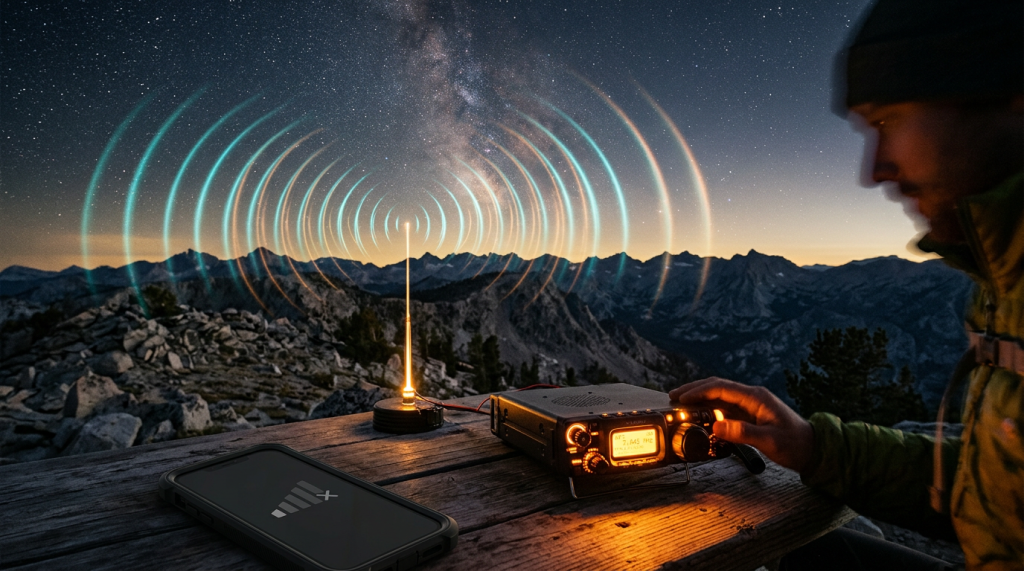
Technical dependencies also pose a risk. Encryption often relies on digital infrastructure—power, internet access, and functioning devices—that may be unreliable or unavailable during a major crisis. If your group’s communication plan is built entirely around encrypted digital tools, you may find yourselves isolated if those tools fail. This highlights the importance of having backup methods, such as prearranged signals, code words, or physical rendezvous points, that do not depend on technology.
Finally, the use of encryption can attract attention from authorities or hostile actors, especially in environments where such tools are restricted or monitored. In some cases, the mere act of encrypting your communications can be enough to warrant suspicion or investigation, regardless of the content.
While encryption is a valuable tool for protecting the privacy of your communications, it is not a panacea. Effective OPSEC requires a holistic approach that considers not just the strength of your encryption, but also the habits, discipline, and contingency plans of your group. Recognizing the limitations and potential pitfalls of encrypted communications allows you to use these tools wisely, integrating them into a broader strategy that prioritizes adaptability, redundancy, and the minimization of risk.
Conclusion
The essence of good OPSEC during SHTF events lies in its proactive, thoughtful approach to survival. Rather than fostering a life ruled by fear, OPSEC encourages a mindset rooted in intelligence, discipline, and readiness. It is about understanding the environment you are in—one where the usual safeguards of society have vanished and where every action, word, or visible sign can have outsized consequences. In such a world, survival is not left to chance; it is the result of deliberate choices and consistent habits.
Controlling information becomes a daily practice, not just a one-time precaution. Every interaction, whether with strangers or familiar faces, is weighed for what it might reveal. The way you manage your supplies, the stories you share, and even your online presence are all carefully considered, ensuring that nothing inadvertently exposes your strengths or vulnerabilities. This vigilance extends to your routines, which are intentionally varied to avoid predictability. By refusing to fall into patterns, you make it difficult for others to anticipate your movements or exploit your habits.
Minimizing signals—whether they are sounds, lights, or other indicators of activity—further reduces your profile in a world where attention can be dangerous. The discipline to keep a low profile, to blend in rather than stand out, is a quiet but powerful form of defense. When you are part of a group, OPSEC becomes a shared responsibility. Cohesion and mutual understanding are essential, as the actions of one can affect the safety of all. Regular communication, clear expectations, and a culture of accountability ensure that everyone is aligned in their commitment to security.
While digital encryption can be a powerful tool for protecting sensitive communications, it is not without its own risks and limitations. Relying solely on encrypted channels can foster a false sense of security, as technical vulnerabilities, user errors, or compromised devices may still expose critical information. Moreover, the use of encrypted communications can itself attract attention, signaling to observers that you have something valuable to protect. In a destabilized environment, where infrastructure may be unreliable and surveillance more aggressive, it is essential to treat encryption as just one layer of your overall OPSEC strategy. Combining encrypted communications with disciplined habits, contingency plans, and alternative methods of information sharing ensures that your group remains adaptable and secure, even if technology fails or circumstances change unexpectedly.
Ultimately, good OPSEC is about resilience. It is the ability to adapt to changing threats, to remain calm and rational under pressure, and to make decisions that protect both yourself and those who depend on you. By integrating OPSEC into every aspect of your life, you transform uncertainty into manageable risk and give yourself the best possible chance of enduring whatever challenges arise. In this way, OPSEC is not just a set of rules, but a foundation for survival and a testament to the power of preparation and thoughtful action.



 UTAZCO Overland
Leave a Reply