
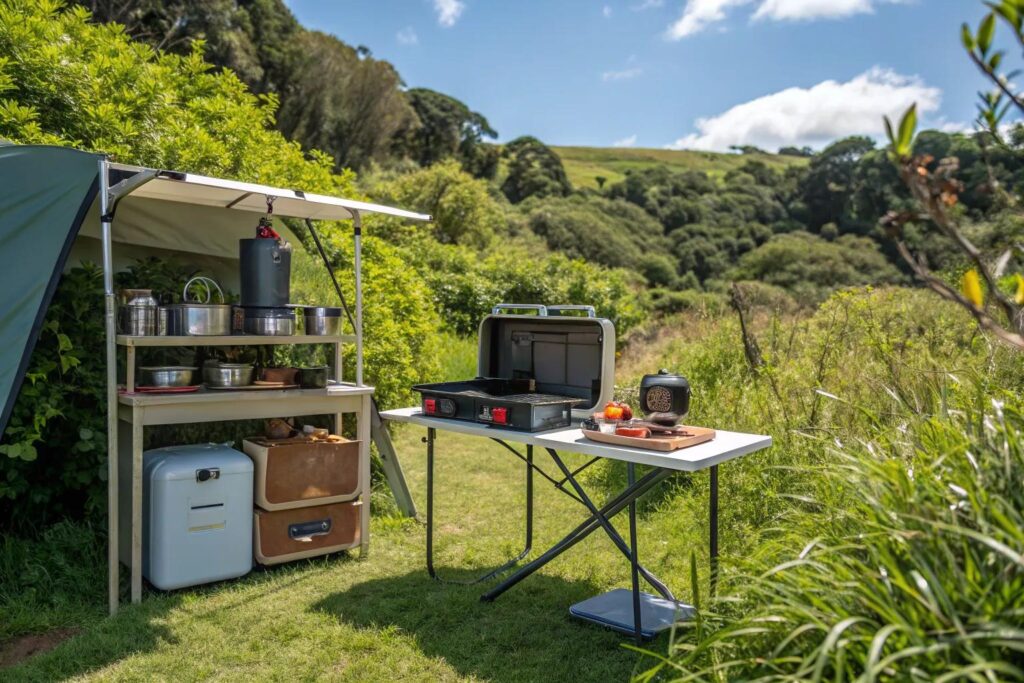
Overland camping offers the unique opportunity to enjoy gourmet meals in the heart of nature. To create successful culinary experiences on the road, it’s crucial to carry the right equipment. This essay explores the three main categories of essential gear: general camp setup, ingredient storage and sourcing, and specialized cooking utensils.
1. General Equipment for a Functional Outdoor Kitchen (Expanded)
A successful gourmet meal in the wild begins with a thoughtfully designed camp kitchen. The right general equipment not only makes cooking easier but also enhances comfort and efficiency. Let’s explore the key components in greater detail:
Prep and Eating Surfaces
Folding Prep Table
A folding prep table truly serves as the heart of any outdoor kitchen, providing the essential workspace needed to prepare gourmet meals in the wild. Its importance lies first and foremost in its stability and durability. When you’re chopping vegetables, filleting fish, or kneading dough, you need a surface that remains steady and secure. Tables constructed with sturdy legs and a solid top—often made from aluminum or steel—offer the necessary strength to handle vigorous prep work without wobbling or collapsing. Despite their robustness, these materials are chosen for their relatively light weight, making them practical for overland travel where every kilogram counts.
Portability is another critical factor. The best folding prep tables are designed to collapse flat, minimizing the space they occupy in your vehicle. Many models feature integrated carrying handles or storage bags, which make transporting them from your rig to the campsite effortless. This portability ensures that you can set up your kitchen wherever you choose, whether it’s beside a mountain stream or under a forest canopy.
The surface area of your prep table is also a key consideration. Ideally, the table should be large enough to accommodate a cutting board, a selection of ingredients, and your essential utensils, allowing you to work efficiently without feeling cramped. At the same time, it should be compact enough to fit comfortably within your camp setup and not overwhelm your available space. Some overlanders opt for modular tables that can be expanded or contracted as needed, offering flexibility for both solo trips and group expeditions.
Special features can further enhance the functionality of a folding prep table. Some models come equipped with built-in sinks, which make washing produce and cleaning up after meals much easier, especially in remote locations where water access is limited. Others include utensil hooks, side shelves, or integrated storage compartments, helping you keep your workspace organized and your tools within easy reach. These thoughtful additions can streamline your workflow, reduce clutter, and ultimately make the process of preparing gourmet meals on the road more enjoyable and efficient.
Selecting a folding prep table of the proper height is essential for both comfort and efficiency during meal preparation. A table that is too low can quickly lead to back strain and fatigue, especially when chopping, mixing, or kneading for extended periods. Conversely, a table that is too high may make it difficult to apply the right amount of pressure or maintain control over your knife and other utensils. Ideally, the prep table should allow you to work with your elbows at a comfortable angle, similar to the height of a standard kitchen counter—typically around 36 inches (91 cm) from the ground. Some folding tables offer adjustable legs, which can be a valuable feature for accommodating different users or uneven terrain. Taking the time to choose a prep table with the right height will make your outdoor cooking experience more enjoyable, safer, and more productive, allowing you to focus on creating gourmet meals rather than battling discomfort.
A well-chosen folding prep table is indispensable for any overland camper who values good food and a smooth cooking experience. Its combination of stability, portability, ample workspace, and smart features transforms a patch of wilderness into a functional kitchen, setting the stage for memorable meals and shared moments around the campfire.
Eating Table
Although eating on your lap or improvising with a log might suffice in a pinch, a dedicated eating table brings a sense of comfort and civility to outdoor dining that can transform the entire meal. The choice between a separate eating table and a combined prep/eating surface is a matter of both practicality and personal preference. Some overlanders value the cleanliness and organization that comes with having a distinct eating table, ensuring that the area where food is consumed remains free from the mess and clutter of meal preparation. This separation can be especially appealing when preparing elaborate or multi-course meals, as it allows diners to sit down to a clean, inviting space.
On the other hand, many campers opt for a dual-purpose table to save on space and weight, which are always at a premium in overland travel. Modern modular tables are designed with flexibility in mind, allowing them to expand for group meals or contract for solo use. This adaptability means that a single table can serve as both a prep station and a dining area, depending on the needs of the moment. Such versatility is invaluable when space is limited or when the number of diners changes from one meal to the next.
Adjustable height is another feature that greatly enhances the functionality of an eating table. Tables with telescoping or multi-position legs can be set high for standing tasks, such as prepping ingredients or serving buffet-style meals, and then lowered for comfortable seated dining. This adjustability is particularly useful when camping on uneven ground, as it allows you to compensate for slopes or rough terrain and ensure a level eating surface.
Ease of setup is also a crucial consideration, especially after a long day of travel or exploration. Tables that feature quick-deploy mechanisms, such as roll-top surfaces or folding frames, can be assembled and disassembled in minutes, minimizing hassle and maximizing relaxation time. The convenience of a table that can be set up quickly and packed away just as easily cannot be overstated, as it encourages you to actually use it for every meal, rather than defaulting to less comfortable alternatives.
A dedicated eating table is more than just a piece of furniture—it’s a gathering place, a focal point for conversation, and a symbol of the pleasure that comes from sharing good food in the great outdoors. Whether you choose a separate table or a combined solution, the right eating surface will elevate your overland dining experience, making every meal a memorable occasion.
Chairs
While the focus of an overland kitchen often falls on tables and cooking gear, the importance of comfortable seating should not be underestimated. The right chair can transform a simple meal into a moment of true relaxation, providing a welcome respite after a day of travel or adventure. For overland campers, collapsible design is essential. Chairs that fold or collapse into a compact bundle are far easier to pack and transport, fitting neatly into limited storage spaces without adding unnecessary bulk. This portability means you can always have a comfortable seat ready, no matter how remote your campsite.
Material choice is another critical factor in selecting the ideal camp chair. Weather-resistant fabrics, such as ripstop nylon or polyester, ensure that your chair can withstand exposure to sun, rain, and the occasional spill. Rust-proof frames, often made from aluminum or powder-coated steel, add durability and longevity, allowing your chair to endure the rigors of outdoor use. In hot climates, mesh panels or ventilated designs can make a significant difference, providing breathability and preventing discomfort from heat buildup.
Support and comfort are where a good chair truly distinguishes itself. Ergonomic designs that offer proper back support help prevent fatigue and encourage good posture, even during long, leisurely meals. Features like armrests, headrests, and integrated cup holders can elevate the experience, turning your camp chair into a personal oasis of comfort. Some chairs even offer adjustable reclining positions, allowing you to shift from upright dining to relaxed lounging with ease.
Weight and packability are always at the forefront of overland gear considerations. Lightweight chairs are easier to carry from your vehicle to the campsite, but it’s important to ensure that they are still robust enough to support your weight and remain stable on uneven or soft ground. Wide feet or reinforced legs can help prevent sinking or tipping, adding to the overall sense of security and comfort.
When selecting a camp chair, it’s important to consider how well it pairs with your chosen eating table to ensure a comfortable and practical dining setup. The height of the chair relative to the table is crucial; a chair that is too low can make eating awkward and strain your posture, while one that is too high may leave you hunched over your plate. Ideally, the seat height should allow your arms to rest naturally at table level, making it easy to cut food, reach dishes, and enjoy your meal without discomfort. Additionally, check that the chair’s armrests, if present, fit comfortably under or beside the table without getting in the way. Some compact or minimalist chairs may be more suited to lower tables or casual, picnic-style dining, while larger, more supportive chairs work best with full-sized tables. Testing your chair and table together before heading out can help you avoid mismatched heights or awkward seating arrangements, ensuring that your outdoor dining experience is as enjoyable and ergonomic as possible.
In the end, investing in quality camp chairs is about more than just having a place to sit. It’s about creating a welcoming, comfortable environment where you can savor your meals, enjoy the company of fellow travelers, and fully appreciate the beauty of your surroundings. The right chair becomes an integral part of your overland experience, enhancing both the practical and the pleasurable aspects of life on the road.
Additional Considerations
When setting up your outdoor kitchen, paying attention to the details beyond just the equipment itself can make a significant difference in your overall experience. One of the most important factors is choosing level ground for your tables and chairs. Uneven or sloped surfaces can lead to wobbly tables, sliding plates, and even accidental spills or falls, all of which can disrupt your meal and create unnecessary frustration. Taking a few moments to scout out the flattest area available, or even using small rocks or shims to stabilize your setup, can help ensure that your dining and prep surfaces remain steady and secure throughout your stay.
Maintaining cleanliness in your camp kitchen is another key to both enjoyment and safety. Outdoor environments can quickly introduce dirt, leaves, and insects to your eating area, so bringing along a small broom or brush allows you to sweep away debris before each meal. Using a tablecloth not only adds a touch of comfort and style but also makes cleanup much easier, as it can be shaken out or wiped down after use. Keeping your workspace tidy helps prevent cross-contamination during food prep and makes the entire cooking process more pleasant and efficient.
Weather protection is also a crucial consideration, as the elements can change rapidly and unpredictably in the outdoors. Setting up your kitchen under an awning, tarp, or even a portable shelter provides a shield from harsh sun, sudden rain, or gusty winds. This not only keeps you comfortable while cooking and eating but also protects your food, equipment, and supplies from the elements. A well-placed shelter can mean the difference between a hurried, uncomfortable meal and a relaxed, enjoyable dining experience, regardless of the weather conditions. By planning for level ground, cleanliness, and weather protection, you create a camp kitchen environment that is safe, efficient, and inviting, allowing you to focus on the pleasures of gourmet cooking in the wild.
Investing in quality prep and eating surfaces, along with comfortable chairs, transforms your overland kitchen from a basic necessity into a welcoming, functional space. This foundation not only supports gourmet cooking but also fosters a sense of community and relaxation, making every meal a highlight of your journey.
Additional Essentials
Beyond the core furniture of your outdoor kitchen, several additional essentials play a crucial role in ensuring both the safety and comfort of your overland cooking experience. Lighting is one of the most important considerations, especially if you plan to prepare or enjoy meals after sunset. Natural daylight fades quickly in the wilderness, and without adequate illumination, even simple tasks like chopping vegetables or reading a recipe can become hazardous. LED lanterns provide broad, ambient light for your entire kitchen area, while headlamps offer focused, hands-free illumination that moves with you as you work. Reliable lighting not only prevents accidents but also extends your cooking hours, allowing you to savor late dinners or early breakfasts without rushing.
Shelter is another indispensable component of a functional camp kitchen. Weather in the outdoors can be unpredictable, with sudden rain showers or intense sun posing challenges to both comfort and food safety. Setting up a canopy, awning, or even a large tarp over your kitchen area creates a protected space where you can cook, eat, and relax regardless of the conditions. This shelter shields you and your equipment from rain, preventing soggy ingredients and slippery surfaces, while also providing shade on hot days to keep both the cook and the food cool. A well-designed shelter can also serve as a gathering place, turning your kitchen into a social hub even when the weather is less than ideal.
A reliable water supply is fundamental to any outdoor cooking setup. Having a portable water container with a spigot ensures that you have easy access to clean water for washing hands, rinsing produce, filling pots, and cleaning dishes. The convenience of a spigot allows for controlled dispensing, reducing waste and minimizing mess. In remote locations where running water is unavailable, a well-chosen water container becomes the backbone of your kitchen hygiene and food safety. Ensuring you have enough water for both cooking and cleaning not only supports gourmet meal preparation but also helps maintain a healthy and enjoyable camp environment.
Together, these additional essentials—lighting, shelter, and water supply—create the foundation for a safe, comfortable, and efficient outdoor kitchen, enabling you to focus on the pleasures of cooking and dining in the wild.
2. Storage and Sourcing of Ingredients
Storage Capabilities
Proper storage of ingredients is the backbone of successful gourmet cooking on the road, as it preserves the freshness, flavor, and safety of your food. Coolers and portable 12V fridges are indispensable for keeping perishable items such as meats, dairy, and fresh produce at safe temperatures, often for several days at a time. The choice between a high-quality cooler and a portable fridge depends on your power setup and the length of your journey. Coolers, especially those with thick insulation and airtight seals, can maintain ice for extended periods, making them suitable for shorter trips or situations where electricity is limited. For longer expeditions or when you want more precise temperature control, a portable 12V fridge is invaluable. Some advanced models offer dual-zone compartments, allowing you to keep certain items chilled while others are frozen, greatly expanding your menu possibilities and reducing food waste.
Dry storage is equally important, as many gourmet recipes rely on a variety of grains, pastas, legumes, and baking ingredients. Airtight, stackable containers are the best solution for protecting these dry goods from moisture, insects, and rodents. These containers not only preserve the quality of your ingredients but also help keep your kitchen organized and efficient. Clear containers or those with labels make it easy to quickly identify contents, saving time and reducing the frustration of rummaging through supplies when you’re in the midst of meal prep. Stackability is a key feature, as it maximizes the use of limited storage space in your vehicle or camp kitchen.
No gourmet kitchen is complete without a well-stocked spice kit. Compact spice containers, such as small screw-top jars or magnetic tins, allow you to bring a wide variety of seasonings without taking up much room. These kits can be customized to your personal taste, ensuring you have the right flavors on hand for any dish you wish to prepare. Some overlanders even use magnetic spice racks that attach to the inside of a vehicle door or the side of a fridge, keeping spices accessible and organized. The ability to add a pinch of smoked paprika, a dash of cumin, or a sprinkle of herbes de Provence can elevate even the simplest camp meal into something memorable.
Together, these storage solutions ensure that your ingredients remain fresh, organized, and ready for use, empowering you to create gourmet meals no matter how far you roam. By investing in reliable coolers or fridges, airtight dry storage, and a thoughtfully assembled spice kit, you lay the groundwork for culinary creativity and satisfaction on every overland adventure.
Gathering Ingredients in the Field
One of the most rewarding aspects of overland travel is the opportunity to gather fresh ingredients directly from the environment, adding a sense of adventure and locality to your meals. Foraging is a time-honored tradition that allows you to supplement your provisions with wild herbs, mushrooms, berries, and other edible plants. To do this safely and effectively, it’s important to carry a small, lightweight foraging basket or bag, which makes it easy to collect and transport your finds without damaging them. Equally essential is a reliable field guide, either in book form or as a digital app, which helps you accurately identify edible species and avoid potentially harmful lookalikes. Foraging not only enhances your meals with unique flavors and nutrients but also deepens your connection to the landscape you’re exploring.
Fishing is another classic way to source fresh ingredients in the field, especially if your route takes you near rivers, lakes, or coastal areas. Packing a compact fishing rod and a small tackle box gives you the flexibility to cast a line whenever you encounter promising waters. The satisfaction of catching your own fish and preparing it over a camp stove or open fire is hard to match, and it allows you to enjoy the freshest possible protein. Even if you’re not an experienced angler, basic fishing gear is easy to learn and can provide both sustenance and a memorable outdoor experience.
In addition to wild foraging and fishing, seeking out local markets and roadside stands along your journey is an excellent way to access fresh, regional ingredients. These markets often offer seasonal produce, artisanal cheeses, cured meats, and other specialties that reflect the culinary traditions of the area. By researching market days and locations ahead of time, you can plan your route to coincide with these opportunities, ensuring a steady supply of high-quality ingredients. Shopping at local markets not only supports small producers and the local economy but also introduces you to new flavors and ingredients that can inspire your camp cooking. Whether you’re gathering wild greens, reeling in a trout, or picking up heirloom tomatoes from a roadside stall, sourcing ingredients in the field brings freshness, variety, and a sense of place to your overland gourmet meals.
3. Cooking Utensils and Cutlery
Essential Cooking Utensils
The quality and versatility of your cooking utensils can make a profound difference in your ability to prepare gourmet meals while overland camping. At the heart of any mobile kitchen is a reliable set of cookware. Opting for a nesting set of pots and pans is a smart choice, as these sets are designed to fit together compactly, saving valuable space in your vehicle or storage bins. At the heart of any mobile kitchen is a reliable set of cookware, and it is best to avoid pots and pans with chemical non-stick coatings, which can degrade over time and release unwanted substances into your food; instead, choose cast iron or carbon steel cookware, both of which offer natural non-stick properties when properly seasoned, exceptional durability, and the ability to handle a wide range of cooking techniques over any heat source. Including a grill grate or a portable stove in your setup adds another layer of versatility, allowing you to cook over a campfire or use controlled heat for more precise culinary techniques.
Utensils are the tools that bridge the gap between raw ingredients and finished dishes. A well-chosen selection should cover all the basic tasks you’ll encounter, from flipping and stirring to serving and tasting. A sturdy spatula is indispensable for turning foods in a pan or on a grill, while a pair of tongs provides control when handling hot items or arranging coals. A ladle is essential for serving soups, stews, or sauces, and a large serving spoon is useful for dishing out everything from rice to roasted vegetables. To maximize efficiency and minimize clutter, many overlanders choose collapsible or multi-use utensils, which can perform several functions and pack down small when not in use.
No camp kitchen is complete without a cutting board, which serves as the foundation for all your prep work. The ideal cutting board is both durable and easy to clean, resisting warping and absorbing odors. Plastic boards are lightweight and simple to sanitize, while wooden boards offer a more traditional feel and can be gentler on knife edges. Whichever material you choose, having a dedicated surface for chopping, slicing, and dicing not only protects your knives but also helps maintain food safety by keeping raw and cooked ingredients separate. A thoughtfully assembled set of cookware, utensils, and a reliable cutting board ensures that you have the tools necessary to tackle any recipe, turning your overland kitchen into a true culinary workspace.
The Knife: The Kiritsuke (切り付け) – The Ultimate Overland Chef’s Tool
The efficiency of carrying a single, high-quality knife like the Kiritsuke1 cannot be overstated, especially in the context of overland travel where space and weight are at a premium. Instead of packing a bulky roll of specialized knives, the Kiritsuke’s adaptability means you can confidently tackle nearly every prep task with one tool. This not only streamlines your kitchen setup but also ensures that you always have a familiar, reliable blade at hand, reducing the time spent searching for the right implement and allowing you to focus on the creative aspects of cooking. The Kiritsuke’s balance and ergonomics further enhance its efficiency, making repetitive tasks less fatiguing and more enjoyable, even when preparing elaborate meals far from home.
Among the many tools an overland chef might carry, the Japanese Kiritsuke knife stands out as a singularly versatile and efficient choice. Traditionally regarded as a symbol of status and skill in Japanese kitchens, the Kiritsuke is distinguished by its long, straight edge and slightly angled tip. This unique design allows it to excel at a wide range of culinary tasks, making it an ideal all-purpose knife for the demands of gourmet cooking on the road. Whether you are slicing delicate sashimi, dicing onions, or finely chopping herbs, the Kiritsuke’s razor-sharp blade and generous length provide the precision and control needed for both intricate and robust preparations. Its straight edge is particularly well-suited for push-cutting techniques, enabling clean, even slices through vegetables and proteins alike, while the pointed tip allows for detailed work such as trimming or scoring.
Proper care and maintenance are essential to preserving the performance and longevity of your Kiritsuke, especially in the rugged and variable conditions of outdoor cooking. A protective sheath is indispensable for safe transport and storage, shielding the blade from nicks and corrosion while preventing accidental injuries. Regular honing with a compact sharpening stone will keep the edge keen, ensuring effortless slicing and reducing the risk of slips caused by a dull blade. Taking a few moments to clean and dry the knife after each use, and occasionally reapplying a light coat of oil to carbon steel models, will help maintain its sharpness and beauty for years to come. In the hands of a dedicated overland chef, the Kiritsuke becomes more than just a tool—it is a trusted companion, capable of elevating every meal with its precision, versatility, and enduring craftsmanship.
In addition to the chef’s knife, it’s important to consider the cutlery and eating utensils needed for everyone at the meal. Each camper should have a personal set that includes a fork, spoon, and knife, ideally made from durable materials such as stainless steel or titanium to withstand the rigors of outdoor use. Some overlanders prefer multi-functional utensils, like sporks or folding cutlery sets, which save space and simplify packing. For those who enjoy a touch of refinement, bringing along reusable chopsticks or specialized utensils for particular cuisines can enhance the dining experience and make meals feel more special. Don’t overlook the value of sturdy, easy-to-clean plates and bowls, as well as insulated mugs for hot beverages. By ensuring that every diner has reliable, comfortable utensils, you foster a sense of hospitality and enjoyment at the table, turning each meal into a shared celebration of good food and good company, even in the heart of the wilderness.
Conclusion
The prospect of preparing gourmet meals while overland camping might seem daunting at first, but with careful planning and the right selection of equipment, it becomes not only possible but deeply rewarding. The foundation of a successful camp kitchen lies in assembling functional, durable furniture—such as a stable prep table, a comfortable eating area, and supportive chairs—that transforms any patch of wilderness into a welcoming culinary workspace. Attention to ingredient storage, from robust coolers or portable fridges to airtight dry goods containers and thoughtfully organized spice kits, ensures that your ingredients remain fresh, safe, and easily accessible, no matter how far you travel from civilization. Embracing the opportunity to gather ingredients in the field—whether by foraging, fishing, or visiting local markets—adds freshness, variety, and a sense of place to your meals, connecting you more intimately with the landscapes you explore.
Equally important are the tools you choose for cooking and dining. By prioritizing versatile, high-quality utensils and cookware—favoring cast iron or carbon steel over chemically coated alternatives—you equip yourself to tackle a wide range of recipes and techniques. The Kiritsuke knife, with its exceptional versatility and precision, stands out as the ultimate chef’s companion, allowing you to prepare everything from delicate vegetables to hearty proteins with confidence and ease. Ensuring that everyone at the table has comfortable, reliable cutlery and eating utensils further enhances the communal aspect of outdoor dining, turning each meal into a shared experience to be savored.
Ultimately, the act of creating gourmet meals on the road is about more than just sustenance; it is a celebration of creativity, resourcefulness, and the joy of gathering together in beautiful, ever-changing settings. With thoughtful preparation and the right equipment, you can elevate your overland culinary adventures, transforming ordinary camp meals into memorable feasts that linger in your memory long after the journey ends.
- For an in-depth treatise of using the Kiritsuke as the main camp cooking knife, check out my previous essay, “The Versatile Kiritsuke: A Minimalist’s Best Friend,” https://utazcooverland.com/2026/02/27/the-versatile-kiritsuke-a-minimalists-best-friend/ ↩︎


 UTAZCO Overland
Leave a Reply