
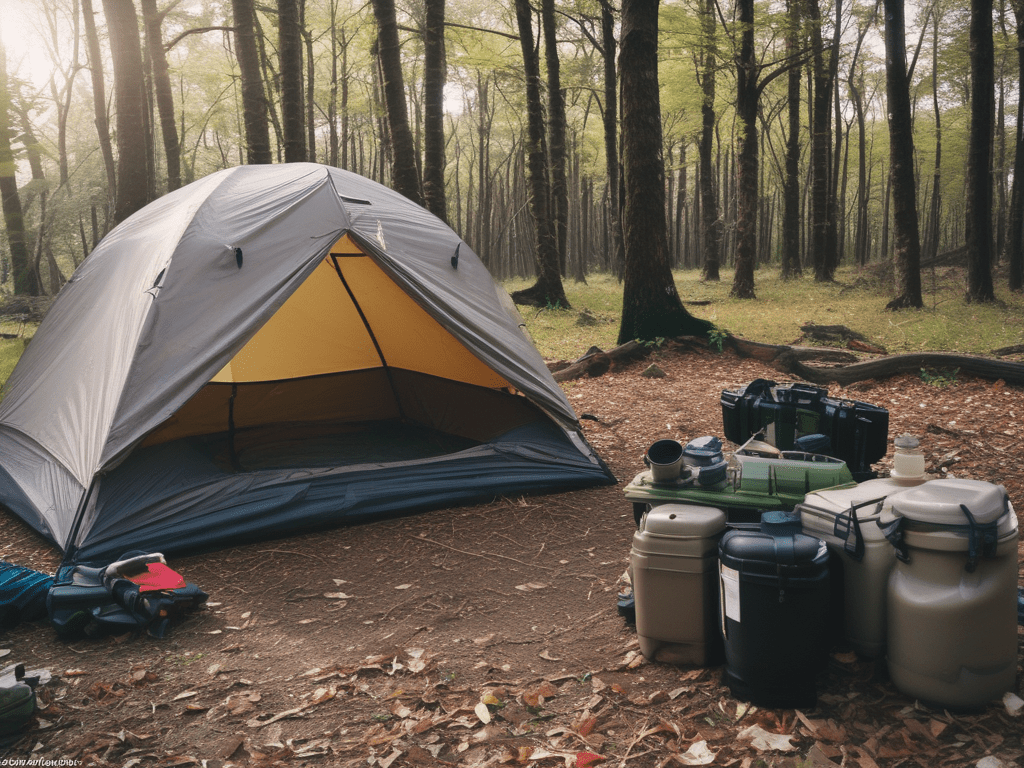
In the realm of outdoor survival, two concepts often come to the forefront: dispersed camping and SHTF (Shit Hits The Fan) bugging out. While both involve surviving in the wilderness, they are fundamentally different in their purpose, preparation, and execution. This essay aims to highlight the key differences between dispersed camping and SHTF bugging out.
Dispersed Camping
Dispersed camping, colloquially known as boondocking or wild camping, is a unique form of camping that is characterized by its lack of reliance on designated campgrounds. This form of camping is primarily practiced in national forests or grasslands, and it is legally recognized and permitted in numerous countries worldwide.
The allure of dispersed camping lies in its appeal to those who seek a deeper connection with nature. Unlike traditional camping, which often takes place in populated campgrounds with amenities such as restrooms, picnic tables, and fire pits, dispersed camping is a more solitary and immersive experience. It offers the opportunity to escape from the noise and distractions of everyday life and to experience the tranquility and solitude of the wilderness.
Preparation for dispersed camping is a crucial aspect of the experience, requiring careful planning and consideration. The necessary gear for dispersed camping often surpasses that of regular camping due to the absence of facilities and amenities. Campers must be self-sufficient, bringing everything they need to survive and thrive in the wilderness.
Essential gear for dispersed camping includes a durable and weather-resistant tent, a warm sleeping bag, and a portable cooking stove. Additionally, campers must pack enough food and water for the duration of their stay, bearing in mind that they may need to carry their supplies over long distances or challenging terrains.
Knowledge of the area is another critical aspect of dispersed camping. Campers should familiarize themselves with the local flora and fauna, potential water sources, and the prevailing weather conditions. This knowledge can help campers avoid dangerous situations, such as encountering wildlife or getting lost. It can also enhance their experience by helping them identify edible plants, find fishing spots, or choose the best location to set up camp.
Navigation tools, such as maps and compasses, are also essential for dispersed camping. In the absence of marked trails and signs, these tools can help campers find their way and prevent them from getting lost. Some campers may also choose to bring GPS devices or satellite phones, especially when camping in particularly remote or challenging areas.
Dispersed camping is a unique form of outdoor adventure that offers a deeper connection with nature. It requires careful preparation, including packing the right gear and gaining knowledge of the area. Despite its challenges, the rewards of solitude, tranquility, and a sense of self-sufficiency make it a worthwhile experience for many outdoor enthusiasts.
SHTF Bugging Out
SHTF (Shit Hits The Fan) bugging out is a concept deeply rooted in survivalist culture, referring to the act of rapidly leaving one’s home in response to an imminent emergency or disaster. The term “bugging out” finds its origins in military jargon, where it was used to describe the act of retreating quickly under enemy fire. In the context of survivalism, however, bugging out has evolved to denote a swift evacuation due to a catastrophic event. These events can range from natural disasters like hurricanes, earthquakes, or wildfires, to man-made crises such as pandemics, economic collapse, or societal unrest.
The preparation for bugging out is a meticulous process, centered around the creation of a bug-out bag (BOB). A BOB is a portable survival kit designed to sustain an individual for approximately 72 hours during an evacuation. The 72-hour timeframe is based on the typical duration it takes for emergency services to restore order or provide aid during a disaster.
The contents of a BOB are carefully curated to address the basic human needs of shelter, water, food, and health. This typically includes a compact, lightweight tent or emergency blanket for shelter, water purification tablets or portable filters for safe drinking water, and high-energy, non-perishable food items. Health-related items include a basic first aid kit, prescription medications if needed, and hygiene products.
In addition to these essentials, a BOB should also contain survival gear such as a multi-tool, a flashlight, a portable radio for receiving emergency broadcasts, and a whistle for signaling for help. Clothing packed should be suitable for the weather and environment, and it’s advisable to pack a change of clothes.
Unlike dispersed camping, which is a recreational activity undertaken by choice, bugging out is a survival strategy triggered by necessity. It is not a leisurely retreat into nature, but a tactical maneuver designed to ensure survival in the face of imminent danger. The goal is not to enjoy the wilderness, but to navigate through it safely and efficiently to reach a safer location, often referred to as a bug-out location (BOL), which is a predetermined destination such as a remote cabin, a family member’s home, or a designated community shelter.
SHTF bugging out is a survival strategy that requires careful planning and preparation. The creation of a well-stocked BOB is a critical part of this preparation. While it shares some similarities with dispersed camping in terms of the need for self-sufficiency and outdoor survival skills, its purpose and execution are fundamentally different, rooted not in recreation, but in survival.
Key Differences
The purpose of dispersed camping and SHTF bugging out marks one of the most significant differences between the two. Dispersed camping is essentially a recreational activity, an intentional choice made by individuals or groups seeking to immerse themselves in the tranquility of nature, away from the conveniences and crowds of traditional campgrounds. It is an exercise in self-reliance and a way to connect more deeply with the natural world.
In stark contrast, bugging out is a survival strategy triggered by a crisis or emergency. It is not a choice made for leisure or enjoyment, but a necessary response to a situation that poses a significant threat to personal safety or survival. The aim of bugging out is to swiftly and safely evacuate from a dangerous situation to a safer location, using the most efficient means possible.
Dispersed camping and SHTF bugging out, despite their different purposes, do share some commonalities in the tools used. Both activities require basic survival gear such as a tent or other form of shelter, a sleeping bag, a fire starter, a multi-tool, a first aid kit, and a source of light like a headlamp or flashlight. Food and water are also essential, whether it’s in the form of packed meals and a water filter for camping, or long-lasting, non-perishable food items and a life straw for bugging out. Navigation tools like a compass and map, or a GPS device, are also important for both activities.
However, there are also significant differences in the tools used for dispersed camping versus SHTF bugging out. Dispersed camping, being a leisure activity, might include additional comfort items like a camping stove for cooking, a hammock for relaxation, or even a portable solar panel for charging electronic devices. Campers might also bring along recreational gear such as fishing rods, binoculars for bird watching, or books for leisure reading.
In contrast, the tools for bugging out are strictly utilitarian, focused on survival and efficiency. A bug-out bag would typically include items like a radio for receiving emergency broadcasts, a sturdy knife for defense and utility, and paracord for its myriad uses. Given the need to travel light and fast, bugging out tools are typically more compact and lightweight compared to camping gear. Also, because bugging out might involve dealing with unforeseen dangers, tools like personal defense items or a signaling device for attracting attention in case of rescue might be included.
In essence, while there are overlaps in the tools used for dispersed camping and bugging out, the differences reflect the contrasting purposes of these activities: one is for leisure and enjoyment of nature, the other for survival during emergencies.
Preparing for dispersed camping involves careful consideration of the gear needed for both comfort and survival in the wilderness over an extended period. This preparation often starts with a checklist of items to pack. Shelter is a top priority, which may include a tent, sleeping bag, or a camping hammock, stand and quilts. Cooking equipment is also essential, such as a portable stove, cookware, utensils, and a cooler or food storage container.
Navigation tools like a map, compass, or GPS device are crucial for finding one’s way in the wilderness. In addition, campers often pack items for entertainment, such as books, games, or even a guitar for campfire sing-alongs. The emphasis in dispersed camping preparation is on ensuring a comfortable and enjoyable experience while living self-sufficiently in the wild. The gear is typically more extensive and heavier compared to bugging out, as comfort and enjoyment are as important as survival.
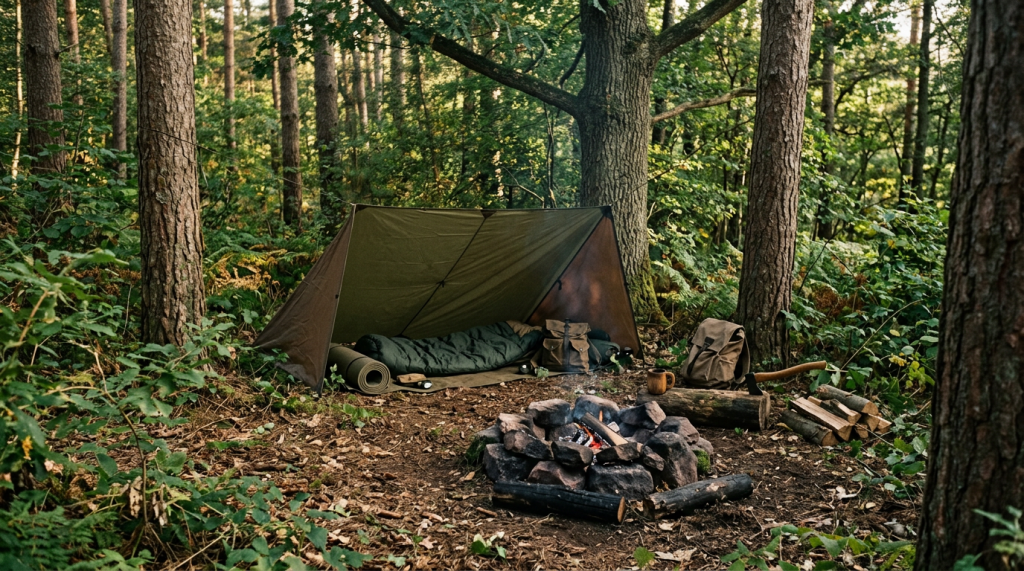
In contrast, preparing for bugging out requires a more streamlined and focused approach. The goal is to pack a bug-out bag with only the essentials needed to survive for a short period, 72 hours, during an emergency. This includes items like food and water supplies, a first aid kit, a multi-tool, a compact shelter like a bivvy sack or Cowboy roll, and a fire starter.
Every item in a bug-out bag must serve a critical purpose. Redundancy is avoided unless it’s for a crucial item like a fire starter or water purification method. The gear must also be as lightweight and compact as possible to facilitate rapid and efficient movement. This is because in a bug-out situation, speed and efficiency are of the essence. The preparation for bugging out also involves planning an evacuation route and a backup plan in case the first option is not viable.
In essence, the preparation for dispersed camping and bugging out reflects their respective purposes. The former is geared towards comfort and enjoyment in the wilderness over an extended period, while the latter is focused on survival and rapid evacuation during an emergency.
The duration of these activities is another key difference. Dispersed camping can last for several days or even weeks, depending on the camper’s preference and preparedness. It is a more leisurely activity, with the time spent largely dictated by the camper’s desire to remain in the wilderness.
Bugging out, conversely, is designed to be a short-term survival strategy. While it is typically planned for a 72-hour period, the actual duration could be shorter or longer, depending on the nature and severity of the emergency. The goal is to reach a safe location as quickly as possible, where more long-term survival plans can be implemented if necessary.
Lastly, the location of these activities also varies. Dispersed camping usually takes place in remote wilderness areas, where the camper can enjoy solitude and a close connection with nature. The choice of location is often based on the camper’s preference for certain types of environments, such as forests, mountains, or lakes.
Bugging out, however, can lead to a variety of locations, depending on the nature of the emergency. While a remote wilderness area could be a potential bug-out location, others might include urban areas, small towns, or even designated emergency shelters. The choice of bug-out location is typically based on its safety, accessibility, and the resources available for survival.
Conclusion
Dispersed camping and SHTF bugging out, while sharing a common thread of survival skills, are fundamentally different in their purpose, preparation, and execution. These differences are not just superficial but impact the way outdoor enthusiasts and survivalists approach, plan, and experience each activity.
Dispersed camping is primarily a recreational activity, a conscious choice made by individuals seeking a deeper connection with the natural world. It’s about immersing oneself in the wilderness, away from the conveniences and crowds of traditional campgrounds. The preparation for dispersed camping involves packing gear for comfort and survival in the wilderness over an extended period. This includes items for shelter, cooking, navigation, and possibly even entertainment. The duration of dispersed camping can last for several days or even weeks, depending on the camper’s preference and preparedness.
On the contrary, SHTF bugging out is a survival strategy triggered by a crisis or emergency. It’s a necessary response to a situation that poses a significant threat to personal safety or survival. Preparation for bugging out is more streamlined, focusing on the essentials needed to survive for a short period, typically 72 hours, during an emergency. Unlike dispersed camping, bugging out is designed to be a short-term survival strategy, with the goal to reach a safe location as quickly as possible.
Understanding these differences is crucial for anyone venturing into the outdoors, whether for leisure or in preparation for potential emergencies. It allows individuals to tailor their preparation, gear, and mindset according to the activity they are undertaking. For instance, a camper planning for dispersed camping might focus on comfort items like a comfortable sleeping bag or a gourmet camp meal, while someone preparing a bug-out bag would prioritize essential survival items like water purification tablets and high-energy food bars.
Moreover, recognizing these differences can also help individuals appreciate the unique challenges and rewards each activity offers. Dispersed camping offers the reward of solitude and a deep connection with nature, while bugging out provides a test of one’s survival skills and resilience in the face of adversity.
Whether one is seeking solitude in nature through dispersed camping or preparing for potential emergencies with SHTF bugging out, knowledge and preparedness are key. By understanding the unique requirements and purposes of each activity, outdoor enthusiasts and survivalists can better equip themselves for a successful and safe experience.

 UTAZCO Overland
Leave a Reply