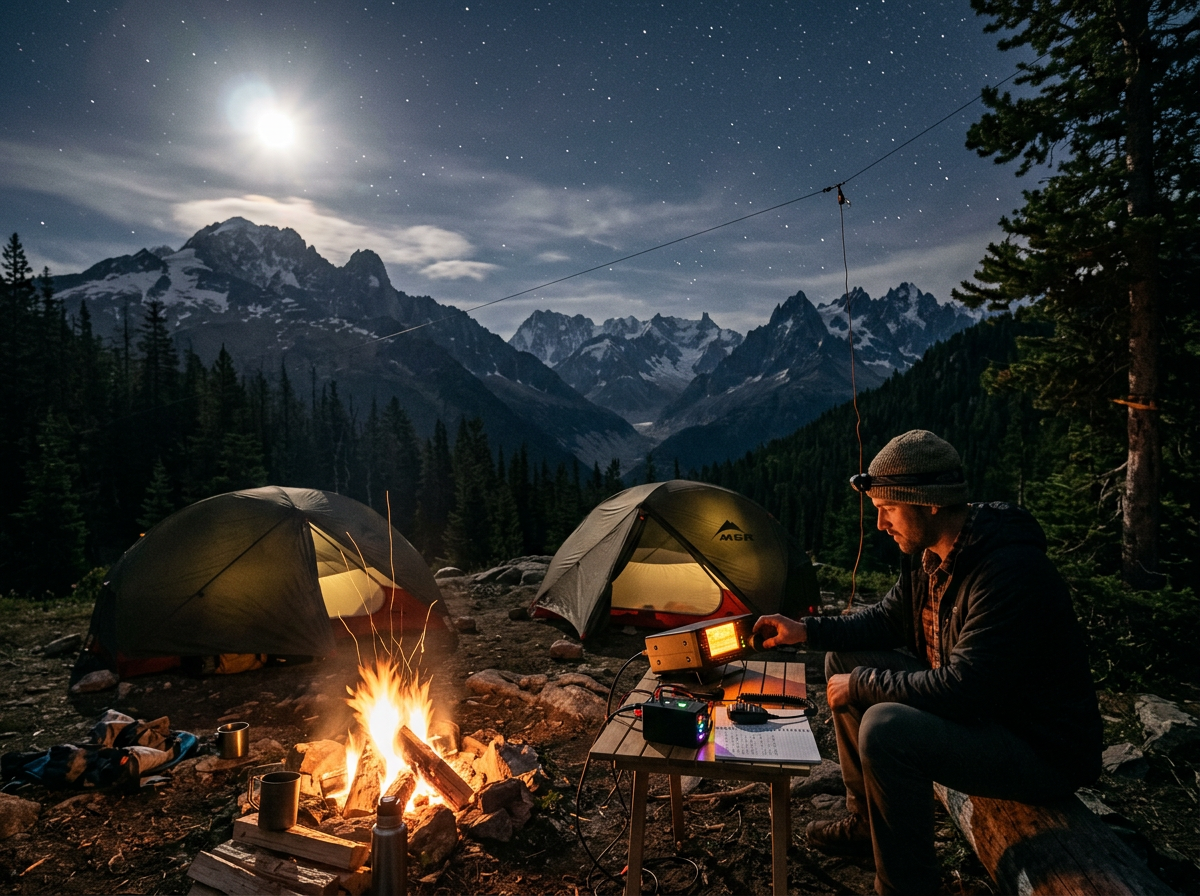
Venturing into the backcountry brings a sense of freedom and adventure, but it also introduces unique challenges—chief among them, the need to stay connected when modern conveniences like cell service disappear. In these remote environments, reliable communication can mean the difference between a minor inconvenience and a serious emergency. While GPS devices have revolutionized navigation, they fall short when it comes to real-time coordination or calling for help. This is where radio communication steps in, offering a dependable link between travelers, teams, and rescuers. Understanding the basics of radio use is not just a technical skill; it’s a critical component of backcountry safety and self-reliance.
The Critical Role of Radio Communication in Backcountry Safety and Teamwork#
Radio communication stands as an essential pillar of safety and coordination for anyone venturing into the backcountry. Unlike GPS devices, which are primarily designed to provide precise location data, radios serve a fundamentally different and often more critical purpose: they enable real-time, two-way communication. This distinction becomes especially important in remote or rugged environments where the ability to reach out to others—whether for routine check-ins, group coordination, or emergency assistance—can be a literal lifesaver.
In many wild places, the limitations of technology quickly become apparent. Cell phones, so ubiquitous in daily life, lose their utility as soon as you move beyond the reach of towers. Even satellite-based devices, while powerful, are not infallible; their signals can be blocked by thick forests, steep canyon walls, or heavy weather, leaving travelers without a reliable means to call for help. In these situations, radios shine because they do not depend on external infrastructure or clear skies. Instead, they allow direct communication between individuals or groups, making it possible to share information, coordinate movements, or summon assistance even when other systems fail.
The value of radio communication is most evident during emergencies. If someone is injured or lost, being able to immediately alert others and organize a response can dramatically improve outcomes. Radios also foster a sense of connection and teamwork, allowing groups to stay in touch as they spread out to explore or tackle different tasks. This ongoing communication helps prevent small problems from escalating and ensures that everyone remains accounted for, even in challenging terrain.
Ultimately, while GPS devices are invaluable for navigation, they are not a substitute for the human connection that radios provide. In the unpredictable and often unforgiving backcountry, the ability to communicate quickly and clearly is not just a convenience—it is a foundational skill that enhances safety, builds confidence, and transforms isolation into a shared adventure.
Choosing the Right Communication Tools#
Backcountry travelers have a variety of radio communication tools at their disposal, each tailored to different needs and scenarios. GMRS radios have become a favorite among families and groups because they strike a balance between range and simplicity. With the ability to transmit over several miles in optimal conditions and the convenience of straightforward operation, GMRS units are well-suited for keeping a convoy together or maintaining contact between base camp and scouts. Their popularity has grown as more affordable, high-quality handheld and vehicle-mounted options have entered the market, though they do require a license to operate legally in many regions.
HAM radios, on the other hand, represent the gold standard for those who want maximum range and versatility. These radios can access a wide spectrum of frequencies and power levels, making them capable of reaching distant repeaters or even communicating across continents under the right conditions. However, this power comes with complexity: operating a HAM radio requires passing a licensing exam and learning the basics of radio theory and etiquette. For those willing to invest the time, HAM radios open up a world of possibilities, including access to emergency networks and a global community of operators.
CB radios, once synonymous with overland travel and long-haul trucking, have seen their popularity wane. Their limited range—often just a few miles—and susceptibility to interference from crowded channels make them less reliable in remote or mountainous terrain. Nevertheless, CBs remain in use among certain communities, valued for their no-license requirement and the nostalgia of classic “breaker-breaker” communication.
FRS radios offer the simplest entry point for backcountry communication. These compact, license-free devices are easy to use and widely available, making them a common choice for casual hikers or families on short excursions. However, their low power output means their effective range is typically limited to line-of-sight or less, especially in dense forests or hilly terrain. They are best suited for close-range communication within a group rather than reaching out for help over long distances.
Satellite messengers, while not radios in the traditional sense, have become an indispensable backup for many adventurers. These devices use satellite networks to send text messages, location updates, and SOS signals from virtually anywhere on the planet. They are especially valuable in areas where even the best radios might struggle due to terrain or distance. While they lack the immediacy of voice communication, their ability to reach emergency services or loved ones when all else fails makes them a critical part of any comprehensive backcountry communication plan.
How Terrain Shapes Radio Communication Effectiveness#
The performance of radio communication in the backcountry is intimately tied to the landscape through which the signals must travel. Unlike cell phones, which rely on a network of towers, radios depend on the direct transmission of waves from one unit to another. These waves, especially those in the VHF and UHF bands commonly used by GMRS, HAM, and FRS radios, behave much like beams of light: they travel in straight lines and are easily blocked or scattered by obstacles. When you’re deep in a forest, the dense canopy and thick undergrowth can absorb and weaken the signal, sometimes reducing your effective range to a fraction of what you might achieve in open country. In mountainous regions, the terrain presents even greater challenges. A single ridge or rocky outcrop can completely block your transmission, leaving you in a radio shadow where even the most powerful equipment is rendered ineffective.
Canyons and valleys introduce their own complications. Signals may bounce unpredictably off rock walls, creating dead zones or areas of interference. In these situations, simply moving a short distance—climbing to a higher vantage point or stepping into a clearing—can dramatically improve your ability to make contact. Experienced radio users quickly learn to read the landscape, seeking out spots where their signal can travel unimpeded. Sometimes, the difference between being heard and being lost in the static is as simple as standing on a boulder or moving away from a dense stand of trees. Understanding these nuances of terrain and radio propagation is as important as knowing how to operate the device itself, and can make all the difference when communication is critical.
Understanding Radio Licensing: Access, Requirements, and Capabilities#
Navigating the world of radio communication in the backcountry involves more than just choosing the right device; understanding licensing requirements is equally crucial. For those interested in HAM radio, the process is more involved but ultimately rewarding. Prospective operators must study for and pass a licensing exam that covers basic electronics, radio theory, and operating procedures. Upon passing, they receive a unique call sign, granting them access to a broad spectrum of frequencies and the ability to use higher power levels. This opens up advanced features such as long-distance communication, access to repeaters, and participation in emergency networks, making HAM radio a powerful tool for those willing to invest the time and effort.
GMRS radios offer a middle ground between accessibility and capability. While a license is required to operate these radios legally, the process is straightforward—there’s no test involved, only a registration and fee. Once licensed, users can operate on GMRS frequencies with higher power and the option to use repeaters, which can significantly extend communication range. This makes GMRS an attractive option for families and groups who want reliable communication without the commitment of studying for an exam.
On the other end of the spectrum, FRS and CB radios are designed for simplicity and ease of access. No license is required to operate these devices, which makes them appealing for casual users or those new to radio communication. However, this convenience comes with limitations. FRS radios are restricted to lower power outputs and fewer channels, which limits their range and effectiveness in challenging terrain. CB radios, while also license-free, are similarly constrained by power and channel crowding, making them less suitable for critical communication in remote areas. Ultimately, the choice of radio and the willingness to pursue licensing will shape both the capabilities and the reliability of your backcountry communication strategy.
Key Radio Terminology for Effective Communication#
A solid grasp of basic radio terminology is fundamental for anyone aiming to use radios effectively in the backcountry. One of the most important concepts is the repeater, a specialized station that listens for incoming transmissions and then rebroadcasts them, often from a high vantage point such as a mountaintop or tall building. This process can dramatically extend the range of your radio, allowing communication over distances that would otherwise be impossible due to terrain or power limitations. In mountainous regions, where direct line-of-sight is often blocked, repeaters can be the difference between reaching help and being isolated.
In contrast, simplex communication refers to the most straightforward form of radio use: one radio transmitting directly to another without any intermediary. This method is simple and reliable over short distances or in open terrain, but its effectiveness is limited by obstacles and the inherent range of the radios involved. Knowing when to use simplex versus seeking out a repeater is a key skill for backcountry communicators.
Another essential feature is the squelch control, which acts as a filter for unwanted static and background noise. By adjusting the squelch, users can ensure their radios remain silent until a strong, clear signal is received, making it much easier to pick out important transmissions in a noisy environment. This not only improves clarity but also conserves battery life, as the radio isn’t constantly playing static.
For those operating under a license, call signs become an integral part of radio etiquette and legality. Each licensed operator is assigned a unique call sign, which serves as their on-air identity. Using call signs properly is not just a matter of protocol; it’s a legal requirement and a way to ensure accountability and clarity during communications, especially in emergency situations or when using shared frequencies. Mastering these terms and their practical applications lays the groundwork for confident, effective radio use in any backcountry scenario.
Selecting the Right Radio Gear for Success#
Selecting the appropriate radio equipment is a decision that can significantly impact your safety and effectiveness in the backcountry. Handheld radios, often referred to as “handies” or “walkie-talkies,” are prized for their portability and convenience. Their compact size makes them easy to carry on hikes, during scouting missions, or when moving away from a base camp or vehicle. While their power output and range are generally limited compared to larger units, their flexibility and ease of use make them indispensable for close-range communication within a group or for quick check-ins during activities that require mobility.
For those who spend much of their time traveling by vehicle—whether overlanding, off-roading, or supporting a group from a mobile base—vehicle-mounted radios offer a substantial upgrade in both power and capability. These units can transmit at higher wattages, which translates to greater range and more reliable communication, especially in challenging terrain. The ability to connect to external antennas further enhances their performance, allowing signals to travel farther and penetrate obstacles more effectively than handheld units alone.
The antenna, often overlooked by beginners, is arguably the most critical component of any radio setup. A high-quality, properly tuned antenna can make a dramatic difference in both how far your signal reaches and how clearly you receive incoming transmissions. Placement is equally important; mounting an antenna as high as possible and away from obstructions maximizes its effectiveness. In vehicles, roof-mounted antennas typically outperform those mounted lower or on the side, while in the field, even raising a handheld radio above your head or moving to higher ground can improve performance. Ultimately, investing in the right gear—and understanding how to deploy it—ensures that your radio becomes a reliable tool rather than a source of frustration when communication matters most.
Best Practices for Clear and Effective Radio Communication#
Effective radio communication in the backcountry hinges on a few key habits that ensure messages are understood and channels remain available for everyone. Clarity is paramount; speaking slowly, enunciating words, and avoiding slang or jargon helps prevent misunderstandings, especially when signals are weak or there’s background noise. Keeping transmissions concise is equally important. Long-winded messages can clog the airwaves, making it difficult for others to get through, particularly in situations where multiple groups may be sharing the same frequency. By focusing on the essential information—who you are, where you are, and what you need—you make it easier for others to respond quickly and accurately.
Plain language is another cornerstone of good radio etiquette. While some radio communities use codes or abbreviations, in the backcountry it’s best to communicate in straightforward terms. This reduces the risk of confusion, especially if you’re reaching out to someone unfamiliar with specific codes or if you’re in a stressful situation where clear understanding is critical.
During emergencies, following established protocols can make all the difference. Announcing “emergency traffic” at the start of your transmission signals to everyone listening that urgent information is coming and that the channel should be kept clear. Waiting for a response before continuing ensures that your message is being received and that help is on the way. These practices not only improve the efficiency of routine communication but also create a framework for calm, organized action when stakes are high. By adhering to these best practices, backcountry travelers help foster a culture of respect and reliability on the airwaves, making radio communication a true asset in both everyday and critical situations.
Avoiding Common Pitfalls in Radio Communication#
Even with high-quality radios and accessories, certain missteps can significantly diminish the effectiveness of your communication setup in the backcountry. One frequent error is the tendency to use more transmission power than necessary. While it might seem logical that higher power always equals better performance, excessive output can actually create problems. Not only does it drain batteries much faster—a critical concern when you’re far from a power source—but it can also cause interference with other users on the same or adjacent frequencies. Responsible power management, using only as much as needed for clear communication, helps preserve both your equipment and the shared radio environment.
Antenna placement is another area where mistakes are common and costly. The performance of even the best radio can be crippled by a poorly positioned antenna. Mounting an antenna too low, such as on a vehicle bumper or behind metal obstructions, can block or reflect signals, drastically reducing range and clarity. Similarly, handheld radios used in dense forests or deep valleys may struggle if the antenna is kept close to the body or shielded by gear. Elevating the antenna—whether by mounting it on a vehicle roof, holding a handheld unit above your head, or moving to higher ground—can make a dramatic difference in both transmitting and receiving signals.
Routine maintenance and practice are often overlooked but are essential for reliable communication. Radios, like any piece of equipment, can develop issues over time: batteries lose their charge, connectors corrode, and settings can be inadvertently changed. Regularly inspecting your gear, testing it before trips, and ensuring everyone in your group knows how to operate their radios can prevent frustrating failures when you need communication most. By staying vigilant and proactive, you can avoid these common pitfalls and ensure your radio system remains a dependable lifeline in the backcountry.
Radio Communication: The Ultimate Safety Multiplier#
At its core, radio communication transforms the experience of backcountry travel by adding a crucial layer of safety and connectivity. When venturing into remote areas where the landscape can quickly isolate individuals or groups, the ability to reach out instantly for assistance or to coordinate plans becomes invaluable. Radios bridge the gap left by unreliable cell service and the limitations of other technologies, ensuring that help is never out of reach, even when miles from the nearest road or trailhead. This capability not only allows for rapid response in emergencies—whether it’s a medical issue, a lost hiker, or a sudden change in weather—but also streamlines everyday logistics, from regrouping after a day’s exploration to sharing updates about trail conditions or hazards.
Beyond practical coordination, radios foster a sense of community and reassurance. Knowing that you can check in with your team or call for help if needed brings peace of mind, reducing anxiety and allowing everyone to focus more fully on the adventure. This sense of connection is especially important in challenging environments, where morale and teamwork can make all the difference.
Mastering radio basics—understanding your equipment, practicing clear communication, and respecting best practices—should be viewed as fundamental as any other survival skill. Just as you wouldn’t head into the wilderness without knowing how to navigate or make a fire, being proficient with your radio is an investment in preparedness that can pay dividends in both routine and critical situations. In the unpredictable world of backcountry travel, radio communication stands out as a true safety multiplier, turning isolation into opportunity and uncertainty into confidence.
Conclusion#
In the unpredictable and often unforgiving environment of the backcountry, preparation is the key to both safety and enjoyment. While navigation tools like GPS devices and maps are indispensable, they address only one aspect of wilderness travel: knowing where you are. Radio communication, on the other hand, addresses the equally vital need to stay connected—to your group, to other travelers, and to potential rescuers. It is this ability to reach out, share information, and call for help that transforms radio from a mere convenience into an essential survival tool.
Throughout this exploration of radio communication basics, it becomes clear that the right knowledge and equipment can make a profound difference. Understanding the strengths and limitations of different radio types, recognizing how terrain shapes signal effectiveness, and respecting licensing requirements all contribute to building a reliable communication strategy. Mastery of radio terminology and best practices ensures that messages are clear and channels remain open, while attention to gear selection and maintenance helps avoid common pitfalls that could otherwise leave you isolated when it matters most.
Ultimately, investing time in learning and practicing radio skills is an investment in your own safety and the well-being of those who travel with you. Radios not only provide a lifeline in emergencies but also foster a sense of teamwork and confidence that enhances every aspect of the backcountry experience. As technology continues to evolve, the fundamentals of clear, effective communication remain unchanged. By making radio proficiency a core part of your wilderness toolkit, you equip yourself to face the unknown with greater assurance, turning the challenges of remote travel into opportunities for adventure and connection.